SATURDAY POETRY SERIES PRESENTS: IRIS JAMAHL DUNKLE

DAPHNE’S BROKEN SONNET
By Iris Jamahl Dunkle


Apples are imagining themselves
onto hillsides – pink petals stick out their
tongues from the dark mouths of branches 
and the forest canopy ripens overnight
until it pulses like a green heart. Spring
frankensteins us all—softens our cyborg
brains (Admit it:  you were thinking about what
mysteries your phone will sing out!
) While your
body turns like a tree toward the light. Reader,
somedays it’s just too much: powder blue sky,
light wind stirring the leaves as if they are
waving, no, beckoning me to root 
and join in. How could I not give in? Trying
to find the song that’s buried in the soil.


Today’s poem first appeared in SWWIM Every Day and is reprinted here today with permission from the poet.

Iris Jamahl Dunkle was the 2017-2018 Poet Laureate of Sonoma County, CA. Interrupted Geographies, published by Trio House Press, is her third collection of poetry. It was featured as the Rumpus Poetry Book Club selection for July 2017. Her debut poetry collection, Gold Passage, was selected by Ross Gay to win the 2012 Trio Award. Her second collection, There’s a Ghost in this Machine of Air was published in 2015. Her work has been published in numerous publications including San Francisco Chronicle, Fence, Calyx, Catamaran, Poet’s Market 2013, Women’s Studies and Chicago Quarterly Review. Dunkle teaches at Napa Valley College and is the Poetry Director of the Napa Valley Writers’ Conference. 

Guest Editor’s Note: The octave from the beginning of this beautifully imperfect sonnet presents pastoral images that set a mood disrupted by the use of frankensteins as a verb, an abruptly delightful and unexpected choice by the poet, reminding us of what humans have done to the natural world to which we are aching to return and how it has affected us. And yet, “It’s just too much” for the speaker who in answer to a final question becomes a tree, as the mythical Daphne did to escape Apollo just before he caught up to her. Escaping into the natural world is an appealing idea when faced with how things have turned out or how things are headed for disaster.

This melding of sonnet forms—traditional, modern, old, and new—offers two voltas, significant turns in meaning, and the first happens at the beginning of the sestet with a simile that compares the body to a tree as it turns toward light. This is where the sonnet leaves its mark on the reader, who is then addressed directly with an anguish of images that lure the speaker to dig deep “to find the song that’s buried in the soil.” The second turn is the speaker’s response to the leaves and their beckoning. Once the speaker has taken root, this “broken sonnet” ends in a line of perfect iambic pentameter, repairing itself.

Want to read more by and about Iris Jamahl Dunkle?
Iris Jamahl Dunkle’s Official Website


Guest Editor Anne Graue is the author of Fig Tree in Winter (Dancing Girl Press), and has published poems in literary journals and anthologies, including The Book of Donuts (Terrapin Books), Blood and Roses: A Devotional for Aphrodite and Venus (Bibliotheca Alexandrina), Gluttony (Pure Slush Books), The Plath Poetry Project, One Sentence Poems, Random Sample Review, Into the Void Magazine, Allegro Poetry Magazine, and Rivet Journal.

A NOTE FROM THE MANAGING EDITOR:

After nearly ten years as Contributing Editor of this series, it is an honor and a unique opportunity to share this space with a number of guest editors, including the editor featured here today. I am thrilled to usher in an era of new voices in poetry as the Managing Editor of this series.

Viva la poesia!
Sivan, Managing Editor
Saturday Poetry Series, AIOTB


Eve

“The First Mourning” By William-Adolphe Bougereau (1888)

.

Eve

By Sister Lou Ella Hickman


eve

was the original survivor story
evicted from her plush garden palace
which meant she had to start over
this time she would discover
how much life isn’t fair
when she lost both her sons
and she started over
 again
another son
then her long shadow of silence
cast under a sun that had blistered
begin again or despair

.

About the Author: Sister Lou Ella is a former teacher and librarian. She is a certified spiritual director as well as a poet and writer. Her poems have appeared in numerous magazines such as America, First Things, Emmanuel, Third Wednesday, and New Verse News as well as in anthologies including The Night’s Magician: Poems About the Moon, edited by Philip Kolin and Sue Brannnan Walker, Down to the Dark River edited by Philip Kolin, Secrets edited by Sue Brannan Walker and After Shocks: The Poetry of Recovery for Life-Shattering Events edited by Tom Lombardo. Last year she was nominated for the Pushcart Prize. Her first book of poetry entitled she: robed and wordless was published in 2015. (Press 53.)

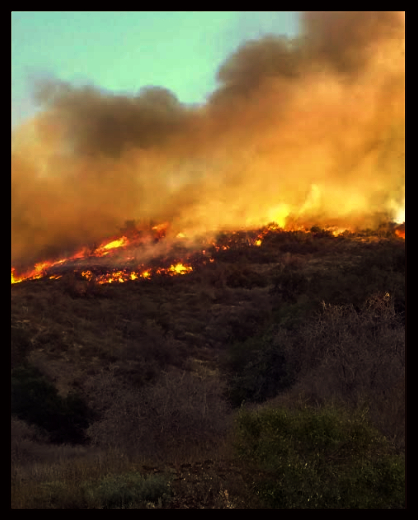
Ruth Bavetta: “Wildfire”


Wildfire

Moon dismantled,
sun a red disk, reflecting

sea a rusty mudflat,
hot wind hollowing

canyons, hills littered
with dust, ash, soot,

chaparral, squirrels, palm trees,
shingles, Chevrolets, dictionaries,

wedding dress, quilt stitched
by a grandmother fifty years ago,

the bones of those who stayed,
the hopes of those who fled.

Close the windows.

.

This poem previously appeared in 10×3 Plus

.

About the Author: Ruth Bavetta writes at a messy desk overlooking the Pacific Ocean. Her poems have appeared in Rattle, Nimrod, Tar River Review, North American Review and many other journals and anthologies. Her books are Fugitive Pigments (Future Cycle Press, 2013) Embers on the Stairs (Moontide Press, 2014,) Flour Water Salt (Future Cycle Press, 2016.) and No Longer at This Address (Aldritch Books 2017.) She likes the light on November afternoons, the music of Stravinsky, the smell of the ocean. She hates pretense, fundamentalism and sauerkraut.


More By Ruth Bavetta:

Neon Boneyard

A Murder


Image Credit: Chase Dimock “Wildfire in Simi Valley” (2018)

Five Hundred Channels and Nothing On

Five Hundred Channels and Nothing On

By Kevin Ridgeway


Five Hundred Channels and Nothing On

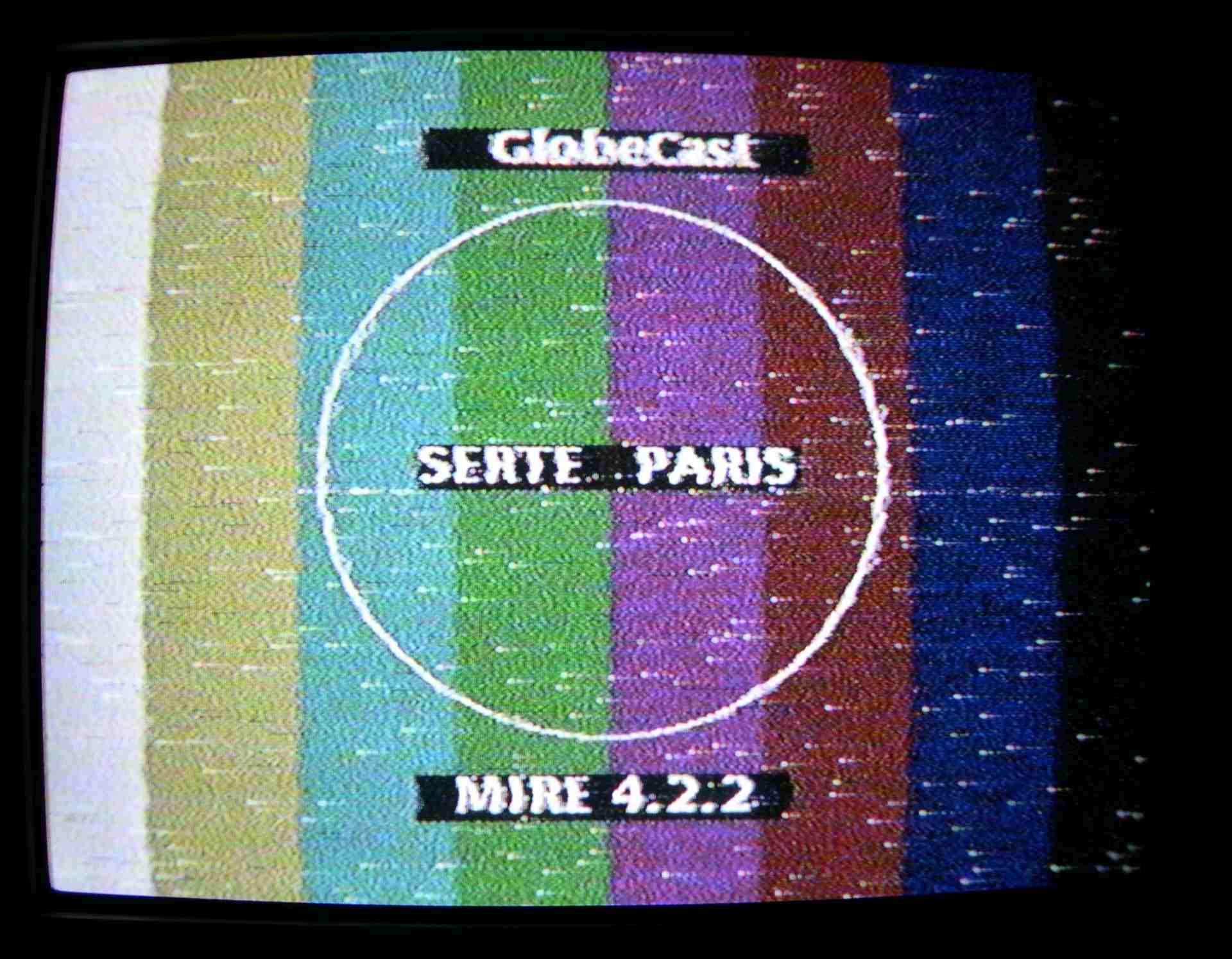
After Letterman signed off and the cartoon Peacock serenaded us with its three tone sign-off warning me to avert my eyes of the artificial bars of what looked just like the rainbow beam-stitched curtain but no Jack Paar successor hired to keep us all at ease, the retired magician who always demonstrated his improved golf swing in the wake of pitiful and incomprehensible demoralization, while an eerie beep told us to go to sleep. I can’t find those bars or that sound in the months following David Letterman’s retirement ten years after the death of a secret magic composed of wild, wild stuff comedy needs a transplant for so there will be no humorless misery in all the infomercial women that are not even beautiful enough to make an insomniac headache disappear in the nocturnal tenderness of a five am weather girl juvenile gameshow manning the remote from bed at three in the morning as human and animal faces plead with me to adopt them or let them predict my future and I snore through a public access channel’s encore presentation of Dorf on Golf that makes me dream in closed captioning.

.

About the Author: Kevin Ridgeway is from Whittier, CA. He is the author of six chapbooks of poetry. His latest book is A Ludicrous Split (alongside poems by Gabriel Ricard, Alien Buddha Press). Recent work has appeared or is forthcoming in SlipstreamChiron ReviewUp the RiverNerve CowboyThe American Journal of PoetryMain Street RagCultural WeeklySan Pedro River ReviewLummoxMisfit MagazineThe Cape RockPlainsongs and So it Goes: The Literary Journal of the Kurt Vonnegut Memorial Library. He lives and writes in Long Beach, CA.

The Jaroslavl Fresco

Wallpainting of a pillar in the Church of St. John Chrysostom

The Jaroslavl Fresco

By David Chorlton


The Jaroslavl Fresco

A likeness of God stares through the plaster.
At twilight he turns into a wolf.
His eyes are close together
and the pupils float on luminous globes.
Hair covers all
but the cheekbones

pushing against a patch of sallow skin.
It grows thicker by the century,
wild from its roots

to the frost on the tips
when he runs in moonlight
through the silent forest

with a star of blood
shining from prey in his teeth.

.

About the Author: David Chorlton is a transplanted European, who has lived in Phoenix since 1978. His poems have appeared in many publications online and in print, and often reflect his affection for the natural world, as well as occasional bewilderment at aspects of human behavior. A recent collection of poems is Bird on a Wire from Presa Press, and The Bitter Oleander Press published Shatter the Bell in my Ear, his translations of poems by Austrian poet Christine Lavant. A new book, Reading T. S. Eliot to a Bird, is out from Hoot ‘n Waddle, based in Phoenix.

Paramnesia 2

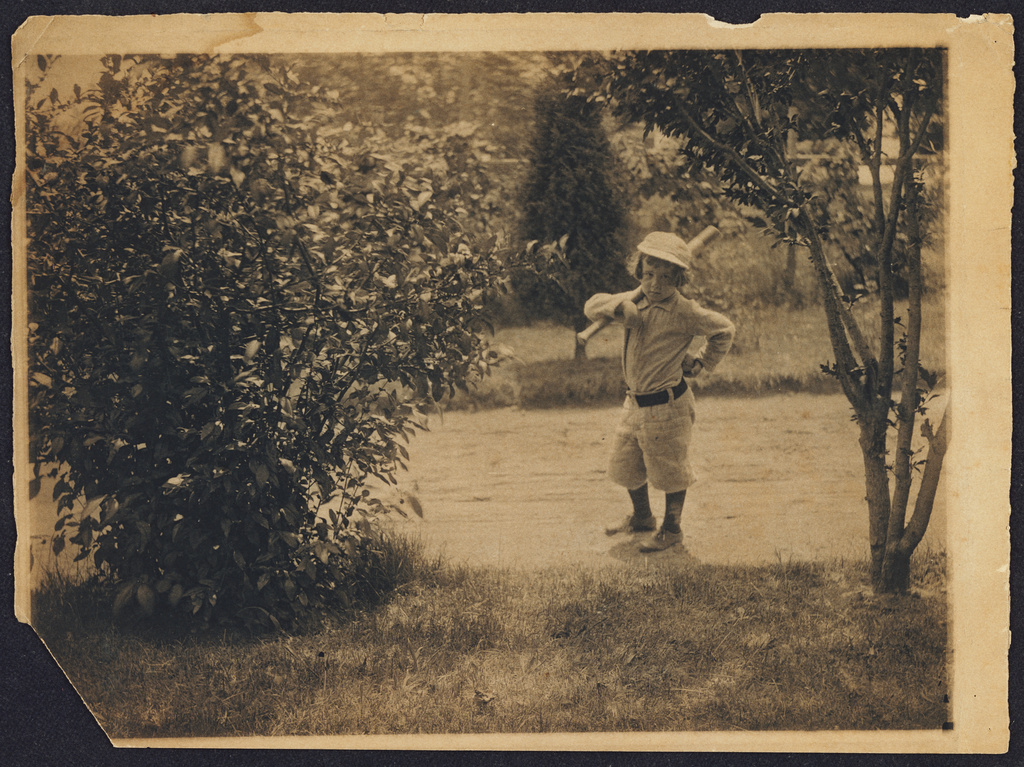
Photo by Gertrude Käsebier (1905) Digital image courtesy of the Getty’s Open Content Program

Paramnesia 2

By Tim Peeler


Paramnesia 2

The deluge of nighttime dog barks
Pauses for the after storm gutter drip.
There was a game, he says, can’t
Remember if it was 47 or 8, but we had
A two run lead in the bottom of the ninth.
Crickets like a crowd roar and the faint
Leaving of a train across the river gorge.
You got a light. Thanks. Well they got
The bases loaded, drunk as they say.
The old man’s profile, a Hemingway
Hillbilly with bifocals in porch light.
And coach, he hollers for me to get in there
To pitch to this Babe Ruth no neck left hander. 
A bawling cow somewhere, the Judge’s braying
Donkeys, hungry in their dark pasture.
So I say a little prayer ‘cause I believed back then,
Hid the ball in my glove behind my back.
A neighbor’s old pickup truck inching
Through the front yard of his trailer.
I throw it hard and outside at the knees.
He swings and misses. Lights was so bad.
An owl in the maple top, sounding out a
Whole summer of loneliness.
When he struck at the third bad pitch, that was
The game, but then he come after me with his bat.
A Hmong woman across the field, singing by the
Lanterns in her vegetable garden.
Our first baseman, Rosenbluth, stopped
Him out between the bases.
The hiss of traffic on the wet road,
River like a belly against the old dam.
We piled on him, beat the shit out of him
Before his teammates got out there, must have
Been 48, same year I met your mother.

About the Author:  A past winner of the Jim Harrison Award for contributions to baseball literature, Tim Peeler has also twice been a Casey Award Finalist (baseball book of the year) and a finalist for the SIBA Award. He lives with his wife, Penny in Hickory, North Carolina, where he directs the academic assistance programs at Catawba Valley Community College. He has published close to a thousand poems, stories, essays, and reviews in magazines, journals, and anthologies and has written sixteen books and three chapbooks. He has five books in the permanent collection at the Baseball Hall of Fame Library in Cooperstown, NY. His recent books include Rough Beast, an Appalachian verse novel about a southern gangster named Larry Ledbetter, Henry River: An American Ruin, poems about an abandoned mill town and film site for The Hunger Games, and Wild in the Strike Zone: Baseball Poems, his third volume of baseball-related poems.

“Women Who Love Men Like Ours” By Rebecca Schumejda


(Editor’s Note: This is the second of a two part series of poems on incarceration by Rebecca Schumejda. You can read the first one here.)

Before my brother’s incarceration, I held many beliefs that I now grapple with; one is my once vehement view embracing an eye for an eye, the law of retribution. The idea once seemed simple, if you do wrong, you should suffer an equivalent consequence. The problem is I interpreted this guiding principle through the kaleidoscope of my own limited experience, an experience that did not take life’s complexity or the fallibilities of the justice system into account. The variables are endless, for example just pick up Anthony Ray Hinton’s new book, The Sun Does Shine, which discusses how he survived three decades on death row in Alabama for a crime he did not commit. The number of death row inmates who were set free is absolutely staggering. Then of course, you have to consider mental illness and countless other factors when considering retaliation in lieu of a more magnanimous alternative.

Here’s the thing, I never thought I would be standing on line, shoes in hand, waiting to walk through a metal detector at a maximum-security prison to see my little brother. I never thought I would sit across from someone whom I once knew as the kindest, gentlest person and question every conviction I ever held about him and about all my perceptions. I never thought someone I loved would cause others, including myself, such intense pain by committing an inane act, an act still unfathomable to all affected. Here’s another thing, sometimes you cannot make sense of a tragedy no matter how hard you try. That aside, I want to believe that if you are willing to look at your experiences, even the most painful ones, as opportunities to learn then you will grow as a person and you may even be able to help others along the way. I have to constantly remind myself that good can come from a tragedy, that all is not lost. I use what I know, poetry, as a catalyst for thought and discussion, the chance to make people feel less lonely. I believe poetry is a good place to start any conversation.


Women Who Love Men Like Ours  

I drive toward your house 
and end up at a maximum-security prison,  
knowing I didn’t make a wrong turn.  

I witness the woman guard,  
at the first checkpoint, turn away  
three women for dress code violations.  

The woman in front of me steps out of line  
to bring those three women out to her car  
where she has t-shirts and sweatpants  
in all different sizes for moments like this.   

I take off my shoes before entering  
your house, not to keep the floors clean,  
but to pass through a metal detector  
before being allowed inside.   

The guard gives me a dirty look  
for letting the woman, who helped,  
back into her place in line and I regret  
drawing attention to myself   

but then the woman says,  
We got to be here for one another  
cause ain’t no one else gives a shit  
about women who love men like ours.  

Since I feel connected for the first time  
in months, I nod in agreement as if  
I traveled hours to see my lover or husband  
instead of my little brother.  

At dusk, on my way back to a life,  
where I forget my brother’s address,  
the setting sun is an orange jumpsuit  
crumpled up in the corner of a dingy cell.

.

About the Author: Rebecca Schumejda is the author of Falling Forward (sunnyoutside press), Cadillac Men (NYQ Books), Waiting at the Dead End Diner (Bottom Dog Press), Our One-Way Street (NYQ Books) and several chapbooks including Common Wages, a joint project with poet Don Winter. She received her MA from San Francisco State University and currently lives with her family in New York’s Hudson Valley. She is a co-editor of the online publication Trailer Park Quarterly.


Image Credit: “Prison, Albany, N.Y” (1865) Digital image courtesy of the Getty’s Open Content Program

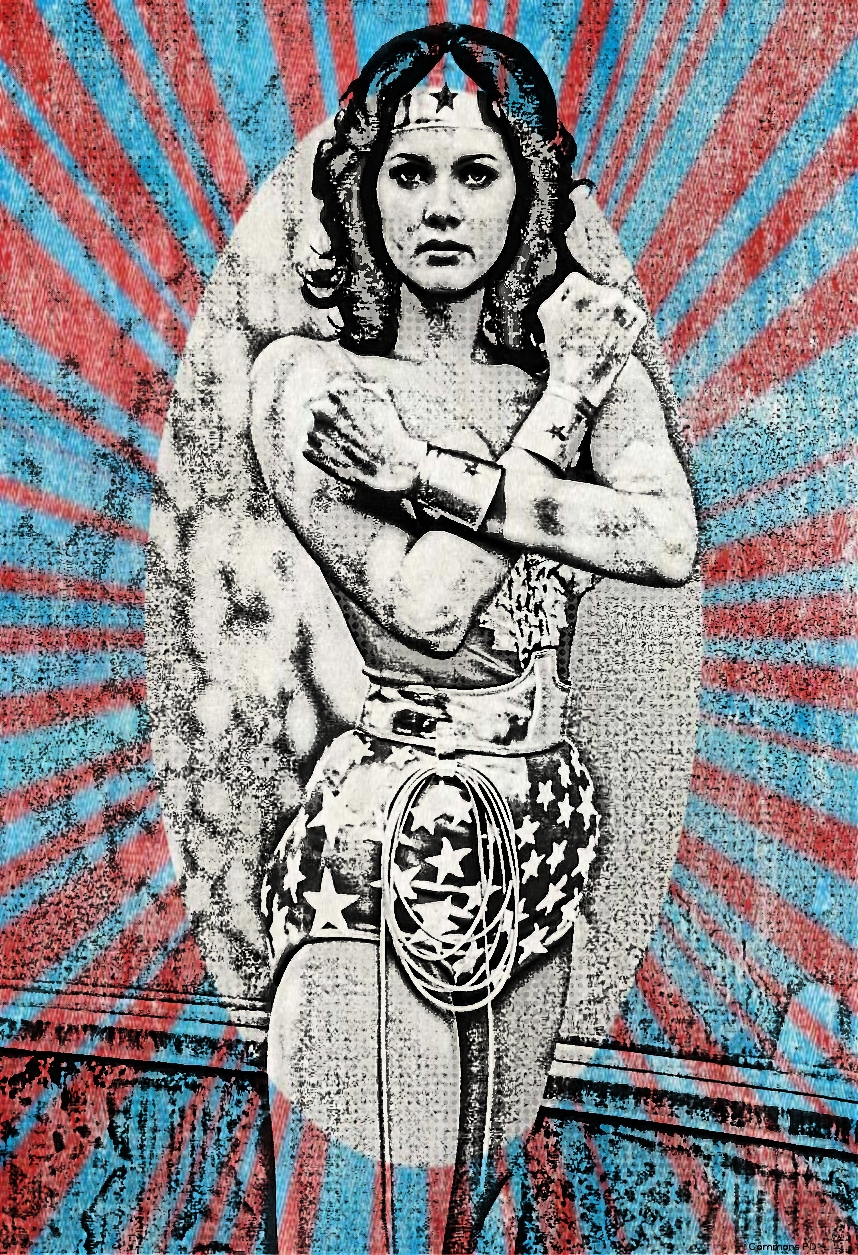
Margaret Crocker: “Earth, Air And Lynda Carter”


Earth, Air And Lynda Carter

I first remember flying.

Flying

with the ceiling’s 70’s popcorn textures
at my cheek.
I could touch it
if I’d only stretched out my hand.

I was a superhero then,
in my first moments of life and memory,
with my Wonder Woman Underoos,
Lasso of Truth
and the bad guy in the background
for seconds,
long particles of seconds,
an eternity of nanoseconds,
in Million Dollar Man slow motion,
with the Bionic Woman smiling at my shoulder.

“Forget Lee Majors,”
she whispers,
“and fuck the Army.
Let’s leave it all behind with our invisible jet.”

And then I land,

Remembering landing for the first time,
as I remember no other landings before now.
The Underoos ruck up to my armpits,
everything explodes,
the house explodes,
sound and sight explode,
the air, Lynda Carter and Lindsay Wagner are sucked from my universe,
the villain is there,
and the ultimate final twist–

That our heroine
could never fly,
after all.

.

About the Author: Margaret Crocker is an artist, writer, wife, mother, daughter, sister and thief. She collects stray animals and has this weird fantasy of being on The Great British Baking Show, despite the fact she uses a bread machine. She knows little but proclaims much. There is much we don’t know about her.


the bleeding horse at sea

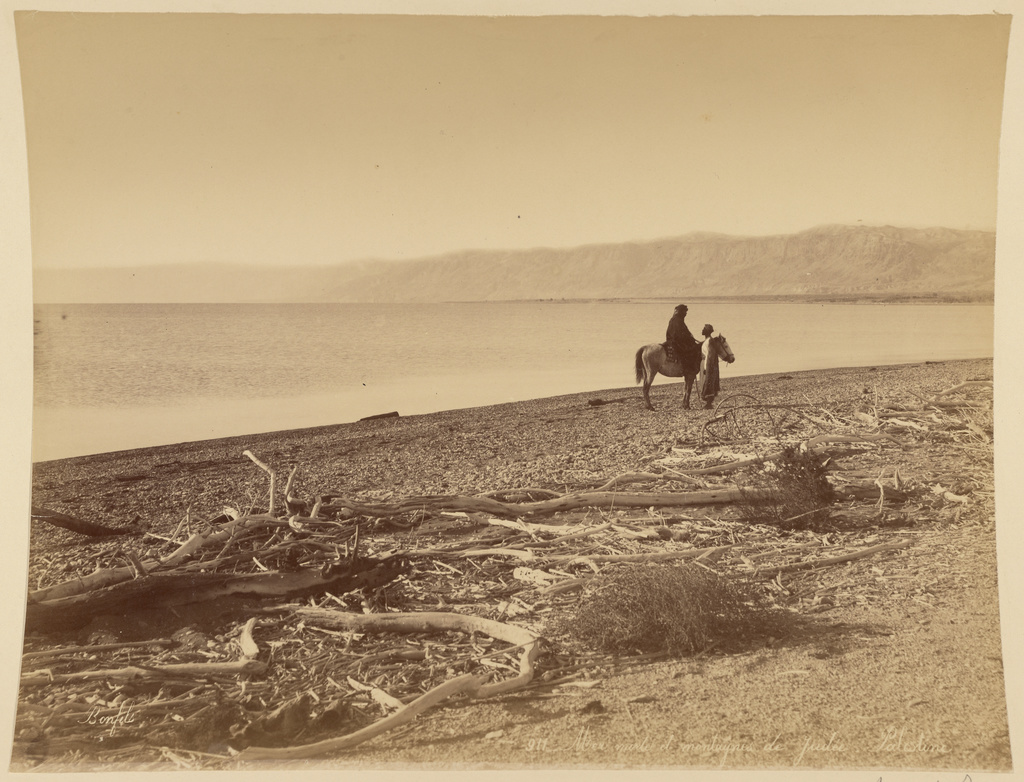
Félix Bonfils “Mer morte et montagnes de Judée” Digital image courtesy of the Getty’s Open Content Program


the bleeding horse at sea

By John Sweet


the bleeding horse at sea

and then it turned out
that the trick was just to
give in to depression, and of course
i felt like a fool for not realizing   
                                 this earlier

i sat there in an empty house
listening to water run down the walls

sat there listening to
the starlings in the attic

thought about my oldest boy

about all of the apologies i owed him

kept wishing i was asleep
until my alarm clock
woke me up the next morning

.

About the Author: john sweet, b 1968, still numbered among the living.  A believer in writing as catharsis. Opposed to all organized religion and political parties.  His latest collections include APPROXIMATE WILDERNESS (2016 Flutter Press), BASTARD FAITH (2017 Scars Publications) and the limited edition HEATHEN TONGUE (2018 Kendra Steiner Editions).  All pertinent facts about his life are buried somewhere in his writing.

All of the Above

“The Bad Book” Unknown Artist, Digital image courtesy of the Getty’s Open Content Program


All of the Above

By Jason Ryberg


All of the Above

A book of poems is
a family photo album
for a spectacularly dysfunctional family,

a scrapbook of newspaper clippings,
wedding announcements, obituaries
and concert ticket stubs,

a file cabinet full of classified documents,
elaborately detailed conspiracy theories
and jealously guarded recipes.

A book of poems is
a jelly jar full of fortune cookie fortunes,

an ancient tome of forbidden knowledge,

a grimoire of (otherwise) benign
spells, hexes, hoodoos and charms.

A book of poems is (at least)
equal parts scrapyard and curio shop,
(bus station at 2am  / country crossroads at midnight),

a shoebox full of old post cards
and love letters,

a rolodex of dead or merely
recommissioned phone numbers
(I’m sorry, who were you looking for?)

A book of poems is an estate sale for a wealthy,
eccentric hoarder who has been missing
and presumed dead for nearly a decade.

an operator’s manual for a machine
that hasn’t been invented yet,

a road atlas for a lost continent.

A book of poems is …

all of the above.

.

About the Author: Jason Ryberg is the author of twelve books of poetry, six screenplays, a few short stories, a box full of folders, notebooks and scraps of paper that could one day be (loosely) construed as a novel, and, a couple of angry  letters to various magazine and newspaper editors. He is currently an artist-in-residence at both The Prospero Institute of Disquieted P/o/e/t/i/c/s and the Osage Arts Community, and is an editor and designer at Spartan Books. His latest collections of poems are Zeus-X-Mechanica (Spartan Press, 2017) and A Secret History of the Nighttime World (39 West Press, 2017). He lives part-time in Kansas City with a rooster named Little Red and a billygoat named Giuseppe and part-time somewhere in the Ozarks, near the Gasconade River, where there are also many strange and wonderful woodland critters.