Tony Gloeggler: “For Mom”

For Mom

The brother who gave me a kidney
for my transplant sent me an email 
telling me not to wear my filthy
Yankee cap to mom’s funeral
out of respect for my mother. 
Mom knew how I felt and we grew 
closer while I helped take care 
of her the nine months before 
she died. Besides, she’d hardly 
notice lying in her closed casket 
and if she did, she’d laugh, shake 
her head and pull me in with her 
for a hug, ask if Judge homered 
in last night’s west coast game 
against the Angels. Jaime was a baby 
when Dad wanted to kick me out 
of the house for hair hanging past 
my shoulders and mom kept yelling, 
over my dead body, until the next door 
neighbors, the ones my other brother 
named The Gruesome’s to rhyme 
with Newsome, threatened to call 
the cops and Dad told them to mind 
their own friggin’ business and forgot 
all about my hair, me. Jaime never 
could guess how much it meant 
that mom kept asking about my writing, 
the only one in the family who read 
my poems and never asked why 
I wrote that or told me not to write
this, sometimes reminding me 
she was the one who taught me 
to read, leaning into her arms, 
my leg in its brace, laid flat across 
the couch when I couldn’t go 
out and play with the other kids 
who sometimes called me names, 
her finger underlining letters, 
pointing out words, making me 
repeat sounds, and though she only 
met Jesse, the severely autistic son 
of the woman I briefly lived with 
three, four, times at holiday dinners, 
she always wanted to know everything 
about him, delighted to hear he spent 
his weekend skiing or climbing on every 
roller coaster, every whirling scary ride 
at the summer fair, not like you Anthony, 
laughing again when I nodded yeah, 
Jesse still loves ripping books into piles 
of thin paper slices, orders chicken fingers, 
French fries extra hot any time we eat out, 
and then she made me promise to take
care of that kid, now a man, good.

About the Author: Tony Gloeggler is a life-long resident of NYC and managed group homes for the mentally challenged for over 40 years. His work has appeared in Rattle, New Ohio Review, Book Of Matches, Chiron Review, Nerve Cowboy. His most recent book, What Kind Of Man with NYQ Books, was a finalist for the 2021 Paterson Poetry Prize and long listed for Jacar Press’ Julie Suk Award.  

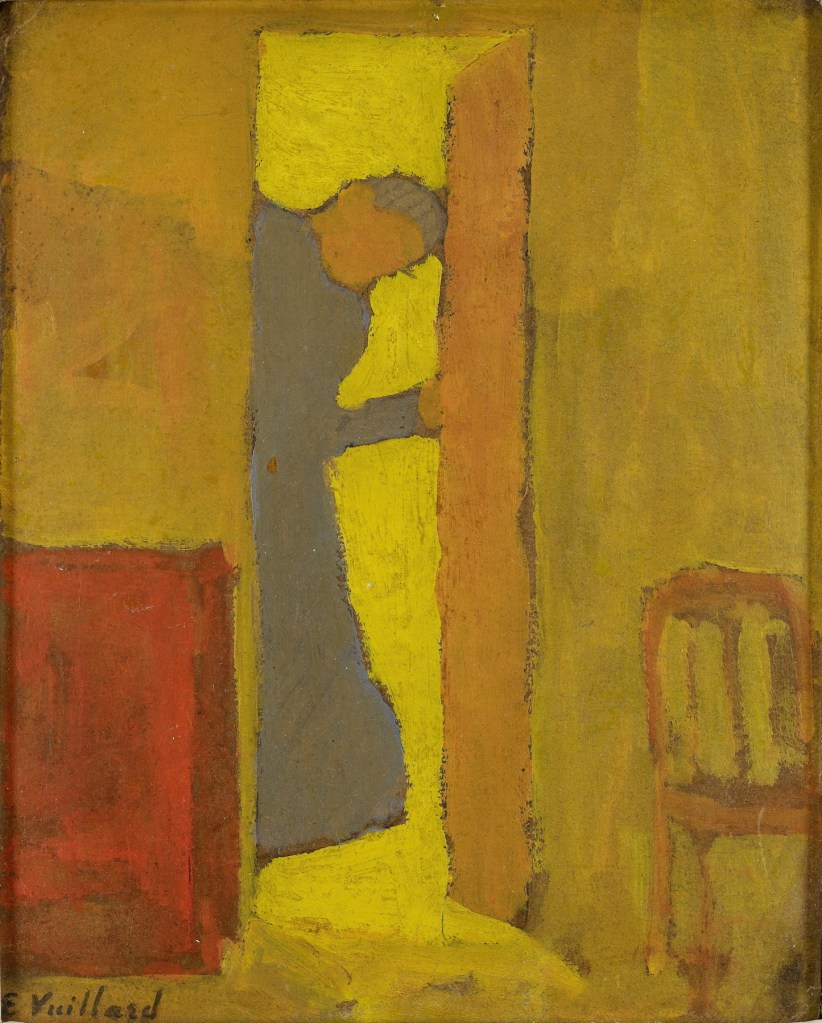
Image Credit: Édouard Vuillard “The Artist’s Mother Opening a Door” (1886) Public domain image courtesy of Artvee.
Susan Cossette: “The Bones Know”

The Bones Know

 
Mama orders beef shank for soup.
I shuffle small feet on the butcher’s sawdust floor,
wishing for that elusive marbled steak.

Gramma Erzebet and I chop carrots and celery
then quarter the parsnips and turnips.

Dolgozz tovább, Zsuzsu.
Keep working, Suzie.

We watch the flesh bubble from the bones
in her cast iron pot and know
we will have supper for days.

Later, the cats lick slick grey bones
tossed on the yellow and green linoleum.

Come May, Mama and I plant pink impatiens by the porch.
Knees pressed into the newly warm earth,
we discover discarded bones of slain birds and mice.

My bones remember every place I go.
Each taste, touch, smell, sight, and sound,
every memory buried in spongy marrow.

About the Author: Susan Cossette lives and writes in Minneapolis, Minnesota. The Author of Peggy Sue Messed Up, she is a recipient of the University of Connecticut’s Wallace Stevens Poetry Prize. A two-time Pushcart Prize nominee, her work has appeared or is forthcoming in Rust and Moth, The New York Quarterly, ONE ART, As it Ought to Be, Anti-Heroin Chic, The Amethyst Review, Crow & Cross Keys, Loch Raven Review, and in the anthologies Fast Fallen Women (Woodhall Press) and Tuesdays at Curley’s (Yuganta Press).

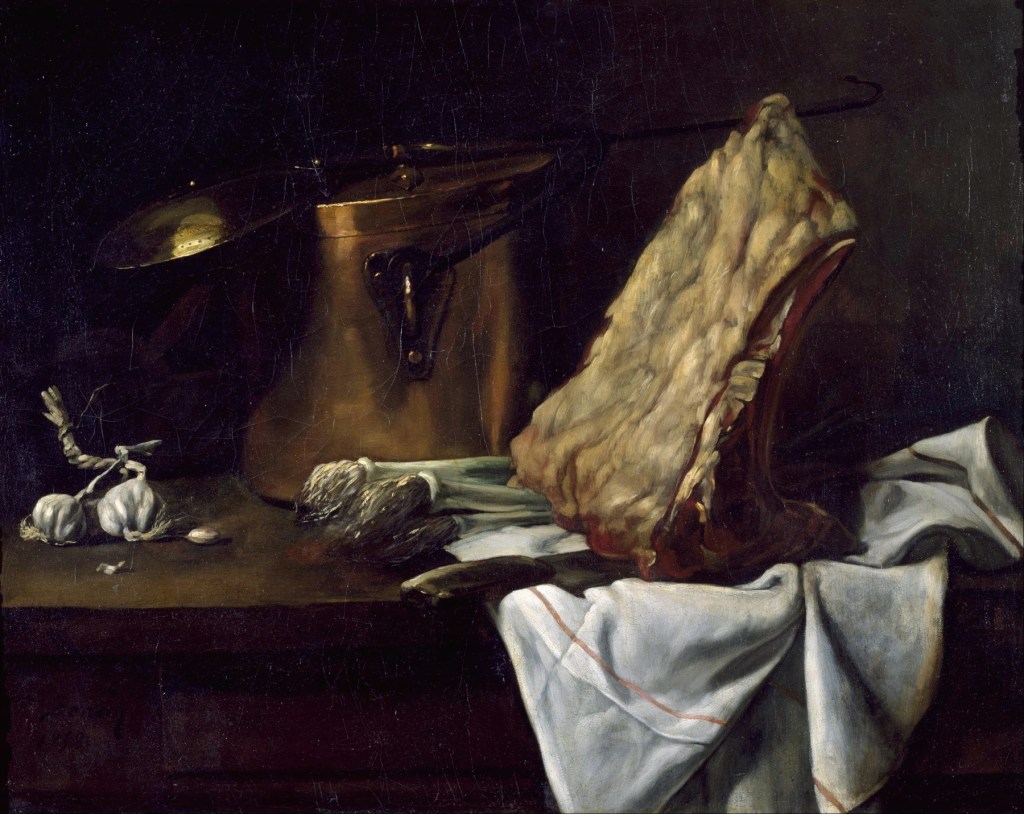
Image Credit: François Bonvin “Still Life” (1858) Public domain image courtesy of Artvee

John Dorsey: “At 45”

At 45

i have no time for rebellion
so i’ll take what comes easily
the sun hanging
over brown grass
like a clenched fist
a broken wine glass
in the sink since february
selling a better story
than any of us
can afford
a wolf spider climbing
a broken down amazon box
like sir edmund hillary
atop some snow covered peak
of desolation & boredom
worn out vinyl
recorded as rain fell on seattle
like the blood of the roman dead
in another lifetime
of raised voices & passionate song
where for a few seconds
we all get to feel young again.


About the Author:
 John Dorsey lived for several years in Toledo, Ohio. He is the author of several collections of poetry, including Teaching the Dead to Sing: The Outlaw’s Prayer (Rose of Sharon Press, 2006), Sodomy is a City in New Jersey (American Mettle Books, 2010), Tombstone Factory, (Epic Rites Press, 2013), Appalachian Frankenstein (GTK Press, 2015) Being the Fire (Tangerine Press, 2016) and Shoot the Messenger (Red Flag Poetry, 2017),Your Daughter’s Country (Blue Horse Press, 2019), Which Way to the River: Selected Poems 2016-2020 (OAC Books, 2020), Afterlife Karaoke (Crisis Chronicles Press, 2021) and Sundown at the Redneck Carnival, (Spartan Press, 2022).. His work has been nominated for the Pushcart Prize, Best of the Net, and the Stanley Hanks Memorial Poetry Prize. He was the winner of the 2019 Terri Award given out at the Poetry Rendezvous. He may be reached at archerevans@yahoo.com.

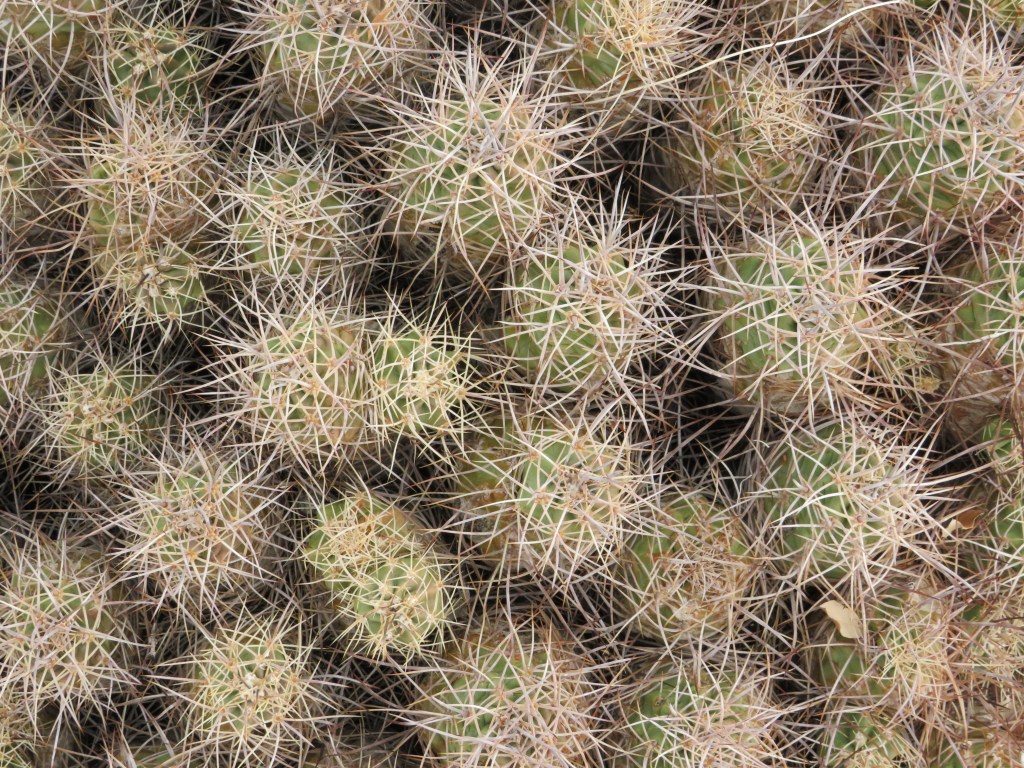
Image Credit: Chase Dimock “Cactus Patch in Joshua Tree” (2021)

Mike James: “Questions and Answers”

About the Author: Mike James makes his home outside Nashville, Tennessee. He has published in numerous magazines, large and small, throughout the country. His poetry collections include: Leftover Distances (Luchador), Parades (Alien Buddha), Jumping Drawbridges in Technicolor (Blue Horse), and Crows in the Jukebox (Bottom Dog.) In April, Red Hawk published his 20th collection, Portable Light: Poems 1991-2021.

Image Credit: Chase Dimock “Malibu Sunset” (2022)

Ruth Bavetta: “A Year Turned Upside Down”

A Year Turned Upside Down

Almost all of fall evaporated
in a flurry of sun. Mayweed’s stars 
immobilized by an embarrassment of heat. 

Come January, gardenias shot into scent,
clivia burst into a conflagration 
of orange. With winter annihilated,

spring spiraled into the disingenuous 
sugar of summer, sage withered, 
chaparral seethed in a flash of flame.

About the Author: Ruth Bavetta’s poems have appeared in North American Review, Nimrod, Rattle, Slant, American Journal of Poetry, and many other journals and anthologies. She likes the light on November afternoons, the music of Stravinsky, the smell of the ocean. She hates pretense, fundamentalism and sauerkraut.

Image Credit: Chase Dimock “California Mayweed” (2022)

Brian Boies “Cod Flashes”

Cod Flashes

Catch and release
but first, after
the flapping stops,
pull a paint-dripping brush
tight down both
sides of its body.
White to teach
a lesson about survival 
to it and
everyone who sees.

Highly visible
through the muck,
it will travel
far south, 
far north
hugging the river’s top ice
until the danger has passed.

I am painted white inside,
my muscles only know taught.
Different doctors say 
this shouldn’t be happening
to someone my age.
Why so wired
and meditation only makes it worse.
I am counting down.

Cod arrives
at its camouflage destination.
Maybe safe
but ghosts are also white.

Three sheets I layer
to cover the ice,
I too have found a home here.

A red fish fibrillates
inside me.
Seize,
unseize.
With a whimper,
arythma.

If the ghost is me,
if the ghost is which part of me,
fish can fellowship
and compare our woes of white.
Maybe the ghost will be only my mind
and haunting is a boast
of finally free.

But before,
we will sleep
me on these stacked sheets,
the cod, bobbing in the current,
exactly below
my meekly knocking heart.

About the Author: Brian Ed Boies lived by train tracks and transcribed train graffiti and used it as prompts.  This poem is from that process. He has been published by the National Endowment of the Arts and in Punk Planet and ZYZZYVA. A story of his was listed as Notable Nonrequired Reading in 2012. He lives in Sacramento with his wife and daughter.

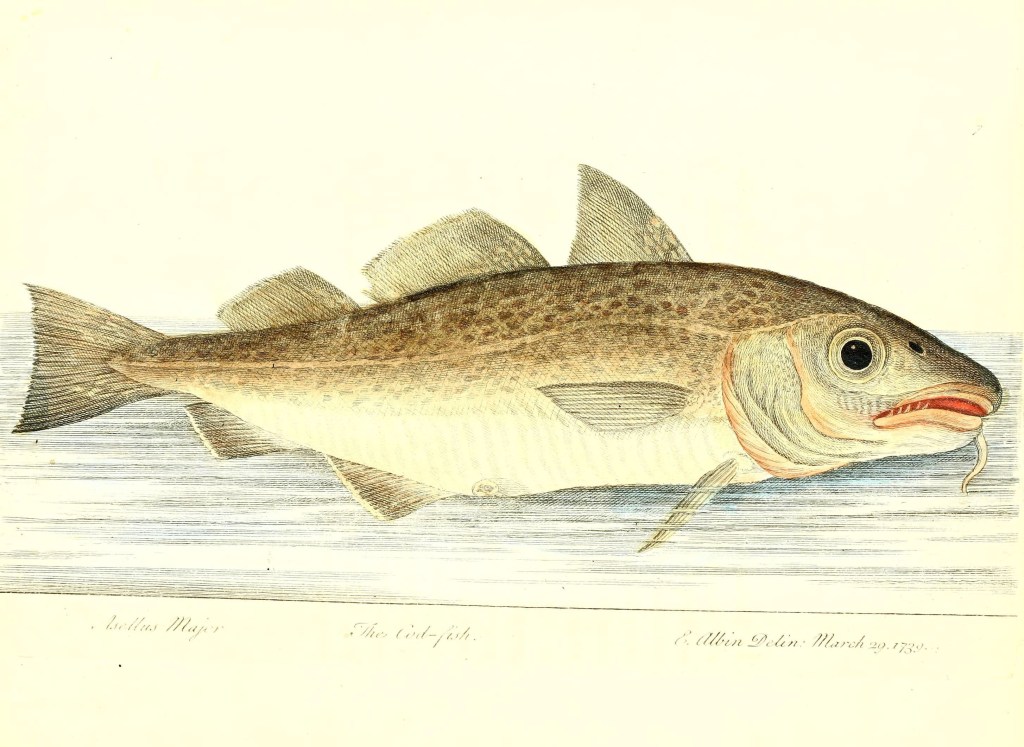
Image Credit: Public Domain image originally from The history of esculent fish London: Printed for Edward Jeffrey [etc.],1794. Courtesy of the Biodiversity Heritage Library.

LB Sedlacek: “Armor”

Armor

A dime
shiny silver
in the pocket
a gold fish
shiny orange
has no memory
a penny
dull brown
by the creek
a tub
shiny metal
full of water
the dime
for emergencies
making a call
the goldfish
for training
to motivate kids
the penny
unused unimportant
left to disappear
the tub
for drowning
whatever is unwanted.

About the Author: LB Sedlacek has had poems and stories appear in “Impspired,” “River Dog,” “Hill Rag,” “Inverse Journal,” and “Iconoclast.”  Her short stories “Sight Unseen”  and “Backwards Wink” were awarded 1st Place Prose prizes in “Branches Literary Magazine.” For 20 years, she published the free resource for poets, “The Poetry Market Ezine.” LB also likes to swim and read.

Image Credit: Public domain image originally from Goldfish breeds and other aquarium fishes, their care and propagation. Philadelphia :Innes & sons (1908) Courtesy of The Biodiversity Heritage Library

Jason Ryberg: “Passion Flowers and Puzzle Boxes”

Passion Flowers and Puzzle Boxes


Scientists and poets alike have yet to find 
whether certain experimental hybridizations 
of radio waves and silver go-go boots in any way
affects the erratic trajectories of UFOs.

Though, they now know that the geometry of fireflies 
may have some influence over the delicate symbiosis 
of communication satellites, train yards 
and Blue Turtle migrations.

However, despite recent controversial reports
there has been no independent confirmation
on whether the random arrangement
of orange blossoms on a city sidewalk, 
slick with rain, has any more relation 
to the performance of a North Korean 
featherweight in the 9th than 
a performance of Beethoven’s 9th
by the South Korean Philharmonic does
to the discovery of designs 
for a steam-driven engine 
written on papyrus.

But, one doesn’t need a steady diet
of coral calcium deposits or subterranean
cold-storage of arcane information
to see that a cracked engine block
is bound, cosmically, 
to a crack-baby found
behind a dumpster in an alley
(alive and doing well we’re told),

that beauty-parlor patter is richly infused
with important information regarding escape artistry,
living in the desert, the number “0” AND, 
stealing household appliances 
(specifically, toaster-ovens, it seems)

and, most importantly, 
that a strangely warm winter-breeze
witnessed stirring a light bulb
hanging on the end of a string
will eventually result in a brilliant idea
unfolding like a passionflower or 
Chinese puzzle box of infinite digression 
somewhere down the integer line 

of an, as yet, undetermined causal chain.

About the Author: Jason Ryberg is the author of eighteen books of poetry, six screenplays, a few short stories, a box full of folders, notebooks and scraps of paper that could one day be (loosely) construed as a novel, and, a couple of angry letters to various magazine and newspaper editors. He is currently an artist-in-residence at both 
The Prospero Institute of Disquieted P/o/e/t/i/c/s and the Osage Arts Community, and is an editor and designer at Spartan Books. His latest collection of poems is The Great American Pyramid Scheme (co-authored with W.E. Leathem, Tim Tarkelly and Mack Thorn, OAC Books, 2022). He lives part-time in Kansas City, MO with a rooster named Little Red and a billygoat named Giuseppe and part-time somewhere in the Ozarks, near the Gasconade River, where there are also many strange and wonderful woodland critters.

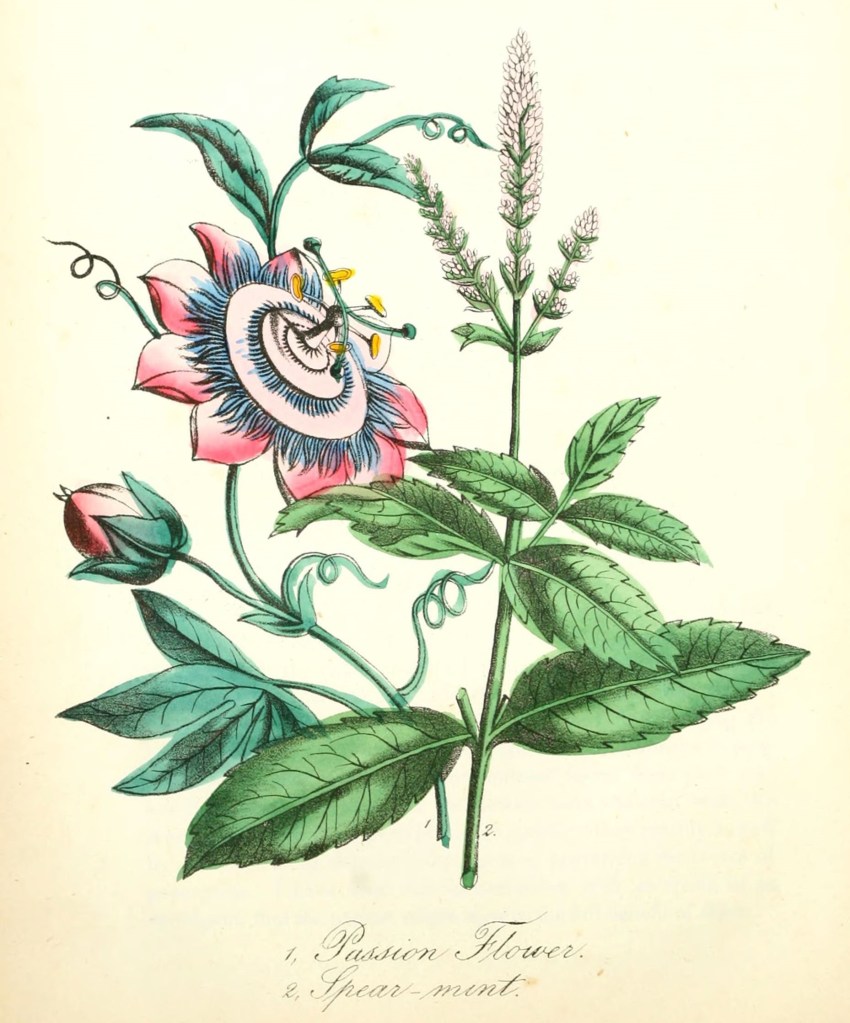
Image Credit: The American flora. v.1 New York :Hull & Spencer,1855. Image courtesy of the Biodiversity Heritage Library

Carolyn Sperry: “Updates from Sour Lake”

Updates from Sour Lake


In Kansas there is still the prairie:
we saw sheep being trucked away
down the interstate, their baby faces white and moony
as they slipped and rattled in the steel.
At a rest stop, birds warbled ancient sets of sounds.
Then, at night, the grassland was so flat
a clear dome of stars went unbroken to the rim of land.

In California the mountains
were hard against the sky, with organic foothills—
rolls and tucks and crotches 
green and stretched out, an ongoing body.

In Arizona we picked through purple and green rocks,
wary of scorpions, looking for gemstones in the sandy soil.
On the way back to the motel with the kidney-shaped pool
we saw someone slam his Jeep into a solid wall of rock. 

We called 911. 
For a split second, I said, I thought there was another road he was going down.
The cop nodded. The man hadn’t made it.   

After a shitty fight in Texas, 
I left myself at a gas station, but we didn't go back.
He* and I stayed together long enough to see a massive sinkhole.
It ate away at the land – it felt like the whole town might disappear.

*He could make the sound of a mourning dove,
breathing through his hands
like they were a flute,
fingers lifting away from each other
for the high notes.

About the Author: Carolyn Sperry is a freelance writer based in Rochester, NY. She has published articles in news outlets across the United States and is a winner of the Gotham Writers Stories Everywhere competition. She lives with her husband and two sons.

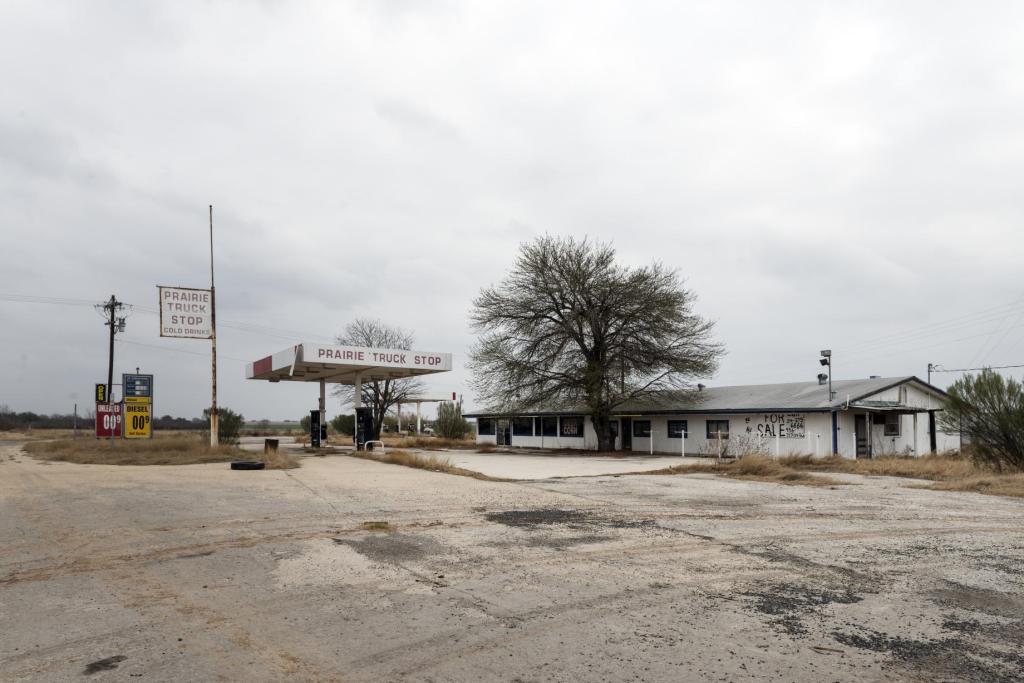
Image Credit: Carol M. Highsmith “The pumps have long been dry at this little truck stop east of the town of Sabinol, Texas” (2014) The Library of Congress (public domain)

M.J. Arcangelini: “Triptych for Clayton”

TRIPTYCH FOR CLAYTON
IN MEMORIUM (Dec. 1954 – May 6, 2022)


1.
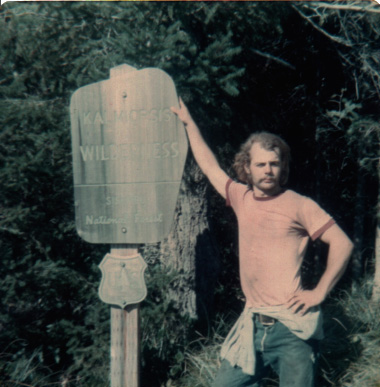
Through a corner of the Kalmiopsis Wilderness 
we hiked around the back of Quail Prairie Mountain,
to where it nuzzles the upper reaches of the Chetco River.
At the spot where Boulder Creek merges with the flow
we set camp on the high bank where water won’t reach
until winter or spring. This was August, 1976,
the river was low, but that didn’t stop us from fishing.
We scoped out the area, built a fire,
cooked dinner, then planned the next day
of basically doing nothing before
falling off to sleep as the moon was rising.

Clay shook me awake, Shhhhh, he said, pointing
down the bank and across the expanse of stones
to the river’s edge. A mama bear and two cubs
were drinking cool water in the bright moonlight,
their tails twitching toward us. He whispered: 
Grab your camera. But I held off, concerned about
frightening them with the flash. Instead we lay there, 
watching in wonder, hoping they wouldn’t notice us.
After a while, they ambled off easy upriver.
We looked at each other, grins filling our faces,
then slid back into sleeping bags and dreams.


2.
It’s not important what argument started the fight,
there we were, rolling around on the kitchen floor,
fists flying. Clay got me on my back, straddled me,
throwing punch after punch. I was fighting just to
fend off his blows while his wife Sue, with
a terrified toddler holding onto one leg, and
balancing a squirming infant in her arms, did 
her best to talk him off of me. Finally she
handed the kids to her friend, and pried us apart. 

We were best friends.

Sue held Clay back while I lay on the floor
crying, poking around at a bloody nose
and what would become a black eye.

With his pummeling abruptly interrupted,
Clay noticed me sobbing. He helped
me up and out to the car. He got me into the
shotgun seat, then produced from the backseat
a fifth of whisky. I’m sorry, he kept saying.
I didn’t mean it. You don’t want to let anyone
see you crying like that though. A man ain’t 
supposed to cry. He drove us around,
up the river and back, until I could stop
shaking and crying. It’s ok if you’re with me, 
but no one else should see you like this.
I’m really sorry, man.  Have another drink.

The next morning we both told people
some bullshit story about the black eye
and after a while folks stopped asking.


3.
Do you trust me? Clayton asked.
Really trust me?
His face 6 or 8 inches from mine,
his eyes reflected the flickering campfire.
He held a bottle of whisky in one hand,
and his empty dinner plate in the other:
I know every inch of these woods.
He pointed with a sweep of his arm,
played here when I was a kid.
I know my way around in the dark.
You believe me?
Yes!
Do you trust me?
Yes!
Then follow me! 
He threw down his plate,
turned and bolted off at a sprint
toward the nearest steep hill. He
shot up into the dark woods like
he’d just set a choker and had to 
get out of the way of the cable.
I jumped and took off before I’d
lose sight of him, he had the whisky.
It was so dark among the trees I had to
follow his rapid footfalls across the
dry forest floor as he ran headlong through
the woods, blindly dodging trees and rocks,
scratching through the underbrush,
avoiding holes and fallen branches.
Me running behind him, just as blind,
amazed that I hadn’t tripped, fallen, or
run into something yet. Then he turned,
headed back downhill and I began to see
the light of the campfire through the trees.
He was waiting for me there, waving 
the bottle around and calling to me to
come get some, telling me I’d earned it.
But when I went for it he yanked it out of 
my hand. I tried again. He held it out of reach.
Our arms were growing tangled and then
we were rolling around on the ground,
laughing, wrestling over the whisky.
Finally he let me have the bottle.
We got up out of the dust and I took
a good, long swig before passing
it back to him and so it went.

We sat, still breathing heavy from the
exertion, passing the bottle back and forth
across the fire blazing between us.

About the Author: M.J. Arcangelini (b.1952 in western Pennsylvania) has resided in northern California since 1979. His work has been published in print magazines, online journals, (including The James White Review, Rusty Truck, The Ekphrastic Review, The Gasconade Review, North of Oxford) & over a dozen anthologies.  The most recent of his six collections are: “A Quiet Ghost,” (2020) and “Pawning My Sins” (2022) both from Luchador Press.