ANKH

Ankh

by Eve Toliman

Anna Akhmatova. Just the sound of your name softly hammering against the roof of my mouth calls me, gently, into order.  Anna Akhmatova. If one such as you once lived then I want to live here too.  From another world in a smoldering time that formed diamond hearts in the crucible of relentless suffering, you spoke me into being.  You left your words dead still on the page that I might find them again, just where you put them.  I return to them shyly.  How do I dare resurrect them, dare even touch them, when I have not known what you suffered?  Yet somehow through the darkness of your time into the bright darkness of mine, your words give me breath, full of the scent of spring and bitter cold iron, like blood on my tongue.  Because of you, I will breathe deeper, and I will risk a little more, your heart in mine, until I take my place beside you under the unknown stones.

ANDREAS ECONOMAKIS

Cockroach. Flickr photograph by Kidicarus222.

COCKROACH

by Andreas Economakis

It’s late summer afternoon, one of those calm afternoons that warms the skin, coating the entire body in a heavy yet soft cocoon.  I’m in a little seaside village in Southern Greece.  Shirts unbuttoned, hairy black forests concealing little golden crosses, the smell of sun-oil and cheap soap permeating the salty air, fresh fish on ice, sizzling under yellow lamps.  Mosquitoes are buzzing around, invisible.

The waiter wafts by, trailing a cloud of stale sweat and fried calamari.  It’s hard work being a waiter in Greece, in the summer, with all the tourists.  Greek tourists are the most demanding of all, never happy and with a chip on their shoulders the size of Mykonos.

I sit alone at a small round blue table on the sidewalk. A small pedestrian road and another sidewalk are the only things separating me from the tranquil sea.  The salt water of the port laps up against the weathered harbor stone, against the sides of small white wooden fishing boats.  The night is dark, the moon barely up.  The water is black.  My back is turned to the black water.

I’m watching soccer on the large TV that the coffee-shop owner has set up at the open window.  Mundial, the World Cup finals.  Every table at the coffee shop is taken, the predominantly male crowd, with their cigarettes and worry beads and ouzo and bottles of Amstel and Heineken and Kaiser beer all staring at the brilliant Philips green of the soccer field.  Disoriented flies hover nearby, confused by the coupling of light and dark, food and exhaustion.  They’re so lethargic you can pick them up with your fingers.

Next to me is a table with three old men, all turned and facing the TV.  They speak with one another, eyes glued to the radiant green grass.  They speak of their lives, of trips on boats, strange harbors, exotic women, greasy sheets, spicy foods.  They must be retired sailors.  Their conversation is pickled with ouzo and beer and olives and cigarettes.  Lots of cigarettes.  One of the men has an American accent.  Not exactly American, just an accent of a Greek who has spent a long time abroad.  Like me.  Too long.  Now he is here, getting drunk with his friends.  Home at last.

The calamari waiter wafts by again and my eyes drift to the sidewalk floor.  A huge cockroach stands (crouches?) motionless a meter or so away from my table, closer to the three old men.  The waiter drifts by again but the cockroach doesn’t budge.  He’s as big as pit bull.  Brave too.  Motionless.  Steely resolve.  I observe, transfixed.  This is an insect god.  Perfect.  Frightening.  The three men are laughing.  Their voices echo in the distance.  The cockroach has absorbed my attention.

Suddenly, the cockroach moves.  Rather… he bolts.  He runs, trickling, fast, determined, to the three old men.  For a moment he pauses by the leg of the American-sounding one.  I can hear my soul cry “WATCH OUT!” but my voice can’t catch up.  Before I can find my speech the roach rushes up the man’s pant leg.  The nimble old man jumps up with lighting speed, overturning the small table.  Ouzo glasses and beer bottles and ashtrays come crashing down, shards everywhere, cigarette butts and black glistening olives floating in dirty frothy pools of beer.  The old man swats his leg, screaming.  Both his friends are doubled over, laughing up a storm.  Heads from everywhere momentarily turn away from the Philips green, enjoying this old man’s frenetic dance.  “Crazy old timer!” “Booze must have gone to his head.” “Too many years on a boat.”  “America!  That’s what happens to you if you stay there too long!”  “Too much ouzo.”  “Can’t mix ouzo and beer, old fella!”

The nimble old man keeps swatting.  Frantic.  The man can dance.  And sing!  The roach drops to the sidewalk and scurries off to a crack in the cement.  Only the old timer and I see this.  Did you see that?” he gasps out loud, pointing toward the crack.  His friends, still doubled over in glee, ask him what happened.  “There was a cockroach in my pants!”  The men double over again.  The calamari waiter crouches nearby and sweeps up the shards.  “Crazy old coot!” he says to himself, his eyes snap-turning to the electric green Philips.  One team has just placed the ball in the opponent’s nets.  The score is 1-0.

–Andreas Economakis

From a collection of stories on Greece entitled: The Greek Paradox.

Copyright © 2010, Andreas Economakis. All rights reserved.

For more stories by Andreas Economakis click on the author’s name below.

This be the Verse


THIS BE THE VERSE

by Philip Larkin

They fuck you up, your mum and dad
They may not mean to, but they do.
They fill you with the faults they had
And add some extra, just for you.

But they were fucked up in their turn
By fools in old-style hats and coats,
Who half the time were soppy-stern
And half at one another’s throats

Man hands on misery to man.
It deepens like a coastal shelf.
Get out as early as you can,
And don’t have any kids yourself.

Philip Larkin

SATURDAY POETRY SERIES PRESENTS: ANTONIO MACHADO

LAST NIGHT, AS I WAS SLEEPING, I DREAMT MARVELOUS ERROR!

by Antonio Machado


Last night, as I was sleeping,
I dreamt — marvelous error! –
that a spring was breaking
out in my heart.
I said: Along which secret aqueduct,
Oh water, are you coming to me,
water of a new life
that I have never drunk?

Last night, as I was sleeping,
I dreamt — marvelous error! –
that I had a beehive
here inside my heart.
And the golden bees
were making white combs
and sweet honey
from my old failures.

Last night, as I was sleeping,
I dreamt — marvelous error! –
that a fiery sun was giving
light inside my heart.
It was fiery because I felt
warmth as from a hearth,
and sun because it gave light
and brought tears to my eyes.

Last night, as I slept,
I dreamt — marvelous error! –
that it was God I had
here inside my heart.


Antonio Machado (1875-1939) was one of Spain’s most esteemed modern poets. He has been referred to as “a poet of time and memory.” Machado was prominent in the Spanish literary movement known as The Generation of ’98. He published a number of works during his lifetime, beginning with Soledades in 1903 and ending with Juan de Mairena in 1936. Machado’s death was related to the Spanish Civil War. When he died, in his pocket was found his last poem, “Estos días azules y este sol de infancia.

Editor’s Note: This poem was a request. If you have a request of your own please feel free to post it as a comment. Of course, I will not post a poem that I do not stand behind. But how can one not stand behind a poem by one of Spain’s greatest modern poets, especially one with such a line as: “And the golden bees were making white combs and sweet honey from my old failures.” I have yet to find poets that blow me away in quite the way that Spanish poets do.

Want to read more by and about Antonio Machado?
Poetry Chaikhana
Famous Poets and Poems
Green Integer

FRIDAY POETRY SERIES PRESENTS: Max Beckmann

Excerpt from “Letters to a Woman Painter”

by Max Beckmann


It is necessary for you, you who now draw near to the motley and tempting realm of art, it is very necessary that you also comprehend how close to danger you are. If you devote yourself to the ascetic life, if you renounce all worldly pleasures, all human things, you may, I suppose, attain a certain concentration; but for the same reason you may also dry up. Now, on the other hand, if you plunge headlong into the arms of passion, you may just as easily burn yourself up! Art, love, and passion are very closely related because everything revolves more or less around knowledge and the enjoyment of beauty in one form or another. And intoxication is beautiful, is it not, my friend?

Have you not sometimes been with me in the deep hollow of the champagne glass where red lobsters crawl around and black waiters serve red rumbas which make the blood course through your veins as if to a wild dance? Where white dresses and black silk stockings nestle themselves close to the forms of young gods amidst orchid blossoms and the clatter of tambourines? Have you never thought that in the hellish heat of intoxication amongst princes, harlots, and gangsters there is the glamour of life? Or have not the wide seas on hot nights let you dream that we were glowing sparks on flying fish far above the sea and the stars? Splendid was your mask of black fire in which your long hair was burning – and you believed, at last, at last, that you held the young god in your arms who would deliver you from poverty and ardent desire!

Then came the other thing – the cold fire, the glory. Never again, you said, never again shall my will be a slave to another. Now I want to be alone, alone with myself and my will to power and to glory…And uneasy you walk alone through your palace of ice. Because you still do not want to give up the world of delusion, that little “point” still burns within you – the other one! And for that reason you are an artist, my poor child! And on you go, walking in dreams like myself…You dream of my own self in you, you mirror of my soul…


Max Beckmann (1884 – 1950) was a German painter, sculptor, printmaker, and writer. Although often described as an Expressionist, Beckmann disagreed with Expressionist aims, finding their tendency to abstraction frustrating. Hundreds of his works were confiscated by Hitler in 1937, and several were featured in the Degenerate Art exhibition produced by the Nazis in an attempt to denigrate Modern art. Driven into exile, Beckmann eventually found himself in the U.S. The above passage is excerpted from a speech he gave at Stephens College in 1948 explaining his approach to art.

Want to read more by and about Max Beckmann?
Wikipedia
Artchive

THE YES MEN

Photograph of a child pumping water in Bhopal, India from a contaminated Union Carbide source.

DOW HIJACKS LIVE EARTH RUN

OR

DO THE YES MEN?

April 19, 2010
FOR IMMEDIATE RELEASE

DOW THROWS A DISMAL PARTY, FEW ATTEND
Underattended “Run for Water” plagued by death scenes, zombies, and dozens of “Dow spokesmen”; truth seems to run free

Video: Yes Men video here; other video here, here, and here
Stills:
Yes Men pictures here; numerous others here
Contact: Whitney Black (803)466-3786;
press@theyesmen.org

Brooklyn, NY — Bucolic Prospect park in Brooklyn, NY played host to a bizarre spectacle on Sunday, as a dramatically under-attended Dow-sponsored “Run for Water” was infiltrated and turned upside down by hundreds of furious activists, including a hundred dressed as Dow spokespeople.

New Yorkers who came to the park expecting a light run followed by a free concert found themselves unwitting extras in a macabre and chaotic scene as runners keeled over dead, Dow-branded grim reapers chased participants, and a hundred fake Dow representatives harangued other protesters and and handed out literature that explained Dow’s greenwashing program in frank detail.

The actions called attention to Dow’s toxic legacy in places like India (the Bhopal Catastrophe), Vietnam (Agent Orange) and Midland Michigan (Dioxin Contamination), and to the absurdity of a company with serious water issues all over the world sponsoring the Live Earth Run For Water.

After race cancellations in London, Milan, Berlin, and Sweden, on-site Dow brand managers were in damage-control mode. But their job was made harder by the hundred fake “Dow” spokespeople who loudly but clumsily proclaimed Dow’s position (“Our race! Our earth!” and “Run for water! Run for your life!”), spoke with many runners, screamed at the other protesters, passed out beautifully-produced literature, and all in all looked a whole lot better than the real Dow reps, who seemed eager to make themselves scarce.

“I don’t know what’s going on here,” said Tracey Von Sloop, a Queens woman who attended the race. “All I know is these people are both crazy, and Dow is f*ing sick. I’m outta here.”

The event was the latest blow to Dow’s greenwashing efforts, the most visible element of which is the “Human Element” multi-media advertising campaign, one of the most expensive, and successful, marketing efforts in recent history. It even won an “Effie Award” for the most effective corporate advertising campaign in North America.

“Effective,” perhaps — but also completely misleading. To name just a few examples of Dow’s water-related issues: Dow refuses to clean up the groundwater in Bhopal, India, site of the largest industrial disaster in human history, committed by Dow’s fully-owned subsidiary, Union Carbide. As a result, children continue to be born there with debilitating birth defects. Dow has also dumped hundreds of millions of pounds of toxic chemical byproducts into wetlands of Louisiana, and has even poisoned its own backyard, leaving record levels of dioxins downriver from its global headquarters in Midland, Michigan.

“We thought it must be a joke when we first heard that Dow Chemical Company was sponsoring a run for clean water,” said Yes Woman Whitney Black. “Sadly, it was not. One of the world’s worst polluters trying to greenwash its image instead of taking responsibility for drinking water and ecosystems it has poisoned around the world? What an awfully unfunny way to start off Earth Week. We decided the event needed a little comic relief.”

Irony was piled on irony throughout the race, which Dow absurdly claimed was going to be “the largest solutions-based initiative aimed at solving the global water crisis in history.” At one point, organizers were caught on tape dramatically throwing out excess water left over because of an embarrassingly low turnout.

Groups organizing the action included the Center for Health, Environment and Justice, the International Campaign for Justice in Bhopal, New York Whale and Dolphin Action League, the Vietnam Agent Orange Relief and Responsibility Campaign, the Wetlands Activism Collective, Global Justice for Animals and the Environment, Kids For A Better Future, The Yes Men, and hundreds of assorted volunteers, activists and mischief makers.

This press release was originally posted on The Yes Men website on 4/19/2010.

For more photographs see Indybay.org.

Against Medical Advice

Human pink ribbon 2005

Against Medical Advice
By John Unger Zussman

A woman I’ll call Bonnie sat in the exam room with her husband, waiting for her oncologist. They held hands without speaking, wearing thin, brave smiles.

(I’ve given Bonnie a pseudonym, and refrained from identifying my relationship to her, out of respect for her privacy. Suffice it to say we are close.)

Three months earlier, after a suspicious mammogram, a biopsy came back positive. Bonnie had a malignant breast tumor.

The diagnosis was a shock to Bonnie, who had no history of cancer in her family. She had to learn to cope with her brand-new reality. But watching someone I love face cancer set off land mines in my brain. My father died from rhabdomyosarcoma at age 35, when I was ten; my sister died of breast cancer at 45. My mother survived breast cancer in her 30s and spindle-cell sarcoma in her 70s, just after my adoptive father (her second husband) was treated for prostate cancer.

So I lived with a sword hanging above my head, expecting that someday I’d have to face that diagnosis myself. Once, my doctor’s office left a message on a Friday asking me to repeat a Hemoccult test. I spent an angst-filled, sleepless weekend convinced I was dying of colon cancer. It turned out that only one of the three samples had read positive—a fairly common occurrence—and the retest came out normal. Still, cancer is my demon, and Bonnie’s cancer let it loose.

The doctors put Bonnie through an exhausting battery of X-rays, MRIs, and CT scans to find out how much it might have spread. Meanwhile Bonnie worked her way through denial, anger, and depression, the first three stages of grief. She scoured the Internet medical sites and joined her local breast cancer support center.

After all the test results were in, her surgeon arranged for her to appear before the tumor board at his hospital, a celebrated university cancer center. First, a group of surgeons and oncologists came in to examine her. “It was strange, sitting there,” Bonnie’s husband said later, “as that parade of medical people took turns feeling her up.” Then she waited while the doctors reviewed her case.

Finally, they met with the hospital’s top breast cancer expert. He presided over the tumor board and was to be her oncologist.

“We’ve reviewed your case,” he told Bonnie, “and we all agree. If your surgery goes as we expect, you’re going to go through six months of hell. But then you’ll be fine.” Although the tumor was small, he explained, it was an aggressive type and might have spread to her lymph nodes. She would probably need radiation followed by chemotherapy.

Bonnie looked at her husband uneasily. She dreaded the thought of radiation and chemo, which had taken a physical and emotional toll on every breast cancer patient she knew.

As Bonnie’s lumpectomy date approached, she moved on to bargaining. Her research said that if her lymph nodes were not affected—that is, if she had stage 1 cancer— she would probably need no chemo, maybe not even radiation. And the less stress she subjected her body to, the better.

Bonnie’s hopes were fulfilled when the surgeon brought good news. She had caught it early. The tumor was small, the surgical margins were clear, and no lymph nodes were affected. Her cancer was only stage 1, and the surgeon was confident he had gotten it all.

Relieved, she settled into acceptance. And now, a few weeks later, she and her husband looked up as her oncologist entered her exam room and sat down. He congratulated her on her successful surgery and her positive test results.

And then he dictated a full course of radiation followed by aggressive chemotherapy.

This wasn’t what Bonnie had bargained for. She questioned him, but he was relentless. He couldn’t be sure that some cancer cells hadn’t escaped or that they wouldn’t metastasize. And that’s what you really want to avoid, he said. When she continued to resist, especially the chemo, he became defensive. “Why are we having this conversation if you’ve already made up your mind?” he demanded. He wasn’t used to mere patients questioning his authority.

Finally, Bonnie asked directly, “What if I go without chemo?”

“It’s risky,” he replied, “I wouldn’t recommend it.”

“What if I skip radiation?”

“I’ll strap you to the table.”

Bonnie doesn’t cotton to being told what to do. “I don’t believe in hell,” she said later. She quickly regressed back to anger—and stayed there.

The first thing she did was fire her oncologist. She couldn’t believe the good results had not altered his treatment plan even a millimeter. “I want a doc who’ll treat me, not my cancer,” she said.

I tried to be supportive, but challenging medical authority is not my nature. I didn’t even know you could fire your oncologist. I wanted her to explore every avenue, use every medical weapon to beat this disease. Foregoing further treatment seemed a great risk, tempting fate, taking a chance with her life. Of all my fears, this was the oldest and most devastating. Bonnie’s cancer unleashed my demons and awakened my nightmares.

Bonnie stepped up her research and sought a second opinion. She also got access to a website, widely used by medical professionals, that estimates the risk of breast cancer relapse and mortality based on characteristics of the patient, her tumor, and potential chemotherapy.

And when she described that research, to my surprise, it was my mind that began to change. Bonnie’s prognosis was good no matter what she did. Radiation would cut the chance of recurrence, but it would have no effect on her survival and might cause long-term heart damage. Chemo would increase her chance of survival by a few percent, but she would be flooding her system with poisons that would cause nausea, hair loss, and the possibility of long-term cognitive and systemic impairment. That made her decision easy: no radiation, no chemo.

Her surgeon, whom she liked and trusted, tried to dissuade her. “What will happen,” he asked, “if the worst happens and you get a recurrence or even a metastasis? How will you feel then? Won’t you regret this?”

“Not for a minute,” she said without hesitation.

We often talk about patients waging a “courageous battle with cancer.” This usually means they try every means available, suffer every side effect, in the attempt to conquer their disease. But it also takes courage to forego treatment—to understand the odds and trust them, to know your own body and what’s best for it, to realize that, for you, the treatment might be worse than the disease.

Most cancer professionals are courageous too, and dedicated. They take their best shot and watch their patients die and then have to come back the next day and do it all again. It’s no wonder that they want to use every possible tool to beat this damn disease.

So they develop a standard treatment and apply it across the board. No doubt this is partly dictated by insurance and liability concerns. “Radiation? Of course you want radiation. It reduces the risk of recurrence by 40% or more.” But when that risk is low to begin with, when it doesn’t increase your chance of survival, and when you add the risks of radiation itself—the choice is far from obvious. Women need the option to make their own decision.

In the end, ironically, it’s not the oncologists’ job to cure cancer. Their job is to treat their patients—and it’s not the same thing.

Twenty-one months later, Bonnie is both healthy and steadfast, without a moment of doubt or regret. The odds are in her favor. I try not to second-guess her, even if I know that disaster might lurk in every screening exam and mammogram, even if just writing these words seems like tempting the gods. It’s her body and her decision, not her doctor’s.

The health care establishment and the breathless media sometimes tout new treatments as medical miracles. But they have risks and cause damage, which have to be weighed against their benefits. I hope to explore this calculus in future posts, and explore what it’s taught me about medicine and the state of our culture. I’ll also describe the ways Bonnie has chosen to manage her risk of recurrence and metastasis. She is not going gentle unto that good night.

Please note that I am not a medical doctor (nor do I play one on TV), so my reflections are meant to be descriptive and not prescriptive. I wouldn’t pretend to tell anyone else what to do. I invite your comments and, especially, your own stories.

Shortly after Bonnie made her decision, she learned that her original oncologist was running a clinical trial with, coincidentally, the same chemo medications he prescribed for Bonnie.

By that time, Bonnie had found a new oncologist. He gives her options, not orders.

Copyright © 2010 by John Unger Zussman. All rights reserved.

Against Medical Advice By John Unger Zussman   A woman I’ll call Bonnie sat in the exam room with her husband, waiting for her oncologist. They held hands without speaking, wearing thin, brave smiles.    (I’ve given Bonnie a pseudonym, and refrained from identifying my relationship to her, out of respect for her privacy. Suffice it to say we are close.)   Three months earlier, after a suspicious mammogram, a biopsy came back positive. Bonnie had a malignant breast tumor.    The diagnosis was a shock to Bonnie, who had no history of cancer in her family. She had to learn to cope with her brand-new reality. But watching someone I love face cancer set off land mines in my brain. My father died from rhabdomyosarcoma at age 35, when I was ten; my sister died of breast cancer at 45. My mother survived breast cancer in her 30s and spindle-cell sarcoma in her 70s, just after my adoptive father (her second husband) was treated for prostate cancer.    So I lived with a sword hanging above my head, expecting that someday I’d have to face that diagnosis myself. Once, my doctor’s office left a message on a Friday asking me to repeat a Hemoccult test. I spent an angst-filled, sleepless weekend convinced I was dying of colon cancer. It turned out that only one of the three samples had read positive—a fairly common occurrence—and the retest came out normal. Still, cancer is my demon, and Bonnie’s cancer empowered it.   The doctors put Bonnie through an exhausting battery of X-rays, MRIs, and CT scans to find out how much it might have spread. Meanwhile Bonnie worked her way through denial, anger, and depression, the first three stages of grief. She scoured the Internet medical sites and joined her local breast cancer support center.   After all the test results were in, her surgeon arranged for her to appear before the tumor board at his hospital, a celebrated university cancer center. First, a group of surgeons and oncologists came in to examine her. “It was strange, sitting there,” Bonnie’s husband said later, “as that parade of medical people took turns feeling her up.” Then she waited while the doctors reviewed her case.   Finally, they met with the hospital’s top breast cancer expert. He presided over the tumor board, and was to be her oncologist.    “We’ve reviewed your case,” he told Bonnie, “and we all agree. If your surgery goes as we expect, you’re going to go through six months of hell. But then you’ll be fine.” Although the tumor was small, he explained, it was an aggressive type and might have spread to her lymph nodes. She would probably need radiation followed by chemotherapy.    Bonnie and looked at her husband uneasily. She dreaded the thought of radiation and chemo, which had taken a physical and emotional toll on every breast cancer patient she knew.    As Bonnie’s lumpectomy date approached, she moved on to bargaining. Her research said that if her lymph nodes were not affected—that is, if she had stage 1 cancer— she would probably need no chemo, maybe not even radiation. And the less stress she subjected her body to, the better.   Bonnie’s hopes were fulfilled when the surgeon brought good news. She had caught it early. The tumor was small, the surgical margins were clear, and no lymph nodes were affected. Her cancer was only stage 1, and the surgeon was confident he had gotten it all.   Relieved, she settled into acceptance. And now, a few weeks later, she and her husband looked up as her oncologist entered her exam room and sat down. He congratulated her on her successful surgery and her positive test results.   And then he dictated a full course of radiation followed by aggressive chemotherapy.    This wasn’t what Bonnie had bargained for. She questioned him, but he was relentless. He couldn’t be sure that some cancer cells hadn’t escaped or that they wouldn’t metastasize. And that’s what you really want to avoid, he said. When she continued to resist, especially the chemo, he became curt. “Why are we having this conversation if you’ve already made up your mind?” he demanded. He wasn’t used to mere patients questioning his authority.   Finally, Bonnie asked directly, “What if I go without chemo?”    “It’s risky,” he replied, “I wouldn’t recommend it.”    “What if I skip radiation?”    “I’ll strap you to the table.”   Bonnie doesn’t cotton to being told what to do. “I don’t believe in hell,” she said later. She quickly regressed back to anger—and stayed there.    The first thing she did was fire her oncologist. She couldn’t believe the good results had not altered his treatment plan even a millimeter. “I want a doc who’ll treat me, not my cancer,” she said.   I tried to be supportive, but challenging medical authority is not my nature. I didn’t even know you could fire your oncologist. I wanted her to explore every avenue, use every medical weapon to beat this disease. Foregoing further treatment seemed a great risk, tempting fate, taking a chance with her life. Of all my fears, this was the oldest and most devastating. Bonnie’s cancer unleashed my demons and awakened my nightmares.   Bonnie stepped up her research and sought a second opinion. She also got access to a website, widely used by medical professionals, that estimates the risk of breast cancer relapse and mortality based on characteristics of the patient, her tumor, and potential chemotherapy.   And when she described that research, to my surprise, it was my mind that began to change. Bonnie’s prognosis was good no matter what she did. Radiation would cut the chance of recurrence, but it would have no effect on her survival and might cause long-term heart damage. Chemo would increase her chance of survival by a few percent, but she would be flooding her system with poisons that would cause nausea, hair loss, and the possibility of long-term cognitive and systemic impairment. That made her decision easy: no radiation, no chemo.    Her surgeon, whom she liked and trusted, tried to dissuade her. “What will happen,” he asked, “if the worst happens and you get a recurrence or even a metastasis? How will you feel then? Won’t you regret this?”   “Not for a minute,” she said without hesitation.    We often talk about patients waging a “courageous battle with cancer.” This usually means they try every means available, suffer every side effect, in the attempt to conquer their disease. But it also takes courage to forego treatment—to understand the odds and trust them, to know your own body and what’s best for it, to realize that, for you, the treatment might be worse than the disease.   Most cancer professionals are courageous too, and dedicated. They take their best shot and watch their patients die and then have to come back the next day and do it all again. It’s no wonder that they want to use every possible tool to beat this damn disease.    So they develop a standard treatment and apply it across the board. No doubt this is partly dictated by insurance and liability concerns. “Radiation? Of course you want radiation. It reduces the risk of recurrence by 40%.” But do the math. When that risk starts at 5%, when radiation reduces that risk (by 40% of 5%) to 3%, when it doesn’t increase your chance of survival, and when you add the risks of radiation itself—the choice is far from obvious. Women need the option to make their own decision.   In the end, ironically, it’s not the oncologists’ job to cure cancer. Their job is to treat their patients—and it’s not the same thing.    Twenty-one months later, Bonnie is both healthy and steadfast, without a moment of doubt or regret. The odds are in her favor. I try not to second-guess her, even if I know that disaster might lurk in every screening exam and mammogram, even if just writing these words seems like tempting fate. It’s her body and her decision, not her doctor’s.    The health care establishment and the breathless media sometimes tout new treatments as medical miracles. But they have risks and they cause damage, which have to be weighed against their benefits. I hope to explore this calculus in future posts, and explore what it’s taught me about medicine and the state of our culture. I’ll also describe the ways Bonnie has chosen to manage her risk of recurrence and metastasis. She is not going gentle unto that good night.   Please note that I am not a medical doctor (nor do I play one on TV), so my reflections are meant to be descriptive and not prescriptive. I wouldn’t pretend to tell anyone else what to do. I invite your comments and, especially, your own stories.   Shortly after Bonnie made her decision, she learned that her original oncologist was running a clinical trial with, coincidentally, the same chemo medications he prescribed for Bonnie.   By that time, Bonnie had found a new oncologist. He gives her options, not orders.

ANDREAS ECONOMAKIS

Harlem Street scene, 1988. Photography by Andreas Economakis.

GRACELAND

by Andreas Economakis

1988. A summer of cut-off shorts, cocaine, drinking, bicycling around Manhattan, dreadlocks and fun.  My girlfriend Marisa and I are hanging out with friends every single night, jumping around bars, ending up in dorm rooms, strange rooms, bathrooms, hunched over mirrors, bankcards and razors clicking the glass, tinfoil and rolled dollar bills powdered white, tongues stinging, noses numb.

Marisa’s pad is up on 139th and Broadway, in a Dominican neighborhood where the music never stops and cars are always triple-parked on the street.  The futile horns of the trapped cars sound in sync with the Latin rhythms blaring out of every window and door, out of every orifice.  Everything seems to fit.  Our bodies are strong and we have no fear.  We’re on top of the world.

Friday night we decide to drop acid and head out to Broadway’s lights.  Broadway is like magic.  It’s the wondrous threshold that pushes us into the high, the avenue that turns it all on like an electrical switch.  I feel great.  Why shouldn’t I?  After all, I finally have a job!  No more Reagan-era scrounging for handouts from friends.  And screw UPS, come to think of it.  Maybe once upon a time I wanted to be a United Parcel Service driver, driving around Manhattan in that big shit-brown truck, in my nappy shit-brown outfit, but no longer.  I even got to drive that shit-brown truck as part of the test.  The examiner told me I was a natural.  Then he handed me a small plastic cup and asked for my piss.  My piss!  They didn’t even have the decency to call and tell me I failed.  But that’s all history.

Starting Monday I’m answering phones in a large law office midtown.  And for $10 an hour!  Easy money, boy, and I don’t even have to wear a tie!  So what if all my co-workers are women in their mid 50’s?  Who cares?  $10 an hour!  And to top it all off, I’ve got a whole weekend to party, lots of weed, a sweet eight-ball, a small sheet of acid and more 24-hour liquor stores than the eye can count.  Marisa’s down to party.  So is Lou.  Tina joins us too.

We burst out of Marisa’s apartment on our bicycles, riding everywhere, the party never ending.  Harlem’s a blur of brownstone, white garlic-covered yucca, colorful crack-vile caps, gutted cars and Run DMC.  The Jersey breeze in our hair, the twinkling lights of Weehawken across black water and then the Village, a neon vinyl wonderland of coin operated candy dispensers and blonde hair over tight, bulging jeans.  Lines and beers and whippets on the old elevated West Side Highway (before they so shamelessly tore it down), buzzing our way cross-town for joints in the warm, dark, narcotic park. Early morning motor-oil sized eggs at the Hudson View Diner under the bridge up on 125th,the old meat market next door an orgy of slaughtered meat and early morning 25-cent hookers in candy-colored spandex over Latin brown skin.

The early Monday sun finds us heading for Marisa’s bed, the Dominicans red-eyed and smiling as we skirt by musical windows and cars, fugitives from a weekend we will never forget but need to leave behind.  The growing twilight is cut by white lines and sucked up through hand-twirled $1 tubes, as Paul Simon sings Graceland on the stereo.  We finally drift off to sleep, horny as fuck but too fucked up to do anything about it.

At some point the alarm goes off and someone slaps it shut.  At ten in the morning Marisa shakes me awake.  I beg her to call the law office for me.  I bury my head under the pillow, a modern day dreadlocked ostrich.  “Uh, he can’t come in,” she says.  I can hear them scream on the other end, through the feathers.  “Um, yeah, he got a job with UPS,” she says.  That was my idea.  We fall back asleep.

When I finally wake up, Marisa is playing Graceland again.  We wander into the kitchen and pour two piping hot Bustelo coffees as speedy little cockroaches run for cover under the humming fridge.  I get dressed and bicycle downtown and get a job as a bike messenger, humming Graceland all the way:

For reasons I cannot explain

There’s some part of me wants to see Graceland,

And I may be obliged to defend

Every love every ending

Or maybe there’s no obligations now,

Maybe I’ve a reason to believe

We all will be received

In Graceland…

I guess I’m just not cut out for offices.

–Andreas Economakis

This piece is part of a collection of stories on blindness entitled: The Blindness of Life.

Copyright © 2010, Andreas Economakis. All rights reserved.

For more stories by Andreas Economakis click on the author’s name below.

“My Father’s Potato Death” by Sean Karns

“Bedrohlich” by Anke Merzbach


MY FATHER’S POTATO DEATH

The Irish weather demands
a black umbrella, but I prefer green
over black. I see green in ways
the morning light comes up over
the green tree divide that separates
the city from green-plastic-
covered potato mounds.

Being a crop inspector is serious
business. There’s been a few cropped
heads because men with hatchets
remember days of potato scares. My father
was on duty protecting the crops,
when I found him headless holding
an umbrella. His death reminds
me of the economics of a potato.
Potato vodka for Russians
or competing with them Idahoans.
Those fancy red rich people potatoes;
all fortified by hatchet men.

I took up the post in honor
of my father, and I will bleed out
the men who steal my potatoes.
I’ll use their blood to fertilize crops.
I will tuck them in a makeshift plastic
greenhouse and plant their heads,
call them head mounds.

I eat fried potatoes in memoriam
of the headless. I fire a twenty-one
potato gun salute into the green
haze released from the potato factory.


Sean Karns‘s work appears in several journals, including Folio, Ninth Letter, and Mayday, where the above poem originally appeared.

SATURDAY POETRY SERIES PRESENTS: FEDERICO GARCIA LORCA


SONG OF THE BARREN ORANGE TREE

by Federico Garcia Lorca


Woodcutter.
Cut my shadow from me.
Free me from the torment
of seeing myself without fruit.

Why was I born among mirrors?
The day walks in circles around me,
and the night copies me
in all its stars.

I want to live without seeing myself.
And I will dream that ants
and thistleburrs are my
leaves and my birds.

Woodcutter.
Cut my shadow from me.
Free me from the torment
of seeing myself without fruit.

“Song of the Barren Orange Tree” by Federico García Lorca, from THE SELECTED POEMS OF FEDERICO GARCÍA LORCA. Translated by W. S. Merwin, copyright © 1955 by New Directions Publishing Corp.

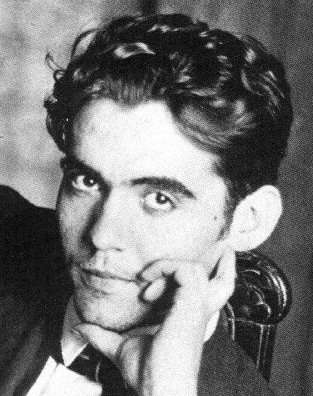
Federico Garcia Lorca (1898-1936) was a Spanish poet, dramatist and theatre director. García Lorca achieved international recognition as an emblematic member of the Generation of ’27. He is thought to be one of the many thousands who were ‘disappeared’ and executed by Nationalists at the beginning of the Spanish Civil War.
(Annotated biography of Federico Garcia Lorca courtesy of Wikipedia.org.)

Editor’s Note: I think few poems have achieved what this poem does. This poem both inspires me to want to be a better poet and intimidates me with its greatness.

Want to read more by and about Federico Garcia Lorca?
Poets.org
The NY Times
Repertorio.org