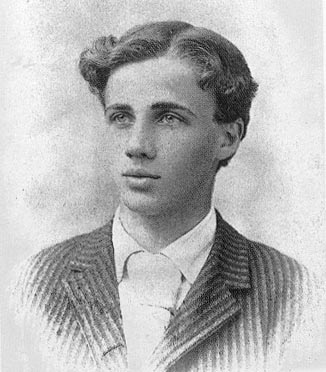
SATURDAY POETRY SERIES PRESENTS: PAUL LEGAULT

MADELEINE AS WHITE COUNTRY
By Paul Legault

At least
you can sleep by
the American names for loneliness:
Iowa, Nebraska, Memphis, like snow
that we had to talk about
when it refused to go away.
Give it names,
names for names’ sake:
ashes, the winter, the white earth.

To build a man up from it
is to want for him
to rid us from what he is made of
by leaving on a horse of snow

into spring, even now.
The land exists. Ruin.
Snow. He will stay.
The patterns of milk, of place

like a fluid, snowmen that know nothing
of competition, of men made
of red and not water,
of blood that keeps through summer.

You may as well make him a home by now
from snow and a wife
of sorts from snow and a mouth,
because they will make a name for themselves
from snow and the means to wait
from ice, from carrots and coal,
their wide language derived from the weather
without a single word for you,
ten for the sea,
nothing for the cold.


(Today’s poem originally appeared in The Madeleine Poems (Omnidawn 2010), and appears here today with permission from the poet.)


Paul Legault was born in Ontario and raised in Tennessee. He holds an M.F.A. in Creative Writing from the University of Virginia and a B.F.A. in Screenwriting from the University of Southern California. He is the author of two books of poetry, The Madeleine Poems (Omnidawn, 2010, winner of the 2009 Omnidawn First/Second Book Award) and The Other Poems which is forthcoming from Fence Books in 2011. He co-founded and co-edits the translation press Telephone Books.

Editor’s Note: I had the pleasure of seeing Paul Legault read last night, for the second time. He did not disappoint. I owe my initial exposure to Mr. Legault to Ms. Lezlie Mayers, editor of this site’s “Friday Poetry Series,” where Mr. Legault first came onto my radar. Since the initial exposure, it’s been nothing but good times had by all.

Of today’s poem I will say only that it is brilliant in its subtle manipulation of language, that you as the reader are being manipulated and you don’t even know it, and that if you do, you are saying “thank you” and asking for more. When I spoke with him at his reading last night, Paul told me that he would be judging me based on the poem I chose to share today, to which I say “bring it on;” I stand enthusiastically by my choice.

For a good read, order a copy of The Madeleine Poems. For a multi-pleasurable experience, pre-order a copy of The Other Poems. You will not be disappointed.

Want to see more by and about Paul Legault?
Paul Legault’s Official Blog
Buy The Madeleine Poems
Bomblog: The Madeleine Poems interview
Pre-Order The Other Poems
Boston Review: Selections from The Other Poems
The Other Poems trailer (youtube)

In Defense of Ambiguity


In his review of Wittgenstein’s Mistress, a seminal experimentalist novel by David Markson, David Foster Wallace describes Markson’s narrative technique as “deep nonsense.” That novel tells the story of a woman who lives alone in a house on a beach, believing, rightly or wrongly, that she is the last human being on Earth. She recounts, presumably as a way of maintaining her sanity, every fact she can remember about Western civilization. But we soon notice that these facts are endlessly repeated, and that every time, a detail or three is changed. Einstein has become Churchill. It is not Proust who is gay, but Joyce. We start to read these “facts” not for the truth of their words, or even their literal sense, but for their incantory quality and for the desperate loneliness they reveal. Though the narrator is unnamed, and though she tells us almost nothing about her previous life or what happened to everyone else, we grow to know her via a sort of metaphorical and emotional through-line that allows continuity of meaning even while shattering the agreed-upon bonds between common signifiers and signifieds. The title of the book is no accident: the woman herself is Wittgenstein’s mistress; she is a speaker of the “private language” that Wittgenstein rejects in his Philosophical Investigations. If language is no longer communal then it means whatever its “author” chooses it to mean. However, the very fact that we are reading and understanding her words actually supports Wittgenstein’s argument: her language is not private after all. And hence the term “deep nonsense” to explain how words that are detached from their original meaning nevertheless manage to communicate.

Deep nonsense is, of course, not nonsense at all. Its sense is simply not the traditional, or superficial, one. This is where the word “deep” comes in. But how does a writer use language to create that sense of depth? How does he avoid mere nonsense? It seems to me that this is what the best surrealist film does; it is the aim and duty of certain poetry; and it is the effect of the lyrics of some of our greatest bands – to achieve a rich and suggestive ambiguity, while avoiding opacity.

***

Music, in particular, can be a great vehicle for deep nonsense. It operates not just on our linguistic sense, but on our auditory sense. As we listen to it, we are often engaged in other activities – driving, cleaning the house, mingling at a party. The lyrics can seep into our brain without too much active analysis. When we are confronted with a poem, on the other hand, we are alone with the words and there is a kind of obligation and challenge to understand them immediately. For this reader at least, the brain often butts up against a wall of inscrutability and grows frustrated. We live in an impatient age; we don’t want to read a poem 20 times. A song on the other hand, can be played over and over without much effort; all that is required is opportunity and time. And slowly a private meaning (which is not the same as a private language) creeps in. It may not be the lyricist’s intended meaning – nor, in fact, did the lyricist necessarily have an intended meaning – but it is the meaning we have made, and there is a joy that is both intellectual and visceral at having unlocked the puzzle’s secrets. Once we have decided on a song’s meaning, it sticks with us, even in the face of overwhelming contradictory evidence. What comes to mind is an episode of the Aaron Sorkin comedy Sports Night, where sports anchor Dan Rydell, convinced of impending trouble, references the song “Hide Your Heart, Girl” by Three Dog Night. When fellow anchor Casey McCall tells him that the “Eli” in the phrase “Eli’s coming” is not an occult symbol of impending doom, but rather an “inveterate womanizer,” Dan replies that he knows, but that that’s the way he interpreted it at first and it has always stuck with him. Like the readers of Wittgenstein’s Mistress, and like the narrator herself, Dan has constructed an alternate meaning behind the literal one.

***

Let’s move to a more specific example of how one listener – this listener – constructs meaning from seemingly nonsensical lyricstuff. Here, in their entirety, are the lyrics to “Soft Pyramids” by a now disbanded postpunk outfit from Washington D.C., Q and Not U. The dashes in Line 1 indicate that the words are spelled out, letter by letter.

S-o-f-t p-y-r-a-m-i-d-s e-v-a-p-o-r-a-t-e at daylight.
Internationally fashioned like d-i-sease.
Patterns, a-l-w-a-y-s yes, maybe no.
This soft is building the softest buildings.
This soft is raising the firmest ceilings.
This soft is dimming the brightest cities every night.
Midnight, midnight.
Midnight, midnight.

How can we ask for a blanket and a habitat?
How can we ask for a place?
We can’t imagine that.
How can we ask for the brightest cities every night?
Midnight, midnight.
Midnight, midnight.

Select a color for your checklist.
Color for your checklist, na na na.
Kiss every comma in your checklist,
Commas in your checklist, na na na.
Ah-ha, commas in your checklist,
commas in your checklist na na na, na na na.
Please pick a color for your checklist,
Color for your checklist, na na na, na na naaaa.

How can we ask for a blanket and a habitat?
How can we ask for the best?
We can’t imagine that.
The softest blackout is soft and black
outside and in.
Clue me in.

We should begin with the title, since that offers a critical legend by which I map the rest of the song. When I hear the phrase “soft pyramids,” one thing comes to mind, and it is not a Salvador Dali painting. I am thinking of the pyramid, with its embedded Eye of Providence, found on the reverse side of the US dollar bill. Money being made of paper, this pyramid is of course “soft.” We also get the connotations of “soft money” and “pyramid schemes,” two capitalist phenomena associated with corruption, greed and the illusory appearance of sturdiness. Line 1 spells out, in a kind of ironic cheer, this impermanence. This is no “Y.M.C.A.”; the singing of individual letters is not meant to celebrate, but to fragment. Without reading the lyrics, it is very difficult to determine what is being spelled. But the last two words are said in their whole: “at daylight,” in other words, under the “harsh light of day.” These soft pyramids will not bear up to real scrutiny.

This idea is further expanded in the Line 4: “this soft is building the softest buildings.” Apart from its nice punning quality, this line is essential to the meaning of the song. “This soft [i.e. – money] is building [structures of impermanence].” The next line is harder to parse, as it seems to contradict the idea of impermanence, but it’s possible that “ceilings” refers to the limits set by capitalism for certain groups. Remember that this is a private meaning I’ve created, mostly by associative accident, and that not every detail has to fit into the schema. In fact, some are flat-out ignored if they can’t immediately be made to cohere. However, this idea of the natural oppressive limits of capitalism is buoyed by the next “stanza” (I use poetic terminology because this song lacks clear verses and choruses).

This stanza asks a series of rhetorical questions, presumably from the point of view of the disenfranchised. “How can we ask for a blanket and a habitat?” is another way of saying, “How can we, the disenfranchised, expect food and shelter in this corrupt system?” This idea of impossible expectations carries into the next line: “How can we ask for the best? We can’t imagine that.” The speaker’s very imaginative capabilities are stunted by a system that has taught him not to ask for too much. The last phrase echoes a phrase in the first stanza: he/they cannot ask for “the brightest cities every night,” the same brightest cities that are “dimmed” by “this soft.”

Now comes the tricky part. For a long time, I chalked the next stanza up to pleasant and nonsensical wordplay. But recently, I’ve come to see them as a critique of another societal superstructure, bureaucracy, and its fetishism of forms and irrelevant details. What could be more irrelevant than the color of a checklist? The idea brings to mind multicolored, triplicate forms. That it is a fetish, and not just a baroque accident, is emphasized in the phrase “kiss every comma in your checklist,” which stresses the punctilious nature of bureaucratic systems while vaguely sexualizing them.

***

So what do we get when we add it all together? For you, perhaps nothing. But for me, we get a critique of the corruption of the capitalist façade, the way it uses “soft pyramids” to erect “soft pyramids,” an endless feedback loop which can be seen as a metaphor for money itself. It only has value insofar as we agree that it does. Like the bureaucracy that manages it, it has a “shared value.” Sound familiar?

I do not know Christopher Richards, guitarist and vocalist for Q and Not U, personally. I have never had the opportunity to ask him what “Soft Pyramids” means to him. Does it even mean anything? Perhaps it is all just witty wordplay and sonic free association. But it is suggestive: I am able to construct from these ambiguous materials a definite meaning. But because the materials are ambiguous, the meaning is not predetermined. It is flexible, variant. And this seems connected to the project of good art: to avoid the overdetermination of meaning while suggesting possible interpretations. There is more than one way to do this. Some art presents a crystal-clear surface that only later yields its ambiguities (the poems of William Carlos Williams might be a good example). Some, like “Soft Pyramids,” operates on the principle of deep nonsense. This art is not willful or disobedient. Rather, it uses language, image or narrative in non-traditional ways, challenging us to not simply interpret, but to reinterpret whole systems of interpretation – to find the shared language in the seemingly private. This strikes me as an endlessly fertile project worth defending.

The Apple / IBM Difference: A Tribute to Steve Jobs

Steve Jobs had the perfect visual for his marketing vision that the Macintosh would be easy to learn and easy to use—a comparison of instruction manuals vs. the IBM PC. Unfortunately this frustrated Apple's technical writers who, try as they might, could not fully explain how to use a Mac in Jobs's target page count. Ultimately, Jobs won out; this print ad appeared in 1984 in a Newsweek spread, and a TV commercial soon followed. Photo credit: macmothership.com.

I never knew Steve Jobs, but I almost worked for him twice. I interviewed for a technical writer position at Apple in 1980, and for the director of documentation role at NeXT in 1993.

In truth, I was both sorry and thankful that I didn’t end up with those jobs. Jobs was a true visionary, and he inspired great loyalty, but he also had a fearsome reputation as a manager. As two early Apple employees told me years ago, “I don’t know anyone who worked for Jobs who didn’t have a strong love/hate relationship with him.”

Still, I had many friends at Apple, and got to observe the company closely as a freelance computer journalist, notably as a contributing editor and regular columnist for InfoWorld in 1981–83 and for A+ Magazine in 1984–85. A+ was an independent Ziff-Davis publication devoted to covering Apple news, products, and culture. My bimonthly column was called “Electronic Brainstorming.”

Although there have been many tributes and eulogies published in the week since Steve Jobs’s death, most have focused on his transformation of Apple after returning to the company in 1997. I thought it might be illuminating to revisit the Apple of the mid-eighties, when Jobs was a brash, young C.E.O. whose early meteoric success was threatened by the market entry of the industry’s most fearsome competitor, IBM, and the concurrent rise of Microsoft. I republish this essay from 1984—a few months after the first Macintosh shipped—as a tribute to a man who, in the end, turned out to be both brilliant and smart.

Readers who weren’t around at the time will find references to inexplicable concepts like computer stores, typewriters, secretaries, MS-DOS (this was even before Windows), CP/M, 1-2-3, floppy disks, Apple computers before Macintosh (Apple II, III, and Lisa), and a raft of prominent computer and software companies that ceased to exist long ago. These were the days when 256K—K, not M—was a lot of memory. If you’re curious … ask your parents.

The Apple / IBM Difference
By John Unger Zussman
from A+ Magazine, May 1984

A war’s going on between Apple and IBM, and it’s not just a war of competing products. It’s a war of competing approaches, styles, and philosophies. The outcome may well determine the type of computers we’ll be using ten years from now—and how we’ll buy them and how much they’ll cost.

The differences between the two companies are apparent as soon as you enter their respective corporate offices. At Apple’s headquarters in Cupertino, California, there’s an Apple—sometimes two—on every desk. In addition, all employees get an Apple to take home on indefinite loan. Once employees have been with the company for a year, the Apple is theirs to keep.

Conditions are different at IBM’s Entry Systems division in Boca Raton, Florida, where the Personal Computer is made. As InfoWorld columnist Doug Clapp recently observed, Apple managers have computers; IBM managers have secretaries. The secretaries, in turn, have Selectric typewriters, not PCs. “I don’t believe that small computers are as pervasive, or as effective, at IBM as they are at Apple,” commented Clapp.

It’s a long-standing tradition in the microcomputer industry for the cobbler’s kids to go barefoot. Since start-up companies typically have little money, any equipment generally goes to the technical staff. Managers and clerks make do with manual systems—an arrangement that often continues, through sheer inertia, well past the early financial crises.

Still, IBM is hardly a start-up. It’s difficult to believe the company couldn’t put a PC on every employee’s desk if it wanted to. The fact is, even at Entry Systems, IBMers seem more oriented toward selling personal computers than toward using them. They work on micros; Apple people work with them. To IBM, personal computing is a business. To Apple, it’s a passion; the business aspect is almost a sideline.

How Did We Get Into This Mess?

Both companies entered the personal-computer business reluctantly, although they came from vastly different directions. Apple founders Steve Jobs and Steve Wozniak built their first computer, in that legendary garage, for their own amusement. They were surprised when their friends and fellow tinkerers also wanted computers; but, finally convinced, they set out to build a computer that others could use. The result, the venerable Apple II, still sells strongly going into its eighth year, in an industry where a five-year product life span is enviable.

IBM initially spurned the micro market, clinging to its mainframe and minicomputer product lines until it could no longer deny the reality of the personal-computer revolution. Ironically, the success of products like the Apple II compelled IBM to take notice. Once persuaded, IBM devoted its efficient, methodical, calculated approach—and its abundant resources—to developing a personal computer.

The result, the IBM PC, is a masterpiece of market and industry positioning, more than of technological sophistication. In fact, its engineering is notably conservative. The PC used mature, tried-and-true technology that other companies had already surpassed. But the PC matches precisely the needs of its intended market—corporate managers and operators of small businesses.

Moreover, for the first time in IBM’s history, the engineering was open. IBM included five expansion slots in the PC and published detailed technical specifications. Independent companies had no trouble developing PC-compatible hardware and software.

It’s significant that IBM’s technology has consistently lagged behind that of these third-party vendors. For example, the independents offered double-sided disk drives, hard disks, and color monitors for the PC long before they were available from IBM. Similarly, within three weeks of IBM’s announcement of the PCjr, two companies announced enhanced PCjr keyboards.

What IBM has built is less a computer than a bandwagon. It has made up for its late entry to actively fostering a market movement. In other words, IBM engineers have developed products that others want to use.

Apple engineers, in contrast, have developed products they want to use. They’ve relied on being brilliant—which is both Apple’s great strength and its great weakness. Apple’s major products to date—the Apple II, and Lisa, and the Macintosh—are bold, innovative, and technically advanced, almost experimental.

Apple’s engineers, trusting their own instincts, have occasionally guessed wrong. For example, Apple made several efforts to develop its own disk drives for the Lisa and Macintosh. It finally abandoned the project and customized a Sony drive instead.

Most often, Apple’s instincts have been right on target, though. That’s why the Apple II has lasted so long and why the Lisa and the Macintosh have received so much acclaim. It’s instructive that the Apple III—the only product Apple designed for others—is its least successful product.

Apple, designing for itself, tries to find its own engineering solutions to all foreseeable problems. For example, it has actively developed its own proprietary operating systems, starting with Apple DOS for the Apple II. Even when Apple supported industry-standard system options, such as UNIX on Lisa, it published a long list of suggested programming rules for interaction between programmers and users.

Brilliant vs. Smart

While Apple was busy being brilliant, IBM was busy being smart. IBM initially offered three standard operating systems (MS-DOS, CP/M, and the p-System) and recently announced a fourth (UNIX). IBM lets the market make the choices and the improvements.

Here is another example. Apple has tried to maintain absolute control over its computers. It has curtailed mail-order distribution channels, patented its technology, and actively prosecuted manufacturers of Apple-compatible machines. So far, IBM has taken no action against the PC-compatibles. In fact, by registering no patents and publishing its specifications, IBM has encouraged imitation.

These actions have made Apple somewhat of an innovative loner, an image the company is promoting in its recent advertising campaigns. In one TV commercial, an Apple user is working alone in a cavernous room ahead of (but also isolated from) a crowded roomful of other computer users. In another ad, a manager has clearly spent all night at the office, working alone with his Lisa computer. He calls home with an exhausted smile to report he’ll be back for breakfast.

Apple obviously wants to appeal to people who fit its corporate image—young (baby-boom generation), innovative, and independent. Apple users, the ads suggest, are loners too—they demand brilliance and aren’t content to use technology that isn’t thoroughly up to date.

But brilliance isn’t always smart. Consultants Barbara and John McMullen recently observed computer stores that carried both the Lisa and the PC. “Invariably there is a much larger crowd around Lisas that around PCs,” they reported, “yet the stores always sell more PCs than Lisas.”

Apple has recently shown encouraging signs that it is conscious of industry standards. It has dropped the price of the Lisa dramatically, increased its emphasis of UNIX on the Lisa, and announced support for Rana Systems’ innovative new 8086/2, which gives IBM PC compatibility to the Apple. These decisions may not be brilliant, but they are smart.

Take the Rana expansion option, for example. It contains an Intel 8086 co-processor, 256K bytes of memory, and two floppy-disk drives. All together, they allow an Apple II or IIe to run MS-DOS, the most popular PC operating system. Shortly after Apple blessed the 8086/2, Lotus Development Corporation announced a version of its integrated application program, 1-2-3—by far the best-selling PC software package—to run on Apples equipped with the Rana option. Score one for Apple.

The Macintosh, on the other hand, is unabashedly brilliant, even revolutionary. It’s also built from the ground up and ignores virtually every established standard in the business: no color, no cursor keys, no expansion slots, small disk drive, yet another proprietary operating system. “Who cares?” asks Apple. “These are the standards that have alienated millions of potential computer users.” A good point.

Apple means to set a whole new standard, to steal the standard-setting business away from the IBM PC (which stole it, in turn, from the Apple II). Is this brilliant? Of course. Is it smart? I don’t know. It’s risky. If it works, it’s smart.

Last year, every software company I know of had boarded the IBM bandwagon. All my programmer friends were working feverishly at their PCs, leaving their dusty Apples in the corner. Even software developers such as Mitch Kapor (Lotus), Dan Bricklin (Software Arts), and Fred Gibbons (Software Publishing), who’d made their first million on the Apple, seemed intent on making their second on the IBM PC.

Now they’re writing for the Macintosh. But they’ve still got one hand on the PC.

In the mainframe world, a long-standing joke had it that the market consisted of Snow White (IBM) and the seven dwarfs (Burroughs, Honeywell, NCR, Univac, RCA, General Electric, and Control Data). (This was an old joke—way before Apple, even before DEC.) If Apple abandons its brilliance and becomes merely smart, it will surely be destined for dwarfdom.

Conversely, should Apple continue to be brilliant but not smart, it might not survive at all. That would be a shame. We need an Apple that’s both brilliant and smart to keep IBM from dominating the industry and slowing the pace.

Copyright © 2011, John Unger Zussman, and copyright © 1984, Ziff-Davis Publishing. All rights reserved.

SATURDAY POETRY SERIES PRESENTS: JOHNATHON WILLIAMS

By Johnathon Williams:

ANNIVERSARY SONNET

We fought all night, all morning, so I treat
myself to breakfast down at Common Grounds,
a Fayetteville thing to do. A regular pounds
the dregs of a Bloody Mary, and the heat
at 10 is already too much. It’s all
too much: the water bill, my promises,
her steady, undefeatable love. She says
no change can fault the way she feels or call

to question time — now thirteen years. But time
is the whole problem, its relentless march
away from that high school lunchroom, the boy
taunting the poor retarded kid in line
and her calling him out. Jesus, the arch
of her back. Her fists and hair. My shame and joy.


SOLILOQUY TO THE PEEPHOLE OF APARTMENT 9
         with lines from Ovid and Goethe

The night is slipping away. Throw back the bolt.
I’ve no excuse, no right, no hope to soothe
these midnight consternations. Yes, I’m married:
She’s sleeping six doors down — you met last Tuesday.
You borrowed our detergent in the laundry.
And when she left to lay the baby down,
you and I, we sat, not talking not moving
our breath alone to meter that conspicuous
lack of manners and the half-inch remove
of your arm from mine. I’m sorry. I know
I shouldn’t be here, but you were reading Goethe
(Goethe in a laundry mat, who does that?)
so I’ve come to say I do not know myself
and God forbid I should
, I’ve come to say
a useless life is an early death, I’ve come
to say this morning I went for a run
around the lake. It was still dark. And mist
swallowed my whole life every dozen paces.
Have you ever done such a thing? Have you
watched your own breath condense, take shape, then clear,
rejoiced in that unleavened vanishing?
You’re thinking man is made by his belief,
thinking love can do much but duty more,
thinking how long you leaned your knee on mine.
The night is slipping away. And Goethe dead.
The night is slipping away. Throw back the bolt.


(Today’s poems previously appeared in The Offending Adam, and appear here today with permission from the poet.)


Johnathon Williams works as a writer and web developer from his home in Fayetteville, Arkansas. He’s a founding editor of the online magazine Linebreak and the co-editor of Two Weeks, a digital anthology of contemporary poetry.

Editor’s Note: Every now and then, as a reader, you simply fall in love with a poem at first encounter. Today’s poems had me at word one. Is it their effortless way of manipulating and conveying narrative? Is it that they speak to those shameful hidden human thoughts, urges, and actions that haunt many—if not all—of us? Or is it those instances of language that still the world for a moment? “the water bill, my promises, her steady, undefeatable love” “Jesus, the arch of her back. Her fists and hair. My shame and joy.” With love at first sight, the answers are not important. You may simply indulge.

Want to see more by and about Johnathon Williams?
The Morning News – Poem, “Leveling Up”
The Morning News – Article, “A Taste for Flesh”
Pebble Lake Review, “Conversations With Imaginary Women”
Pebble Lake Review, “Dirge”
The Rumpus, “Single Lane Bridge”
Unsplendid, “Sapphics for a Dead Porn Star”

SATURDAY POETRY SERIES PRESENTS: ROBERT FROST

THE ROAD NOT TAKEN
by Robert Frost

Two roads diverged in a yellow wood,
And sorry I could not travel both
And be one traveler, long I stood
And looked down one as far as I could
To where it bent in the undergrowth;

Then took the other, as just as fair,
And having perhaps the better claim,
Because it was grassy and wanted wear;
Though as for that the passing there
Had worn them really about the same,

And both that morning equally lay
In leaves no step had trodden black.
Oh, I kept the first for another day!
Yet knowing how way leads on to way,
I doubted if I should ever come back.

I shall be telling this with a sigh
Somewhere ages and ages hence:
Two roads diverged in a wood, and I—
I took the one less travelled by,
And that has made all the difference.


(This work is in the public domain in the United States because it was published before January 1, 1923.)


Robert Frost (March 26, 1874 – January 29, 1963) was an American poet. He is highly regarded for his realistic depictions of rural life and his command of American colloquial speech. His work frequently employed settings from rural life in New England in the early twentieth century, using them to examine complex social and philosophical themes. A popular and often-quoted poet, Frost was honored frequently during his lifetime, receiving four Pulitzer Prizes for Poetry. (Annotated biography of Robert Frost courtesy of Wikipedia.)

Editor’s Note: Every once in a while it’s good to look back to the traditions and literary greats that are the roots of modern American poetry. Today is one of those days.

A class I TA for recently did a close reading of today’s poem. It was one of the best close reading experiences I’ve engaged in to date, and it inspired today’s post.

We began with the reading the poem appears to offer on its face, the idea that choosing the road less traveled in life is the better choice. On a second reading, and after hearing the poem read aloud by Frost, students offered that the poem has a tone of regret. Finally, after much debate, the class reached a consensus that the speaker in the poem is looking toward an unknown future, knowing only that one day he’ll see the choice he made in taking one path over the other as the choice that made all the difference in his life.

I see genius in the very fact that a reader might garner one meaning on a cursory reading, that the poem might then inspire debate among readers, and that, in the end, the group might conclude that the poem was always meant to be open to multiple interpretations. After all, when we look into our own future and contemplate what we’ll one day say when recalling our past, what do we really know at all?

Want to see more by and about Robert Frost?
Hear “The Road Not Taken” Read Aloud by Robert Frost
Poets.org
The Poetry Foundation
Famous Poets and Poems

Landscape’s Influence: An Interview with Kathy Fagan

Landscape’s Influence: An Interview with Kathy Fagan

by Sean Karns

Kathy Fagan is the author of four books of poems: The Raft (Dutton, 1985), a National Poetry Series selection; Moving & St Rage (Univ. of North Texas Press, 1999), winner of the Vassar Miller Prize for Poetry; The Charm (Zoo Press, 2002), and Lip (Eastern Washington Univ. Press, 2009). She is a professor of English at Ohio State University, where she co-edits The Journal.

Sean Karns: How has moving to the Midwest changed your perspective? And how has it influenced your poetry?

Kathy Fagan: I lived many places growing up and going to school, so it wasn’t a shock to move to the Midwest. I grew used to reserving judgment, and just went where I had to go for my family or for my education and, later, for my own jobs. What was shocking were the circumstances under which I was suddenly, being fully employed, able to live when I moved to central Ohio. In a house, for example. A large 130-year-old former farmhouse, a house that was in many ways the house I wished I’d grown up in. And the house was in a small town north of Columbus, which was also, for me, a native New Yorker, enormously weird and appealing. I got to playhouse really, attending the neighborhood movie theater for a couple bucks a show, eating in the neighborhood burger and beer joint for cheap, going to the county fair, etc. I lived in that house for sixteen years, longer than I’ve ever lived anywhere. I wrote about it in the new book, Lip, in a poem called “Nostophobia.” I love that house as if it were a person, and when I left it I knew I could never go back. Maybe that’s one way that the Midwest has changed my perspective: the land is flat, you can see the horizon everywhere. I’ve become someone for whom a tree or a hill or a house can be seen as a singular significant entity. Anything of beauty can flare up and throttle you: a cardinal in snow, sycamore trees in sunlight, a redbud in bloom, a child in her father’s arms. They’re all set off in high relief in the Midwest. Likewise, I look to poems, and to my own poems in particular, for something decidedly unflat: music, energetic syntax, images that radiate outward, creating light and shadow and color; I try to shape lines that will make a composition vivid, to use language that allows for emotional complexity and permits aural/oral pleasures simultaneously. Maybe I’d require all that of poems if I lived in Hawaii or Paris instead of here, but I don’t think I’m overstating landscape’s influence on one’s work and life.

SK: Do you think that the Midwest has a distinct aesthetic?

KF: I don’t have any freakin’ idea. I’ve lived here for nearly twenty years and I’m still surprised every day by it. What I think is that, on the one hand, the Midwest is one of the least provincial places I’ve ever lived. I think it’s a good place to make art—or to be a reader or writer or stilt-dancer or whatever—because nobody cares, and if they do they don’t mention it. I’ve never met people who keep to themselves as much as Midwesterners do. There’s a national perception that the Midwest is a place where it’s still the 1950s, that people go to church on Sundays and vote Republican and drive American-made cars and have abysmal eating habits; there’s some truth to that. But I have also met the most progressive and eccentric and creative people in Ohio and the Midwest, people who lead interesting lives, people who work hard and live fruitfully.

All that said, I’m not sure there is, beyond the Protestant plainness and simplicity one sees in the buildings and homes of Midwestern cities and towns, an aesthetic. I think most Midwesterners would scoff at the notion of aesthetics. It used to pain me that Columbus, for instance, wasn’t more forward-thinking about saving its landmarks and historical sites. It worries me that we don’t have a lightrail, that we build shit-malls and shit-houses where there once were natural habitats for deer and owls. There’s plenty that’s butt-ugly around here, but I’ve seen butt-ugly everywhere. We live in a climate of disposability, in this country and others, and in a disposable society the word “aesthetic,” if it exists at all, is an extremely fluid word at best, corrupt at worst. The Midwest has a little bit of an inferiority complex, I think. I think it feels insecure. When it quits feeling second- or third-best, and I think it is, slowly, doing that, it will flourish as a green, intellectual, and artistic part of the country. For my part, I see incredibly diverse work being written across the Midwest, by natives and non-natives alike. It would feel wrong to try to group that work under the heading of a single controlling aesthetic or sensibility.

SK: How would you characterize your poetry?

KF: I don’t characterize my poetry. I don’t subscribe to schools or categories or movements. I love to read poems that wake me to something in myself. I hope I write that kind of poem for other readers.

SK: Do you find any pattern ideas recurring in your poetry?

KF: I see patterns of thought and image echoed and expanded on in the poems, if not actual ideas. And some poetic obsessions or fetishes recur, of course. In the new book, Lip, I extend my ongoing work with persona, which I’ve been interested in for over twenty-five years. Maybe it’s the frustrated novelist in me, maybe it’s the fact that a single point of view never satisfies me, maybe it’s a love of voice, of many voices, that continues to motivate me to find those poems to write. I think, looking over the past four books and now into the fifth, that persona and structure, the voice speaking the poem and the vessel in which the spoken word is delivered, are absolutely central to my project, so if that’s the kind of pattern you’re talking about, well then, it’s there in spades. Making a song of a poem is more important to me than making a story. I wish for the music and texture of the language to say as much as the sentences do. And I do so love sentences and all they’re capable of, but I love the line even more. Littler fetishes of mine include the alphabet, the dictionary, the Bible, the saints, field guides, graveyards, a handful of artists, and miniatures of all kinds, which explains my affinity for children and birds.

SK: How do you manage being the poetry editor of The Journal, teaching, and writing?

KF: In the past it seemed to me that teaching and editing and life in general always came before writing. In as much as humanly possible, that is no longer true for me. I try to put writing first now, and sometimes I succeed. I started teaching to pay the rent and quickly discovered that I became invested in my students, in their lives and their learning processes. As a student myself, I worked on literary magazines and realized that that, in addition to teaching, was the best way for me to interact with other poets. I’m not much of a social butterfly, so engagement with poets in the classroom and in magazine correspondence are the primary ways I meet poets and get to know their work. I’ve made more friends over the years through teaching and The Journal than I ever did in writing programs, at conferences, or at colonies. But that’s another subject altogether. My point is that the three activities, teaching, editing, and writing, have become very interconnected, especially in the past ten years or so. At worst, I can feel like a poetry machine, churning forward for no good reason; at best, like someone who’s holding a little lantern in the dark. But I can’t imagine not writing, teaching, and editing—I wouldn’t refuse some time off, but I think the balance is just about as right as I can get it at this moment.

______

Sean Karns’s poetry has appeared or is forthcoming in RATTLE, Pleiades, Los Angeles Review, Cold Mountain Review, Folio, Mayday Magazine, and elsewhere.  His chapbook, Witnessing the World (New American Press), will be released in late 2012.

[The above interview was originally published by Ninth Letter and is reprinted here with permission of the author.]

Mahmoud Abbas’s Speech at the UN

Mahmoud Abbas’s Speech at the UN

by Karim Abuawad


Despite the fact that I was never a supporter of the Palestinian Authority, I have to say that I was very impressed with President Mahmoud Abbas’s speech at the UN last Friday. Granted, the Palestinian UN bid for statehood and Abbas’s speech will yield few tangible results on the ground. Life in Palestine will change little: the roadblocks will remain, the illegal settlements will continue to grow, eating up the land of the future Palestinian state, and the Israeli government, with the help of a right-wing, extremist Knesset, will continue issuing racist laws designed to make life harder than it already is for Palestinians.

This gloomy assessment, however, should in no way obscure the importance of Abbas’s speech and the PA’s UN bid for statehood. The importance of the speech has nothing to do with emotions or sentimentality. In addition to calling Obama’s bluff on his support for the establishment of a Palestinian state, Abbas, through a well-crafted speech, has also signaled a change in the terms of reference. For the first time in two decades (since the ill-fated Oslo Accords), Abbas has talked about a struggle against an aggression that lasted for 63 years (since 1948) rather than a struggle against an occupation that lasted for 44 years (since 1967). One of the things the Oslo Accords is criticized for is its erasure of the ethnic cleansing that took place in 1948 (see Ilan Pappe’s The Ethnic Cleansing of Palestine), the results of which are still evident in refugee camps in several countries as well as in the occupied West bank and Gaza Strip. The Oslo Accords failed to address this key question because they were written as if nothing had happened before 1967. Abbas chose to bring up this critical question, while reminding his audience at the UN General Assembly that he himself was a victim of this ethnic cleansing when his family was forced to leave the costal city, Jaffa. He also reminded his audience that Palestinians have already compromised when they accepted the premise of peace in exchange for a state on the land occupied in 1967. How can they be asked to make more compromises? How can they be accused of being so stubborn as to refuse to compromise?

When it was the turn for the Israeli PM Benjamin Netanyahu to address the General Assembly, the concrete terms of reference outlined by Abbas were countered by an interesting assortment of Biblical stories and a genealogy of ancient names. In an op-ed piece in the Israeli newspaper Haaretz, Gideon Levy wrote that

The world and the auditorium cheered for Abbas because he spoke like a 21st-century statesman, not like a co-opted archaeologist of centuries past. Abraham or Ibrahim, Hezekiah or Netanyahu, Benjamin or Jacob-Israel, Jew or Judea – our prime minister’s Bible and Holocaust stories should have made Israelis sitting down to their Friday night dinner feel awkward and uncomfortable.

Of course, not all Palestinians admired Abbas’s speech or supported the UN bid. The crowds that cheered for him upon his return to Ramallah and the news coverage that constantly talk about the “surge” in Abbas’s popularity should not fool anybody into believing that all Palestinians now wholeheartedly support the PA or the president. Some of the people in these crowds were civil servants who were dismissed early on the day of the president’s return in order to welcome him. Others were people who belong to the president’s political faction, and those are the people who are ready to show their support any day of the week.

The people who chose not show up for rallies because of their critical stance vis-à-vis the UN bid are taking all these developments with a grain of salt. Surely, they have all the right to question these new developments rather than participate in a fanfare before knowing what good this bid will bring them. Having said that, some of these critics have attacked, or even mocked, the UN bid either on the grounds of their distrust of anything the PA engages in, or on the grounds of legal concerns, claiming that the bid will ultimately compromise the right of return of Palestinian refugees because the state proposed is one on the 1967 borders while most refugees were expelled from the part of historical Palestine on which Israel was established in 1948.

While not qualified to comment on the legal concerns, which might, after all, be valid, I can comment on the reactions of the people who oppose anything the PA proposes, often without truly evaluating the PA’s actions. It goes without saying that it’s important to have people around who never sing the praises of those in power and instead take them to task. However, the criticism of the PA’s bid which I heard over the past few days doesn’t fall into this category. Calling Abbas’s speech a publicity stunt, or accusing him of “riding the wave” of the Arab Spring can hardly be considered credible critique. At the end of the day, the bid and Abbas’s speech showed us that the world still supports the Palestinian cause, that the “international community” isn’t made up of only the US and Western Europe, that Palestinians are indeed capable of saying No to the US administration, and that if Palestinian are determined to stand by their principles, they will find out that the free people of the world will stand with them. This isn’t an overdone sentimentality; it is the truth that was expressed through the 15 standing ovations that president Abbas received at the General Assembly.

Chasing the Hare

by Raul Clement

[Author’s note: This story originally appeared in the Spring 2011 issue of Blue Mesa Review. You can purchase the issue here.]

The turnpike’s crowded come Thanksgiving, so at first Dylan doesn’t notice her, the new girl at the Northside McDonalds. Then the traffic breaks and he catches purple glimpses of her, a body bobbing among the waves. He hasn’t spoken to a real woman in so long he wonders if he remembers how. His last girlfriend, right before he dropped out of college, had accused him of cowardice, of running away. He can still see her getting into her car and pulling slowly out of the parking lot, daring him to run after her, to say, Wait, I was wrong. It’s okay. But he hadn’t, and now here he is, watching a girl on the other side of the turnpike.

One thing he’s learned: Southside and Northside don’t mix. It sounds like a bad show tune, but it’s true. Only a hundred feet of shimmering blacktop separate them, but it’s a five mile drive, heavily tolled, to the nearest turnabout. You could walk across, of course, but he’s seen too many rabbits paralyzed in headlights, too many bucks dragged bleeding hundreds of yards, ragged fur and antler smeared across the median. No one’s forded it yet, the Great Tollbooth River.

The air’s bone dry, the sky a chalky blue, and the leaves are rattling from their branches—so why the raincoat? She’s pulled the purple thing so tight the hood shadows her face. It hides the maroon and gold button-up, but he’s sure she’s a newbie. Just look at how she scrutinizes her watch, how her glance darts to the bright-lit windows of the store, as if expecting someone to come out and reprimand her at any minute. After a moment she hops from the car and slips off her hood. She shakes out a head of rich, auburn curls that goes tumbling down her back. She slips on her visor and disappears inside.

In the kitchen, Francisco’s struggling with a vat of last week’s fryer oil, a difficult task for a one-armed man. Some sloshes on the floor, and Rainbow leaps back and hops on one foot, pretending to be horribly burnt. Rainbow is a ninety-five pound transvestite with a piercing through her labret. Somehow, she’s neither convincing as a woman nor a man.

“Want to give me a hand?” Francisco asks Dylan. He waves the exposed stump of his arm, which if Rita were here, she would say constitutes a serious health code violation. Rainbow gives a snort of high-pitched laughter and then goes back to cleaning the grill. It’s down time, or as much of it as they get anyway, between the lunch and dinner rush.

Dylan grabs one side of the bucket and they haul it out the back door, where there’s pair of steel drums designed especially for old grease, collected by the county once a month. Dylan doesn’t know how they dispose of it once it’s in their possession, and he doesn’t want to know. He peeks around the corner, hoping to catch a glimpse of the Northside girl, but there’s only a long line of cars, creeping toward the drive-through window. The stars are coming out.

***

“I had a dream I was a balloon,” Francisco is saying. It’s the following day, around four p.m. “I filled up with air and I floated high above the trees, looking down at you all. It all seemed so laughable, you know? All the things we worry and stress about. Nothing.”

Rainbow is nodding sagely. Last night she had her left breast tattooed, and she rubs it gingerly as Francisco talks. She showed them it this morning—a grinning rabbit with half of its skin flayed off, in honor of her first pet, who was struck dead on this very turnpike. Dylan doesn’t know which is more horrifying, the tattoo or Rainbow’s breast.

“I’m going for a smoke,” he says.

He’s halfway through his second cigarette before the girl steps outside, in the same purple rain coat. She looks about, as if to make sure she isn’t being watched. Once again, she takes a seat on the hood of her car, and reaching into the pocket of the raincoat, digs out a brown paper bag, unwraps a sandwich. She swallows it in slow, thoughtful bites. It’s only her second day and already she’s bringing homemade food. She glances up and smiles at him—at least he thinks it’s at him. From this distance it’s hard to be sure.

***

Dylan began working at the Southside McDonalds as a college junior, with only thirty credit hours left and the full intention of completing a degree, but his father had taken longer dying than expected, and after the chemo, the hospital and the cremation, there wasn’t any money left. Dylan Sr. was a bookie, placing bets at Langston Hughes Memorial Greyhound track down in Loveland, and for a while it had been a decent living. Problem was, he couldn’t help placing his own wagers and he winded up owing some connected types. They let him live, but he never was the same afterward. It was only a couple of months later that he found the lump at the base of his skull.

“These types of tumors can affect decision making,” the doctor told Dylan. With Dylan’s mother gone, there was no one else to tell. “Have you noticed anything erratic in his behavior?”

You mean like gambling your life away? Dylan thought.

His lawyer wanted to sue, but by then Dylan Sr. was terminally depressed and could summon enthusiasm only for high-speed car chases on TV. He recorded these chases and watched them repeatedly, with same lost gleam in his eyes each time, though he already knew the outcome. It took him back to the Loveland, he said, to the “flesh and bone” excitement of a group of long-limbed Greyhounds tearing around the track, pounding down the dirt, in pursuit of the ever-elusive hare.

“Dogs teach a man to live,” he told Dylan. He took a drag of his cigar and doubled over, coughing woundedly. The chesnut-brown wig slipped from his skull, revealing a shiny, birthmarked pate. “How to chase the hare. You’ve got to chase the hare, or else why are you here?”

***

The next afternoon, same purple slicker, only this time it’s raining. Muddy gray water beats down in great, whipping sheets. Lights on the interstate move by in a swimmy dream. He waves to her and she waves back. He waves again, this time more vigorously. Then, inspired, he climbs into his car and switches on the lights. He flashes the only Morse Code he knows—SOS, the international call for help. She appears to smile—again, difficult to say—and points to her chest. I, or me. She holds up two fingers. I…peace? No. Me too—a fellow passenger in need.

Inside, Dylan works the register, a cush job offered to senior employees. People come at him in steady file, a wall of smooth, featureless masks, shouting orders at him over the hiss of burgers cooking, the gurgling of the fryer, the tinny crackle of voices from the drive-through speaker. Two children, one in a plastic cowboy hat, tear around the dining area, ducking under booths and climbing on tables. Normally he might have a word with their parents, but this time he leaves it to Rita, who comes huffing out of the back room, her hair in a net and her eyes rimmed red from crying. Rita’s got problems of her own, a boyfriend who left her for their salsa dancing instructor, and a kidney that won’t excrete. Her doctor recommended salsa dancing as a kind of natural therapy, and now he’s been added to her list, along with the salsa instructor and a score of others, of people she secretly wants to kill. The list is posted in her office, scrawled in big blue Sharpie and titled just that—People I Secretly Want to Kill. Dylan asked her about it once—“If you post it like that, how is it secret?”—but she just stared at him in a way that made him wonder if he was next on the list.

As Rita takes the parents aside, delicately explaining the situation, Dylan presses numbers and colored buttons on the cash register as if in a trance. A shadow of a smile plays about his lips.

“Who’s your new girlfriend?” Francisco whispers in his ear. He’s clutching a hundred-count bag of Chicken Nuggets, which he prepares to dump into the fryer. “Does she dig on onesies?” He nods at his stump.

“I don’t know what you’re talking about,” Dylan replies.

***

The next day he doesn’t work, but the following day is clear and sparkling, one of those autumn afternoons where the light comes in slanted and bright. Yesterday, he journeyed to the all night Wal-Mart in Loveland, passing the Langston Hughes track. Without quite realizing what he was doing, he doubled back and pulled into the dark parking lot. He sat on his hood for a while and stared at the closed gates, not really thinking of much. The structure seemed smaller, less stately and more decrepit, than when his father used to work there.

Langston Hughes was an avid fan of Greyhound racing, and it is said that as a young man he spent an entire afternoon at the Loveland track, placing one grand wager after another. At the time the track had been named for Walter Schultz, the shipping magnate who’d funded its construction. That afternoon, Mr. Hughes won only a single bet, but he never stopped laughing uproariously, flushed and drunk in the August heat, a slender beauty at his side. Or so this is what Dylan’s father told him as a boy. Now he’s not so sure if he believes it—not because it’s unbelievable, but because it was his father saying it.

From a large plastic bag, Dylan removes a neon-green Frisbee, a roll of Scotch tape, a pen and a yellow legal pad. Bent over the sun-warmed hood of his car, he scribbles one word: Hey. The girl watches him curiously. He tears off a length of tape, then another, and affixes the paper to the Frisbee. He waits for a breath in the traffic, and then casts the Frisbee powerfully. It sails over the highway, wobbling gently to the weedy edge of the lot. The girl walks, not too slowly but not too fast, to pick it up. She reads the note. She studies him for a moment, face obscured by the glare of the lowering sun. She reaches inside her car, finds a pen, and removing the cap with her teeth, pauses for a long time, considering what to write. She puts down something, then seems to think better of it, crosses it out. She balls up the piece of paper and begins anew. Then, taking a running start, she launches the Frisbee back across, her whole body twisting in the attempt. The disc doesn’t quite make it, rolling to a stop two lanes in, where it is swept under the grill of a passing pickup. Miraculously, it reappears unscathed. Dylan darts out to retrieve it.

“Hey,” the message reads.

He thinks for a minute. “What’s your name?” he writes. He flings the Frisbee back across the turnpike in a wide arc that sails just clear of the parking lot. It bounces through high grass, into a ditch of knotted brambles. She retrieves it and holds it up with a triumphant grin. In a moment, the disc comes soaring back across.

“Carmen Ríos,” it says. Or maybe Caren Rios. But what kind of name is Caren? He finds it interesting that’s she written her full name. She’s one of those girls who draws hearts over her I’s, which normally irks him, but here seems endearing. “Dylan Broderick,” he writes, and then in a bold flurry, “Where are you from? How old are you? What do you hope to do with your life?” He worries this last is too heavy and vague, as if the Frisbee might buckle under its weight. But the reply comes quick and unmeditated: Chicago; twenty-two (one year younger than him); and Play Frisbee on the Turnpike with a Cute Boy.

“It’s looks like you’ve already found happiness,” he writes. “An enviable lot. Hopefully someone matching that description will come along soon.”

“I’m not picky,” she writes. “See you.” He watches her run back inside, curls swaying as she goes.

***

In the insular world of Greyhound racing, a dog that catches the hare is known as a “dealbreaker.” Greyhounds are sprinters, and as such are easily winded; they do not race more than once in a day. Once a dog sinks its jaws into the stuffing of the admittedly very fake rabbit, the race is over and no winner can officially be declared. Money must be gathered and redistributed. Drunk and inveterate gamblers are a raucous and impatient lot. They clamor and bang on the booths, one small spark shy of riotous. The glass of the booths is bulletproof, but it’s no match for an angry mob. Dylan’s father had braved their wrath several times in his career, and once he’d had to be hospitalized for a couple of bruised ribs and a sprained wrist. He’d called out the riot guard on that one, and they’d swarmed in with tear gas, mace, and shiny black sticks.

“No one likes a dealbreaker,” Dylan Sr. told his son when he came to visit him in the hospital.He had asked about Dylan’s girlfriend, and Dylan had confessed that she’d left him. “I always thought that she was too much for you. Hard-nosed.”

Like Mom? Dylan thought.

This was just a few months after Dylan’s mother had left him for a chiropractor in Des Moines, but Dylan now believes she was on her way out long before that, tired of the four A.M. knocks on the door, the hushed conferences out in the hall, the women who’d corner her in the grocery store, begging Dylan Sr. to call his henchmen off, saying that their husbands needed one lucky break, just one, and then they’d settle up. Of course, the break never came and soon enough those same henchmen came for Dylan Sr. Claudia left him for a man of earnest principle and steady income. Several months later, a postcard arrived at their door. The postcard showed the shimmering wheat fields of Des Moines, rippling in the wind, a sky blue water tower floating balloonlike in the background. The postcard had no return address and only one word on the reverse side: dealbreaker.

***

“Will you come out with me this Sunday?” Dylan’s most recent note said. She simply smiled and nodded, and the knowledge of this date was enough to carry him buoyant through a week of staff meetings (they weren’t pushing the McRib hard enough, and don’t forget the holiday specials), nonplussed customers, corporate scandal (someone had lifted five grand from the Lexington branch, an inside job if there ever was one), and long lines of screaming children. He felt a bit like Francisco, way up in his dream balloon.

When the day finally arrives, they meet at exit 127, five miles south of the Northside McDonalds. She is waiting for him at the travel plaza, leaning against her car in a yellow sundress. The dress’s pleats whip about her ankles. Her toes are squeezed into high-heeled, red leather boots. She must be freezing, Dylan thinks, and suddenly feels embarrassed to be seen in his faded Army jacket and frayed jeans. Should have combed my hair, he thinks. She is wearing the purple rain slicker, as always.

“You know it’s not raining, right?” Dylan says by way of greeting. “I’ve been meaning to ask you that.”

She nods. “But it might start any minute.”

“An optimist.”

“My grandmother always used to say that if you have low expectations you won’t be disappointed,” she says. “She raised me.”

“Sounds like a wonderful woman.”

***

The race track, exposed at its northern opening, is buffeted by a hard-edged Canadian wind. In a fit of chivalry, he offers her his jacket, which she accepts, draping it over her knees. He shivers uncontrollably but makes no complaint. It turns out her name is Caren after all, pronounced with a Latin-sounding A.

She has bet on the last place dog. “If it wins, I’m rolling. If not—well, I didn’t expect it to anyway.”

“I suppose I’m conservative,” he says. “I never thought of myself that way.” He has placed a bet on Firefly, a dog whose name sounds fast and whose odds are sufficiently low—six-to-one—for a substantial payoff, but sufficiently high to seem judicious.

“So listen,” she says. “There’s something I should tell you.”

“Yeah?” He waits for her to speak, but then she grabs his arm and points out to the track. The race is about to start. It’s the first time she’s touched him.

There’s a sharp whistle, and then the short, dry pop of the starting gun. The dogs come roiling out of their gates in a skirt of dust, and as the yellow cloud settles you can see their lean, silvery muscles stretched taut, their combed heads thrust from long necks swollen with cords, their small paws scuttling for purchase in the dirt. The crowd is on their feet. At first the dogs are nearly even, and it’s anybody’s race, but then one gray and blue-spotted beast, the smallest and scruffiest of the lot, noses ahead. And incredibly, it’s Blue Angel, Caren’s pick, who edges around the second bend, just twenty yards behind the steady bobbing of the hare. The great crane arm yanks the stuffed rabbit around the track, and Caren is jumping in her seat, Dylan’s coat falling forgotten on the dirty, soda-puddled ground. She clutches his hand and looks at him more closely than anyone ever has, he thinks. Then she returns to the race, clapping and cheering herself hoarse. It’s the last lap and it doesn’t seem possible but there it is: with one final, heroic lunge, Blue Angel crosses the finish line mere inches in front of the first place pick, Remember the Alamo. A groan arises in the crowd, most of whom have made safer picks, like Dylan. Firefly finishes several lengths behind. They go to pick up her winnings. She counts through the money again and again, as if she can’t believe it’s real. It’s more than she makes in a week, if she gets paid anything like him. Afterwards they stand at his car, reluctant to let the moment pass. He’s about to suggest that they get a drink somewhere—to celebrate her win, just like his father did the rare times he won—but she speaks first.

“I’m married,” she tells him. “That was what I wanted to tell you.”

***

For the next two days, no messages pass between them, and he works in a fog of misery and doubt. He goes drinking after work with Francisco, Rainbow, and one of the fry cooks. Rainbow takes them to a Tranny bar in downtown Levinston, where the bass thumps loud and low, and shirtless men in leather pants gyrate in an ecstasy-induced sweat. There is cage with a live Bengal tiger in it. The tiger, bored by the whole scene, stretches out languidly, licking his paws with a distracted air.

On the third day, the Frisbee floats lazily into view. He reads her note. “Are you mad at me?”

“No,” he replies, and then as an afterthought, a postscript, “I don’t know.”

“It’s not a happy marriage,” she writes. “He’s on the way out, I promise. His name’s Lewis and he’s a knife salesman. He’s always trying to get me to stand still so he can practice knife-throwing tricks on me. Once, he cut off the tip of my ear.”

“I don’t want to hear about it,” Dylan writes.

“Then you don’t want to know me.”

A schoolbus passes between them, creaking in its axles, a dozen small children mashing their faces curiously against the windows. Dylan goes back inside.

***

The next day, he takes his cigarette break out back, by the grease drums. When it comes time for lunch, he sits at a corner booth wedged between the drink machine and the bathroom. There’s a lot of commotion here—the rattle of ice cubes in plastic cups, the whoosh of flushing toilets—and the occasional waft of shit and piss mixed with antisepctic tablets whenever the bathroom doors swing open. But he feels secure in his corner, away from the window. He’s brought a book—on the history of greyhound racing, as if to torture himself—but the truth is he mostly stares at the page, unable to concentrate.

Three days go by like this, but it feels like an eternity, a geologic amount of time. After every shift, when he emerges into the cold November night, he’s almost surprised to discover that life continues unabated, shameless. He expects a wasteland, overrun by vegetation and huge reptilian birds. But cars rush by and people emerge from the glowing façade of Northside. He hurries to his car to avoid seeing her.
After a few days, she calls. He’s half asleep and he answers without thinking. “I want to talk to you,” she says. “Can we meet somewhere?”

He hesitates, but says yes. They arrange an appointment at the coffee shop in the travel plaza where they’d met before. He wills himself to arrive late, but somehow shows up early anyhow. But there she is, even earlier, sitting inside. She’s taken off the purple slicker and draped it over the back of the chair. Her arms looks very pale in the harsh halogen light.

“Hi,” she says.

“Hi.”

He takes a seat and waits for her to speak. She shifts uncomfortably, coughs, then stares down into her coffee, where the cream has clouded the surface. She swirls the liquid with a stirrer and looks back up at him. “Aren’t you going to get something?” she says. “It feels weird, you watching me like that.”

“I don’t want anything.”

“Lewis has agreed to a divorce.”

“Okay.” He’s not going to give her the satisfaction of a reaction.

“Look,” she says, “I should have told you. I don’t know what I was thinking. I was scared you’d freak out.”

“Yeah.”

“Lewis and me—it’s complicated. Remember what I told you about my grandmother? Well, imagine growing up that way. Thinking you’re never going to get anything. That you don’t deserve it.”

He hates it when people do this, talk about their failings as if they were like the weather, outside of their control. It reminds him of his father, always blaming the dogs when he lost, telling himself that next time it would be better, next time his dog would come in. Never considering that it wasn’t simply bad luck that had put him where he was. Dylan stands. “I’ve got to go.”

She just nods and watches him leave, or so he imagines, though he doesn’t turn around. He wonders if she’ll just keep sitting there, drinking cup after cup, waiting for a moment that never comes. Let her wait, he thinks.

***

The weekend brings a dense, low-lying fog creeping from the marshy woods surrounding the highway. Traffic moves at an intermittent crawl, and there is news on the radio of delays and pileups, road closings and tollbooth robberies. Dylan calls in sick twice in a row, burying himself in bed with a pillow over his eyes. Dealbreaker, he keeps thinking, remembering the sharp, black letters, the way they rose menacingly from the blank postcard.

The next morning Dylan’s head is steady and calm. The anxieties of the week seem foolish, overwrought. He hurries to work, arriving fifteen minutes early. The fog is still rolling and mixing along the weed-choked shoulders of the highway. As he was hoping, she’s on break, eating another sandwich. The fog cuts ribbons around her. He sends the Frisbee sailing across—no note attached, the Frisbee alone is enough—and it disappears into thick, gray clouds.

SATURDAY POETRY SERIES PRESENTS: SARAH SHELLOW

by Sarah Shellow:

FULL MOON IN THE SUBURBS
For Gary Snyder

The full moon announces itself to this night
a specter chiseled by branches and leaves.
And the honeyed air loiters in the dark particles of day’s exhaustion,
remembering the difficult work of re-creation. 

How this suburb longs to be wild with the neighboring woods,
with slatted moonbeams drawn across its forested face. 

But these shiny lit facades of houses startled by street lamps
give us no place to
obscure ourselves.

Return, to masted quarry,
Reach, through obstructing leaves,
and feel the lick of this moon’s silvery tongue
cool your cheeks
hot from running
home.


DAY’S LINE OF REASONING

funny: The purple feather on my dash flew out the window. What do I know?

                  1. television:

                  The spicebush swallowtail caterpillar has false eyes

               you cannot tell when it is walking away 

               2. grocery:


               A bar code swiped

               identifies a package by its

               contents


               Who is there?


The cotton in my ears must have arrived in my sleep. I couldn’t hear by morning.


By midday, curious, the silence was louder than the noise of petals falling.


Dreamed pieces clack and slide in auricular tubing against hammer, anvil, stirrup


noise

no one can hear

but me


I took my knowing

down by the river,

washed it, and let it go


3. she hung in silks across my path

tangled and free,

like me,

not you.

me.


breakfast: it was too late to eat dinner, so I ate breakfast.


no margarine


               4. a sunrise.


(Today’s poems appear here today with permission from the poet.)


Sarah Shellow lives in Bethesda, Maryland. Her short fiction, short stories, and reviews have appeared in The Pitkin Review and The Atticus Review. She was a critical commentary editor for The Pitkin Review and presently serves as an associate editor for the Potomac Review. She has taught creative writing for sixteen years to third grade through graduate-level students, and she works as a literacy educator for first-year public school teachers at Center for Inspired Teaching in Washington, D.C. She blogs at http://www.sarahshellow.blogspot.com.

Editor’s Note: When I sought out a submission for this series from Sarah Shellow, she sent me a wide array of poems. I read and re-read them. I vacillated. There were so many things I loved in each, yet each was so different. Should I share the more traditional poem or the more experimental? What do my readers want to be exposed to? In the end, I decided her work, and your eyes, deserved a sampling of both ends of the spectrum. With “Full Moon in the Suburbs,” the poet shares something more familiar in its style and use of imagery, and mirrors the layout and language of the poem with the subject matter itself. In “A Day’s Line of Reasoning” she treats us instead to an exploration of the other, in both the way the poem interacts with the page and in the varied, sometimes nonsensical narrative. I think, for a reader, it is important to be exposed to both, and that it is particularly interesting to see how one poet’s work can encompass such vast and varying planes.

Want to see more by and about Sarah Shellow?
Sarah Shellow Official Blog
The Atticus Review