High School Poetry Series: Gender, Identity, & Race — Jazmyn Alexander

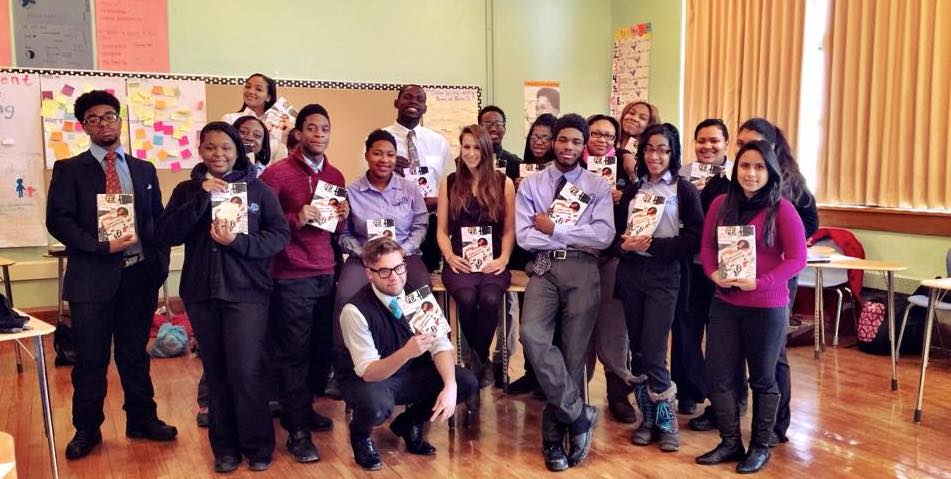
Poet and teacher Sarah Marcus with her high school students.

A note from Series Editor Sarah Marcus: Born from a powerful in-class discussion that we had about gender, race, and the role of masculinity in rape culture, “Be A Man/Be A Woman” poems are an analysis of gendered personal experience and a study of our intersectionality. This poetry series was inspired by a HuffPost essay I wrote called, “Why I Teach Feminism at an Urban High School.” The poets featured here are students from my 12th Grade Resistance Writing class whose work I found to be brave, fearless, and progressive. Please help me support their crucial and influential voices.

*

Jazmyn Alexander is a senior poet in my Creative Writing class. She loves hair, hanging out with friends, shopping, and reality T.V. shows. To be perfectly honest, Jazmyn and I got off to a rough start this year, but as the year progressed, Jazmyn felt incredibly connected and engaged with the material that we were learning. She says, “Before this class, I really didn’t care about feminism or women being treated poorly in the media. I didn’t pay much attention. I just thought a woman being degraded was the norm. When we learned about it, I felt like women have so much more to offer than being objectified for men. And we’re beautiful; we don’t have to get naked to show that we’re beautiful.”

Jazmyn’s rap is incredibly powerful. She addresses the wrongful deaths of Trayvon Martin, Eric Garner, and Mike Brown. She says: “Writing this rap came easy. I knew I wanted to tell a story about justice. I wanted to stick to one person for each verse.” I feel especially connected to this poem’s chorus. I love the way it subverts our conception of what a contemporary rap encompasses.

See Jazmyn read her poem here.

He’s Gone

Verse 1:
Now Trayvon walkin down the street, swagged out with a hood and J’s on his feet.
Ain’t doing nothing but lookin at his phone, no worries but it was gone be a long way home.
He wasn’t ready for what was comin, if he only knew that he was gone get into somethin.
Tryna fight… for his life, with Zimmerman on his back he knew that something wasn’t right.
So he kept on walking, noticed he was being followed so he started talking…
The man was cruel, knew what he wanted to do.
With all the break-ins on his street this was a justice move.
Tray’s girl on the line, she wanna know if it’s okay, is it all fine?
He let her know, he had to call back, time to fight for his life cus he under attack.

Chorus:
And he’s gone, Tray lost his precious life to a bullet hole
Not smokin’ on nothin’, nor sippin on somethin’
But the color of his skin showed that his life wasn’t nothing

And he’s gone
Yeah he’s gone
And he’s gone
Trayvon is gone

And wasn’t smokin’ on nothin’, nor sippin’ on something
But the color of his skin showed his life wasn’t nothing, alright.

Verse 2:
Then there was Eric too, chilled on the block listening to the humming blues.
He didn’t know how this day would go… Wasn’t knowing that he wasn’t gonna make it home.
Then a fight broke out, he tried to break it up but he got struck out.
(Make noise) he gasp for air, I can’t breathe, please let me go, please let me go
Cus I can’t breathe!
The police they choked him tight, aware of his asthma as he gasped for his life.
They didn’t care, they didn’t stop
Black man down, was the evidence that they got.
Taking this man’s life away, the public watched like dim to a brighter day.
This gotta end, where do we begin?
Rest in peace… Tray, Eric, Mike, and all black men.

Chorus:
And he’s gone, Eric lost his precious life to a choke hold
Not smokin’ on nothin’, nor sippin’ on somethin’
But the color of his skin showed that his life wasn’t nothing

And he’s gone
Yeah he’s gone
And he’s gone
Eric is gone

And wasn’t smokin’ on nothin’, nor sippin’ on something
But the color of his skin showed his life wasn’t nothing, alright.

Things to Worry About

Norah Vawter Parents
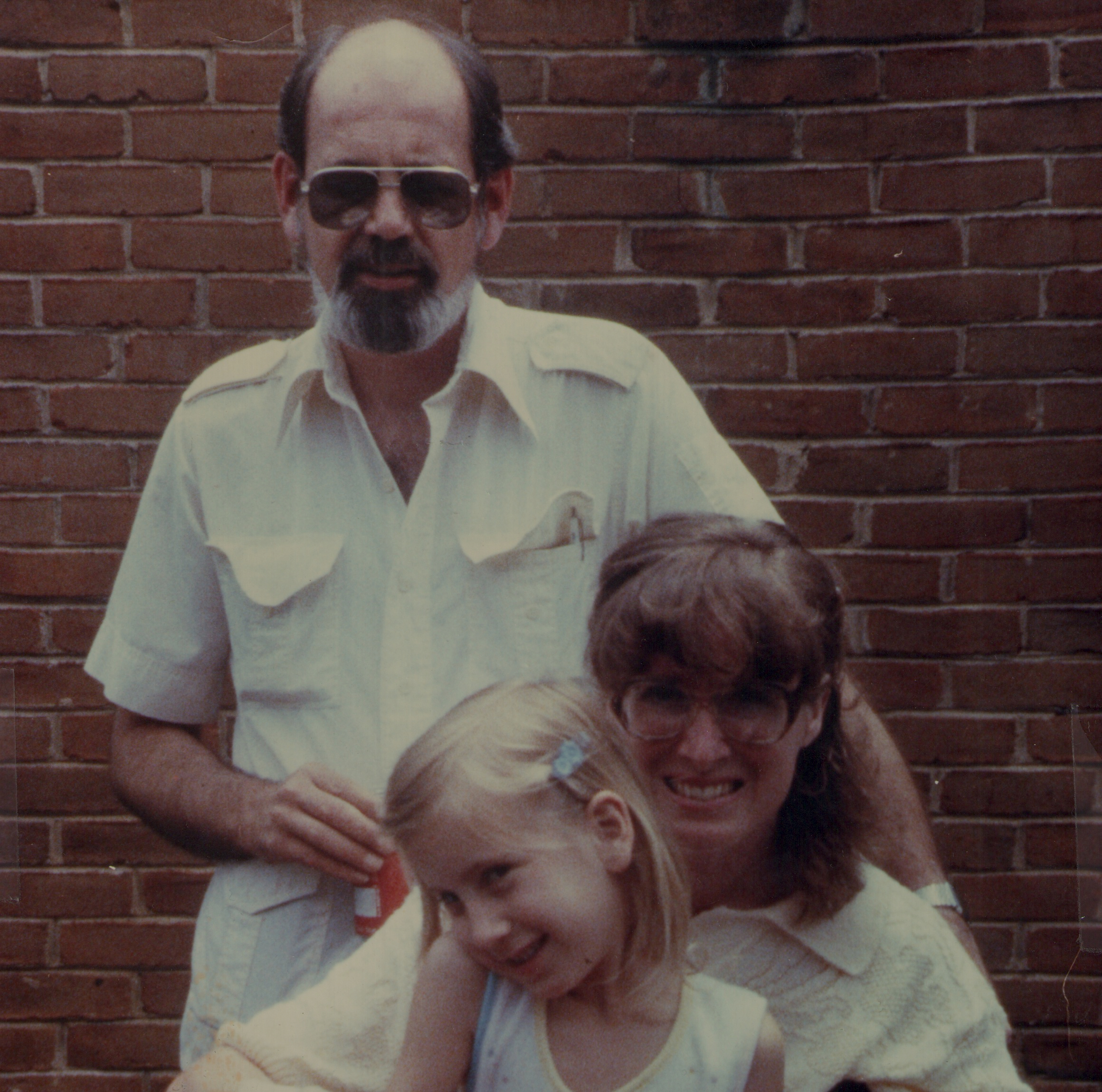
The author with her parents, Skip and Denise, 1985.

Things to Worry About

by Norah Buckley Vawter

Dear Mothers,

Things to worry about:

  • Worry about the planet.
  • Worry about your children’s welfare.
  • Worry about your family and friends.
  • Worry about not wasting your life.
  • Worry about kindness and love.

Things not to worry about:

  • Don’t worry about conversations you had yesterday.
  • Don’t worry about what other people think of you.
  • Don’t worry about what other people think, period.
  • Don’t worry about jogging strollers.
  • Don’t worry about jumperoos vs. exersaucers.
  • Don’t worry about getting a fancy anything unless you really want it.
  • Don’t worry about worrying.
  • When holding a newborn, don’t worry that he is so tiny and fragile you might break him just by holding him. If babies were that fragile, we wouldn’t have a human race.
  • If you had great parents, don’t worry about living up to impossible expectations of what parenting should be like. Your parents surely, surely had days when they made mistakes, maybe even huge ones.
  • If your parents were awful, don’t worry about doing everything differently to create some magical world full of goodness and light for your own child. Just do your best. There will probably be plenty of magic and goodness and light.
  • Absolutely don’t cry yourself to sleep thinking you are the world’s worst mother. You’re probably doing better than you think. In fact I bet you are strong and beautiful. I feel certain that you deserve happiness and love.
  • Don’t worry about the dark circles under your eyes from lack of sleep and lack of makeup and just being plain tired and wrung out every day.
  • Don’t worry about the fact that Mom X gives her kids all organic food when you don’t.
  • Don’t worry about what Mom X must think when you pull out a bag of Honey-Nut Cheerios and food-dye-ridden Goldfish crackers for your toddler, while she feeds her kid homemade flaxseed bread and homemade yogurt with a smattering of wheat germ.
  • Don’t worry about anything anyone posts on Facebook. Ever.
  • Don’t worry about haters in general.
  • If you had your heart set on nursing, don’t worry if you can’t.
  • And don’t you dare let any parent bottle-shame you. When you are sitting at the park with your baby in your lap, and you pull that bottle of formula out of your bag – hold your head high because you are feeding your baby.
  • If your own parents are gone like mine are, don’t worry that your kid will grow up never knowing them. They’re around – somewhere. They’re inside of you. They’re inside of your kid. They’re in photo albums and in the books they read to you, the ones you now read to him.
  • Don’t worry about how you will eventually have to explain what death is, and where Granny Denise and Grampa Skip are.
  • When your kid starts to point out “Nise” and “Skip” in the family photos on the wall, because you’ve been doing that, don’t worry if you cry in front of him. When he says, “Mama sad” – don’t worry about what to say. Something will come. And then he’ll probably want to hug you, and it will be the best hug in the world. Ever. And then you can say, “Mama happy,” and mean it.
  • Don’t worry about being the perfect mother.
  • Don’t worry about perfection, period. It doesn’t exist, and if it did, life would be a hell of a lot less interesting.

Things to think about:

  • How can I be a mother and still be a human being in my own right?
  • If I’m not happy, how can I get there? If I’m not happy with how I fit into my world, how can I fix that?
  • Am I doing my best, as a parent, as a human being, in general, etc.?
  • What tangible, specific things can I do to make my life better, or others’ lives better, and maybe even make my world a better place to live?
  • If I want to make my mark on the world, how can I do that?

Love always,

Norah Buckley Vawter

Things to Worry About Parenting
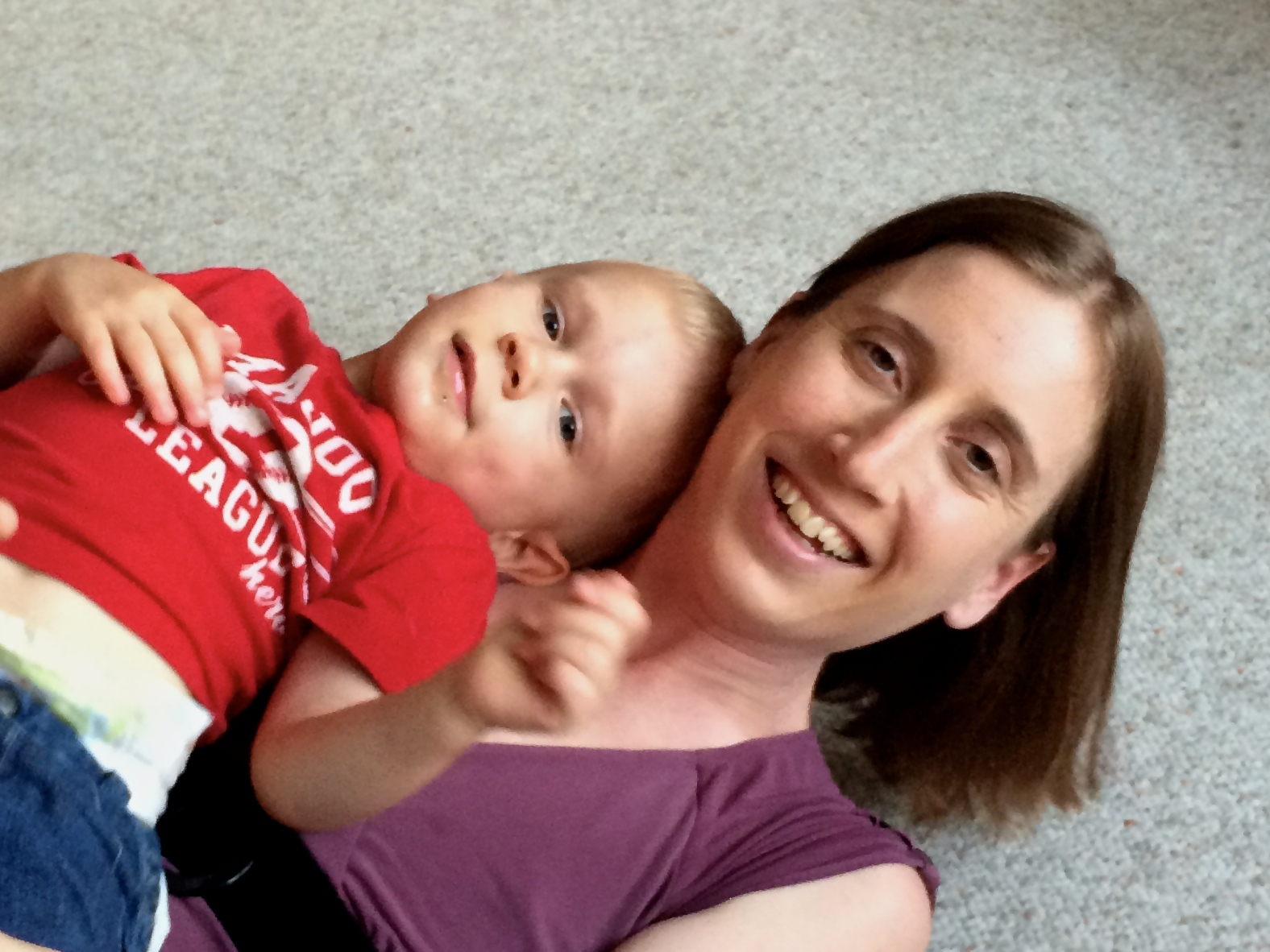
The author with her son, 2015.

***

Inspired by Scott Fitzgerald’s letter to his daughter, Scottie, dated August 8, 1933

Norah Vawter wishes time travel were possible so she could party with Scott Fitzgerald and then talk literature. She earned an MFA in fiction from George Mason University and  has work published or forthcoming in Extract(s), The Nassau Review, and Agave. Currently she stays at home with her toddler while at work on her first novel.

SATURDAY POETRY SERIES PRESENTS: HEMISPHERE

hemisphere


From HEMISPHERE
By Ellen Hagan:


RIVER. WOMAN.

I.
Downriver is always long
& always flailing, finding

where our lives begin,
intersect?  You, your bones

the humped slope of nose
browned skin of home.

You, sand. You, ocean.
You, bending & me.

How many nights we sleep
alone, our bodies rising—

what it means to miss you.
What it means to expand.
What it means to be birthed.
What it means to be sacred.
What it means to go home.

Place of birth, birthing
ground. Ground that is sacred.
You that is sacred.

Bones that hold together.  Bind.
Bound to you.  My mother.

II.
Me
I am bound to you.  My mother.
You stitch me from inside.  Hollowed.
your split sheath of self, your letters
the slow cursive of your language,
can’t I hear your voice, always?

Her
Lock the doors.  Latch the locks.
Shut the windows.  Close the blinds.
Cover up.  Clean your room.  Do
the dishes.  Wash the clothes.  Behind
your ears, yourself.  Clean the floor.  
Scrub.  Mop the remains every day
is one that you can use to erase all
the mistakes.  Blemish free.
Shine the doorknobs, pine, every
crease of space.  Cabinets.  Don’t leave
food out.  Food brings mice.  Mice
bring disease.  You will die.  You could 
die.  Don’t die.  Don’t ever die.  You 
stitch me from inside.  I am bound
to you.  Can’t you always hear
my voice?


LESSONS ON SPELLING

Bring the snakes in their skins, sly
& surrender. Simple bodies of grass
& clover, their slithering and sleuth-ness.
& the earth & the dusty fisherman
in from their boats, bobbing. Bring
piano, bring pain. That yellow skirt
pocked w/ fuchsia & the halter
of your mother’s pixie 60’s ways.
Let out the hems from your dresses,
the vertebrae in your back, body
forget skeleton—be loose, let it be dirty.
Get there. Call the black cat promenade,
lazy through the streets. Let your hair
down. Let it crawl, crowd the length
of your back. Bring soca & fiddle,
that record player your father bought
your mother in 1974. Bring all the days
from 1974 & on because time is a revolver.
A bag of limes on your back porch
squeezed & bitter & neon & orbiting
over you. Is your neighbor calling.
Is satsumas bursting on your tongue.
Bring your shiny shoes & arched soles
for the flapping pageant of second line
parade, the 100 parades from now until.
Autumnal. Hymns. Prayers.
Ways to say yes. Bring with you
your rope of hide, your many rings
of muscle & the washcloth
for your stomach, your feet
for the laying nape of your neck.
Bring danger & ways to hold your lips,
your lips, bring them too.
Spanning the whole of you.
You become.


WATER SIGN

Already a lullaby inside.
Your palms to belly, breath
on hip.  You are changing,
beginning. Too.  And you,
baby girl, or boy. Or two.
Are just gills. Still. Heart in
mouth. Red burst of newness.
Fins.  Fish or fowl. Shrimp
are larger than you.

Still, you are breaking me
apart. Him too. Our hearts
and lungs, and gills. Bursting 
You are stretching all,
all of us. Open.


Today’s poems are from Hemisphere, published by TriQuarterly Press/Northwestern University Press, copyright © 2015 by Ellen Hagan, and appear here today with permission from the poet.


Hemisphere: The poems in Hemisphere explore what it means to be a daughter and what it means to bear new life. Ellen Hagan investigates the world historical hemispheres of a family legacy from around the globe and moves down to the most intimate hemisphere of impending motherhood. Her poems reclaim the female body from the violence, both literal and literary, done to it over the years. Hagan acknowledges the changing body of a mother from the strains of birth from the growing body of a child, to the scars left most visibly by a C-section €”as well as the changes wrought by age and, too often, abuse. The existence of a hemisphere implies a part seeking a whole, and as a collection, Hemisphere is a coherent and cogent journey toward reclamation and wholeness. —TriQuarterly Press/Northwestern University Press


Ellen Hagan is a writer, performer, and educator. Her latest collection of poetry, Hemisphere, was released by Northwestern University Press in Spring 2015. Ellen’s poems and essays can be found in the pages of Creative Nonfiction, Underwired Magazine, She Walks in Beauty (edited by Caroline Kennedy), Huizache, Small Batch, and Southern Sin. Her first collection of poetry, Crowned, was published by Sawyer House Press in 2010. Ellen’s performance work has been showcased at The New York International Fringe and Los Angeles Women’s Theater Festival. She is the recipient of the 2013 NoMAA Creative Arts Grant and received grants from the Kentucky Foundation for Women and the Kentucky Governor’s School for the Arts. National arts residencies include The Hopscotch House and Louisiana Arts Works. Ellen recently joined the po­etry faculty at West Virginia Wesleyan in their low-residency MFA program. She teaches Memoir, Poetry & Nature, and co-leads the Alice Hoffman Young Writer’s Retreat at Adelphi University. She is Poetry Chair of the DreamYard Project and a regular guest artist at the Kentucky Governor’s School for the Arts.


Editor’s Note: I fell in love with the poems in Ellen Hagan’s Hemisphere for their language: earthy, sensual, gritty. Unafraid of blood and birth, of mud and heat, of nature, of relationship, of what is real and lush and vivid, of what is primal and complex. I am reminded of the swamp, of the first creatures that dragged themselves forth from the murky depths, crawling forward, always, evolving for the sake of life. I am reminded, also, of witchcraft, of alchemy, of drawing down the moon. Of things my mother taught me, of that which has been handed down from woman to woman through the ages.

Today’s poems were meant to be, here, today. Because they are about the twin experience of birth—both as child and mother. Because much of this book is about the relationship between mother and daughter, the circle of life as only mother and daughter experience it: “where our lives begin, / intersect;” “what it means to miss you. / What it means to expand. / What it means to be birthed. / What it means to be sacred. / What it means to go home.”

In honor of Mother’s Day, and of the magic that grows from the rich soil of today’s poems, today’s feature is dedicated to my mother, the water sign, from your daughter, the water sign. “You that is sacred… I am bound to you. My mother.”


Want to see more from Ellen Hagan?
Ellen Hagan’s Official Website
Ellen Hagan’s Blog
Duende
Drunken Boat
Buy Hemisphere from Indie Bound

High School Poetry Series: Gender, Identity, & Race — Dion Pride

Poet and teacher Sarah Marcus with her high school students.

A note from Series Editor Sarah Marcus: Born from a powerful in-class discussion that we had about gender, race, and the role of masculinity in rape culture, “Be A Man/Be A Woman” poems are an analysis of gendered personal experience and a study of our intersectionality. This poetry series was inspired by a HuffPost essay I wrote called, “Why I Teach Feminism at an Urban High School.” The poets featured here are students from my 12th Grade Resistance Writing class whose work I found to be brave, fearless, and progressive. Please help me support their crucial and influential voices.

*

Dion Pride is an eighteen-year-old senior poet in my Creative Writing class. In his free time he enjoys writing, watching film, and participating in Cleveland’s community advocacy. At school he is involved with our Take Back the Night Campaign and event, he is an active member of Campus Ministry, and he participates as a member of the Men of Strength Organization.

I am constantly inspired by Dion’s compassion towards his family and his classmates. He is an activist who cultivates a culture of empathy in our classroom and community alike. I most enjoy the imagined conversation that takes place in this poem. This vital dialogue considers the courage needed to empower each other to stand up for equality.

In his own words: “Like in the past, no one person can get us there, we have to get us there. The energy of the youth and the wisdom of our elders. Together we can be the greatest force of change. Today, let us make the negro proud and show them how far the African American can go. Show them we won’t stop this time, until we are all free at last.”

See Dion read his poem here.

Be A Man

Yea, I’m a FEMINIST, I believe in equality.
So you believe that a woman is just as equal as you?
I do.

Do you think that we can have a woman leader?
There’s this real smart sweetie that live on Cedar
She can do the job.

There’s no way a woman can lead our nation–
We’ll be at World War III by her next menstrual cycle.
You say that now, but you would follower her
Like a boy on his bicycle
While you try to catch her in that Benz.

Women need to stay in they place.

So what is their place?

In the pages of a Secret catalog.
Let me tell you a secret real fast,

That girl is way more than a pretty face.
She can out school you and fool you.

When you were getting C’s and D’s,
She was getting A’s and B’s, trust and believe.
More than just a pretty face,
All women of all shapes and sizes
Meant to be equal by our God the highest.

But girls with bodies should show them and expose them.
Not for you, it’s not slavery, their sexuality is not for you to own.

But the media says…
Forget what the media says.
But politicians say…
Forget what politicians say,
They remind me of Homer from The Simpsons: rude, crude, and dumb.

It’s time for the wake up call,
It’s time to put your glasses on,
You don’t have to be worried about those wolves.
You have to worry about those foxes, those vixens–
Not those video vixens.


High School Poetry Series: Gender, Identity, & Race — Johnny Ward

Poet and teacher Sarah Marcus with her high school students.

A note from Series Editor Sarah Marcus: Born from a powerful in-class discussion that we had about gender, race, and the role of masculinity in rape culture, “Be A Man/Be A Woman” poems are an analysis of gendered personal experience and a study of our intersectionality. This poetry series was inspired by a HuffPost essay I wrote called, “Why I Teach Feminism at an Urban High School.” The poets featured here are students from my 12th Grade Resistance Writing class whose work I found to be brave, fearless, and progressive. Please help me support their crucial and influential voices.

*

Johnny Ward is a senior in my Resistance Writing class. His life is music. He enjoys working out and good food. He follows sports and the news, and he constantly sends me relevant and funny BuzzFeed lists and videos. He says that our class has opened his eyes to what feminism actually meant.  “I thought it meant you were feminine, or a lesbian, or pro-women to the point that you were anti-men. Now, I know it means standing up for women’s rights and being conscious to the fact that lack of equality is a problem and that anyone can be a feminist.” His advice to young writers is to practice, have confidence, practice, and perform.

I especially love this poem for its insistent and aggressive repetition. Johnny maintains a sturdy rhythm that serves to highlight the contradictory messages we send young men. He writes about the struggle to come out of the cold and embrace connection. This poem commands our respect on many levels.

See Johnny read his poem here.

Be A Man

I’m young
I’m young but
I feel so old
If I may be so bold let me say
It’s more than just cold out here
You need more than just a coat out here
You need coats out here

Men!
They coming for your throats out here
But be a man
Tell me what are tears?
I’m unfamiliar
I ain’t been able to cry since… eh, can’t remember

I’m seventeen, look at me
Still manhood’s a puzzle
I carry a whole household on my back with back trouble
and still going through black struggles
But anyway be a man
Showing emotion is weak
or it’s how you show it
If so, then please explain that to me
Like what do I do whenever I see
My friend going through it?
Walk up and just give her a hug then leave?
I wasn’t taught to console nor to be consoled
By God!
It took Jesus 16 years to even reach my soul
Pardon my rude mouth he forgave it already
I’m making the change
I prayed it already

Wish I could forgive but I hold grudges
Like that one time
One time said “your father was a joke n****, you the punch line!”

Life ain’t easy it’s full of opinions
“You ain’t a man until you first had sex”
“You ain’t a man until you gotcha first check”
“You ain’t a man till you known through respect”
“You ain’t a man till you build intellect”
“You ain’t a man till you made yo first band”
“Think you a man with that gun in yo hand?”
“You ain’t a man till yo words ain’t see through”
“You ain’t a man till we believe you”
“You ain’t a man till yo actions speak for you”
“You ain’t a man till these women adore you”
“You ain’t nothing till you love yourself”
“Aye you a man, man why you need help?!”

We what we want we just got to connect
We’ll be alright we just need to respect
We what we want we just got to connect
We’ll be alright we just need to respect.

High School Poetry Series: Gender, Identity, & Race — DeJuan Brooks

Poet and teacher Sarah Marcus with her high school students.

A note from Series Editor Sarah Marcus: Born from a powerful in-class discussion that we had about gender, race, and the role of masculinity in rape culture, “Be A Man/Be A Woman” poems are an analysis of gendered personal experience and a study of our intersectionality. This poetry series was inspired by a HuffPost essay I wrote called, “Why I Teach Feminism at an Urban High School.” The poets featured here are students from my 12th Grade Resistance Writing class whose work I found to be brave, fearless, and progressive. Please help me support their crucial and influential voices.

*

DeJuan Brooks is a senior writer in my Resistance Writing Class. His work has previously appeared in As It Ought To Be as part of a collective response to the prompt “We Can’t Breathe.”  He enjoys good music, playing  sports, and writing. His favorite author is Alex Haley. DeJuan is committed to bettering his Cleveland community. He says, “A lot of people don’t  want to change anything. They get complacent with the way things are. If no one’s going to help, I might as well try.” In the following poem, I most admire his careful attention to rhyme and the natural rhythm that highlights and reinforces the idea that we are trapped in an insidious cycle of repressed emotion and stereotypes. This poem was the poem that inspired this series. I am consistently impressed by DeJuan’s persistence, poise, and maturity. I hope you enjoy this work as much as I do.

See DeJuan read his poem here.

Be A Man

The face of a young black man in the inner city. The growing pains that make him “strong.”
The fights, the bruises, the cuts, the scrapes. The tears that came and were told to go away.
We internalize pain for an image we portray. Cuz we all know if you emotional as a girl
your dad gets ashamed. People may think that’s crazy, he just a baby,
but we all know that boy in the 4th or 5th grade who at recess played patty cake
or double dutched way too much. So your dad gives you that look to stay away,
cuz he knows what you don’t, and he’s keeping you “safe.”
And we don’t try to even exercise our free right and go over there and play,
cuz we supposed to be growing to be men, and not that way. Cuz the way we raised,
boys don’t cry, boys don’t walk that way, boys stay strong, boys portray men who are
messed up themselves, cuz that’s how we was raised.
Your dad gets more proud when you fight, then when you tell em’ bout your pain.
When you fall down, you stand up. You crying, then man up. We release pain on others,
we’re supposed to be brothers, but I gotta figure out how to release this some other way.
They say fight like a man, but what people don’t understand is if you’ve never seen
my mom throw hands, you’ll never understand what a real fight is.
A whole theory deferred.
I know men, women, even children who would kill to have as much pride as her.
I lived my whole life knowing my worth, so when they tell me to man up,
like men set the precedent of the world, like this woman who brought me into the world
isn’t stronger than any man or boy. I was raised as a boy and I turned into a man,
but when they tell me I’m acting like a girl, I think of the fight my mom endured.
So, when they say I’m acting like a girl, I feel like I’m the strongest man in the world.

SATURDAY POETRY SERIES PRESENTS: EARTH VOICES FOR SPRING

Public Domain image.


EARTH VOICES
By Bliss Carman

I

I heard the spring wind whisper
Above the brushwood fire,
“The world is made forever
Of transport and desire.

“I am the breath of being,
The primal urge of things;
I am the whirl of star dust,
I am the lift of wings.

“I am the splendid impulse
That comes before the thought,
The joy and exaltation
Wherein the life is caught.

“Across the sleeping furrows
I call the buried seed,
And blade and bud and blossom
Awaken at my need.

“Within the dying ashes
I blow the sacred spark,
And make the hearts of lovers
To leap against the dark.”

II

I heard the spring light whisper
Above the dancing stream,
“The world is made forever
In likeness of a dream.

“I am the law of planets,
I am the guide of man;
The evening and the morning
Are fashioned to my plan.

“I tint the dawn with crimson,
I tinge the sea with blue;
My track is in the desert,
My trail is in the dew.

“I paint the hills with color,
And in my magic dome
I light the star of evening
To steer the traveller home.

“Within the house of being,
I feed the lamp of truth
With tales of ancient wisdom
And prophecies of youth.”

III

I heard the spring rain murmur
Above the roadside flower,
“The world is made forever
In melody and power.

“I keep the rhythmic measure
That marks the steps of time,
And all my toil is fashioned
To symmetry and rhyme.

“I plow the untilled upland,
I ripe the seeding grass,
And fill the leafy forest
With music as I pass.

“I hew the raw, rough granite
To loveliness of line,
And when my work is finished,
Behold, it is divine!

“I am the master-builder
In whom the ages trust.
I lift the lost perfection
To blossom from the dust.”

IV

Then Earth to them made answer,
As with a slow refrain
Born of the blended voices
Of wind and sun and rain,

“This is the law of being
That links the threefold chain:
The life we give to beauty
Returns to us again.”


(Today’s poem is in the public domain, belongs to the masses, and appears here today accordingly.)


Bliss Carman FRSC (1861–1929) was a Canadian poet who lived most of his life in the United States, where he achieved international fame, and was acclaimed as Canada’s poet laureate during his later years. (Annotated bio courtesy of Wikipedia, with edits.)

Editor’s Note: Each year around this time I become so excited by the fact that winter is finally over that I must celebrate the birth of spring through poetry. The sun is shining, the crocuses and tulips are rising, the spring blossoms are in bloom. The cold and darkness that are just behind us are quickly forgotten by the promise of all that is warm and beautiful and worthy of rejoicing. So it has been since the days of Demeter and Persephone, and so it shall be until humankind destroys the natural balance of the world with climate change.

Today’s poem calls upon the “Earth Voices”—the spring wind, the spring light, the spring rain, and the Earth herself—to tell a story of the rebuilding of the world at springtime. The voices of spring speak of the newness they create: “Across the sleeping furrows / I call the buried seed, / And blade and bud and blossom / Awaken at my need.” “I am the master-builder / In whom the ages trust. / I lift the lost perfection / To blossom from the dust.” And the voice of Earth answers, calling upon the ancient power of three, reminding us, as spring does, that what is buried beneath winter “Returns to us again.”

Want to read more Spring Poetry?
SATURDAY POETRY SERIES PRESENTS: SPRING! (2014)
SATURDAY POETRY SERIES PRESENTS: LIZZIE LAWSON ON SPRING
SATURDAY POETRY SERIES PRESENTS: SPRING! (2013)
The Poetry Foundation – Spring Poems

The Lessons of Mayor Adams

doors_cover1

[Editor’s Note: The following is an excerpt from the literary sci-fi novel The Doors You Mark Are Your Own, co-written by As It Ought to Be managing editor Okla Elliott and site contributor Raul Clement, available at Amazon.com, B&N.com, and direct from the publisher, as well as local bookstores and other online venues.] 

The Lesson of the Father:

On a glorious morning in mid-April, Joshua City having been washed clean with recent rain, William Adams, future mayor, was born at a robust nine pounds and eight ounces, his skin ruddy with the vigor of grand destiny. William Sr., the most successful water-baron in Joshua City, was in particularly high spirits because the rain would increase his already considerable fortune. Later, on the ride home, he even held the baby.

“This is an important day, isn’t it, Little William?”

Mayor Adams, who was already Mayor Adams before he became Mayor Adams, performed his first act of rebellion by promptly urinating in his father’s lap. William Sr. cursed and tossed Mayor Adams to his mother who, though exhausted from a prolonged childbirth, caught him—what can only be called providentially—just before he broke on the limousine floor.

In the following years, the Adams mansion was filled with sound: the clinking of brandy glasses as William Sr. brokered larger and larger deals; the daily bustle of servants; workers building extra wings on the house and then, when William Sr. had become the richest man in Joshua City, an indoor pool. But the loudest sound of all was the crying. From the nursery, Mayor Adams’s cries for his mother; and from behind the closed door of the librarie, where his mother spent most of her time, the crying of an unhappy wife.

The swimming pool was housed in an enormous wing of glass. When Mayor Adams was eight years old, after countless legal setbacks which, thanks to William Sr.’s money and influence, were not insurmountable, the pool was finally completed. William Sr. showed Mayor Adams the finished product with pride. Mayor Adams marveled at the blue jewel of the water, the way the light struck it through the glass and did a skittery dance he couldn’t quite follow with his eyes.

“You will be the heir to all of this,” William Sr. said. “Everything I build.”

Mayor Adams took on the confident, wide-legged stance of his father.

“But you’ll have to learn certain lessons, just as I did.” He rested a hand on Mayor Adams’s back.

The water hit Mayor Adams in the face. Flailing, the glass above him, and the light blinding him, he took a mouthful of water as he tried to call to his father. His father stood colossally distant.

“What I’ve done to you is unfair,” his father said. Mayor Adams quieted his splashing, trying just to keep his head above water now, more to hear his father’s words than to be able to breathe. “You can’t swim. But practically no one in Joshua City can. And that’s the point. To fulfill your destiny, you will need powers no else has.”

Mayor Adams gathered up an animal willpower with a human hatred and decided not to drown. He looked up toward his father, but the image he saw through the wavering fluid was a three-headed woman, each face distorted in dark grimaces. They beckoned him upward. Arms chopping toward the pool wall, he reached the grainy stone, but couldn’t grab the lip of the pool wall. He clawed at the stone and tore off a fingernail. He clawed again, doing damage that the doktor would later say had fractured three fingers, finally reaching his hand over the edge. He pulled himself out.

His clothes heavy with water, he looked at his father, who did not seem so colossal now.

“You’ve made me very proud, son.”

That was when Mayor Adams knew he would kill him.


The Lesson of the Mother:

On a lovely perfect day in mid-April, made peaceful by the recent rain, Josephina Adams struggled through seven hours of labor to give birth to the one joy in her married life. She clutched little William to her breast and looked at her husband, her hair stringy and her face moist with exhaustion.

“Can we leave now?” William Sr. asked the doktor.

“If your wife feels ready.”

She kissed little William on the forehead, and with a dreamy look in her eyes, speaking to herself and her new son, said, “After the storm comes peace.”

The first years with the mother were all warm milk and favorite blanket. But, at three, when the first flickerings of consciousness introduced themselves, the mother walked in with the red on her face again. And her eye-water. He cried more and she tickled his belly the way he liked.

When he was eight years old, he walked into the house dripping water everywhere. His mother tried to help him out of his soaked clothes.

“I can do it,” he said, struggling to make his fractured fingers do the simple task.

She brought him dry clothes, a towel, and called the doktor. This was the doktor who had come before, but always for the mother.

“No, not me,” she said, directing him to the boy.

“Is this becoming a problem?” the doktor asked.

***

She did it in full view of all the servants. “You desert thug,” she screamed.

She slapped him with real force. Mayor Adams had never seen his father cringe. His father stood there, trying to seem unstunned.

“You can do anything you want to me,” she said, “but if you touch my son again, I will kill you.”

The Oracles had told him he would learn this lesson three times. This was the second.


***

At thirteen, he sat on the edge of the tub while his mother bathed. Bubbles spilled out of the bath and circled up into the air. She liked his company at times like these, when his father wasn’t around. But she usually wasn’t so quiet.

“Pass me the razor.”

He wondered if she would slit her wrist. Would he stop her or would he just watch? But she dipped the razor into the bathwater to wet it. He had never thought of his mother as a woman before. One slick leg emerged and she shaved the bubbles down.

The sound of the door slapping against the wall behind him. The voice of his father: “What are you two doing?” And the plop of the razor falling into the water. His father grabbed him and tugged him to his feet. Mayor Adams resisted, pulled against his father’s strength. His mother’s hand was a fish swimming the bathwater for its hook, the razor. He stared at his father, who had paused, taking his new son in with a kind of fear. A yelp from his mother, and the water went pink with mother’s-blood. Mayor Adams charged his father, swinging his impotent fists wildly, hitting hard muscle and unbreaking bone. His father let himself be hit, feeling his power renewed with each helpless impact. And then one stray swing landed in his father’s groin, and he grunted in actual pain. Mayor Adams stopped, looked up at his father’s face, smiled at the grimace he saw there.

He was weightless off his feet and then came the hollow-solid crack of skull on porcelain. His mother was out of the water, holding the razor, blood in streams down her beautiful arm, and then the world blurred into the distance, into nothingness.


The Lesson of the Self:

It was a promise to himself, his promise, and it was what he was beholden to. Hadn’t it begun one fine April, after the rains had blessed Joshua City? Mayor Adams knew it wasn’t true, but he liked to think that the rain had brought him to cleanse the world of its filth. He did not yet know he was Mayor Adams, though he was. This final lesson would show him his true promise; it would make him what he was to become.

No one spoke of The Lesson of the Mother, in those terms or any. He was sent to the best technical institutes and the most expensive tutors were hired to instruct him during his holidays at home. In the years that followed, few would think of Mayor Adams as an intelligent man, especially today, but he was the brightest of students, as quick with mathematics as he was with foreign languages and rhetoric. Many would praise his moving speeches, but few would know he had written them himself. He suffered many setbacks at his father’s hands, but as his favorite quote from the Book of Before-Time runs: Almost every genius is familiar with a stumbling existence as one stage in his development, a feeling of hatred, revenge, and rebellion against everything that is and no longer becomes… an incomplete ego—the form in which every Caesar pre-exists.

Mayor Adams learned this and many other lessons at his prestigious technical institute. Some were lessons his father would have condoned. But he also learned how to float above, untouchable and untouching. When he returned home on his second winter break, his father was locked in his study with work. Who knew what he worked on besides the business of work itself? His mother wandered, a woman without meaning now that her son had left, only the occasional bruise her husband gave her to remind her she was alive. Mayor Adams saw all this without surprise, without even anger now. It was time. And remembering his first lesson, he knew what to do. After all, what had he taken all those chemistry classes for?

He took his father a glass of water. Hunched over the large oak table, his father looked tired and old. But that didn’t matter.

“I thought you could use a drink,” he said. “You work so hard.”

His expensive spectacles, designed to look expensive, slipped down his nose, not unkindly. “Why thank you, son.”

The water’s shadow, with its core of sun, wobbled on the table. Would his father ever take a drink of his future? Both of their futures filled that glass.

“You know, you’re growing into a fine young man, William. But I hope you are learning the importance of water to this family. The very essence of all life is held in this fluid.”

He lifted his glass to punctuate his point. He swirled the contents. Mayor Adams’s chest tightened.

“There are creatures in the Baikal Sea that are 99% water. Think of that. Were it not for that one percent, they would be exactly the same as the contents of this glass here. Amazing. And you, you are 60% water. Your blood is 92% water.”

Mayor Adams knew all this. He also knew the meaning of blood, whether from a razor in the bathtub or from the other lesson that could not be unlearned. He would carry on his father’s legacy, but it would not make his father immortal.

“Your future floats on its surface,” his father said.

“I know it does. You have taught me that before.”

“I have. But I don’t think you appreciate this fact, not in its fullness.”

“I do, father. Believe me, I do.”

His father drank, a large self-satisfied gulp as he always did. Mayor Adams had not skimped on his assassin’s purchase; the poison was incredibly strong and undetectable by normal forensic procedures. His father slapped his chest and then the table, knocking previously important papers to the shiny marble floor. The water spread over the hard smooth surface, glistening beautifully.

With a voice that mimicked real panic, Mayor Adams screamed out, “Mother! Mother! Something’s wrong with father. Quick!”

His father fell to the floor, gasping. He looked at Mayor Adams who peered down with no discernible emotion; even he did not know what he was feeling at that moment. If there were words to say, he did not say them. Their eyes met and everything was known. His father slithered like a broken lizard toward the northwest corner of the house, where oblivion awaited him.
SATURDAY POETRY SERIES PRESENTS: THE OPERATING SYSTEM FOR NATIONAL POETRY MONTH


national-poetry-month1


Editor’s Note: April is National Poetry Month. According to the Academy of American Poets, who founded the annual event in 1996, “National Poetry Month is the largest literary celebration in the world, with tens of millions of readers, students, K-12 teachers, librarians, booksellers, literary events curators, publishers, bloggers, and, of course, poets marking poetry’s important place in our culture and our lives.”

Today I want to highlight one of the countless organizations that has picked up the gauntlet the AAP has thrown down. This April the Operating System celebrates its 4th Annual 30-on-30-in-30 Poetry Month Celebration:

“Over the course of Poetry Month The OS brings you 30 poets (+ writers, musicians, and artists) writing on 30 (+ a few extra) poets for 30 days (every day in April). The intention is simple, but crucial: to explode the process of sharing our influences and joys beyond the random. To create a narrative archive around that moment where we excitedly pass on the work of someone who has made a difference in our lives. And so, too, this is an opportunity for The OS to introduce our audience to the work of the people writing — who are invited to share work of their own that demonstrates that influence. Really, its an exercise in appreciation.”

An exercise in appreciation. A labor of love. 30 days for 30 artists to share their 30 favorite poets with you. What more could you ask for? A little love from your fearless editor? You’ve got it! Keep up with the Operating System throughout the month of April and be on the lookout for yours truly sharing the love and inspiration that is Li-Young Lee.

What should you be doing RIGHT NOW? Go forth and fall in love, poetry style, with the Operating System’s 4th Annual 30-on-30-in-30 Poetry Month Celebration.

Want more National Poetry Month?
Spend each day in April with The Operating System.
Learn About National Poetry Month from the Academy of American Poets.
Read blog entries, online poetry sources, and get writing prompts from NaPoWriMo.
Celebrate NaPoMo with WordPress: Celebrating poetry, all month long.
30 ways to celebrate National Poetry Month, from the Academy of American Poets.

SATURDAY POETRY SERIES PRESENTS: MIRIAM’S SONG

Feuerbach_Mirjam_2

“Miriam the prophetess” by Anselm Feuerbach. Public Domain image.


“Miriam the prophetess… took the tambourine in her hand; and all the women followed her with tambourines and dances. And Miriam called to them: Sing…” (Exodus 15:20-21)


Editor’s Note: The most important thing that has happened to Passover this year is the Notorious RBG’s decree that when we remember the Exodus, we need to remember the women. First and foremost among them, for me, is Miriam. The unsung hero of what is usually thought of as “Moses’ story,” Miriam is responsible for everything from Moses’ birth to his survival to providing water for the Israelites throughout their forty-year-sovereign in the desert. The first person in the Bible to be called a prophet, Miriam was beloved by her people but less-loved by her creator, who struck her down with leprosy to teach her the consequences of a woman voicing her opinion.

Song is one of the oldest forms of poetry, and the poetry of the Bible is one of the oldest written records of poetry we have. Sadly, all that remains of Miriam’s song in the Bible is a call to action: “And Miriam called to them: Sing…”

We are lucky, therefore, that Debbie Friedman (1951-2011) picked up this mantle. In “Miriam’s Song” she joins her voice with a new generation of women to remember and celebrate the heroine of the Passover story, responding to the prophetess’ call to action: “Sing.” Beloved by women and men alike all the world over, Debbie Friedman and “Miriam’s Song” are the kinds of modern Passover traditions we need. Inclusive and powerful, shedding new light on ancient traditions. For, as Debbie Friedman reminds us, “The more our voices are heard in song, the more we become our lyrics, our prayers, and our convictions.”

Want more Miriam, Debbie Friedman, and Feminist Passover?
Read the lyrics to “Miriam’s Song” by Debbie Friedman on Ritualwell
Debbie Friedman via the Jewish Women’s Archive
Miriam via the Jewish Women’s Archive
Buy The Journey Continues: The Ma’yan Passover Haggadah on Amazon