Poetry: March 2025

Sue Blaustein: “A Song for Centipedes”

Felicia Clark: “Chrome Cheers”

john compton: “[we play scrabble—]”

Sam Culotta: “Voices in the Other Room”

Jenna K Funkhouser: “The House at the End of the Road”

Ken Gierke: “After the Rain”

Julia Hatch: “A Thoughtless Moment of Zen”

James Croal Jackson: “Drymouth”

Daniel Edward Moore: “From the Castle of Resentment”

Jimmy Pappas: “The Ineffable”

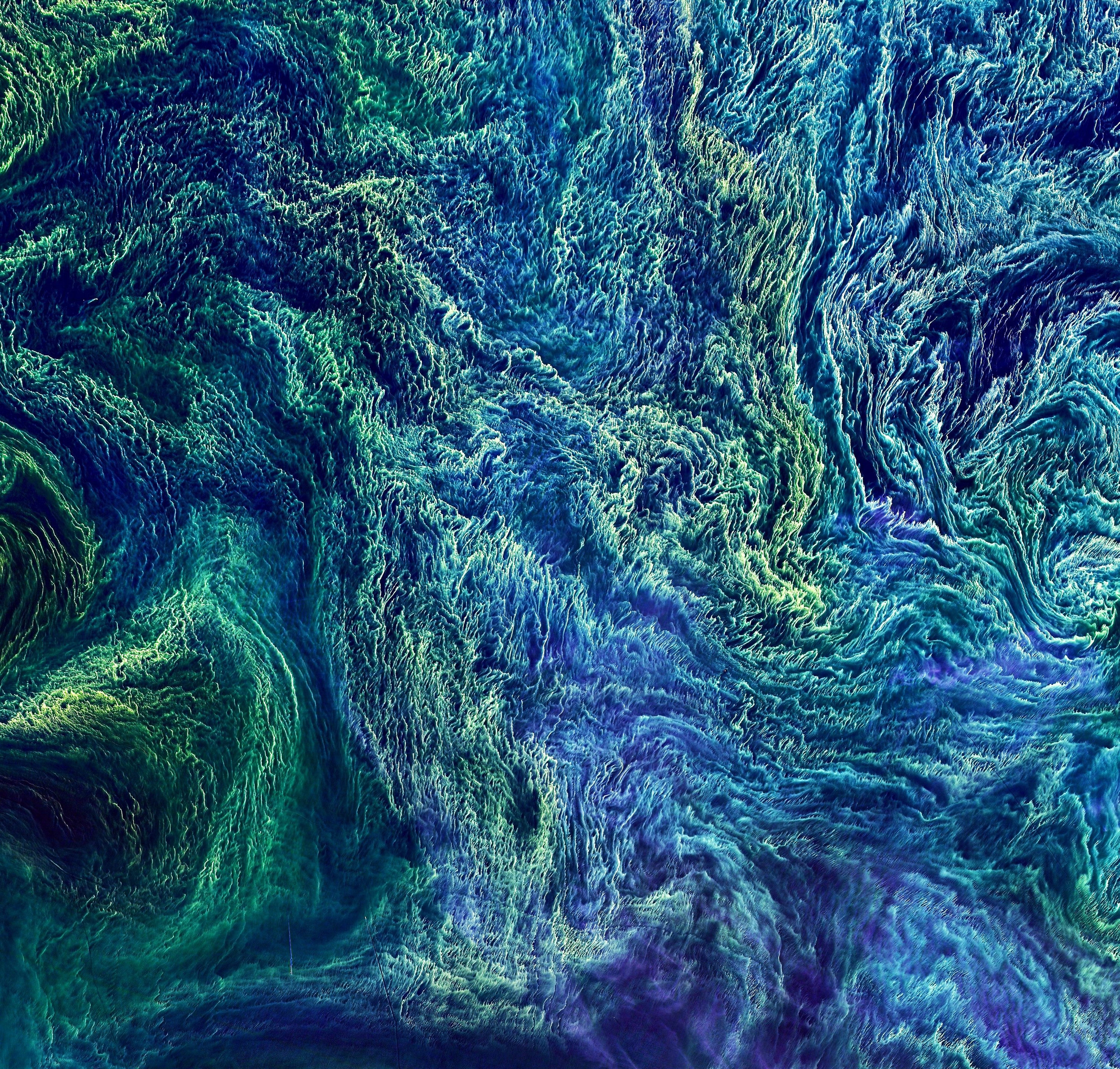
Sue Blaustein: “A Song for Biofilms”

A Song for Biofilms

Wild yeasts and spores – meshed
with whatever minerals and mites

they passively snagged –
formed a mat of slime and grew

in the bar sinks at Johnny’s.
Almost a half-inch thick

when I first met it,
the mat hid the seamed bottoms

of old-style cylindrical sink compartments.
I stared at it. What next?

How high could it grow, how deep
could it get, left to circumstance?

Leaving things to circumstance wasn’t an option.
My job was intervention, so I wrote an order:

Clean and maintain the bar sinks. Slime buildup noted.
A Song for Biofilms Part II
(Science Fiction)


Intervention.
Prevention. Not imagination,
not invention...

and yet, picture it – a tangled, spongy horde!
The organisms and their household goods –

slimy here, dusty there –
clear the top of the sinks
cross drainboards
drop to the floor. Or
they climb! Drainboard to bar top and onward...
Picture yourself opening the door, finding that the letter carrier
who sat there afternoons watching Court TV has been engulfed!
The Microbiome
(Last Word)


Matter on us, in us – in and on
everything.
A lot of it’s alive!
Is there anyone/anything who isn’t
a substrate?
If we shed every last thing
we’re substrates for (we can’t) how tiny would we be?
Anything left?
And yes, who’s “we” anyhow?

About the Author: Sue Blaustein retired from the Milwaukee Health Department in 2016. She published her first book – In the Field, Autobiography of an Inspector – in 2018 and a chapbook The Beer Line in 2022. She blogs for Milwaukee’s Ex Fabula, and serves as an interviewer/writer for the Veteran’s Administration’s “My Life My Story” program. Find more information at www.sueblaustein.com.

Image Credit: NASA Earth Observatory/USGS “On Aug. 11, 2015, a NASA satellite captured this false-color image of a large bloom of cyanobacteria (Nodularia) swirling in the Baltic Sea.” (2015) Public domain image courtesy of Wikimedia.

Sue Blaustein: It’s 2023, and We Still Need to Read Sally Carrighar

It’s 2023, and We Still Need to Read Sally Carrighar

By Sue Blaustein

The late author Sally Carrighar’s work is out of print. Between 1944 and 1975, Carrighar (1898-1985) published one novel, eight works of “nature writing” and an autobiography (Home to the Wilderness). Two of her books One Day at Beetle Rock and One Day at Teton Marsh were made into Disney features, making those titles very well-known. 

I must’ve read one or more of her books when I was in grade or middle school. As an adult, I found them while browsing used bookstores. They looked familiar, and I bought and read them again. By that time, I was a poet with a day job – better prepared to appreciate how exact, humble, and brilliant a writer; and how meticulous an observer she was. 

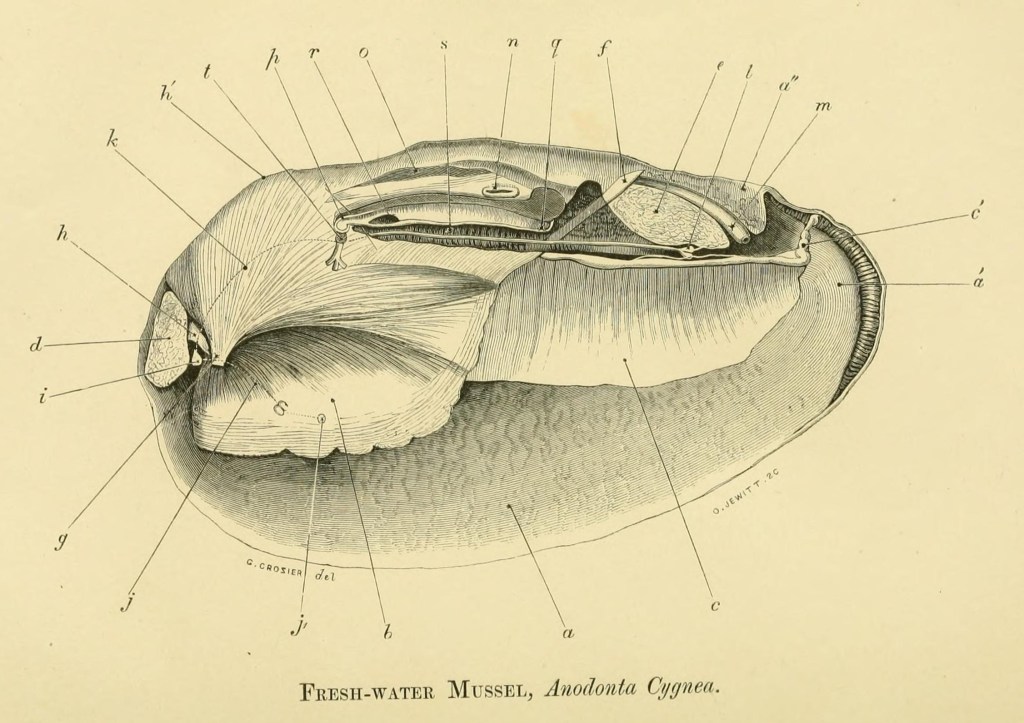
If you’ve never read her work, you don’t know yet, how in a few paragraphs – say about the reproductive habits of a freshwater mollusk – she could expand and reshape the way you see non-human creatures, yourself, and the world we inhabit together.

The swan mussel was not nearly as complex a creature as man, but even she had her satisfactions, and a simple nervous system with which to experience them.

Every creature – swan mussels included – has vital and specific needs. If those needs are satisfied, we live. Of course, the word “satisfy” carries layers of other meanings for humans. Most likely few if any apply to our mussel. Carrighar’s deft use of the word satisfactions doesn’t load mollusks up with human emotions and yet…it opens the door to kinship. 

How does the mussel breathe and eat? Carrighar explains how it pulls water into one tube and expels it through the other, thus receiving oxygen for the gills and minute plants and animals for nourishment.

No doubt she enjoyed some draughts of this living broth more than others; on windy days when the pond was stirred, the greater amount of oxygen may have felt rather invigorating. These were not very stimulating events, but the mussel was not equipped for excitement.

Enjoyed? Invigorating? Though these words come close to attributing human perception to a mollusk, they make a valid point more vivid. For any creature, no moment is the same as the one before, or ones to come. Experiencing and responding to change is what nervous systems are for. The language opens a portal, a way to imagine what it’s like to be something else. A way to care.

Continue reading “Sue Blaustein: It’s 2023, and We Still Need to Read Sally Carrighar”

Sue Blaustein: “Who Wrote the Book of Love?”

Who Wrote the Book of Love?

To discover laws, you need facts.
           Of course. But laws! 
Laws are about relationships.

The cast from my childhood biographies – pea plant and pigeon
breeders, lens grinders and collectors 
           would testify:

that you can discover anything if you’re patient enough.

If you’re imaginative enough 
           and tough. Curious.
If you vibrate and resonate, hyper-able to read signs…
perceiving the tiniest swerve or oddity –
	  flash, whiff or residue.

If your study feels like courtship!
	  All new. You know. You know
what you saw. What it means. How delicious it could be to verify!

The miners and mechanics, the alchemists,
	  taxidermists –
they’d testify!
 	 
	  That if you’re receptive,
if you’re in love or some similar state, if you have to know. If you want
	  that knowledge,
you’ll devise the means – titrations, 
          equations, dissections...
Calculations and equilibrations. Instruments.

Those restless cooks and brewers! Observant healers…
	  Astronomers and microscopists.

They proved that sooner or later, you’ll detect
          what’s too small, too far,
too big or too quiet, too subtle!

You’ll get there. You’ll coax the remote into
touching – moving things you can 
          see. And you’ll measure
and record, measure and compare,
          and relationships
          come clear.

About the Author: Sue Blaustein is the author of “In the Field, Autobiography of an Inspector”. Her information can be found at www.sueblaustein.com. Recently she contributed a poem to a “The Subtle Forces” podcast episode and was interviewed on the “Blue Collar Gospel Hour”. A retiree, she blogs for Milwaukee’s  Ex Fabula, serves as an interviewer/writer for the “My Life My Story” program at the Zablocki VA Medical Center, and chases insects at the Milwaukee Urban Ecology Center.

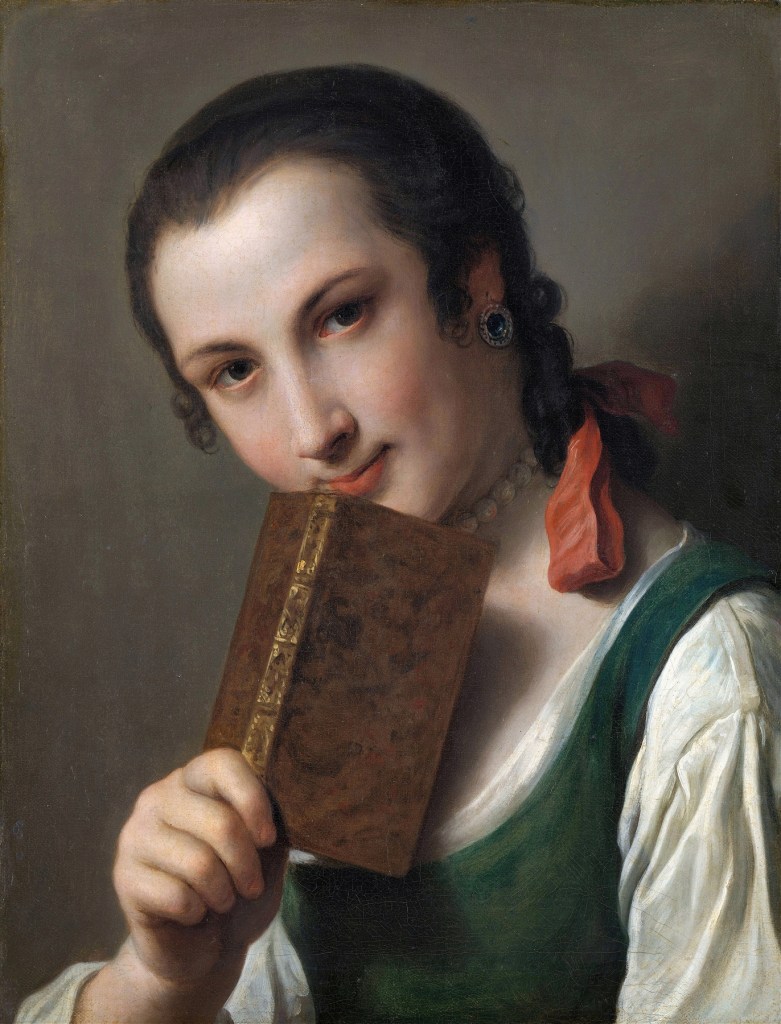
Image Credit: Pietro Rotari “A Young Woman with a Book” (1756) Public domain image courtesy of Artvee

Sue Blaustein: “Microscopy”

.

service-pnp-cph-3b10000-3b10000-3b10500-3b10544r

.

.

Microscopy

What’s under our skins?

                Show me –
through an illustrated cut-out,
                an incision
or window – what lies
                under soft
and folded flesh.

                What’s in there?
Zoom in, then in once more
                to see. Cell structures
revealed by swirls stained
                purple. Vacuoles,

membranes – pores
                endowed
with intelligence! Chemical
                locks, chemical
keys – receptors.
                Shapes.

What’s under our skins?

(My mother knew – from
autopsies and slides).

Away from the flaws
                and heat,
the embarrassments
                of flesh –

                attentive
and schooled
in the wonders
of magnification,

my mother
in her working days
spent hours
at the microscope.
What’s under our skins –
                our skulls?

The more you magnify,
                the closer in –
cellular, molecular,
atomic, sub-atomic ­-
everything starts
to look strangely the same.

Is that a womb, or a brain?

Fundamental
and fundamental.
                Shapes.
Coils of DNA, twitchy
                in a nucleus –

the secret codes and keys
accounting for the ways
                my mother and I
are alike and unalike.

                My mother –
who pored over
The Double Helix
when it first came out –
who could write lines
in a trip journal like:
our capable guide endlessly
                over-informed us.

                I stay informed.
I read about the frontiers of biology –

                Virus,
prion, shred
of protein.
Electron sharing and bonds
creeping along the boundaries
                between
living and non-living –
                things known,
and not yet known
                in her time,
                her prime.
                On that last trip
for which she kept a journal,
(she’d been a widow for more
than a decade by then)
she woke thinking she’d slept
all night and it was breakfast.

                It wasn’t.
It was dinner. Some other
travelers set her straight
                and she wrote:

I was informed that I was dis-oriented.

                Shapes and
chemicals create
                relationships.
Tastes and tics, a way
of making
                sentences.
A preferred way
to spend your days.
Until reaching a point
at which you,
                or yours (on
your behalf) say:
                This isn’t
what I’d call living…

.

.

About the Author: Sue Blaustein is the author of “In the Field, Autobiography of an Inspector”. Her information can be found at www.sueblaustein.com. Recently she contributed a poem to a “The Subtle Forces” podcast episode and was interviewed on the “Blue Collar Gospel Hour”. A retiree, she blogs for Milwaukee’s  Ex Fabula, serves as an interviewer/writer for the “My Life My Story” program at the Zablocki VA Medical Center, and chases insects at the Milwaukee Urban Ecology Center.

.

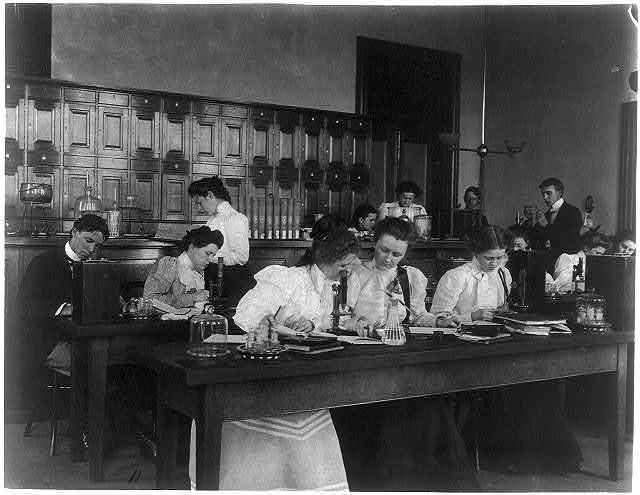
Image Credit: Frances Benjamin Johnston “Students in a science class using microscopes, Western High School, Washington, D.C.” (1899) The Library of Congress

Sue Blaustein: “On Hubbard Street”


On Hubbard Street


April

My new friend
is the northern end
of Hubbard Street.
Hubbard is a homely

name! Old Mother
Hubbard’s bare cupboard;
fall wagons heaped
with warty squash.

Hubbard Street comes
near my house too. But
the northern end – the terminus –
feels like a distant

village. By going there
this spring I learned
that I need a distant
village. It has outskirts.

Where a copter-beanie
wind turbine
in a warehouse parking
lot goes whup whup

whup whup whup.


June

East Side Stor-Mor
is on the outskirts. Not
Store not More.
We shaved e’s off

naming places
in the 20th century.
Not anymore – too
corny. I’m scuffing

a heated mix of brown
pine needles and litter.
A cups-and-bags-and-wrappers mix
that clogs catch-basins

and recurs;
piling ahead of your same feet
in all the summers of your life,
to appear again

across lifetimes, suffusing
you with feelings
about eternity. Everything
simultaneous… could be…


November

The curbstones are soft-edged
along the street
between Stor-Mor and what
I call my village proper.

Where there are
seven houses – residences!
Modest, and I don’t know
who lives there. I’ve

dwelt in houses and flats
I might’ve passed;
circumstances and years
before I lived there.

Hubbard Street –
I feel something in your ether.
You seem to know where I’ve been.
I sense you know

where I might be, when one
day another now
turns to then. It’s 2:00 PM
and the turbine blades whirl,

casting shadows
on the units of Stor-Mor –
garage doors 29, 30 and 31 –
whup whup…whup whup whup


About the Author: Sue Blaustein is the author of “In the Field, Autobiography of an Inspector”. Her publication credits and bio can be found at www.sueblaustein.com. Sue retired from the Milwaukee Health Department in 2016, and is an active volunteer. She blogs for ExFabula (“Connecting Milwaukee Through Real Stories”), serves as an interviewer/writer for the “My Life My Story” program at the Zablocki VA Medical Center, and chases insects at the Milwaukee Urban Ecology Center.


More by Sue Blaustein:

A Song for Harvest Spiders

A Song for Noise

The Old Ways


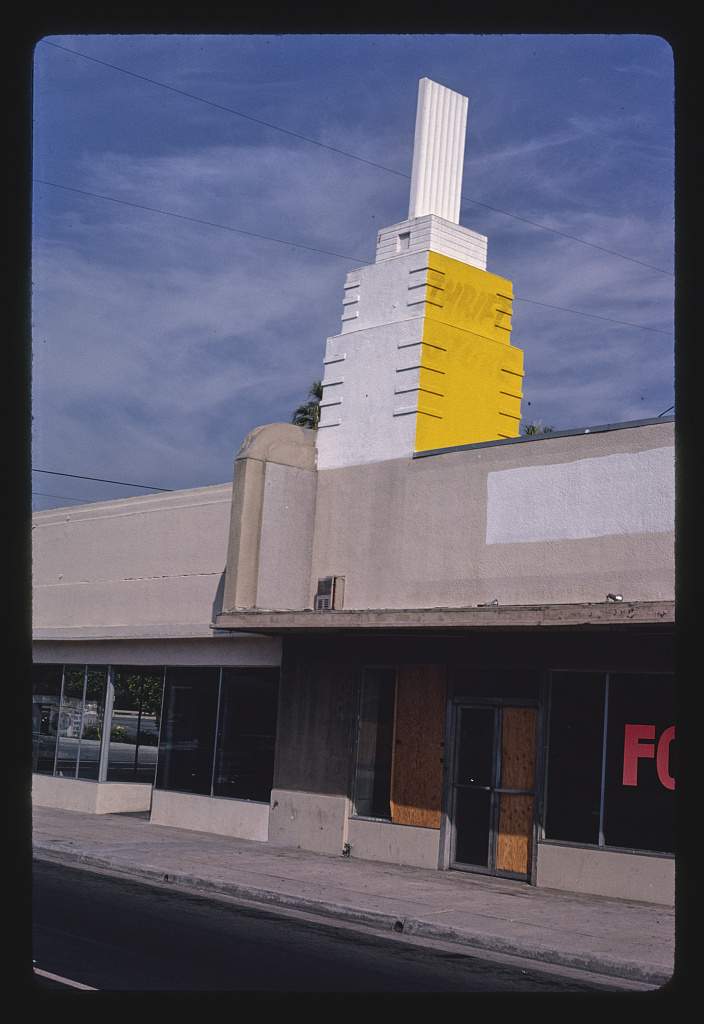
Image Credit: John Margolies “Thrift Store, Baseline [i.e. Base Line] Street, San Bernardino, California” (1991) The Library of Congress

Sue Blaustein: The Fifty-Year Anniversaries are Almost Over


1968, ‘69
2018, ‘19:
The Fifty-Year Anniversaries are Almost Over


On the back porch
at sunrise,
I hold my toaster oven
over the rail. I
pop the bottom
tray, brush crumbs
onto the grass
then stay
to listen to crickets.
To their uninterrupted
    chirping,
then to chirp-imitating
beeps, as the kneeling floor
of the #15 bus
is lowered to the curb
on Holton Street.

    My tiny portion –
        my due –
    of the brunt of your war
    has been arriving.
    Ramifications traveling
    in steady waves,
    rolling in for fifty years
    and more
    come faster now.

It’s only fit
that I kneel like the bus
to meet them.


About the Author: Sue Blaustein is the author of “In the Field, Autobiography of an Inspector”. Her publication credits and bio can be found at www.sueblaustein.com. Sue retired from the Milwaukee Health Department in 2016, and is an active volunteer. She blogs for ExFabula (“Connecting Milwaukee Through Real Stories”), serves as an interviewer/writer for the “My Life My Story” program at the Zablocki VA Medical Center, and chases insects at the Milwaukee Urban Ecology Center.


More by Sue Blaustein:

A Song for Harvest Spiders

A Song for Noise

The Old Ways


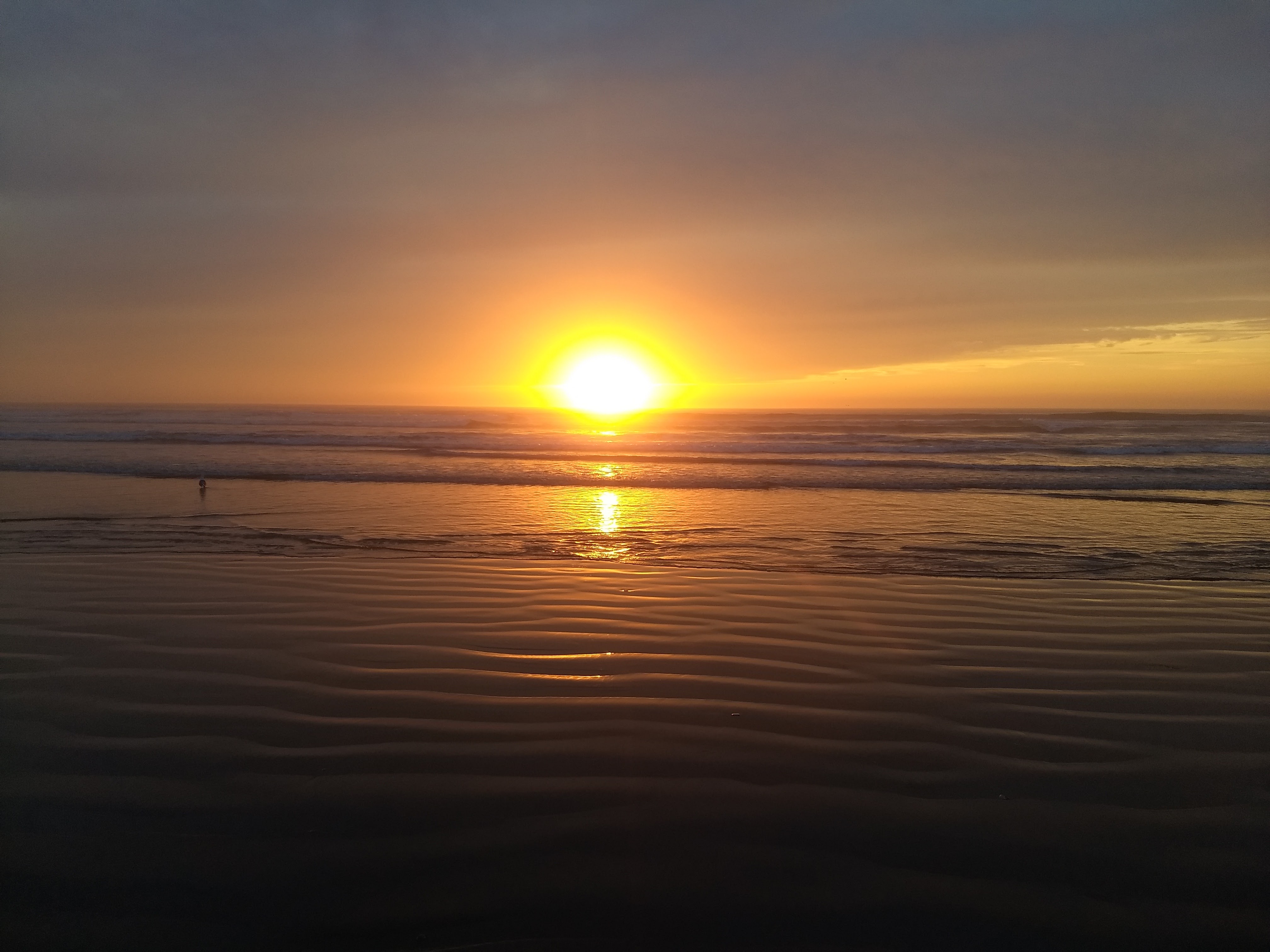
Image Credit: Chase Dimock “Sunset at Grover Beach” (2020)

Sue Blaustein: A Horse Named “Can-Ball-the-Flowers”


A Horse Named “Can-Ball-the-Flowers”

…we can tentatively define information as the communication of relationships
– Hans Christian Von Baeyer in “INFO, Information, the New Language of Science”

When I was five or six,
I was crazy for horses
            and words.
My mother told me
about Thoroughbreds
and the meaning of pedigree –
why owners gave them

long and pompous names. She’d
open the New York Times to find
the line-up at Belmont, read
us the silliest ones out loud
            and we’d laugh.
Something only we shared… As
years passed, I’d remember, or

mis-remember a name.
Was there a horse
named “Can-Ball-the-Flowers”?
I let it drop, but then the Internet was invented.
Forty-three when I got connected, my first
burning question for the web:
Was there ever a horse named

“Can Ball the Flowers”?
DOS search engines in the 90’s
didn’t think for you like Google.
Courier type on a black
background…I strategized
keywords: I was five or six.
So, 1961, ‘62. Races in New York – 

would be Aqueduct or Belmont.
I had to tweak my terms
repeatedly, but finally I learned –
there was a chestnut
stallion named “Candy Spots”,
and a fast mare whose name
was “Bowl of Flowers”!


About the Author: Sue Blaustein is the author of “In the Field, Autobiography of an Inspector”. Her publication credits and bio can be found at www.sueblaustein.com. Sue retired from the Milwaukee Health Department in 2016, and is an active volunteer. She blogs for ExFabula (“Connecting Milwaukee Through Real Stories”), serves as an interviewer/writer for the “My Life My Story” program at the Zablocki VA Medical Center, and chases insects at the Milwaukee Urban Ecology Center.


More by Sue Blaustein:

A Song for Harvest Spiders

A Song for Noise

The Old Ways


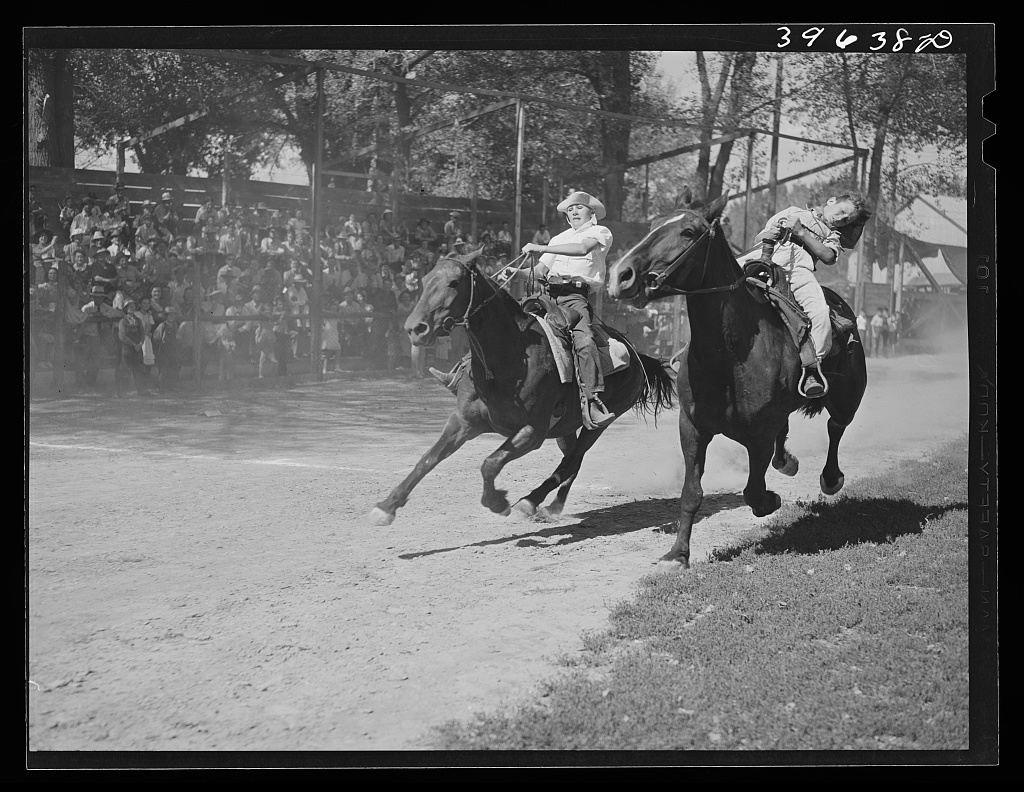
Image Credit: Russell Lee “Finish line of farm boys’ horse race. Vale Oregon. This was supposed to be a boys race but the girls wanted to be in it too so they were included ” (1941) The Library of Congress

Sue Blaustein “The Old Ways”


The Old Ways

So many atmospheres
to perceive
when it gets quiet!

Sometimes on 17th Street
I hear a train.
Though active lines

aren’t really near
I know. Then, the feel
of a dusty depot –

late-August-in-April.
I lose myself in golden
            wheat fields

gracing the box
of Triscuits on
the counter.

Color lithography
has not entirely
lost its power.

Leaving the wheat field
where Triscuits are born
I lose myself again,

in a halftone
of mud-colored raisins
on another box.

A picture on the outside
showing what’s inside –
fifteen sticky ounces

of raisins. “Lion”
brand. Lion Raisins?
That’s funny.

But don’t laugh
at the lion in the logo.
He’s in profile –

the flow of his mane
modeled with simple
strokes. Just line art.

Just line art, it’s enough.
To show lion is stable
and strong. Run out of raisins?

It cannot happen.


About the Author: Sue Blaustein is the author of “In the Field, Autobiography of an Inspector”. Her publication credits and bio can be found at www.sueblaustein.com. Sue retired from the Milwaukee Health Department in 2016, and is an active volunteer. She blogs for ExFabula (“Connecting Milwaukee Through Real Stories”), serves as an interviewer/writer for the “My Life My Story” program at the Zablocki VA Medical Center, and chases insects at the Milwaukee Urban Ecology Center.


More by Sue Blaustein:

A Song for Harvest Spiders

A Song for Noise


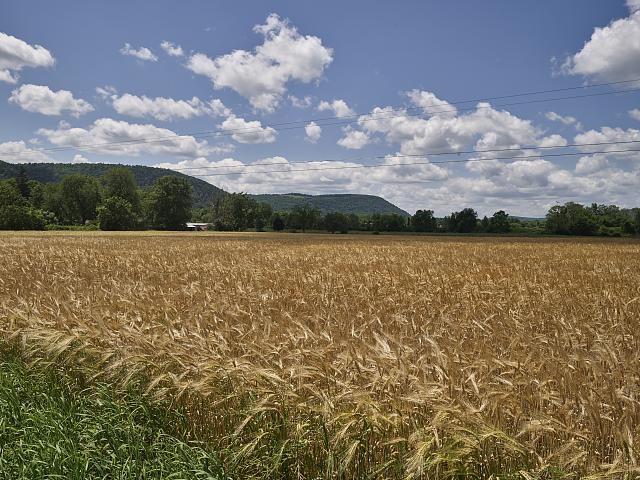
Image Credit: Patricia M. Highsmith “Wheat field near Candor, New York ” (2018) The Library of Congress

Sue Blaustein: “A Song for Noise”


A Song for Noise

Time has been called God’s way of making sure everything doesn’t happen at once. In the same spirit, noise is Nature’s way of making sure we don’t find out everything that happens.

– Hans Christian Von Baeyer (in Information, The New Language of Science)


I was there – passing by –
             on an April day
when industrial gases arrived.
A long truck parked on Holton Street –
Advance Diecasting – their new home.

I saw tanks secured on the flatbed.
Primary colors on Hazmat signs.
Warnings in triangles – yellows
and reds. The delivery was almost over.  

It was something that happened –
an event – so I marked it. Goodbye
welding gases I said. Cordial, to cylinders
in my rear-view mirror. Visit again sometime soon! 

I could’ve said goodbye
            to the driver too. 
Said goodbye, unloaders and signs.
Goodbye tires, goodbye pebbles
caught in the tread, rolling 

            away to where? 
When to leave off? To wrap it up –
when nothing’s really “over”?
It’s a never-ending, all-at-once
            overlapping onrush –

Something happened…What 
             happened?
            What’s next?


About the Author: Sue Blaustein is the author of “In the Field, Autobiography of an Inspector”. Her publication credits and bio can be found at www.sueblaustein.com. Sue retired from the Milwaukee Health Department in 2016, and is an active volunteer. She blogs for ExFabula (“Connecting Milwaukee Through Real Stories”), serves as an interviewer/writer for the “My Life My Story” program at the Zablocki VA Medical Center, and chases insects at the Milwaukee Urban Ecology Center.


More by Sue Blaustein:

A Song for Harvest Spiders


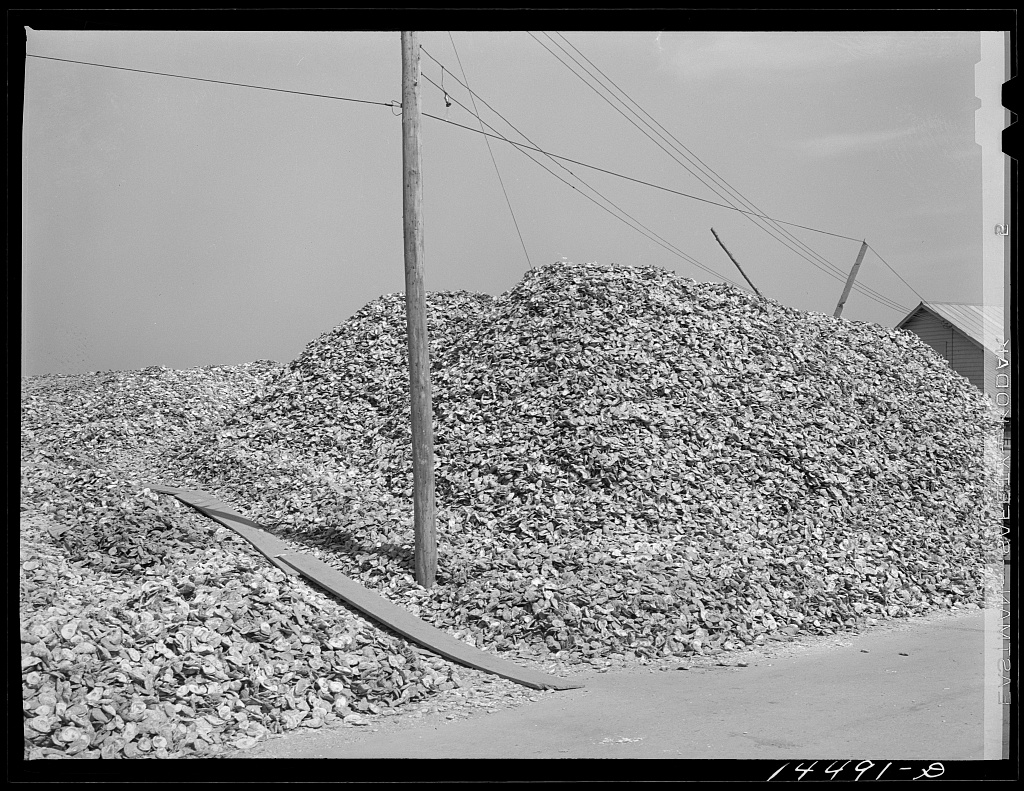
Image Credit: Reginald Hotchkiss “Shuck pile. Rock Point, Maryland. These shells are returned to river to start new beds” (1941) The Library of Congress