It’s 2023, and We Still Need to Read Sally Carrighar
By Sue Blaustein
The late author Sally Carrighar’s work is out of print. Between 1944 and 1975, Carrighar (1898-1985) published one novel, eight works of “nature writing” and an autobiography (Home to the Wilderness). Two of her books One Day at Beetle Rock and One Day at Teton Marsh were made into Disney features, making those titles very well-known.
I must’ve read one or more of her books when I was in grade or middle school. As an adult, I found them while browsing used bookstores. They looked familiar, and I bought and read them again. By that time, I was a poet with a day job – better prepared to appreciate how exact, humble, and brilliant a writer; and how meticulous an observer she was.
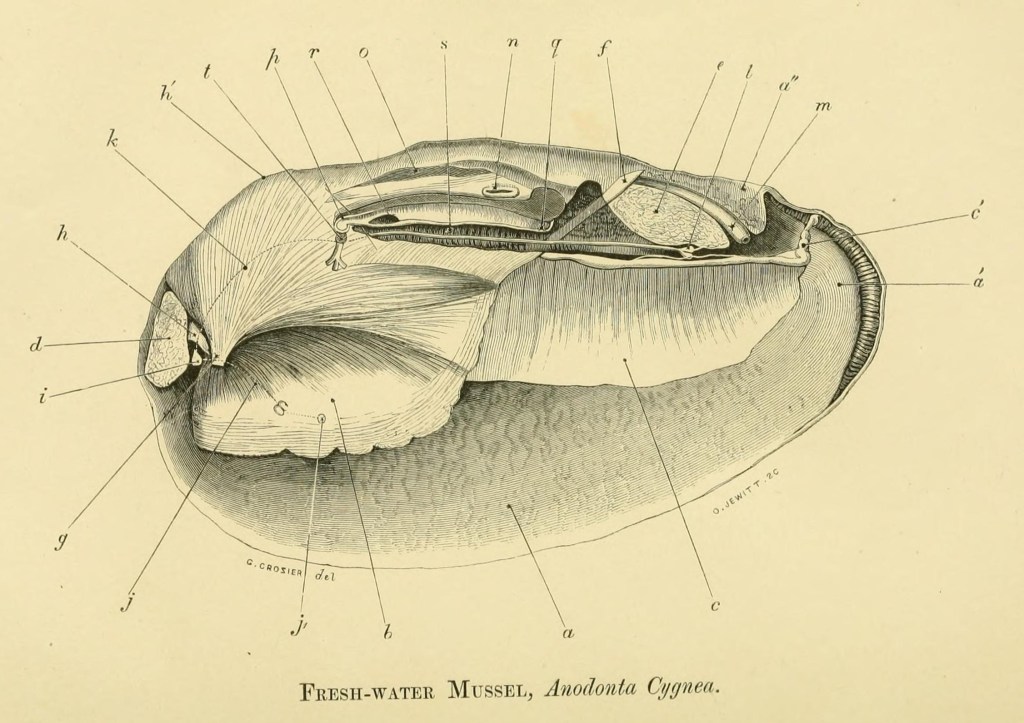
If you’ve never read her work, you don’t know yet, how in a few paragraphs – say about the reproductive habits of a freshwater mollusk – she could expand and reshape the way you see non-human creatures, yourself, and the world we inhabit together.
The swan mussel was not nearly as complex a creature as man, but even she had her satisfactions, and a simple nervous system with which to experience them.
Every creature – swan mussels included – has vital and specific needs. If those needs are satisfied, we live. Of course, the word “satisfy” carries layers of other meanings for humans. Most likely few if any apply to our mussel. Carrighar’s deft use of the word satisfactions doesn’t load mollusks up with human emotions and yet…it opens the door to kinship.
How does the mussel breathe and eat? Carrighar explains how it pulls water into one tube and expels it through the other, thus receiving oxygen for the gills and minute plants and animals for nourishment.
No doubt she enjoyed some draughts of this living broth more than others; on windy days when the pond was stirred, the greater amount of oxygen may have felt rather invigorating. These were not very stimulating events, but the mussel was not equipped for excitement.
Enjoyed? Invigorating? Though these words come close to attributing human perception to a mollusk, they make a valid point more vivid. For any creature, no moment is the same as the one before, or ones to come. Experiencing and responding to change is what nervous systems are for. The language opens a portal, a way to imagine what it’s like to be something else. A way to care.
Continue reading “Sue Blaustein: It’s 2023, and We Still Need to Read Sally Carrighar” As It Ought To Be