When the latest version of Dogs of War dropped, adolescents of all ages kept vigil.
Children played like adults. Adults played like children. True for all good fun, killing
felt almost real. In this virtual world (“virtual” comes from the Latin for “manly”),
the human body springs alive with detail, down to platelets and red and white blood cells.
In slow motion, you watch the discharged round spin and spin and spin until you see the impact,
then hear the sound. The slow motion kill effects are insane, down to shattering bone.
How could verisimilitude this true not make anyone fall in love with war?
About the Author: Richard Stimac has published a poetry book Bricolage (Spartan Press), two poetry chapbooks, and one flash fiction chapbook. He is a fiction reader for The Maine Review.
Image Credit: Rik Wouters “Nightmare – War” (1914) Public domain image courtesy of Artvee
Desire
You’d think something like a river is a fixed thing.
Maps, no matter how old, keep rivers in the same place.
Names change. Boundaries move, or dissolve.
Arrows mark migrations and invasions.
The river, given erosions and sediment, stays the course.

Like children, or cats, fixity is what adults desire.
All things change, with time. This is a truism.
But some things change so slowly, so easily unnoted,
we assume them permanent and build our imagination around them.
To think things can be otherwise is to be a god.

That was the first sin, in the Land Between the Rivers.
The Serpent implanted an image in Eve: “What if?”
Eden could be different than it was. Paradise lost with options.
Wisdom is knowing all that is need not be all there can be.
After the Fall, we could no longer accept we simply are. Like the river,

that once enclosed Paradise, and now slowly dies in its way
to the delta, we turn against ourselves. We are not enough.
Or so I feel. Like the river never rests in its mindless meander,
through my works, my days, wants and grasps, kisses, goodbyes,
I long to be a fixed thing, without movement, without will and thirst,

to be a standing body of water, a lake, a pond, a flippant backyard pool.
But that’s not true. It’s the sea I fear, the end of course, when all the sediment
collected over a continent dissolves into salt water. There the river ends.
The maps lose their contour. Far at sea, we lose our landmarks.
Lost, we drift, and lift our heads to the stars, secure in their heavens.
About the Author: Richard Stimac has published a poetry book Bricolage (Spartan Press), over forty poems in Michigan Quarterly Review, Faultline, and december, and others, nearly two-dozen flash fiction in Blue Mountain, Good Life, Typescript, and several scripts. He is a fiction reader for The Maine Review.
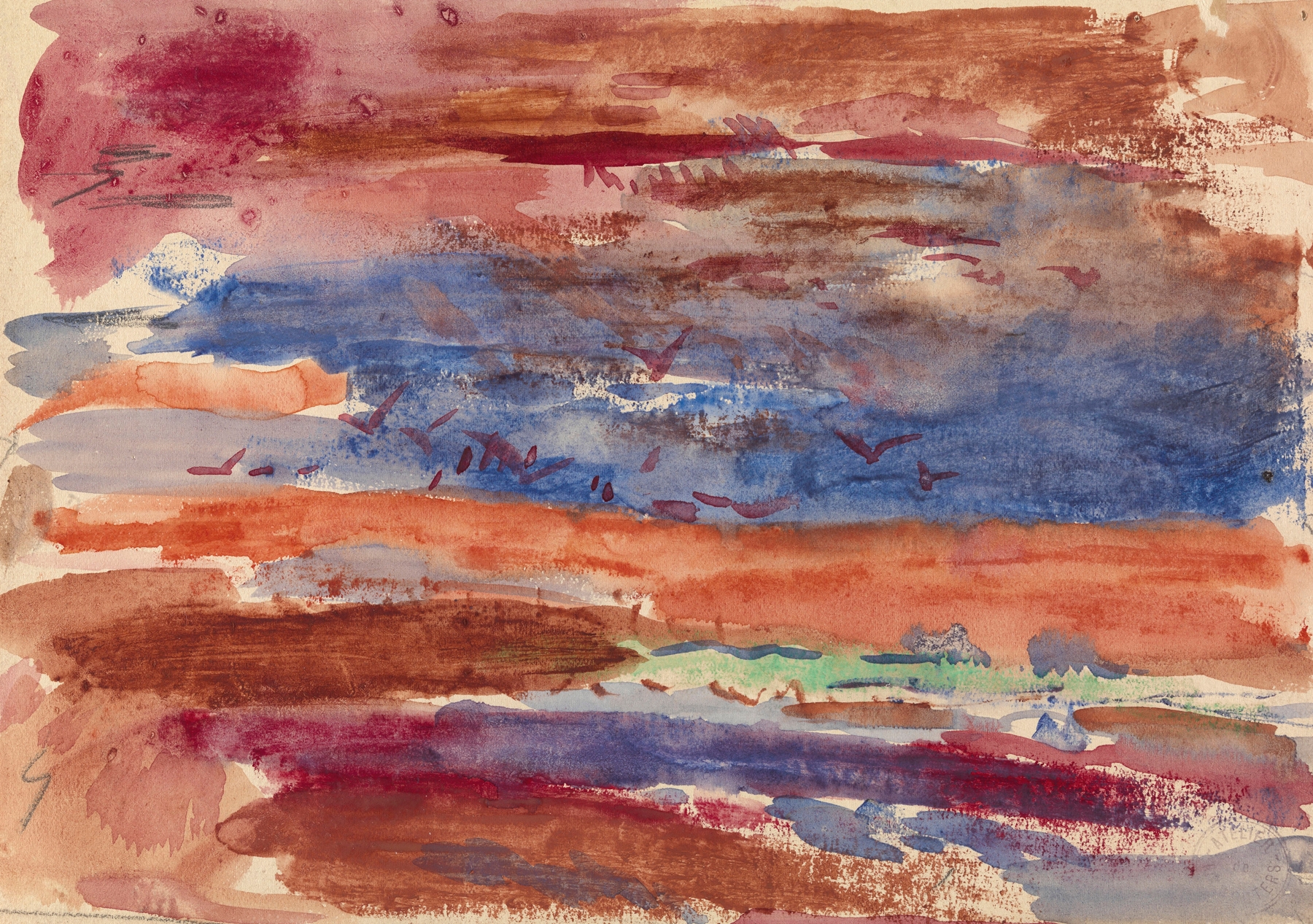

 As It Ought To Be