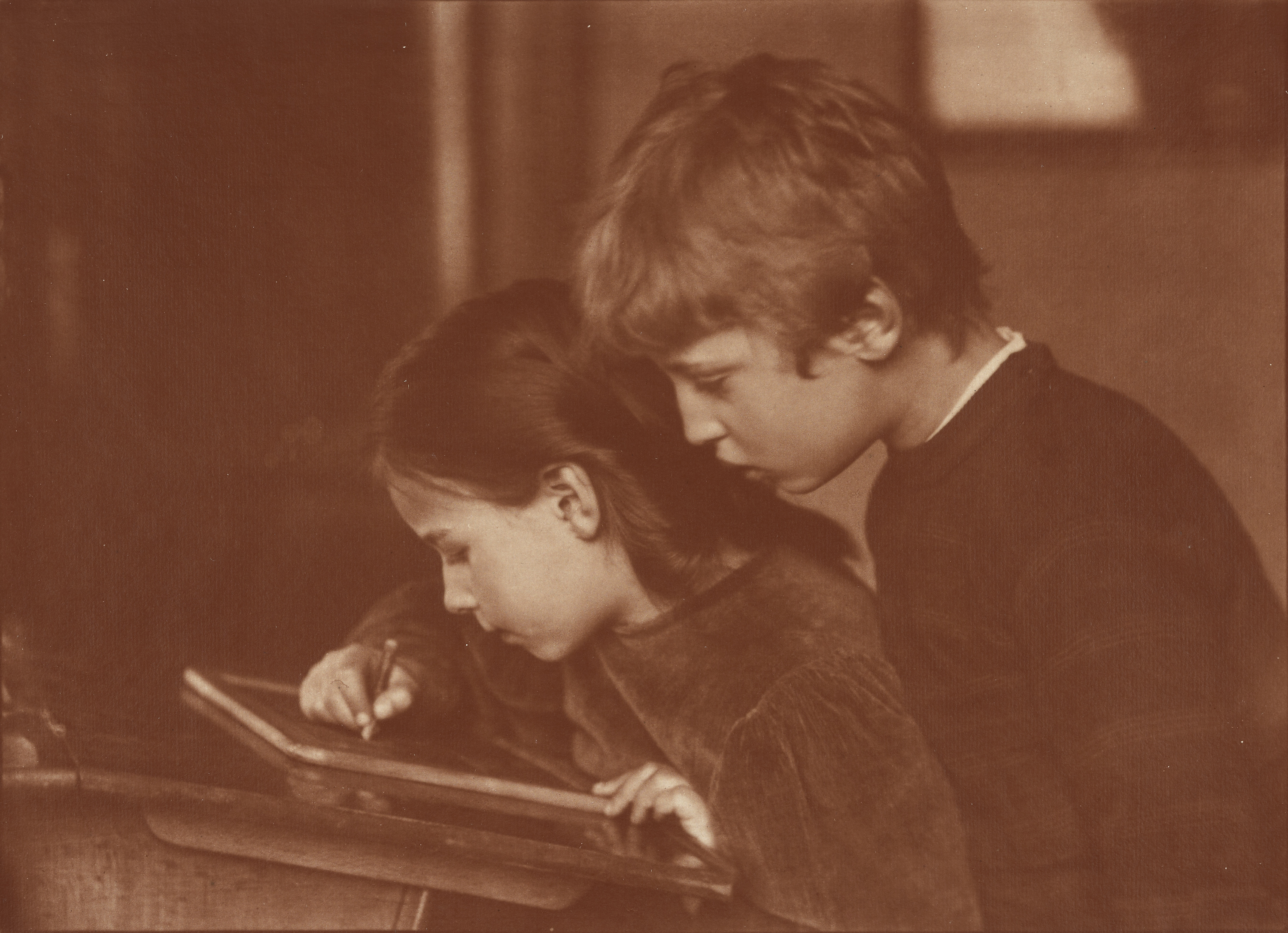
“Aubrie” By Cord Moreski

.

Aubrie
for Andrew Moreski  

My parents had just killed their bedroom lights
when I decided to sit on the porch after supper
listening to Let It Be by The Replacements
and sipping on Fat Tire in a broken beach chair.
It was September and all that was left
in this shore town were locals
and the subtle hints of autumn in the ocean air.
That was when my little brother Andy came out
of the house and introduced me to Aubrie.

He told me as he took a seat that he met her
when he was six years old. Andy snuck
into our older sister’s bedroom
and saw Aubrie’s reflection in posters
of Ginger Spice and Belinda Carlisle,
in palettes of eye shadow and lipstick,
and in the array of powder brushes and bags
scattered like treasure along our sister’s vanity.

They continued to talk in high school.
He wrote love poems for her
during eighth-period composition class
repeating the mantra LOVE HAS NO IDENTITY!  

Then they moved to Astoria together
after college. She told him to grow his hair
past his ears and down his shoulders
to drown out the sound of gossip
that would be about him, to paint
his fingernails blacker than the looks
he would receive, to wear
his thrift store dresses and stilettos
better than any woman he would ever know.

“One day,” Andy told me as we clinked
our beers together, “I’m going to introduce her
to Mom and Dad. But that’s whenever she’s ready.”


.

About the Author: Cord Moreski is a writer from New Jersey. His work has been previously featured in Silver Birch Press, The Pangolin Review, Philosophical Idiot, The Rye Whiskey Review, In Between Hangovers, and several other publications. He is the author of the chapbook Shaking Hands with Time (Indigent Press, 2018) and is currently working on his first full length (2020). You can follow Cord here: https://www.cordmoreski.com

.

Image Credit: Heinrich Kühn “Brother and Sister” (1906) Digital image courtesy of the Getty’s Open Content Program.
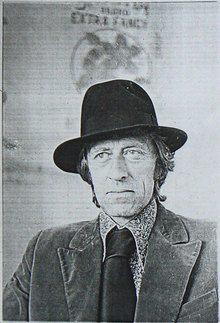
“A Man, His Family Killed by the War, Returns to Aleppo” By Steven Croft

Embed from Getty Images


A Man, His Family Killed by the War,
Returns to Aleppo

In mornings I am despair.  I rise
and walk out to the balcony, its ruined
wall missing like my life, like townspeople
buried in the city’s uncleared debris.
Thanks be to Allah the days send no bombs
now.  But at night they still wake me sweating
and screaming into the sudden quiet
for the dead I’ve abandoned again
and again.

In mornings my neighbor’s daughter still
misses her leg.  “Every time I give her a doll,
she cuts off its leg,” her mother says.

In mornings, below me, younger men rebuild
the insides of houses, clear the street’s rubble
for cars while motorcycles weave through them.
Below me, I smell bread baking, hear laughter,
like an unknown language, its beauty alien
to my life, to my ear, its sound impossible
like my wife has come calling
my name.

.
About the Author: Steven Croft is the author of two poetry chapbooks, Coastal Scenes (2002) and Moment and Time (2015), both published by The Saltmarsh Press. He has published poems recently in Politics/Letters Live and Sky Island Journal. He works for The Marshes of Glynn Libraries in Brunswick, Georgia.

.

Image Credit: Photo courtesy of Getty Images‘ embedded photo program


“Acetylene Sunsets: Edward Dorn’s Recollections of Gran Apacheria” By John Macker


Acetylene Sunsets:

Edward Dorn’s Recollections of Gran Apacheria

By John Macker

“In the internal resistance of his thought, Dorn has been able to understand the American Indian more deeply perhaps than any recent writer, scholarly or poetic, who is not himself an Indian. In these works, as in the larger body of his writing, Dorn makes marginal figures, as they resist external authority with an indivisible spirit of self, land and history, morally central to the inner life of American Culture.”

                                                                                                         – Paul Dresman


I dug Ed Dorn because he wd rather
Make you his enemy
Than lie
           – Amiri Baraka


I first encountered Ed Dorn at a reading I did with him and Linda Hogan in Denver in the spring of 1983, at Muddy’s Coffee House in the Slightly Off Center Theatre on 15th street. I was a young, green poet and it was my first major reading with a theatre full of people, most of whom I didn’t know. I remember being anxious, pacing as I read, almost stalking the words as they came from my mouth. In contrast, Dorn was seated for his reading and read from Hello, La Jolla, or, possibly, Yellow Lola, late 1970’s works that, in contrast to the wild-crafted, rhythmic surrealism of his Gunslinger series of books, seemed arrestingly aphoristic. I knew of Ed Dorn — he was teaching at the University of Colorado — but it would be some years before I began reading all of his works and concluding, along with many others, that his was a distinctive, uncompromising and wildly original American voice and, as his friend the late Amiri Baraka described him, “Thin straight blonde Cowboy/movie looking white guy with the mind/of a saw.”

    Fact is, I didn’t appreciate him as much in those days. And that was as much due to my immaturity and insecurity as it was my inability to recognize great writing character when I was in the same room with it. He was particularly generous to my wife and I and after the reading we spent some time together talking about Denver — he was interested in it as a collection of characters in a landscape, its roots as well as its contemporaneous presence as a major metropolis. He was intrigued by its straight, cosmopolitan, newly corporate cow town development vibe verses the academic/counter-culture exoticism of post-hippie mountain town Boulder. At that time, Naropa Institute was sucking much of the literary air out of the room. Allen Ginsberg and Anne Waldman had conceived the Jack Kerouac School of Disembodied Poetics there, and Trungpa Rimpoche’s hijinks were becoming legend. (I attended the summer poetics program in 1978, so, guilty.)

    After a brief summer teaching stint there in 1977, Dorn evidently wanted no further part of it. In fact, he eschewed the authoritarian implication of all labels and categories: definitions, belonging to a particular school or group of writers. He disdained being classified as Beat, outlaw, academic or avant-garde or belonging to any particular “movement”; as for his primary poetic education with Charles Olson and Robert Creeley at Black Mountain College in North Carolina, as Lisa Jarnot put it, “the formidable constellation of Black Mountain poetics”, it was a transformative experience that would transcend all manner of category or label. In fact, his appearance in Donald Allen’s seminal 1960 anthology of non-academic, avant-garde writing, The New American Poetry, where his work appeared with the greatest poetic minds of his generation, would be as close as he came to belonging to any group. Continue reading ““Acetylene Sunsets: Edward Dorn’s Recollections of Gran Apacheria” By John Macker”

“to abby wherever you are” by John Grochalski


to abby wherever you are

i watch the little girl
sitting across from me

she is four years old
and is as impatient
with this stalling subway train as i am

she kicks her legs
and squirms in her seat
and complains to her mother
in impatient little kid whines

mama’s reaction is a mantra of shushes
and the impatient bark of her name, abby

mom has a fussy infant to attend to as well

i wish that i could act out like abby
kick my legs and squirm in my seat

impatiently whine to my wife
about infrastructure and the decline
of american ingenuity

but i’d end up in divorce court

i wish i could tell abby
that in thirty minutes
we will all reach the end
of this horrible saga together

that i will gallantly carry
her brother’s stroller up two flights of steep steps
as her mother offers many thank yous

and abby leads us up and up
toward the light of the quickly moving city

where the big tall buildings
aren’t always big tall lies

and a taste of the american dream
is as delicious as an ice cream cone.


About the Author: John Grochalski is the author of the poetry collections, The Noose Doesn’t Get Any Looser After You Punch Out (Six Gallery Press 2008), Glass City (Low Ghost Press, 2010), In The Year of Everything Dying (Camel Saloon, 2012), Starting with the Last Name Grochalski (Coleridge Street Books, 2014), and The Philosopher’s Ship (Alien Buddha Press, 2018). He is also the author of the novels, The Librarian (Six Gallery Press 2013), and Wine Clerk (Six Gallery Press 2016).  Grochalski currently lives in Brooklyn, New York, where the garbage can smell like roses if you wish on it hard enough.


Image Credit: “116TH STREET/COLUMBIA UNIVERSITY STATION. PLATFORM AND STAIRS TO MEZZANINE. – Interborough Rapid Transit Subway (Original Line), New York County, NY” The Library of Congress

“Punchline” By Nathan Graziano


Punchline

Here’s a joke in a loose poetic form.
Let’s be honest, people like reading
jokes more than they like reading poems.
In my older age, I’m becoming a realist,
like my father warned, only he used
the word “conservative.” Which I’m not.
At one time, I sat at this same desk
and believed that a poem could touch
the world and make the smallest dent
in whatever armor protects us from us.

So a poet walks into a bar with a parrot
on his shoulder, and the bartender says,
“Hey, where did you get that thing, bub?’
And the parrot says, “Starbucks. There’s
a ton of them.” Funny how that turned.   


About the Author: Nathan Graziano lives in Manchester, New Hampshire, with his wife and kids. His books include Teaching Metaphors (Sunnyoutside Press), After the Honeymoon (Sunnyoutside Press) Hangover Breakfasts (Bottle of Smoke Press in 2012), Sort Some Sort of Ugly (Marginalia Publishing in 2013), and My Next Bad Decision (Artistically Declined Press, 2014), Almost Christmas, a collection of short prose pieces, was recently published by Redneck Press. Graziano writes a baseball column for Dirty Water Media in Boston. For more information, visit his website: www.nathangraziano.com.


More By Nathan Graziano:

Explaining Depression To My Cousin


Image Credit: “Wallace & parrot, 2/29/24” (1924) Library of Congress

“War? Rumors of War?” “By John Guzlowski

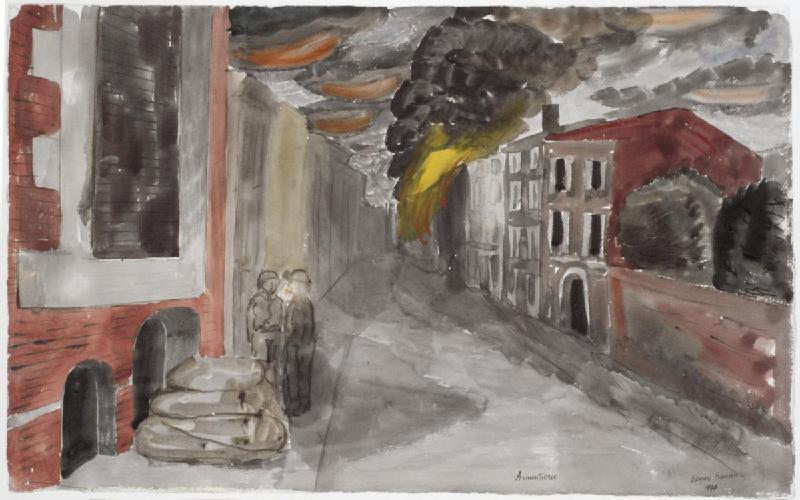
Armentieres_after_Bombing,_May_1940_Art.IWMARTLD175


War? Rumors of War?     


     There’s been a lot of talk in the news about the possibility of war in Iran and the Middle East.  Some people are talking about why we need to go to war with Iran, and some are talking about why war with Iran is a mistake.  

     I’m tired of war.

     I’ve lived through the Korean war, the Vietnam War, the first Gulf War, the second Gulf War, the war on Terror, the Afghan War, and the Iraq War. And this list doesn’t include all the little bitty wars I’ve lived through, like Panama, Grenada, Lebanon, and it doesn’t include all those other little bitty wars I’ve forgotten about and that only the dead remember.

     War is a terrible thing.  I think that’s one of the things I’ve learned from my mother and father and from writing about their lives and the experience of other Poles in World War II.

     In my poem “Landscape with Dead Horses,” I talk about the way the war began in Poland on September 1, 1939.  Here’s what I say:

War comes down like a hammer, heavy and hard
flattening the earth and killing the soft things:
horses and children, flowers and hope, love
and the smell of the farmers’ earth, the coolness
of the creek, the look of trees as they unfurl
their leaves in late March and early April.

     This is war for me.  This is the way I see war. There’s nothing pretty about war, nothing heroic, nothing epic or Homeric.  50 million civilians died in World War II. And you can bet that not one of those deaths was peaceful, not one was a death you would want to wish on your own mother or your father or your children.

     And what I hate to admit about war – but I have to – is that sometimes war is necessary.

     I’m glad that the US went to war against Hitler and dragged him and his soldiers and followers down and tried to bury every single one of them in an unmarked and unmourned grave.

     War, as I see it, was terrible and it was necessary, but the thing I can’t ever forget is that the Germans who fought for Hitler also thought the war was necessary and justified.

    That’s one of the problems with war.

     What brings us together finally – brings together those who don’t want war and those who want war – is that we all end up scratching our heads and grieving over the chaos and the loss.


About the Author: John Guzlowski’s writing appears in Rattle, North American Review, and other journals.  Echoes of Tattered Tongues, his memoir about his parents’ experiences as slave laborers in Nazi Germany, won the Benjamin Franklin Poetry Award and the Eric Hoffer/Montaigne Award.  He is the author of the Hank and Marvin mystery novels and True Confessions, a memoir in poems.


More By John Guzlowski:

Language and Loss

From the Ashes: An Interview With John Guzlowski


Image Credit: Edward Bawden “Armentieres after Bombing, May 1940″ Public Domain


“And on the Seventh Day” By Agnes Vojta


And on the Seventh Day

God had finished his work and thought
a rest day would be a nice change.
But he didn’t have anybody to play golf with,
because Satan was busy.
After the thrill of creating,
He wondered
what to do to amuse Himself.

So He figured,
let’s give those humans free will
and see what they do with it. Perhaps
watching them will be
a fun pastime.

And He settled down to watch
civilizations rise and fall
and humans slaughter each other,
and when the same stories played out
over and over again,
He became bored and
wandered off to
create another universe.

This time, He thought,
I’ll make one
without people.


About the Author: Agnes Vojta grew up in Germany and now lives in Rolla, Missouri where she teaches physics at Missouri S&T. She is the author of Porous Land (Spartan Press, 2019). Her poems recently appeared in Gasconade Review, Thimble Literary MagazineTrailer Park QuarterlyPoetry Quarterly, and elsewhere.


More By Agnes Vojta:

Flotsam


Image Credit: William Blake “Ancient of Days” (1794)

“My Mother on Her Deathbed” by Bunkong Tuon


This is the sixth in a series of poems from a forthcoming poetry collection about raising a biracial daughter in contemporary America, during this polarizing time of political and cultural upheavals where sexual harassment allegations abound, where a wall, literal and figurative, threatens to keep out immigrants like the narrator, a former refugee and child survivor of the Cambodian Genocide. You can find links to the full series of poems on As It Ought To Be Magazine below.


My Mother on Her Deathbed

Withered away in pus,
knowing that she’d leave
me, her only child.
My uncle’s body crouched in
fetal position on the red
dirt of the refugee camp,
heavy boots of Thai soldiers
thundering on his head,
back and stomach.  
Grandmother weeps
at night
for all her children,
alive and dead,
for her orphaned grandson,
for all parents haunted
by helplessness.
In America
I was the new kid,
a reminder of a war
that tore families apart.  
Saliva clung
to my tear-stained cheeks
and stuck to my hair.
Stephanie  
my first crush said,
“It’s nothing personal.”
But these memories
are wiped clean.
All is forgiven.
A flower blooms
in the desert
when my daughter
hugs me.


About the Author: Bunkong Tuon is the author of Gruel (2015) and And So I Was Blessed (2017), both poetry collections published by NYQ Books, and a regular contributor to Cultural Weekly  He is also an associate professor of English and Asian Studies at Union College, in Schenectady, NY.


Bunkong Tuon’s series of poems on raising a biracial daughter in contemporary America:

Ice Cream

Gender Danger

The Bite

Tightrope Dancer

Women’s March in Albany

My Mother on Her Deathbed


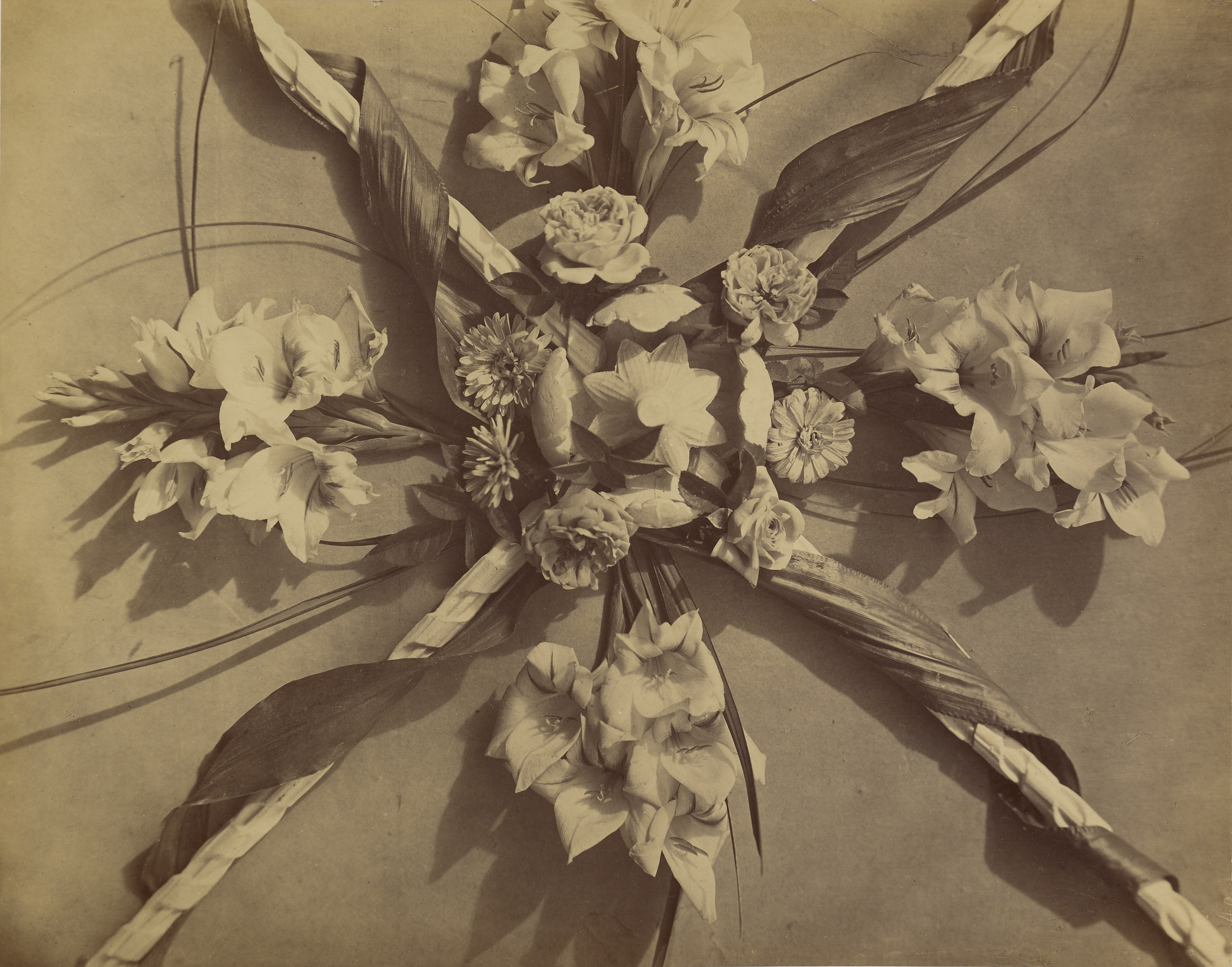
Image Credit: Charles Aubry “Still Life Arrangement” (1864) Digital image courtesy of the Getty’s Open Content Program.
“Eat Rain” By Luis Cuauhtémoc Berriozábal


Eat Rain

We can eat rain
when our teeth fall
out; Mexican
beer from the bar.

The sky will be
the food mart; the 
sea as well. We
can eat a tear.

No one will care.
Not Washington,
not the food banks,
and not the clouds.

We can’t eat fire.
New teeth won’t grow.
Ice cubes are
hard. This I know.

I have eaten
up my own sweat,
a pool of tears.
I am human.

I get quite starved.
I love the clouds.
The rain they drop.
I wait under.

And I eat rain,
and I eat rain,
fabulous rain,
clear, falling rain.


About the Author: Luis Cuauhtémoc Berriozábal, born in Mexico, lives in Southern California, and works in the mental health field in Los Angeles, CA. His latest poems will appear in Fearless, Former People, Piker Press, Right Hand Pointing, Winamop, and Yellow Mama Magazine.


Also By Luis Cuauhtémoc Berriozábal:

Dracula

When I was a Child


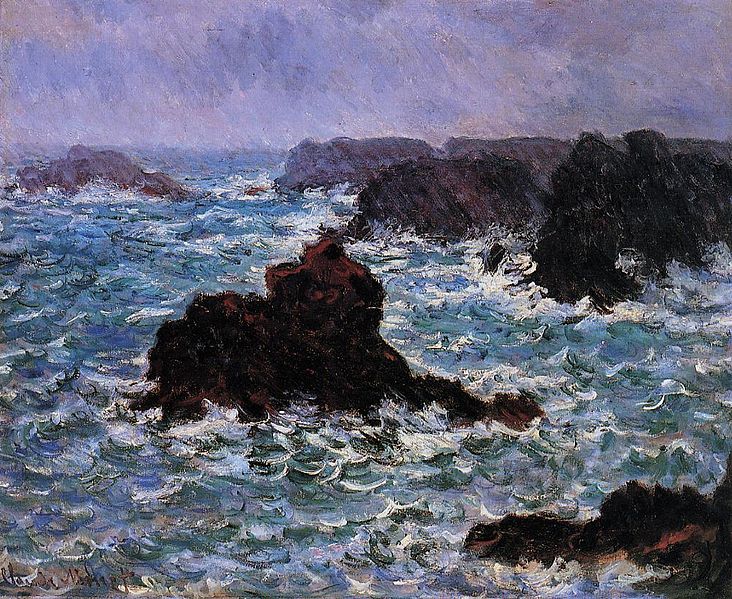
Image Credit: Claude Monet “Belle-Ile, Rain Effect” (1886) public domain

“Cycles of Grief Go On and On” By Jeanette Powers


Cycles of Grief Go On and On

In no good world is it right
for a mother to leave behind
two young boys when she dies
or for the family to fight
over her crumbs, her car
the paint by number of a white horse
the hand-painted sculpture
of a monkey, hanging
from a real rope
the raining oil lamp
with the naked woman inside
there’s no justice
in fighting over her wedding ring
while those two boys
sit in pews praying
for their mom.

There is no kindness in giving
your queer granddaughter
a bible for graduation
after fifteen years of her
hiding behind the pulpit
knowing she can’t be baptized
into the faith of her family
and cutting off her college fund
when she’s caught red-handed
with a woman at the movie theater
then sending her out into the world
without a safety net
unable to pray without
remembering being cast away.

For the abandoned
it feels like everyone
is beating on them for their whole lives
and they are the only ones paying the price
it seems like everyone
is just getting away with so much cruelty
dressed up as the Christian thing to do
and we, abandoned through grief,
loss, through being different
find our own solace
and too often in razor blades,
another dozen bottles
always bashing our heads
in prayer against a wall
we can’t find our way out from behind.

Are we raising a generation
of hungry ghosts, sleeping
with clenched fists, ready to punch back
at first waking, unable to be given
an apology they can hear
every reason just an excuse
always believing everyone
is going to be right at our throats
the second we show our self
our rage an impacted tooth
our memory a suppurating ulcer
the only cheek turned, always our own?


About the Author: Jeanette Powers: poet, painter, philosopher, professional party dancer and working class, anarchist, non-binary queer. Here to be radically peaceful, they are a founding member of Kansas City’s annual small press poetry fest, FountainVerse. Powers is also the brawn behind Stubborn Mule Press. They have seven full length poetry books and have been published often online and  print journals. Find more at jeanettepowers.com and @novel_cliche


More By Jeanette Powers:

Reflections in the Windows of Your First Car


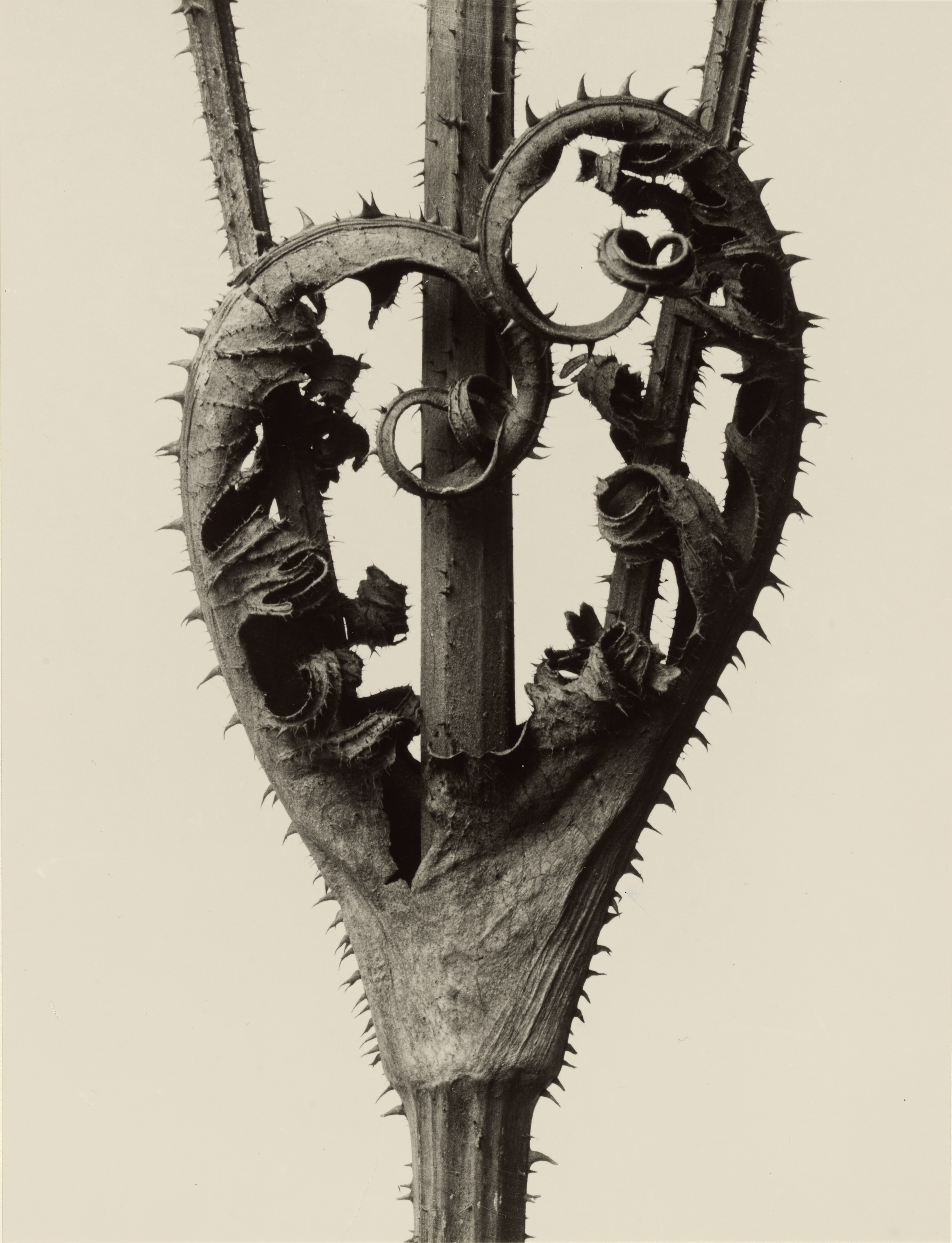
Image Credit: Karl Blossfeldt “Dipsacus laciniatus” (1928) Digital image courtesy of the Getty’s Open Content Program.