Jason Baldinger: “let go of atlantis”


let go of atlantis

jerry believes in ivory soap
he believes in starched collars
his spine is straight
he says all the flying plagues
of florida are near sited
don’t give them room to smell

I missed the manatees
out in some cove near
the launch pad that’s etched
in our consciousness
I see it in the rearview
and I want to write about
shoveling snow as a boy
about dreams exploding
about hot cocoa
and christa mcauliffe

jerry says for fifteen bones
they’ll give me a sea kayak
I can paddle over the surf
to a barrier island all my own

out there cooking hamburger
helper over a pocket rocket
Ill turn back/ahead time
ill forget my couth
and go native

going native is a racist term
meant to minimize
the people who were killed
so this land could be our land
a universe of violence

it seems that every inch
of this land is steeped
in blood, I wonder
if a barrier island
off the coast of the atlantic
may be one of the few places
I can step where that blood
doesn’t well up a hot spring
of unacknowledged history

I’m gonna stay out
an island a mile away from
civilization, the sun paints
the sky every twelve hours
every day the ocean
steps a little higher
when it reaches my neck
Ill know its time
to let go of atlantis


About the Author: Jason Baldinger is bored with bios. He’s from Pittsburgh and misses roaming around the country writing poems. His newest book is A Threadbare Universe (Kung Fu Treachery Press) with The Afterlife is A Hangover (Stubborn Mule Press) coming soon. His work has been published widely across print journals and online. You can hear him read his work on Bandcamp and on lp’s by the bands The Gotobeds and Theremonster.


More Poetry by Jason Baldinger:

This Ghostly Ambience

It was a Golden Time

Beauty is a Rare Thing


Image Credit: Carol M. Highsmith “Sunrise on a Florida beach ” (2014) The Library of Congress


Ivan Jenson: “Last Call”


Last Call

why didn’t you
say this
when we were
both beautiful
I mean look at us now
our shoes are shinier
than our complexions
and when was the last time
we were complimented
by our own reflections
at this stage we would rather
sleep too damn much
than search the city at night
for a stranger selling
the soft drug called touch
anyway you say
you still know your way
around a midnight mattress
and this time
I won’t mix and match
my feelings
or misplace your
rusty red kiss


About the Author: Ivan Jenson is a fine artist, novelist and popular contemporary poet who lives in Grand Rapids, Michigan. His artwork was featured in Art in America, Art News, and Interview Magazine and has sold at auction at Christie’s. Ivan was commissioned by Absolut Vodka to make a painting titled Absolut Jenson for the brand’s national ad campaign. His Absolut paintings are in the collection of the Spiritmusuem, the museum of spirits in Stockholm, Sweden.

Jenson’s painting of the “Marlboro Man” was collected by the Philip Morris corporation. Ivan was commissioned to paint the final portrait of the late Malcolm Forbes.  Ivan has written two novels, Dead Artist and Seeing Soriah, both of which illustrate the creative and often dramatic lives of artists. Jenson’s poetry is widely published (with over 600 poems published in the US, UK and Europe) in a variety of literary media. A book of Ivan Jenson’s poetry was recently published by Hen House Press titled Media Child and Other Poems, which can be acquired on Amazon. Two novels by Ivan Jenson entitled, Marketing Mia and Erotic Rights have been published hardcover.

.
Ivan Jenson’s new psychological thriller novel The Murderess is now available on Amazon for preorder and will be published June, 1, 2021 by Dark Edge Press, UK. Ivan Jenson’s website is: www.IvanJenson.com
.
.
Image Credit: Russell Lee “Truck full of mattresses in front of mattress factory. San Angelo, Texas ” (1939) The Library of Congress

John Dorsey: “The Prettiest Girl at Dirty Frank’s Bar”


The Prettiest Girl at Dirty Frank’s Bar

helped take the stools down every morning
& wore an eyepatch to keep out sunlight
& bad decisions

she hung art on the walls
just below a faded banner
for budweiser

& she talked about the moon landing
while dancing in a circle
with her arms out
to properly explain
the laws of gravity.


About the Author: John Dorsey lived for several years in Toledo, Ohio. He is the author of several collections of poetry, including Teaching the Dead to Sing: The Outlaw’s Prayer (Rose of Sharon Press, 2006), Sodomy is a City in New Jersey (American Mettle Books, 2010), Tombstone Factory, (Epic Rites Press, 2013), Appalachian Frankenstein (GTK Press, 2015) Being the Fire (Tangerine Press, 2016) and Shoot the Messenger (Red Flag Press, 2017),Your Daughter’s Country (Blue Horse Press, 2019),Which Way to the River: Selected Poems 2016-2020 (OAC Books, 2020) and The Prettiest Girl at the Dance (Blue Horse Press, 2020. His work has been nominated for the Pushcart Prize, Best of the Net, and the Stanley Hanks Memorial Poetry Prize. He was the winner of the 2019 Terri Award given out at the Poetry Rendezvous. He may be reached at archerevans@yahoo.com.


More By John Dorsey:

Anthony Bourdain Crosses the River of the Dead

Punk Rock at 45

Perpetual Motion


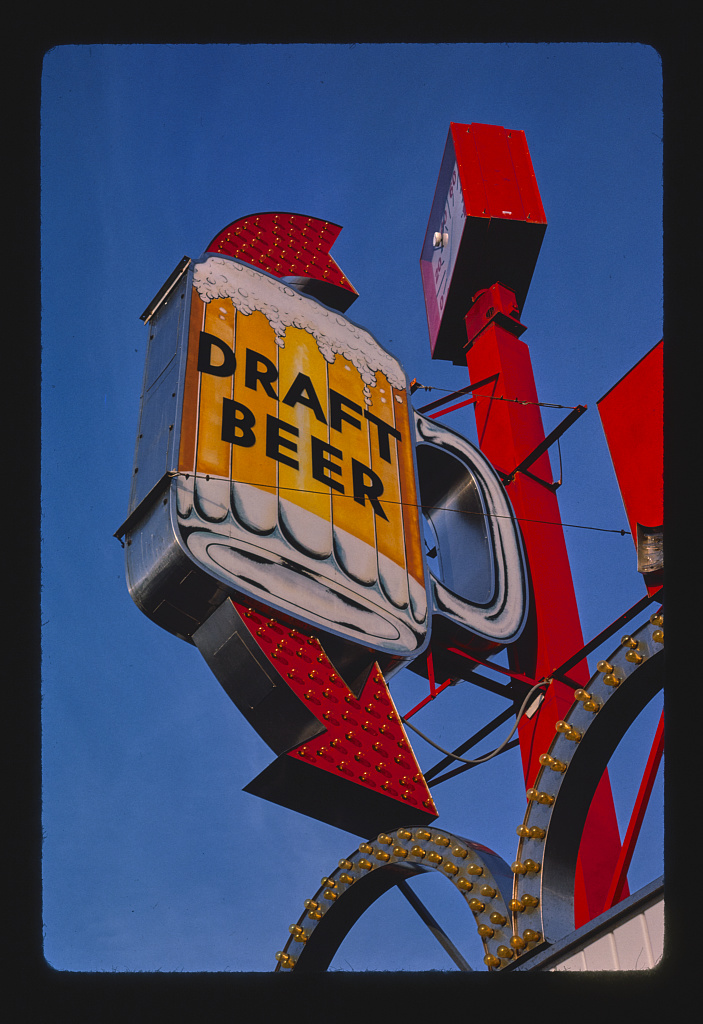
Image Credit: John Margolies “Beer sign, Seaside Heights, New Jersey” (1984) The Library of Congress

Ron Riekki: “The Roaring 20’s Are Roaring Already”


The Roaring 20’s Are Roaring Already

& 2019 was 1919 & they were refusing to wear masks
then & they’re refusing to wear masks now & a cousin
who was an alcoholic in high school is an alcoholic in old

age & my limp I had as a kid is a limp I have as an old
man & there is this feeling that nothing changes but then
a Buddhist monk friend, completely committed, shaved

head & unisex kayasa that he says with laughter is, yes,
like wearing a curtain, “but it’s a comfortable curtain”
& he explains everything changes, that impermanence

is at the heart of Buddhism, & that hearts change, pump,
& stop, & decay, & spread out as dust across the world
where we breathe in parts of a million hearts every day.


About the Author: Ron Riekki’s books include My Ancestors are Reindeer Herders and I Am Melting in Extinction (Apprentice House Press), Posttraumatic (Hoot ‘n’ Waddle), and U.P. (Ghost Road Press).  Riekki co-edited Undocumented (Michigan State University Press) and The Many Lives of The Evil Dead (McFarland), and edited The Many Lives of It (McFarland), And Here (MSU Press), Here (MSU Press, Independent Publisher Book Award), and The Way North (Wayne State University Press, Michigan Notable Book).  Right now, he’s listening to Elliott Smith’s “Cupid’s Trick.”


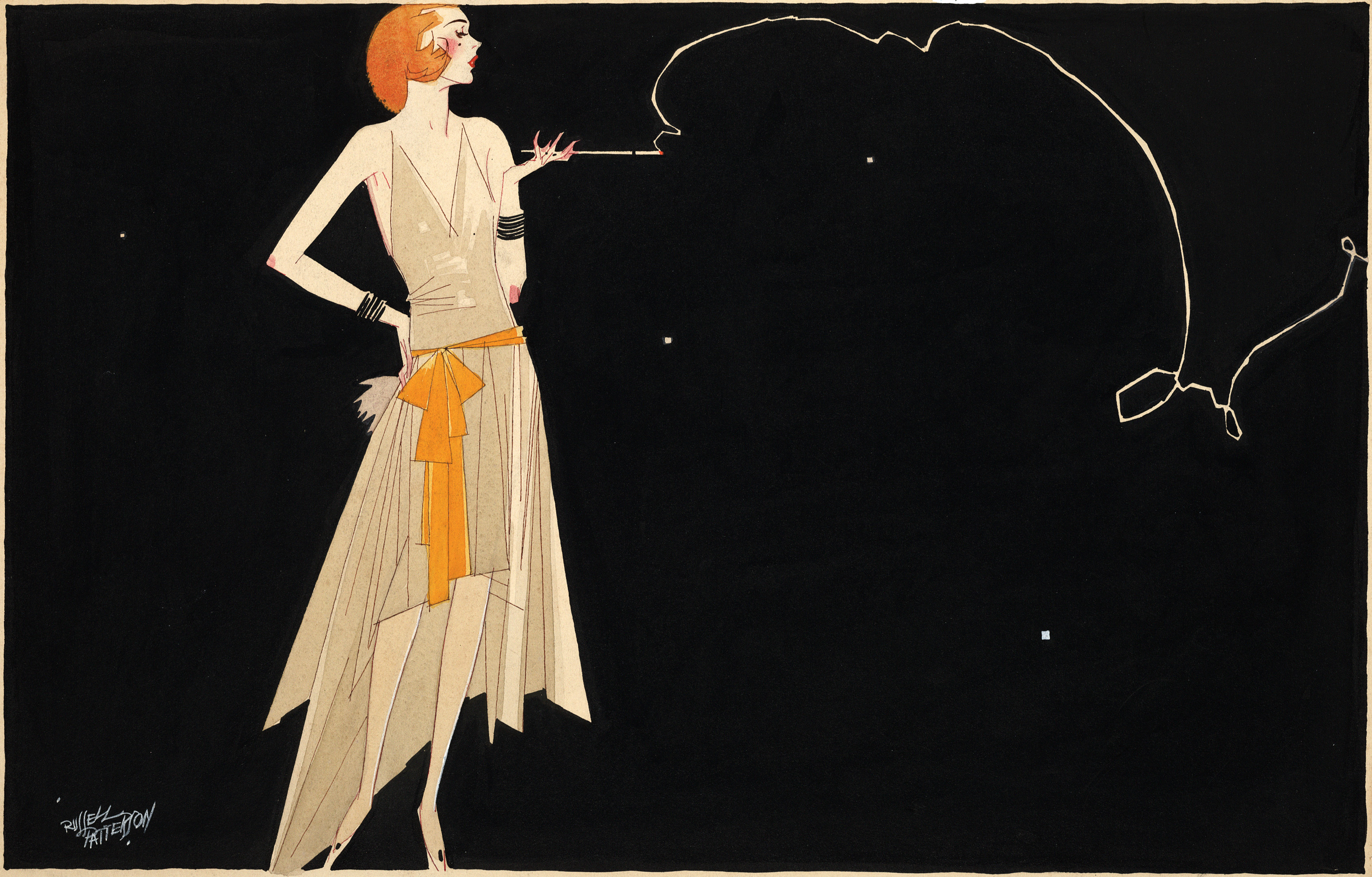
Image Credit: Russell Patterson “Where There’s Smoke, There’s Fire” Public Domain

Tali Cohen Shabtai: “In the Image of God”


In the Image of God

To whom will you imagine me and compare me to?

“For in his image he
created man.”

As worded,
I am
called a man (Adam in Hebrew)
named after the earth (Adama in Hebrew)
why was I named as a man after the lowest
part of creation?
For that I am flattered. In any case
the sky is not achievable.

And yet at the same time as a man I am
treated upliftingly and exaltedly that the Torah gives
me
for the Creator of the World who chose
me in his image and in this passes over
my futility
in front of God? I relish
ironic statements like this,
but

as long as I don’t know
the sight of God

It does not interest me
that it’s possible to simulate a shape to its creator
like clay in the potter’s hand
and allow me to reflect on
this paradox:

hence, God can
wear my bra
snort a cigarette and confront
the forlorn thoughts that
visit me
in Jerusalem – where
the divine revelation in the world
resides, so to speak.

And if I was created in God’s image,
from here it is possible to compare with the parable
about a craftsman who with does the material
as he pleases,
for which it is called “matter in the hand of the creator”
but should I admire
that I
am in God’s hands like the matter in the hand of the artist?

And more than that, it is said
that I was created in his image.
Of course not.


About the Author: Tali Cohen Shabtai, is a poet, she was born in Jerusalem, Israel. She began writing poetry at the age of six, Tali’s poems expresses spiritual and physical exile. She is studying her exile and freedom paradox, her cosmopolitan vision is very obvious in her writings. She lived some years in Oslo Norway and in the U.S.A. Tali has written three poetry books: “Purple Diluted in a Black’s Thick”, (bilingual 2007), “Protest” (bilingual 2012) and “Nine Years From You” (2018). By 2021, her fourth book of poetry will be published which will also be published in Norway. Her literary works have been translated and published into many languages as well.


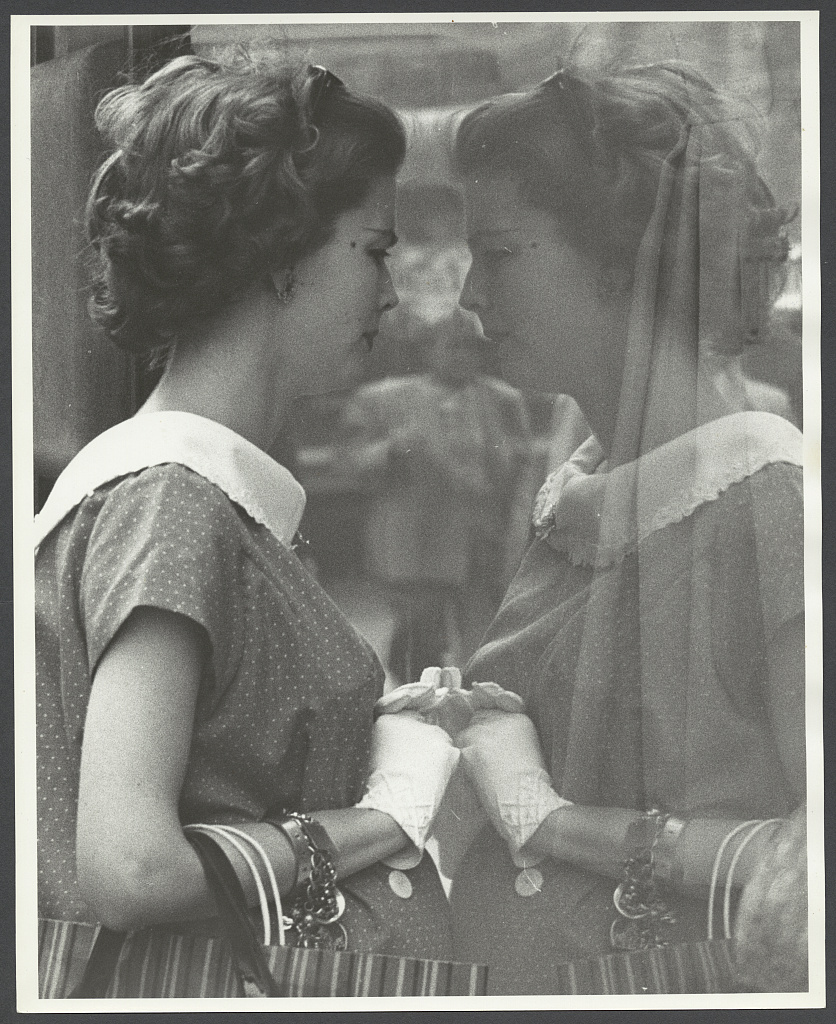
Image Credit: Angelo Rizzuto “Unidentified woman and her reflection” (1959) The Library of Congress

Poetry Soundbite: An Interview and Reading with Mike James


Welcome to AIOTB Magazine’s first Poetry Soundbite, an on-going series of poetry readings and interviews. For our inaugural Poetry Soundbite, we welcome Mike James, author of over a dozen books of poetry, including the soon to be released Leftover Distances, from Luchador Press. Below the video, you can find the text of the poems from James’ reading.


.

.


.


“Falling as We Go” and “Drunk Butterflies near the Missouri River” previously appeared in The Rye Whiskey Review.


About the Author: Mike James has published widely in places such as Plainsongs, Laurel Poetry Review, Birmingham Poetry Review, Gargoyle, and Tar River Poetry. His poetry collections include: Parades (Alien Buddha), Jumping Drawbridges in Technicolor (Blue Horse), Crows in the Jukebox (Bottom Dog), and My Favorite Houseguest (FutureCycle.) He has served as an associate editor of The Kentucky Review, of Autumn House Press, and of The Good Works Review, as well as the publisher of the now defunct Yellow Pepper Press. He currently serves as an associate editor of the prose poem journal Unbroken. His 18th collection, Leftover Distances, is forthcoming from Luchador Press. A multiple Pushcart nominee, Mike has read and lectured at festivals and universities throughout the country He is strong supporter of cats, literacy, coffee, white wine, top hats, crows, and free range poetics. He is an opponent of plaid, rigidity, salads, and quiet parakeets. He currently makes his home right outside Nashville.

Sue Blaustein: “On Hubbard Street”


On Hubbard Street


April

My new friend
is the northern end
of Hubbard Street.
Hubbard is a homely

name! Old Mother
Hubbard’s bare cupboard;
fall wagons heaped
with warty squash.

Hubbard Street comes
near my house too. But
the northern end – the terminus –
feels like a distant

village. By going there
this spring I learned
that I need a distant
village. It has outskirts.

Where a copter-beanie
wind turbine
in a warehouse parking
lot goes whup whup

whup whup whup.


June

East Side Stor-Mor
is on the outskirts. Not
Store not More.
We shaved e’s off

naming places
in the 20th century.
Not anymore – too
corny. I’m scuffing

a heated mix of brown
pine needles and litter.
A cups-and-bags-and-wrappers mix
that clogs catch-basins

and recurs;
piling ahead of your same feet
in all the summers of your life,
to appear again

across lifetimes, suffusing
you with feelings
about eternity. Everything
simultaneous… could be…


November

The curbstones are soft-edged
along the street
between Stor-Mor and what
I call my village proper.

Where there are
seven houses – residences!
Modest, and I don’t know
who lives there. I’ve

dwelt in houses and flats
I might’ve passed;
circumstances and years
before I lived there.

Hubbard Street –
I feel something in your ether.
You seem to know where I’ve been.
I sense you know

where I might be, when one
day another now
turns to then. It’s 2:00 PM
and the turbine blades whirl,

casting shadows
on the units of Stor-Mor –
garage doors 29, 30 and 31 –
whup whup…whup whup whup


About the Author: Sue Blaustein is the author of “In the Field, Autobiography of an Inspector”. Her publication credits and bio can be found at www.sueblaustein.com. Sue retired from the Milwaukee Health Department in 2016, and is an active volunteer. She blogs for ExFabula (“Connecting Milwaukee Through Real Stories”), serves as an interviewer/writer for the “My Life My Story” program at the Zablocki VA Medical Center, and chases insects at the Milwaukee Urban Ecology Center.


More by Sue Blaustein:

A Song for Harvest Spiders

A Song for Noise

The Old Ways


Image Credit: John Margolies “Thrift Store, Baseline [i.e. Base Line] Street, San Bernardino, California” (1991) The Library of Congress

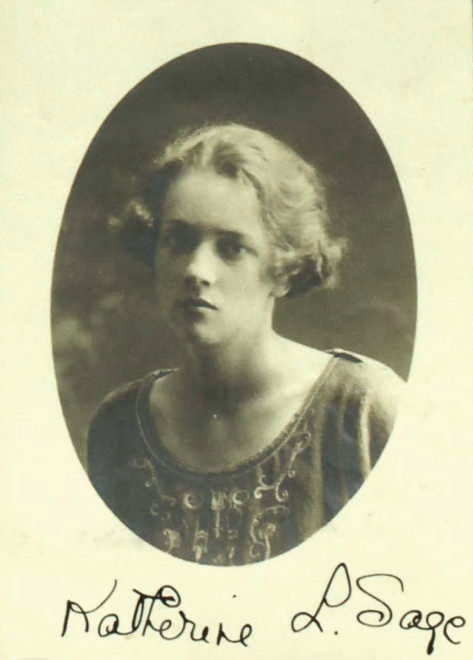
Nadia Arioli: On “The Fourteen Daggers” by Kay Sage

(You can view Sage’s painting “The Fourteen Daggers” here)


On “The Fourteen Daggers” by Kay Sage

All the prosaic thin places you will visit
are before you. The places where reality
shifts a bit to the right like a staircase
or fourteen daggers that fail to kill you.

A movie theater in a foreign city
where you are alone. You sit in front
of the projector directly. A story bounces
around your head. A laundromat,
any time, any place. Things are getting
clean without you.

The tobacco store where the man
with thick glasses coughs a little worse
each year. A gas station with maps
of the Midwest for sale. The state-lines
look menacing. The old ship,
below deck, where buckets cluster
like drippy ulcers.

A smaller place is your mouth after
your first nosebleed. You saw what happened
to your teeth when you smiled for the mirror.
When you were a teenager, you filled your palms
with wet bees for the watery shudder.

The eighth dagger is you.
O my Angelica root,
O my toothy abortion.

I will not say what the other six are.
I can’t even see the last. Perhaps
it is shaped like a gun.

If a third were to see us,
they would know which was you
and which was I.
I am the beginning, you are the middle
and more like a knife.

But perhaps we are in each other’s houses
now, switched like interpreting a dream badly.
The waiting room was the thinnest place.
My breasts are scalloped like fingernails.


About the Author: Nadia Arioli (nee Wolnisty) is the founder and editor in chief of Thimble Literary Magazine. Their work has appeared or is forthcoming in Spry, SWWIM, Apogee, Penn Review, McNeese Review, Kissing Dynamite, Bateau, Heavy Feather Review, Whale Road Review, SOFTBLOW, and others. They have chapbooks from Cringe-Worthy Poetry Collective, Dancing Girl Press, and a full-length from Spartan.


More by Nadia Arioli:

On “I Walk Without Echo” by Kay Sage

Paul Koniecki: “timmy neuman and the zippo of the apocalypse”


timmy neuman and the
zippo of the apocalypse 

in back my mom
was listening to greensleeves
or clair de lune
or otis redding sitting

on the dock of
the bay your eyes ran
manic ovals like a
free dog in an

occupied carrier banging on
the door you said
you wanted to come
in and watch hong

kong phooey cartoons because
roger your father who
no one called father
or papa or dad

was watching the saturday
morning fishing show back
when we could only
see our favorite cartoons

one morning a week
you ran through six
inches of new snow
without your shoes again

the neumans lived two
blocks over which was
closer than two blocks
down because nobody had

fences then i noticed
as you spooned our
loveseat and i plopped
back down on the

couch that you had
a carton of pall malls
and a lighter that
could only be roger’s

and i wondered if
scatman crothers would put
on a mask and
jump out of a

random dumpster to save
you later when roger’s
show was over and
he needed to smoke

i rubbed the burn
scar on my arm
and asked if you
wanted to stay for pufnstuf


About the Author: Paul Koniecki lives and writes in Dallas, Texas. He was once chosen for the John Ashbery Home School Residency. He is the Associate Editor of Thimble Literary Journal.


More by Paul Koniecki :

today the sky is
a flag that helps everyone

1976


Image Credit:Ignition of a cigarette lighter” from Wikimedia Commons, Public Domain.

Shawn Pavey reviews “The Prettiest Girl at the Dance” by John Dorsey


John Dorsey Tells Us of Pretty Girls

By Shawn Pavey


Book Review: The Prettiest Girl at the Dance by John Dorsey

Blue Horse Press, ISBN-10 : 0578818787, ISBN-13 : 978-0578818788


Reviewing John Dorsey’s work is never an easy task. The greatest challenge comes in finding new things to say about his consistently exceptional poems that, over the last decade or so, come with more frequency and ferocity. Dorsey is a prolific poet. His previous collection to this one, Which Way to the River? by OAC Books weighed in at just under 500 pages and only collected four years of work. Yet Dorsey still manages to create, in each poem, a fresh revelation about being human in a world moving so fast that people spin off to collect in convenience store parking lots, truck stop diners, and low rent tenements. These are John Dorsey’s people.


The subject of each of the poems in this collection are women he’s met – waitresses, lovers, passing acquaintances, and dear friends. I know this because I know John. I’ve witnessed the events in at least one of these poems, met some of the characters from others. To be considered a friend of John’s is an honor and one I don’t take lightly. But as a reviewer, I must set that friendship aside to speak honestly about this book. That, in this case, is the easy part.


The Prettiest Girl at the Dance is some of Dorsey’s best work to date. Victor Clevenger’s insightful foreword to this book makes the same assertion. It is a bold thing for either of us to say, but Dorsey’s legion of readers will most likely agree.


Let’s look at The Prettiest Girl in Austin, Texas:


claims to have the best ass
in the city

a perfect apple shape
for roaming hipster bars

this town used to be so cool

now she has to drink malt liquor
out of an empty bag
in an empty field

just to stay ahead
of the curve


As I wrote in the foreword to Dorsey’s 2019 collection, Your Daughter’s Country (also from Blue Horse Press) if one finds one’s self the subject of a John Dorsey poem, he loves you. But it doesn’t mean one is free from a little good-natured teasing. The subject of the poem above laments how “cool” only lasts long enough to be recognized. Once “cool” is overrun by “common,” we are, quite literally, sent to new pastures to find the thing we lost once everybody else found out about it.


Readers new to Dorsey’s work and longtime fans will delight in how much weight each of these poems carry in so few lines. There are only two poems in this collection that run longer than a page and none longer than a page and a half. Dorsey makes his verbs do the heavy lifting. His modifiers are sparse and absolutely necessary to paint his images. His use of imagery is damned near alchemical as he creates tiny little worlds where the reader and the subject interact. In The Prettiest Girl in Philadelphia, Pennsylvania, Dorsey writes:


had red hair & kind eyes
& wore a backless sundress
in the middle of february

she had a mind as big
as the milky way

& freckles all over her body
that kept me from writing
anything


It is in the small details where we see Dorsey paint vast canvases with a fine-tipped brush: sundresses, freckles, red hair – these are the words that create the thumbnail sketch that he fleshes out throughout this brief poem. Freckles become the Milky Way, all of the details combine to create a person that affects the poet so deeply that he cannot do the thing that defines him.


Another distinctive characteristic in these poems is that many contain a structural hinge, much like a traditional sonnet. While Dorsey rarely writes structured verse, he’s studied it plenty. Take  The Prettiest Girl in Fisherman’s Wharf, for example:


places her hand on my shoulder     
to keep my absent-minded legs
from stepping in front
of an oncoming streetcar

her fingers long and cool
like the summer breeze
remind me that I don’t die yet
want to die alone
or take the form
of a dying bird

i want to love her
just long enough
for a beer to get warm

just long enough
to mean it


In a mere 15 lines, Dorsey takes us from mindlessly walking down the street to recognizing an act of kindness to contemplating his own mortality to falling in love “just long enough / to mean it.” The hinge happens in the line space before the next to last stanza. The three lines prior take us out of the moment and into the poet’s contemplative spinning out to his eventual end and back again. But he changes direction in those last five lines. What can the poet offer in thanks? Love, adoration, if only for the briefest time.


One could argue that in the title of this book and in the title of each poem, using the diminutive “girls” does a disservice to the subjects of these poems. That is a valid point, on the surface. After reading these poems, however, it becomes evident that Dorsey’s use of the term “girl” is intentional to portray a sense of the innocence of beauty, kindness, and feminine vulnerability and strength.


Dorsey’s view of these characters is also unflinching. In The Prettiest Girl in Kansas City, Missouri, Dorsey concludes:


working as a museum security guard
where she stole loose bills
from the donation box

to buy enough whiskey
to put in the baby’s bottle
to help her make it
through the night.


This is an unflattering observation of somebody struggling to make it through the world the best she can with the tools available. Not all of Dorsey’s pretty girls are life-saving angels, their beauty might be hard for many of us to see. But John Dorsey sees beauty in everyone and that beauty permeates every single one of his poems.


The Prettiest Girl at the Dance is Dorsey at his best – telling entire stories with a handful of lines that are at once both intimate and universal. It is a quick read, but by no means light.


Shawn Pavey, February 12th, 2021


About the Author: Shawn Pavey is the author of Talking to Shadows (Main Street Rag Press, 2008), Nobody Steals the Towels From a Motel 6 (Spartan Press, 2015), and Survival Tips for the Pending Apocalypse (2019, Spartan Press) which was 1st runner up for the 2020 Thorpe Menn Literary Excellence Award.  He co-founded The Main Street Rag Literary Journal and served as an Associate Editor. His infrequently updated blog is at www.shawnpavey.com.