John Dorsey: “Paul & the Trailer Park Tornado”

.

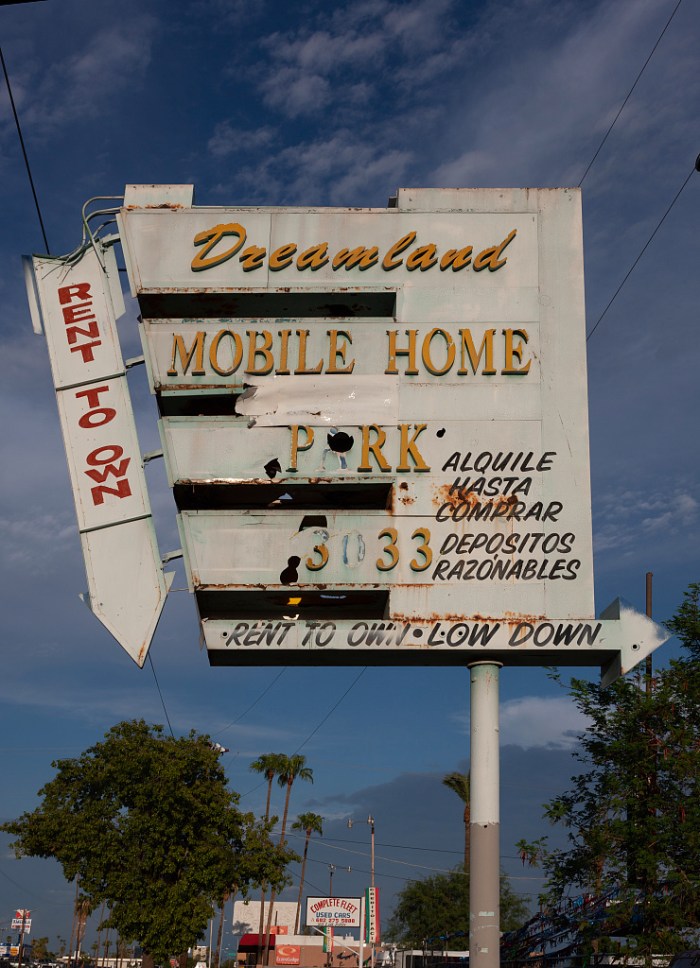
Sign for the old Dreamland mobile-home park in Phoenix, Arizona.
.

.

Paul & the Trailer Park Tornado

the door of our trailer flapping
my heart wide open
my mother says
not to stand
by the window
where my fingers
touched everything
for the first time

while a plastic pinwheel
in the shape of a rooster
takes flight
over our roof.

.

.

About the Author: John Dorsey lived for several years in Toledo, Ohio. He is the author of several collections of poetry, including Teaching the Dead to Sing: The Outlaw’s Prayer (Rose of Sharon Press, 2006), Sodomy is a City in New Jersey (American Mettle Books, 2010), Tombstone Factory, (Epic Rites Press, 2013), Appalachian Frankenstein (GTK Press, 2015) Being the Fire (Tangerine Press, 2016) and Shoot the Messenger (Red Flag Poetry, 2017),Your Daughter’s Country (Blue Horse Press, 2019), and Which Way to the River: Selected Poems 2016-2020 (OAC Books, 2020). His work has been nominated for the Pushcart Prize, Best of the Net, and the Stanley Hanks Memorial Poetry Prize. He was the winner of the 2019 Terri Award given out at the Poetry Rendezvous. He may be reached at archerevans@yahoo.com.

.

More By John Dorsey:

Anthony Bourdain Crosses the River of the Dead

Punk Rock at 45

Perpetual Motion

.

Image Credit: Carol M. Highsmith “Sign for the old Dreamland mobile-home park in Phoenix, Arizona.” (2008) The Library of Congress
Tohm Bakelas: “the end is near”

.

service-pnp-habshaer-ri-ri0200-ri0291-photos-146308pv

.

.

the end is near

she maintained communication
by way of phone
sometimes she would write letters,
but she was best at the phone.
there were times she’d stop calling
and it seemed as if she disappeared,
but she never did
she was always there.
and then one day all the letters
and all the calls stopped,
everything stopped.
all her bills were paid through the next month,
she was always good at that
always ahead of the game
she never gave anyone a reason to
come looking for her,
but when the letters and the calls stopped
that’s when they went looking for her.
when they got to her house
the grass looked like a jungle
the mailbox was stuffed full of letters
all the curtains were pulled closed
and the front door was locked
but they found the key
inside a rusted out bucket.
when they went inside
they turned on the lights
the electricity worked
and the house was mostly clean
there were unopened medication bottles
neatly lined on kitchen countertops
the bills organized and stacked
checks undelivered addressed and signed
the calendar was stuck on last month
and the phone was off the hook.
when they reached the living room
that’s where they found her
sitting in her favorite rocking chair
facing a broken glass tv screen
containing four words written in dust:
“the end is near”

.

.

About the Author: Tohm Bakelas is a social worker in a psychiatric hospital. He was born in New Jersey, resides there, and will die there. His poems have appeared in numerous journals, zines, and online publications. He has published 13 chapbooks. He runs Between Shadows Press.

.

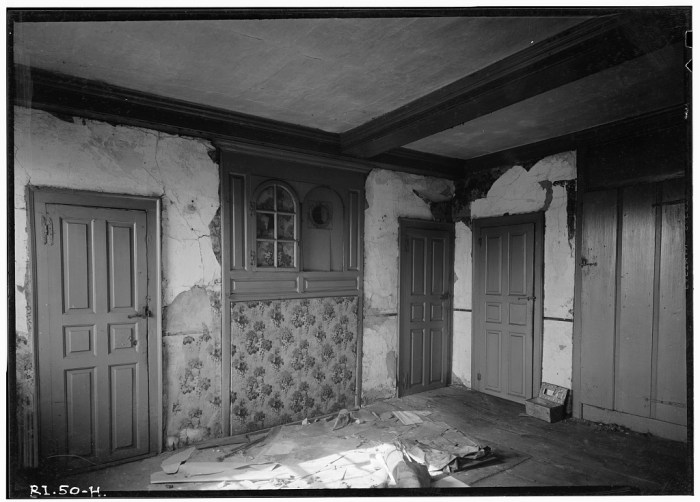
Image Credit: The Library of Congress: ” Historic American Buildings Survey, Stanley P. Mixon, Photographer, March 28, 1940 INTERIOR DETAIL, MIDDLE ROOM, MANTEL AND DOORS, WEST SIDE, FIRST FLOOR, OLD HOUSE. – Samuel Phillips House, Tower Hill Road (U.S. Route 1), Belleville, Washington County, RI”

Agnes Vojta: “I don’t usually pray”

.

20210624_195225

.

.

I don’t usually pray


My father is still alive
when I switch off the phone
to board the plane.
My mother pleads
with him: hang on, wait,
just one more night.

I ask for a glass of wine.
I don’t usually drink.
Today I hope it dulls
the edge of grief,
lulls me to forget
where I travel.

Over the Atlantic,
I dissolve in weeping.
I don’t usually cry.
The flight attendant asks
if she can do anything.
Make the plane fly faster.

I keep checking the flight status.
I will search my sister’s face
when she picks me up.
I don’t usually pray.
Today I pray.
To be in time.

.

.

About the Author: Agnes Vojta grew up in Germany and now lives in Rolla, Missouri where she teaches physics at Missouri S&T and hikes the Ozarks. She is the author of Porous Land (Spartan Press, 2019) and The Eden of Perhaps (Spartan Press, 2020), and her poems have appeared in a variety of magazines.

.

More By Agnes Vojta:

Legend

Sisyphus Calls It Quits

Flotsam

.

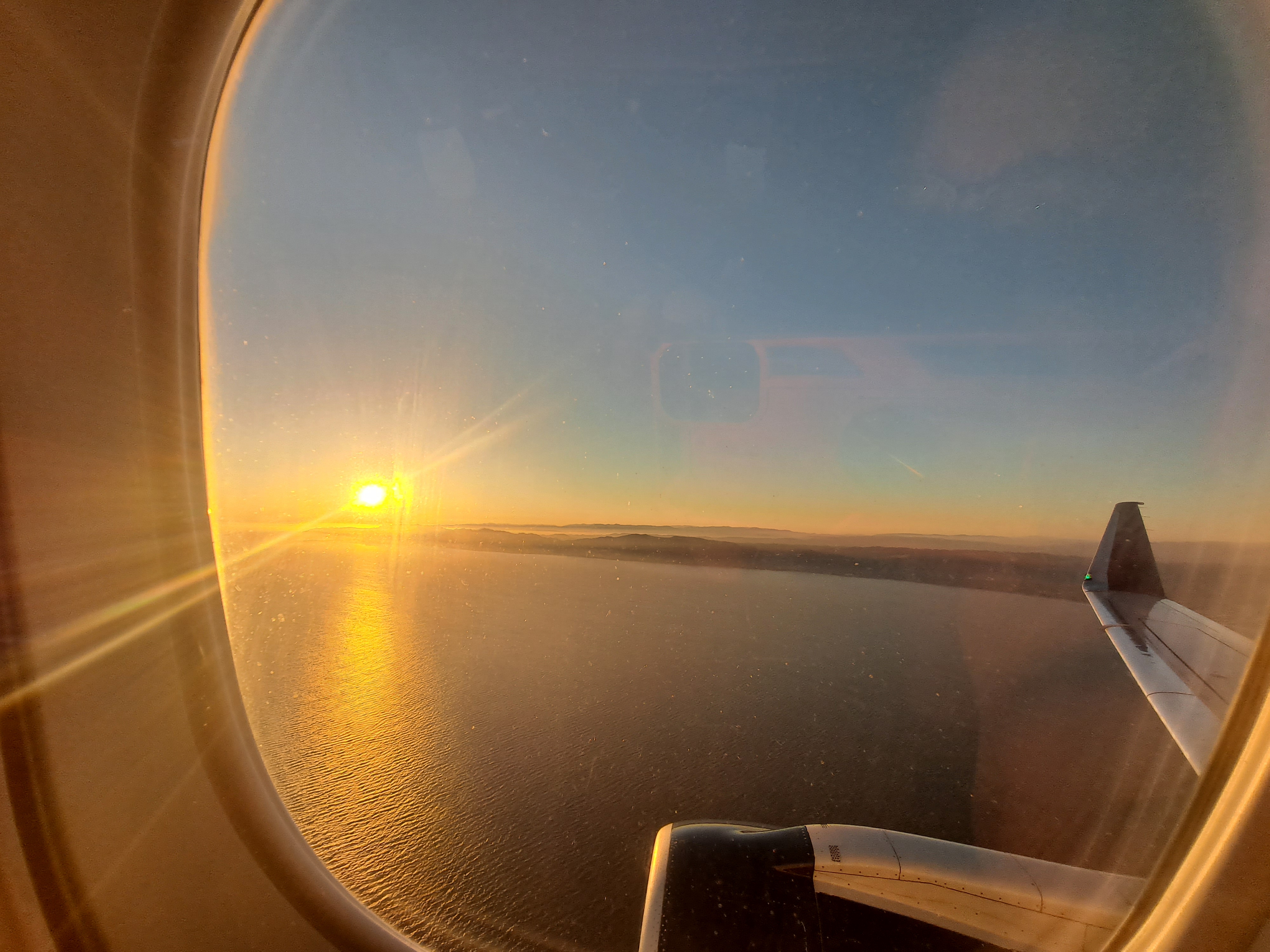
Image Credit: Chase Dimock “Airplane over the Beach” (2021)

Robin Wright: “Make-believe”

.

.

.

Make-believe

When the sun rolled the rain away,
Mother, tired of sheets, blankets tossed
across chairs and couch for our fort,
shooed us outside to swing on a tire
held to the tree by rope.

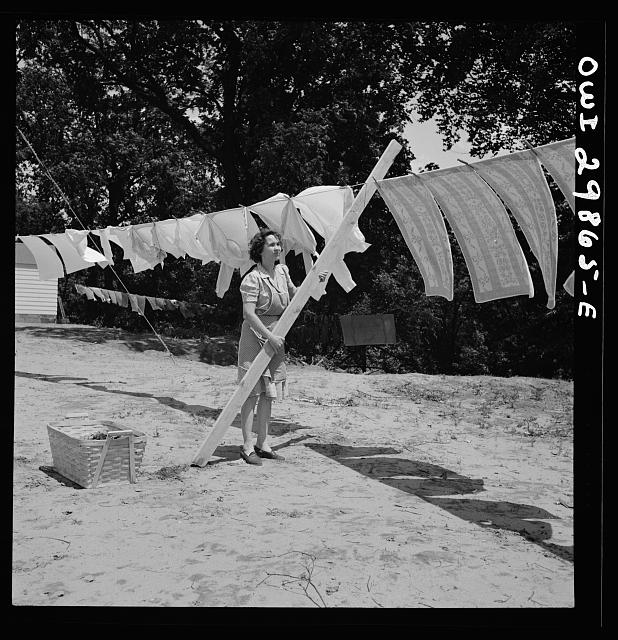
She washed rainbows of cloth,
pinned them to the clothesline
with the same reverence
she showed in church,
hummed Amazing Grace as the sun
imbued freshness and new life.

We swung high, waited
until Mother headed inside,
slipped between the sheets
into a new existence
while the sun sprinkled light,
vowed to stay there
until the moon took over.

.

.

About the Author: Robin Wright lives in Southern Indiana. Her work has appeared in Muddy River Poetry Review, Rat’s Ass Review, Bombfire, Sledgehammer, Young Ravens Literary Review, Sanctuary, Ariel Chart, Spank the Carp, Panoply zine, and others. She is a Pushcart Prize nominee, and her first chapbook, Ready or Not, was published by Finishing Line Press in 2020.

.

Image Credit: Arthur S. Siegel “Point Pleasant, West Virginia. Mrs. Fergusen putting a pole on the clothes line” (1943) The Library of Congress

Mike James: “Supporting Characters”

.

20211222_140834

.

.

Supporting Characters

Jill has the largest flea circus of anyone I know. She keeps them practicing in her spare bedroom beside her Winston Churchill mask collection. That’s another obsession I’ve never gotten into. I’d rather collect half-used candles, discarded matchsticks, and light projecting items of every variety. Though not every lamp hides a genie. I’ve learned that from years of rubbing. Jill says she scrubbed away whatever magic her hands held. She uses the harshest, discount soaps. Despite that, her bathroom smells like lavender. Whenever I visit, I go to the bathroom, lock the door, close my eyes, and imagine a charmed garden. On more than one occasion, both Jill and I have forgotten I was there.

.

.

About the Author: Mike James makes his home outside Nashville, Tennessee. He has published in numerous magazines, large and small, throughout the country. His poetry collections include: Leftover Distances (Luchador), Parades (Alien Buddha), Jumping Drawbridges in Technicolor (Blue Horse), and Crows in the Jukebox (Bottom Dog.) In April, Red Hawk will publish his 20th collection, Portable Light: Poems 1991-2021.

.

More By Mike James:

Grace

Saint Jayne Mansfield

Paul Lynde

.

Image Credit: Chase Dimock “Desert Fence” (2021)

Ace Boggess: “End of the Fence”

.

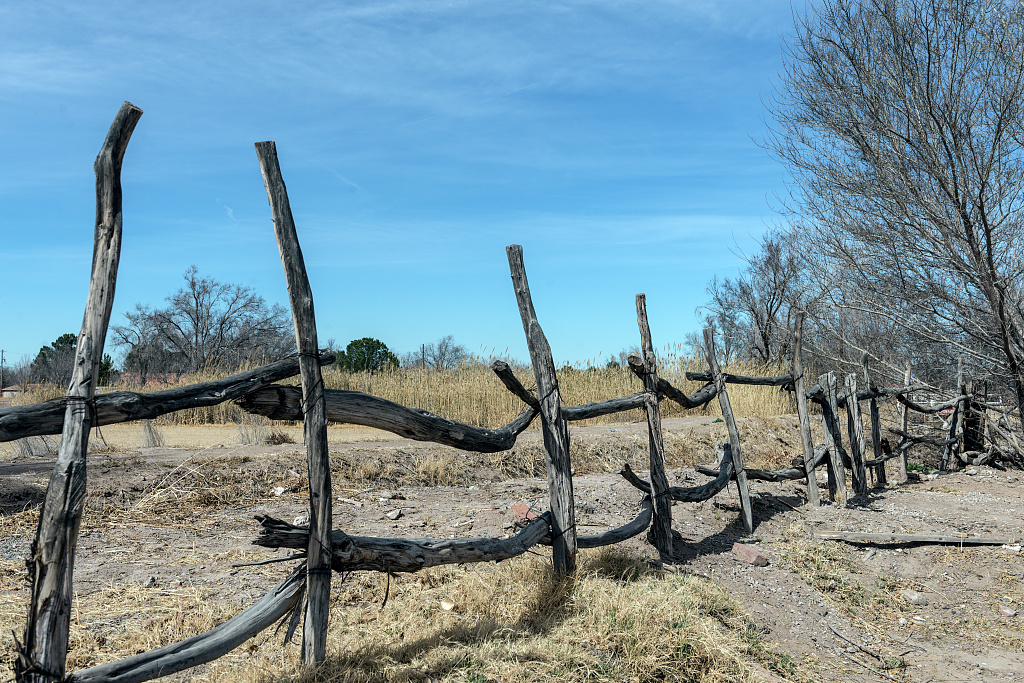
Extremely old wooden fence in the town of San Elizario, near El Paso.

.

.

End of the Fence

Strong winds. A pillar leans.
A beam descends on one side,
angling toward a motorcycle ramp
for squirrels launching themselves
toward flimsy branches.
Wire mesh, loosened, waves
like a nationless flag.

Here is the ruin, lapsing:
all that’s built crumbles,
no matter words spoken,
savior speed-dialed on the phone.

What seemed sturdy all those years
shares news of broken lumber
while the boastful, constant sky
promises other storms, graceless
as madcap dancers in the mud.

.

.

About the Author: Ace Boggess is author of six books of poetry, most recently Escape Envy (Brick Road Poetry Press, 2021). His poems have appeared in Michigan Quarterly Review, Harvard Review, Mid-American Review, River Styx, and other journals. An ex-con, he lives in Charleston, West Virginia, where he writes and tries to stay out of trouble.

.

More by Ace Boggess:

Rock Garden

And Why Am I A Free Man?

Why Did You Try To Sober Up?

.

Image Credit: Carol M. Highsmith “Extremely old wooden fence in the town of San Elizario, near El Paso, Texas” (2014) The Library of Congress

Marissa Perez: “Shark Smile”

.

50707486936_926ff7054c_o

.

.

Shark Smile 

Saturday night out and
I swallow an oyster⸺
adductor muscle, pericardial cavity, party-streamer gills⸺
I have no intention of
consuming the shell, so
I leave it empty and
winking with the sheen of departed
intestine.

How absence is also presence
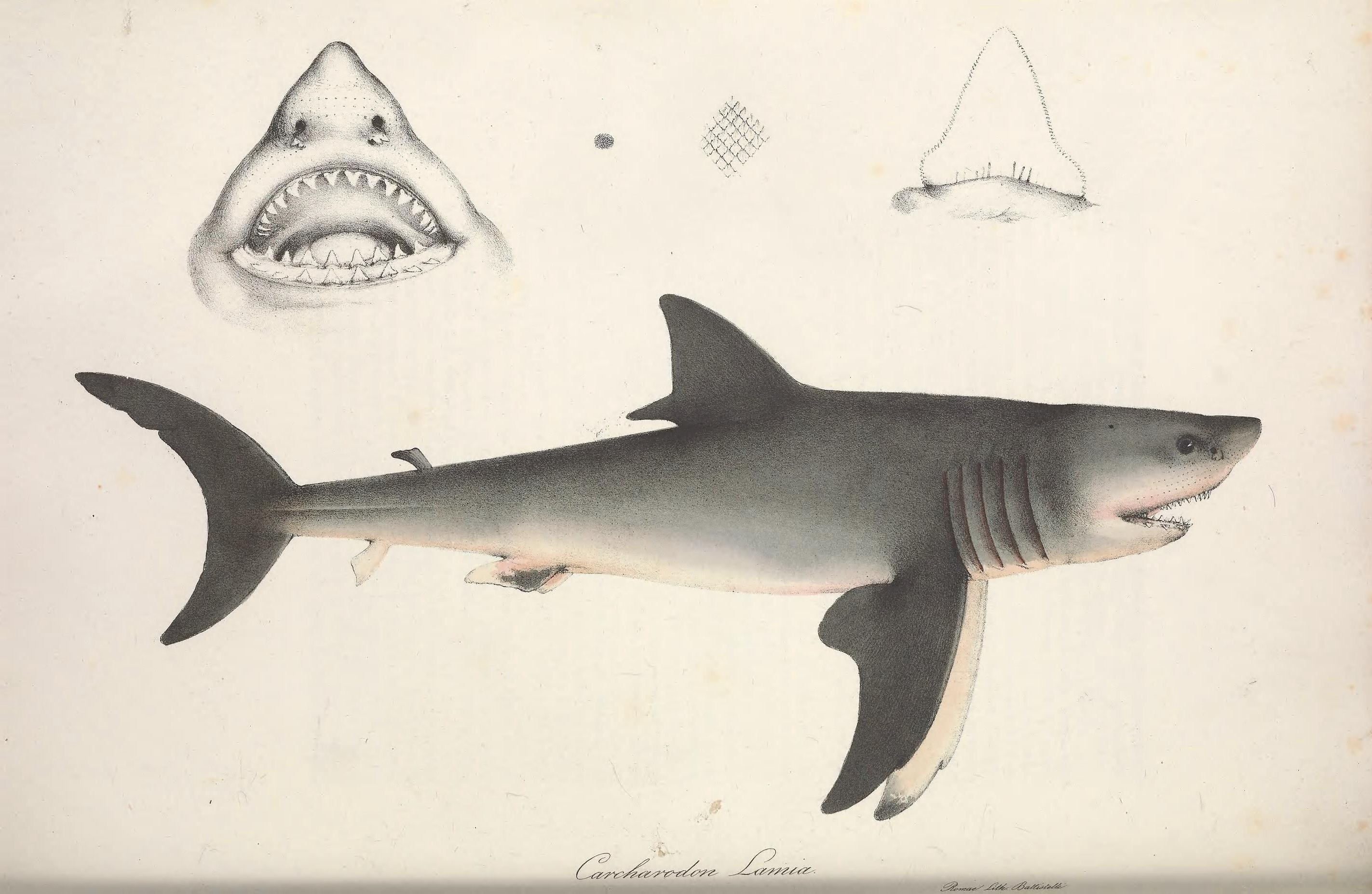
with serrated teeth so
pretty they can be looped
around my summer-nipped
neck
in beachfront gift shops⸺
Shed
from their host
when they puncture prey and
cannot tear the meat off
clean.

If I had been born with
a body that ended at my collarbones
and with a mouth
less sophisticated than
a bivalve’s
I would have never
been desired
only respected

.

.

About the Author: Marissa Perez is an undergraduate student from Massachusetts. She became the 97th recipient of the Glascock Poetry Prize in 2020 and has appeared in Huizache: The Magazine of Latino Literature.

.

Image Credit: Image from: Iconografia della fauna italica Roma: Tip. Salviucci,1832-1841. Courtesy of the Biodiversity Heritage Library.

Ruth Hoberman: “Planaria”

.

7044672793_bd23a8f608_o

.

.

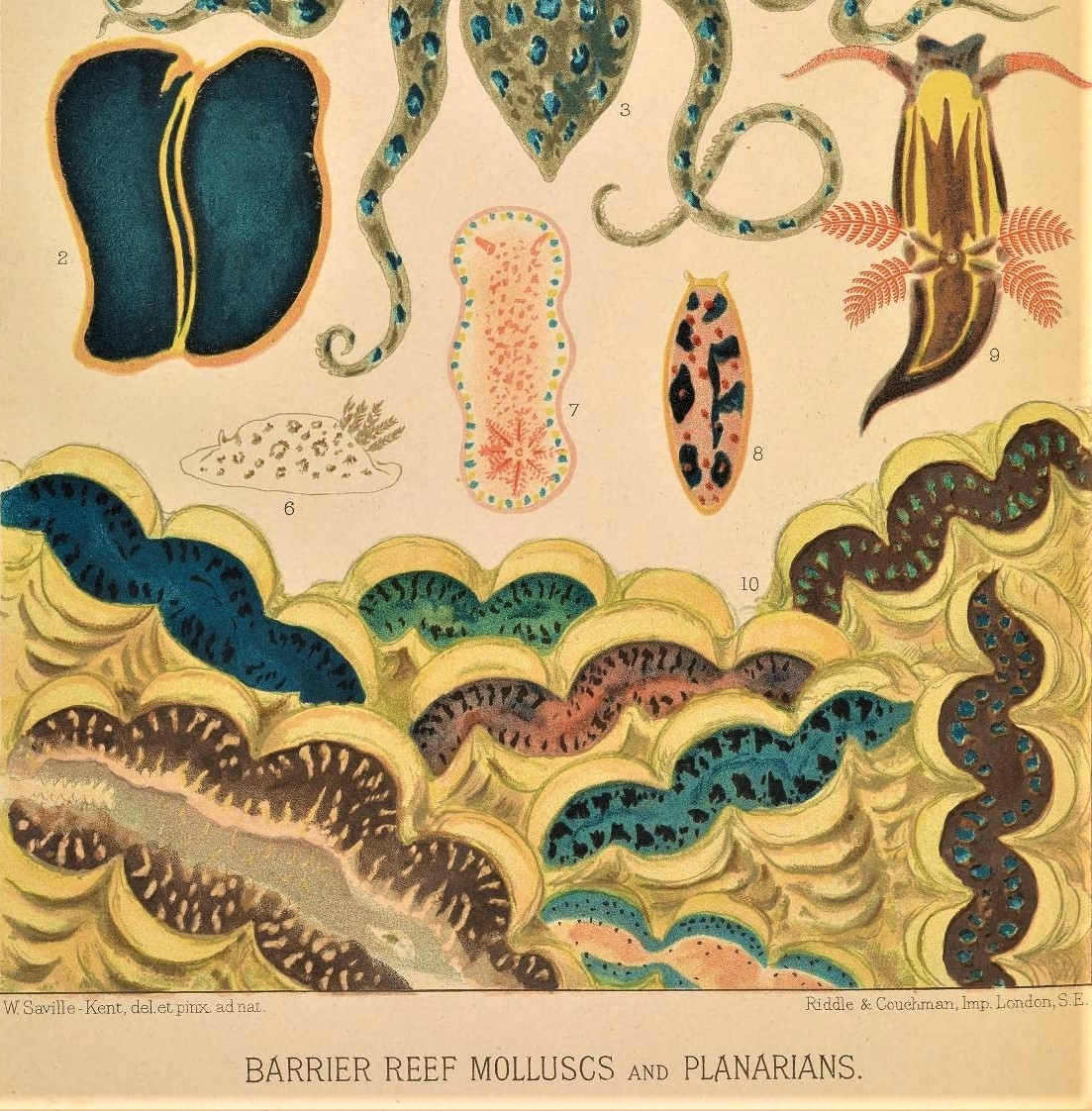
Planaria 

Over pie, Len talks about worms. Dice them,
he says, and each regrows its missing parts!  

His eyes glow under tangled brows, entranced
by immortality. I picture eyeless

mouths groping for their eyes and mouthless eyes
their mouths. Hungry for their hunger, old

in need of new. We’re old, our gray hair wild
and worried as brambles clinging to a cliff.

The question is where to look. He looks for doors
from body into bliss or second chances—dicing

as self-renewal? recycling as lizard or crow?
Anything to start again. I fork a peach wedge

on my plate. Sweet in my mouth the slice,
the talk with friends.

.

.

About the Author: Ruth Hoberman mainly lives in Chicago. She writes poetry and essays, which have been published in such places as RHINO, Calyx, Smartish Pace, Naugatuck River Review, and Ploughshares.

.

Image Credit: Image from The Great Barrier Reef of Australia;. London :W.H. Allen,[1893]. Courtesy of The Biodiversity Heritage Library

Jenna K. Funkhouser: “Chihuly’s Baskets”

.

.

.

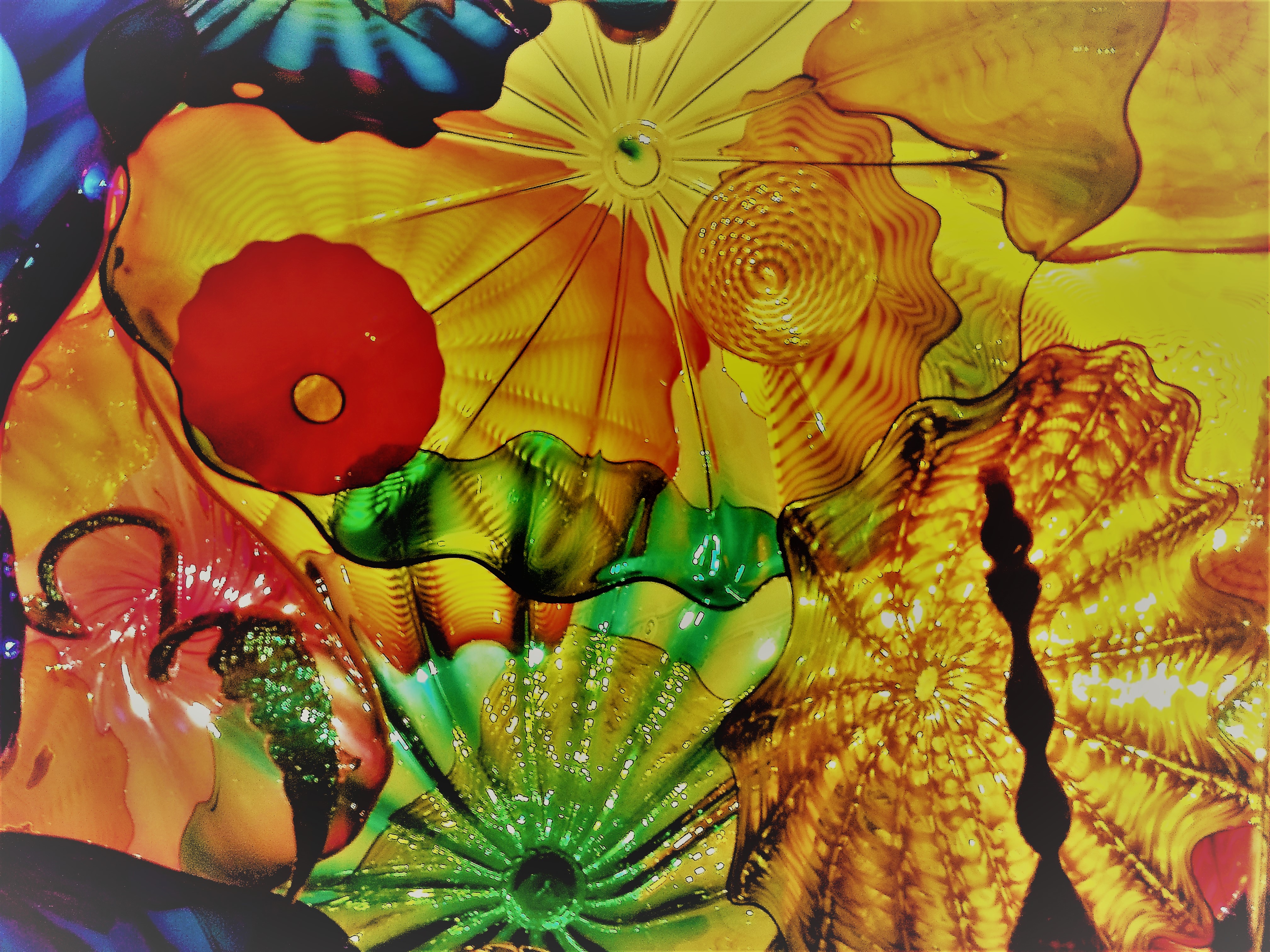
Chihuly’s Baskets

How carefully we preserve the emptiness
      in these theaters of light

how the man spins silken robes
      of turquoise and pebbled gold
            from the hot mouth of the kiln
and clothes oxygen in its fragile gowns,
            now
drawing its tensions away
   from the point where there must be
nothingness

cupped in its pale, deep hands

and the prayer he breathes is nothing but
good, good. 

To remain filled is
      to remain heavy

to resist your capacity to hold
invisible things
                          to grow lucent
lose everything
even your darkness

let the fire touch you

it whispers 

this bright shell husked
from the seed of eternity.

.

.

About the Author: Jenna K Funkhouser is an author and nonprofit communicator living in Portland, Oregon. Her poetry has recently been published by Geez Magazine, the Saint Katherine Review, and the Oregon Poetry Association, among others; her first book of poetry, Pilgrims I Have Been, was released in October 2020.

.

More by Jenna K. Funkhouser:

Persephone

Gerald Friedman: “A Race of the Red-tailed Hawk”

.

86_Black_Warrior

.

.

A Race of the Red-tailed Hawk 

Audubon shot a hawk,
mostly black-brown.  Painting it
while it still lived, he said,
he chocolate-covered its white marks,
tidied its tail pattern,
not thinking both were typical.
He wrote tall stories:
his specimen bred in Louisiana,
feared him only when he carried his gun.
He baptized it in Latin
after his friend Dr. Harlan;
in English, “Black Warrior”,
maybe something good to have
dying or dead
to be depicted as he saw fit.

Morning frost by the Rio Grande.
All summer Harlan’s, black or rare white,
glided down from Alaska
in my mind.  Now
a red-tail screams. At me?
I sneak, a commando,
to capture it with my camera,
barely disturbing
fragile cottonwood leaves.
By some occult sense
it feels me, flies, straight
as limbs slip by.  Out of view.
But I’ll call it a Harlan’s,
tail white constellated in black.
A stereotypical birdwatcher,
I’m already checking my pictures.
One shot caught that tail,
so I’ll get an accepted sighting.

.

.

About the Author: Gerald Friedman grew up in the suburbs of Cleveland, Ohio, and now teaches physics in Santa Fe, New Mexico.  He has published poetry in various magazines, recently Rat’s Ass Review, Entropy, The Daily Drunk, and Better Than Starbucks.

.

Image Credit: Plate 86 of Birds of America by John James Audubon depicting “Black Warrior Falco harlani” Public Domain