What We’re Here for
for bart solarczyk & bob phillips

your whole generation
seemed to know
how to swat away a compliment

kind words tossed
into a river
full of mud & rust
born out of houses
with tin roofs & tar paper hearts
by men & women
who knew the weight
of factory gloves
after so many years
their fingers piercing
the very edges of time

even poems are just about
doing the job

like pushing a mop
or wiping sweat
away from your heart
after the loss of a friend or a spouse or your sanity
knowing that’s just what time does
knowing you just have to keep putting the work in

because that’s what we’re here for.
About the Author:John Dorsey is the former Poet Laureate of Belle, MO. He is the author of several collections of poetry, including Which Way to the River: Selected Poems: 2016-2020 (OAC Books, 2020), Sundown at the Redneck Carnival, (Spartan Press, 2022, and Pocatello Wildflower, (Crisis Chronicles Press, 2023). He may be reached at archerevans@yahoo.com.
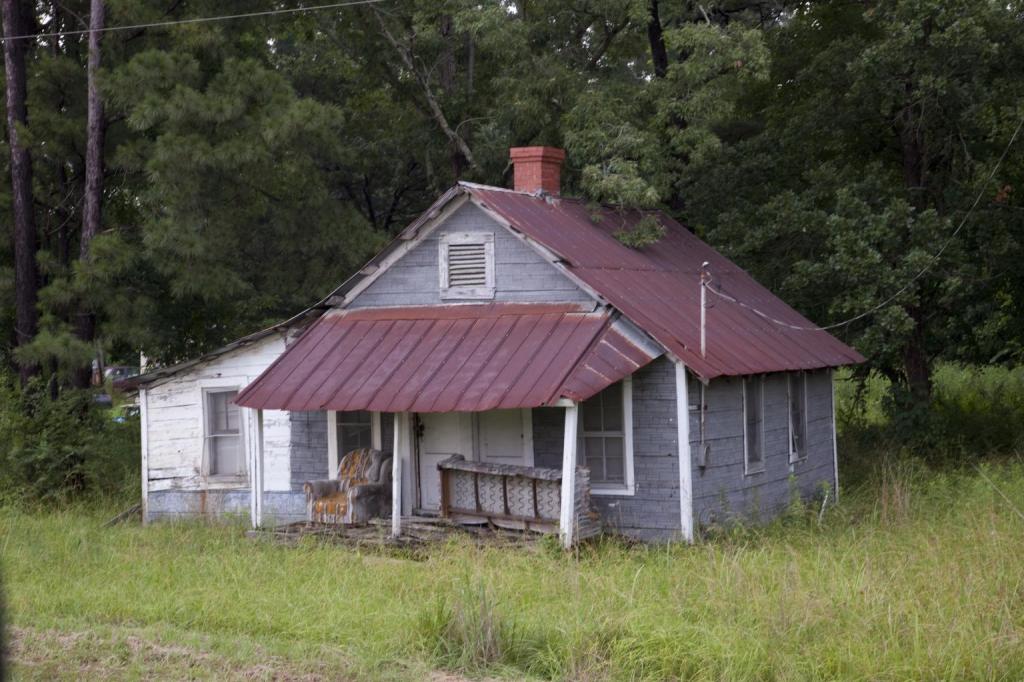
Image Credit: Carol M. Highsmith “Historic house with tin roof in Eutaw, Alabama” (2010) Public domain image courtesy of The Library of Congress
The last time I spoke to my husband was a Saturday night before bed. We hugged and gave each other a smooch on the lips. My husband put his hands on my shoulders and said, “Now tomorrow morning we will go to Trower’s for sure!” Several Sundays were missed because of bad weather. He drove to Trower’s, a twenty-minute drive, because his cigarette brand was not sold in any of our local stores. We used to go to Trower’s for breakfast, but that was before my husband became more depressed and weaker due to cancer, and vascular disease. He began to withdraw from society, except for Trower’s. He had given up his life-long hobbies making reproductions of Kentucky and Pennsylvania muzzle loaders and playing the banjo. He no longer practiced Buddhism. On several occasions he said he wanted to die but didn’t want me left “flapping in the wind.” I didn’t know how to respond to that, so I was always silent, just holding his hand. If I would have assured him I would be okay, would that be like giving him permission to kill himself? If I said I wouldn’t be okay, that would put an extra burden on him.
What had we been through in the last two or more years because of his illnesses? Endless doctor appointments, Cat-scans, bloodwork, X-rays, radiation treatment, stent surgery. Bad reactions to several antidepressants. Falling, requiring a hospital stay which revealed nothing. Physical therapy to gain strength. He didn’t become strong. He became weaker, falling several more times. On one occasion, he fell against the bedroom door, and I could barely get the door open to lift him onto the bed. I wouldn’t allow him to smoke in the house, only in his room. I had uncontrolled asthma. He didn’t resent this decision except on very cold winter days when his open ventilating window made the room unbearable. But at least he smoked his half a cigarette very quickly: a half a cigarette every hour. We had many disagreements about his smoking, but since he had been smoking for more than 60 years, the thought of him quitting was out of the question for him. “The damage is done, I’m 80 so how many years do I have left anyway? I have to have one pleasure.” I would rant and rave about the insanity of lethal corporations and government regulations that outlawed heroin and weed, but not cigarettes. My only coping mechanism. “Well, it’s your choice to smoke, but at least I don’t have to enable your addiction by going with you to Trower’s.” I eventually went with him, but I didn’t drive, rationalizing that at least I wasn’t a total enabler.
On that last evening I ever saw my husband alive, I resigned myself to drive him in the morning to get his cigarettes rather than having him die in a car crash. His decreased depth perception and slowed reflex problems didn’t bode well for a successful trip. “Goodnight, sweetheart.” “Me, too.” When he wasn’t out of bed by 6:30 am, I knocked on his door. Since there was no reassuring answer that he was awake, I opened the door. His head was sticking out of the covers. I touched his cold head. I moved his head. There was no response. I kissed him on the forehead and said, “I’ll always love you.” I walked out to the living room to call 911.
“This is it!” I said to myself, as I ambivalently welcomed death into my house.
About the Author: Connie Woodring is a 79-year-old retired psychotherapist who has been getting back to her true love of writing after 45 years in her real job. She has had many poems published in over 40 journals including one nominated for the 2017 Pushcart Prize. She has had ten excerpts from her novel Visiting Hours, published in various journals. She has had five excerpts from her non-fiction book, What Power? Which People? Reflections on Power Abuse and Empowerment, published in various journals. Her memoir was published in White Wall Review.
“Adieu, but let me cherish, The hope with which I cannot part contempt may wound, and coldness chill But still, it lingers in my heart.”
Farewell by Anne Brontë
mourners filed into your home
gathered around a table's harsh surface in the dining room— intended for birthdays Thanksgiving Christmas— gutting fish shrouded in a makeshift cloth
instead of a boning knife razor sharp stockpiled photographs lay
two-inch thick faded heaps—
you— Miss University of Florida smile from a float
hold your bouquet — dark roses
over your satin sash over your heart-sounds
at the beach tipped chin brown eyes
deny rain
your smile perched atop the grand canyon refuses to wilt
free-falls all the way down
the color of your sore throat
fringed in distressed mahogany wishing today was your birthday—
you’d blow out candles in front of me
gusts blast through windows
winter storms july
your jigsaw-puzzle life trembles unlike never before
I hear your silence— weightless as a fly’s wing
the sound of your gun
About the Author: Andi (Andrea) Horowitz is an older emerging poet who lives in Fort Myers, FL., with her husband and their two cairn terriers, BeCa and Bleecker. She taught high school English and speech and was also the drama coach. Her students remain one of her life’s greatest gifts. Andrea can be read in VARIANT LIT, STONE PACIFIC, NEW NOTE, GRIFFEL MAG. and others. She has a manuscript titled: tasted lies, misnomers, and balderdash in chicken soup at a fine hotel serving cheap champagne coming out later this year. Andrea dreams of a world devoid of stains.
The Way We Know Before We Know
             for Mike James, poet (d. 12/17/23)

You were dying and I was dreaming
of you, something nice. I wish I could
be there again, a last time with you.
You were thinner, shirt weighing you down
like in recent photos I’d seen,
and dying in the dream, but still lively,
saying something Mike-like to me.

Mid-December chill, covered in layers,
I lay awake, my husband (whom you
highly approved of) deep into
his pain-pill sleep. His stillness
worried my fretful night. And finally,
the dream, then waking from it
only to get the news an hour later.

In the blackness of subconscious,
I now know: a questioning.
Were you still in the blur of hospice?
Your eyes awake, wife touching
your hand, five kids all around.
Like the five of us ringed Mother’s bed,
singing a Slavonic prayer, the priest
anointing her with attar of rose.
Was it serene that way for you, for them?

Your wife, those children, now dazed
with the dizzying grief I’ve known,
no easier even with death expected.
You’d told me it wouldn’t be long,
after all those doctors, knives, cocktails
of cruel chemicals.

You had hoped to see Christmas,
but felt thankful for so much—
soulmate, children, job, poems
you were supposed to write and did.
And I know you weren’t just saying it
(you never said anything just to please).

My last text to you was I love you.
You’ll always be my poetry buddy.
Your response: a heart icon, red and beating.
About the Author: Karen Paul Holmes won the 2023 Lascaux Poetry Prize and received a Special Mention in The Pushcart Prize Anthology. She has two books: No Such Thing as Distance (Terrapin)and Untying the Knot (Aldrich). Poetry credits include The Writer’s Almanac, The Slowdown, Verse Daily, Diode, and Plume. She hosts the Side Door Poets in Atlanta and is grateful to Mike James who was the second member way back when it started.
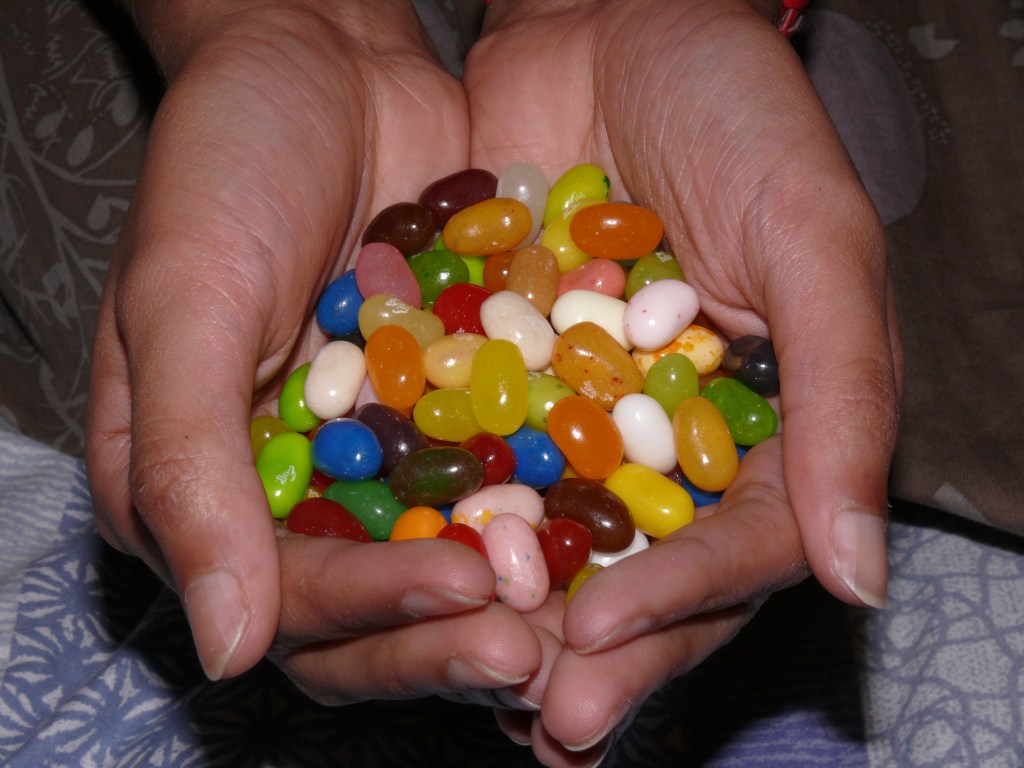
Some penguins build their nests on piles of rocks and partners exchange gifts of stones. You ask for jelly beans every time I visit, cookies, as if life has lost its sweetness. Like a bewitched pregnant woman, so strange are you, with your cravings, the wrong sex, and way too old. You used to call me “Sweets.” I deny you
nothing. My father always told me, “It’s no good to be alone.” While mother kept repeating, “Learn to type, so you’ll have something to fall back on.” If she didn’t like my boyfriend it was simply, “Play the field,” or when I went out a whispered, “Have you got your Mad Money?” Had she told me things she never did, things she wished she’d done to lay the breadcrumbs? Stones in moonlight? Meanwhile, in a case of utter irony, Dad was an insurance
salesman. I had a friend who volunteered to help install exhibits in a gallery where we worked side by side, talking, laughing. She told me that she thought a white panel van with veggies pictured on the side was some covert operation, it passed by so many times each day. We called nothing something. Imbued it with menace, omen. It was all fun and games. Until it wasn’t,
really. Years later I’d still find myself shaking my head remembering this, long after she moved away. But then I started seeing a different white van, over and over and everywhere, painted: “Loss Prevention Specialists.” I told myself that surely they installed alarms, but every time I saw the truck, I thought: Well wouldn’t it be great? Put them on speed-dial for your loved one’s cancer diagnosis, a break-up,
a death. The last time I left you I thought, next time I’ll ask you about the difference between jackdaw and crow. Wondering if I should tell you, in your fragile state, that the Montana brookies and rainbows are in steep decline. Knowing no poultice, no tincture, no prayer could save you. No
garlic necklace. But I ask myself now, what cause for alarm? So useless are we all against the leaving. The hummingbird’s heart races 20 beats per second, wings fly in the symbol of infinity, and just so, I raced to you that Tuesday, too late. I pass the black cows, all lying down, on the long drive home alone.
About the Author: Artist/poet Mary Kathryn Jablonski is most recently author of “Sugar Maker Moon,” from Dos Madres Press. Her poems and collaborative video/poems have appeared in numerous literary journals, exhibitions, screenings and film festivals, including Atticus Review, Beloit Poetry Journal, Poetry Film Live (UK), Poetry Ireland Review (IRE), Quarterly West, and Salmagundi, among others. She was recently awarded a NYSCA Individual Artist’s Grant in Poetry to complete a video/poem “chapbook” and is Senior Editor in Visual Art at Tupelo Quarterly.
Within a week of burying my husband, I took all his clothes, minus three shirts, from hangers and drawers, stuffed them into garbage bags and hauled them off to a church donation bin. I took down pictures of him, of us. I slipped into my extra-large meatsuit each morning and went to work, took care of my sick mother and my daughters. I believed that getting through the day was enough, then it wasn’t and there he was. To find that kind of love again, to cradle that love in my bones, a baby in a carriage, a love I’ll raise knowing everything here is ephemeral. Babe, these are just meatsuits, this new love promises, love never dies. I want to believe that we can raise love high above the bulky restrictions we inhabit, a dozen balloons floating above us like angels instead of a tumor resting at the base of a skull, a tombstone, a marker, these meatsuits.
About the Author: Rebecca Schumejda is the author of several full-length collections including Falling Forward (sunnyoutside press), Cadillac Men (NYQ Books), Waiting at the Dead End Diner (Bottom Dog Press), Our One-Way Street (NYQ Books) Something Like Forgiveness, a single epic poem accompanied by collage art by Hosho McCreesh (Stubborn Mule Press) and her new collection Sentenced (NYQ Books). She is the co-editor at Trailer Park Quarterly. She received her MA in Poetics from San Francisco State University and her BA from SUNY New Paltz. She lives in New York’s Hudson Valley with her family. You can find her online at: rebecca-schumejda.com
Image Credit: Ben Shahn “Clothes hanging in house at farmland auction, New Carlisle [i.e. Marysville], Ohio” (1938) Public domain image courtesy of the Library of Congress
They say the moon is an orange we should not eat. They say sweat on your neck brings good luck. They say to brag is to cut off a toe at a time. They say your virtues are your grandchildren; hold them close. They say tomorrow will be like today, only the weather will change. They say speak gently to the old, they are a bridge you must pass over. They say robins speak to robins, crows to crows. They say grief has many faces, depression only one. They say kindness is a seed we plant in each other. They say.
About the Author: Larry Smith is a poet, fiction writer, memoirist and editor of Bottom Dog Press books in Ohio. He and his wife Ann cofounded a meditation center in Huron, Ohio. His most recent book is CONNECTIONS: Moring Dew: Tanka.
Image Credit: Image originally from The Birds of North America. New York :Published under the auspices of the Natural Science Association of America,1903. Courtesy of the Biodiversity Heritage Library



 As It Ought To Be
