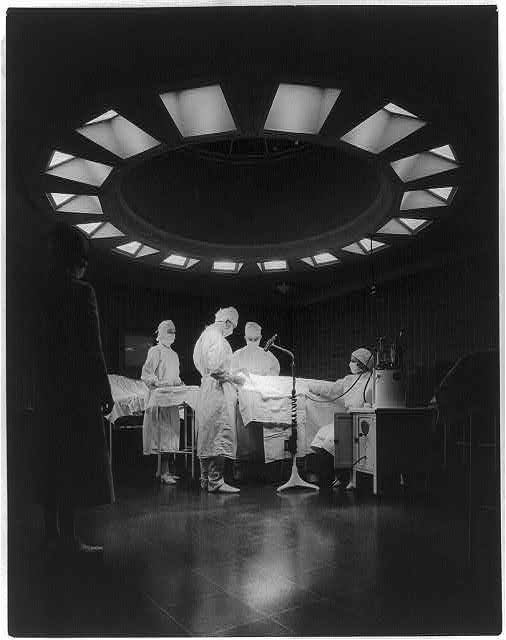
What to Do After You Don’t Die on the Table

get up
write a few things down
shake
thinking
they missed something.
About the Author: John Dorsey is the former poet laureate of Belle, Missouri and the author of Pocatello Wildflower. He may be reached at archerevans@yahoo.com.
Image Credit: “Operating room – eye institute” Public domain image courtesy of the Library of Congress
Cancer Song #9

your first mri
you have to be pulled out 3 times
hardly able to breathe
now they place a towel over your face
& offer you a warm blanket
& some easy listening music
piped into your headphones
& it almost feels like you’re on vacation
& you dream about staying in there forever
safe from the outside world
somewhere cancer & time can’t follow you
& you think about squeezing a button
& ordering a cold drink
& asking about the inflight movie.
About the Author: John Dorsey is the former poet laureate of Belle, Missouri and the author of Pocatello Wildflower. He may be reached at archerevans@yahoo.com
Slow Denial

Years passed since I witnessed
MS fracture Mom’s neurology, stealing
her calligraphic hand, stilling her walk
and independence, robbing all recollection.

Unhurried decline gave rise to stroke that denied
her swallow, silenced her song and motherly words,
her last breath at age 74. Today, with each successive
phone call from seven hundred miles away,

I learn how my father’s eyes betray his art. Potter’s
wheel not recently turned, blank canvases on the easel
sit untouched, despite Dad’s nagging urge to paint,
to create, before his waning vision decides

it’s too late. Now 83, he also fights COPD. Worries
over his final arrangements, forgets again and again
to follow through. I gently remind. I politely nag—
it’s a father-daughter round dance. Correspondence

penned by an unsure hand and our déjà vu discussions
underscore his blurred attention to details, numbers,
and words—macular degeneration in cahoots with his
mind’s random disposal of clear thought and memory.

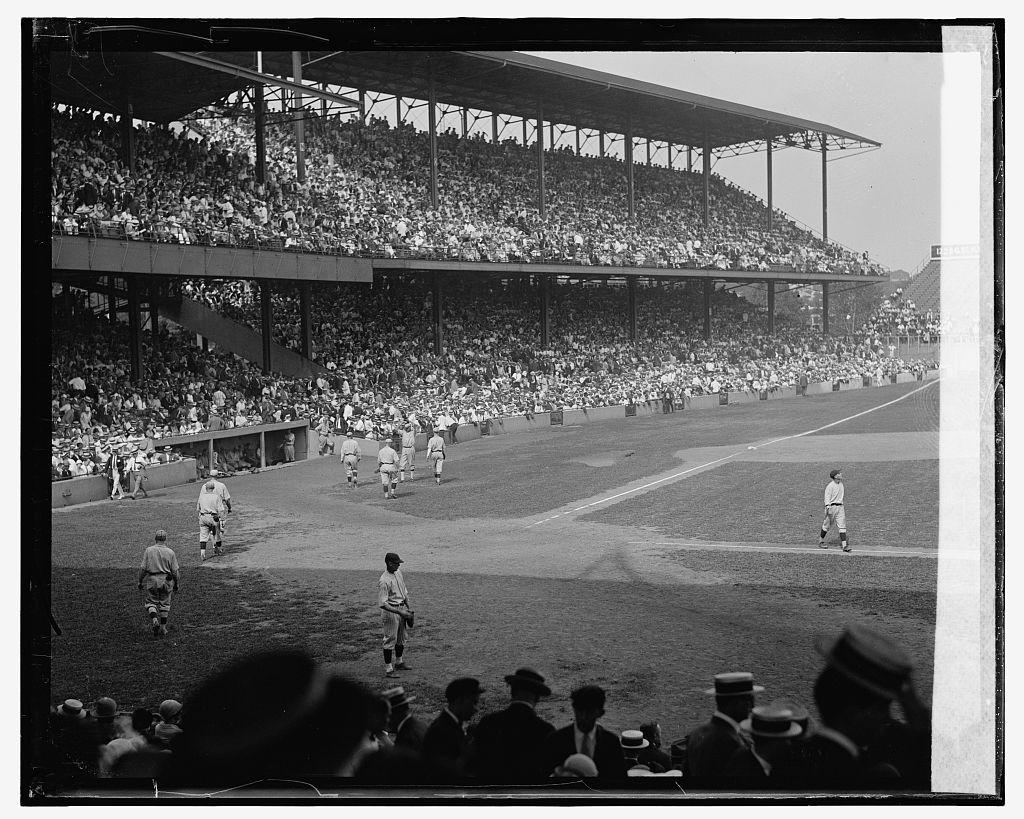
Tonight, I call Dad. I wrote a poem about a ball game
we went to when I was nine. This holds his attention.
He says he looks forward to hearing it. Calls me a true
artist for my writing craft. Mostly, I want to reminisce

for fun and distraction from our legal to-do list. Tough
topics simmer on the back burner as Dad cites the same
Major League players I named in my poem—
Reggie Jackson, Thurman Munson, Willie Randolph,

among them—our famous sports heroes who
stood at the fence between first base and bleachers,
signed autographs as we lingered in joyful awe,
drenched in the summer rain.
About the Author: Leslie M. Rupracht has poems appearing or forthcoming in Aeolian Harp, Asheville Poetry Review, As It Ought To Be Magazine, Chiron Review, K’in, The Ekphrastic Review, Gargoyle, Anti-Heroin Chic, Kakalak, a chapbook, Splintered Memories (Main Street Rag), and elsewhere. Editor, poet, writer, visual artist, and rescued pit bull mama, Leslie cofounded and hosts the monthly reading series, Waterbean Poetry Night at the Mic, in Huntersville, NC (on Facebook/Instagram @WaterbeanPoetryNightattheMic).
Image Credit: “Baseball game at Griffith Stadium, Washington, DC. The Washington Nationals are playing the Philadelphia Athletics” (1925) Image courtesy of The Library of Congress
The Scientist After the Operation

A couple weeks after the operation,
he finally can sit outside,
under the enormous black walnut tree
that hasn’t yet succumbed to a storm
although it loses limbs each time.
He holds in his lap a biography
of Gregor Mendel, the monk
who cross-bred plants
and discovered genetic inheritance.

At one point, he had thought about
the church as a career. His mother had
suggested it would be a good place
for someone with his “proclivities,”
a comment so complicated he kept
returning to the statement for years
trying to determine if it was caring,
Machiavellian or something else.
He had studied science instead.

She doesn’t know he’s sick.
They haven’t talked since the wedding
when the state finally allowed him
and Greg to be a legal couple,
and yet, this was when
his grandmother began talking
openly to him about relationships
in the months before her death.
Some things skip a generation.
Some things never get passed down.

He sees Greg glancing out
the kitchen window, checking
to make sure he’s okay,
awake, still alive,
and he waves the book
to reassure his partner,
like a preacher with a bible
About the Author: A faculty member at the University of North Carolina School of the Arts, Joseph Mills holds the Susan Burress Wall Distinguished Professorship in the Humanities. He has published seven volumes of poetry, most recently Bodies in Motion. His collection This Miraculous Turning was awarded the North Carolina Roanoke-Chowan Award for Poetry for its exploration of race and family.
 As It Ought To Be