Agnes Vojta: “Gone Fishing”

Gone Fishing

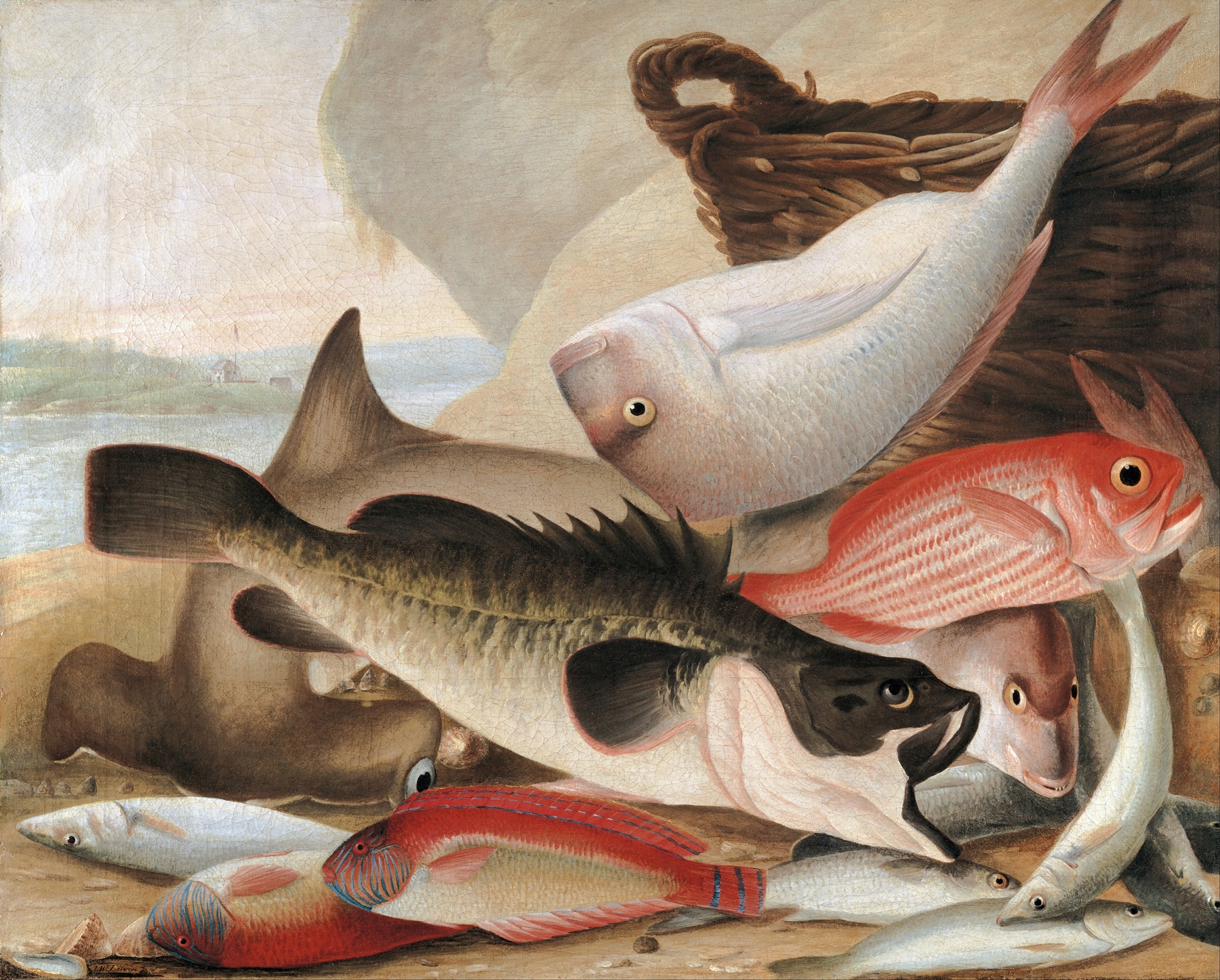
A storefront window on Main Street
displays a collection of wooden rainbow
trout. Carved and painted to look real,
their speckled bodies curl in mid-jump

next to a model ship with billowing sails,
an engraved sign reading Jeremiah Hale,
Attorney at Law,
and a set of scales.
The lights in the office are off.

Perhaps the attorney has gone fishing,
wades knee-deep in the cold river,
hears the kingfishers shriek from bank to bank,
watches silvery fish dance in the reeds.

Perhaps he sits in the dusty backroom
on a desk that is suffocating with papers
and dreams of a ship with white sails
that will come to carry him far away.

About the Author: Agnes Vojta grew up in Germany and now lives in Rolla, Missouri where she teaches physics at Missouri S&T and hikes the Ozarks. She is the author of Porous Land, The Eden of Perhaps, and A Coracle for Dreams, all published by Spartan Press. Together with eight other poets she collaborated on the book Wild Muse: Ozarks Nature Poetry (Cornerpost Press, 2022.) Her poems have appeared in a variety of magazines; you can read some of them on her website agnesvojta.com.

Image Credit: John William Lewin Fish catch and Dawes Point, Sydney Harbour (1813) Public domain image courtesy of Artvee.
Agnes Vojta: “Darkroom”

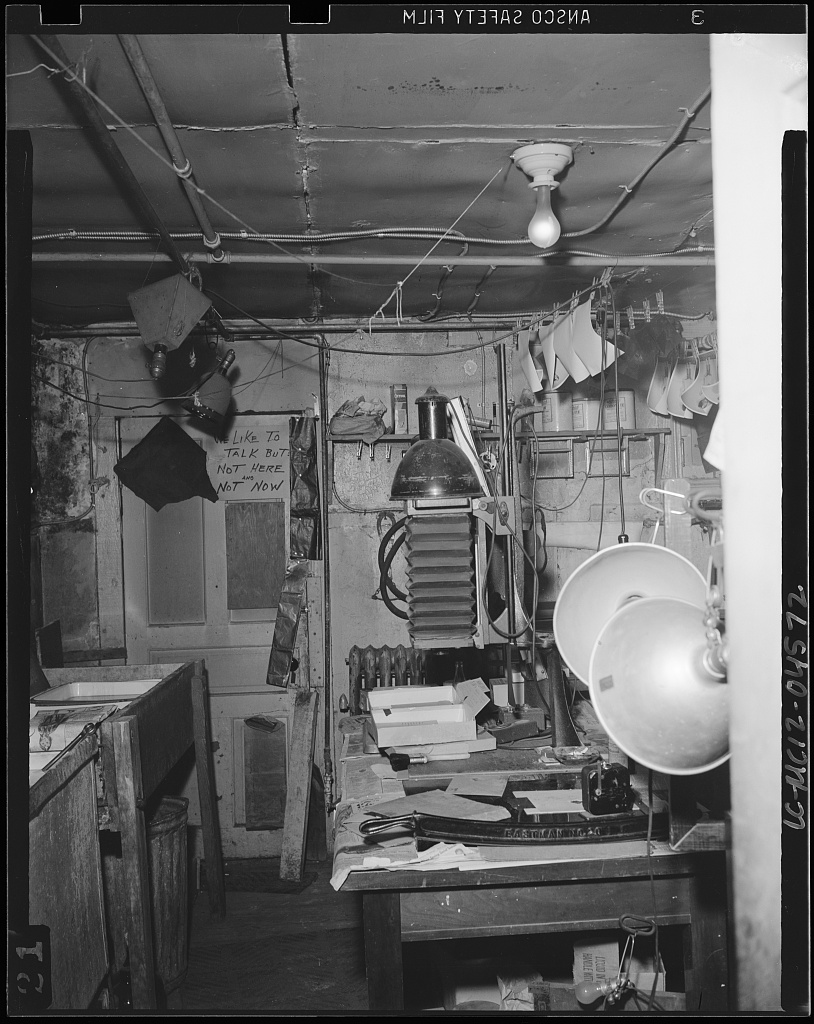
Darkroom

He loves the slow and lonely work.
In the orange glow, he watches
shadows grow on the paper,
darkening shapes blossom.

From his test prints, he knows
how long the photo needs to soak
in the developer, when to move
it to the stop bath, to the fixer.

At the end of the day, ten portraits
will hang on the drying line:
acrobats, jugglers, stilt-walkers,
dancers – street performers, captured

mid-flow. He dislikes poses,
and circus acts that are now
all about break-neck speed.
Speed is not important to him.

He bicycles, travels by train,
eschews the subway, walks instead
unbothered by his luggage – how
can he see if he is underground?

He does not show his photographs.
They cover the walls in his house:
clowns, mimes, and fire-eaters, none
looking towards the audience.

About the Author: Agnes Vojta grew up in Germany and now lives in Rolla, Missouri where she teaches physics at Missouri S&T and hikes the Ozarks. She is the author of Porous Land, The Eden of Perhaps, and A Coracle for Dreams, all published by Spartan Press. Together with eight other poets she collaborated on the book Wild Muse: Ozarks Nature Poetry (Cornerpost Press, 2022.) Her poems have appeared in a variety of magazines; you can read some of them on her website agnesvojta.com.

Image Credit: John William Lewin Fish catch and Dawes Point, Sydney Harbour (1813) Public domain image courtesy of Artvee.
Cheryl A. Rice: “Fishing Both Sides of the River”

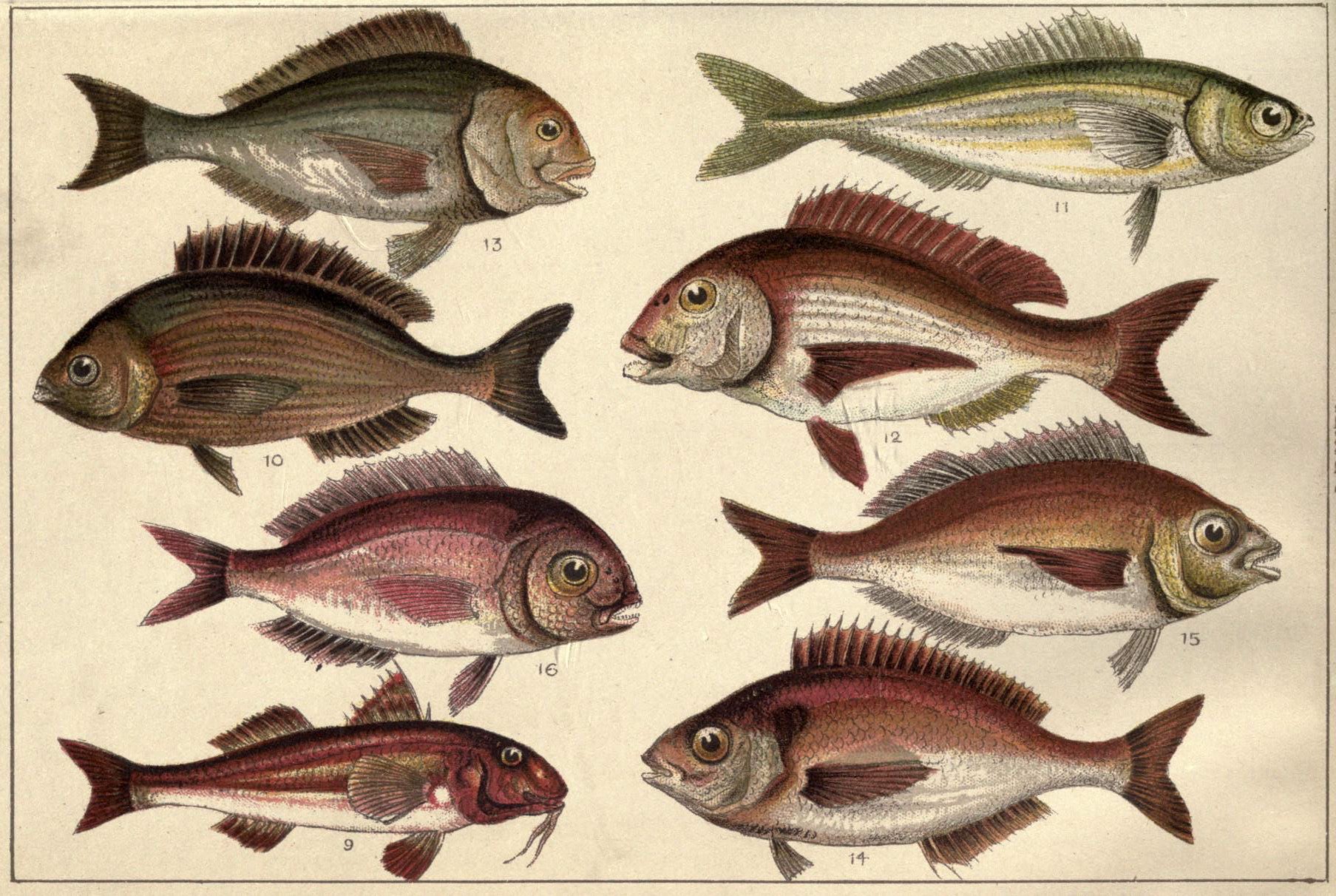
Fishing Both Sides of the River
-for Mike James


Between heaven and Earth is orange,
binder I’ve been missing all my life.
Only fish you catch can see in color,
but the ones that can tend to stay
on the right side of the bank.
Reds around me, peevish, gregarious,
shy away from the unmitigated optimism
that is yellow. I see orange now
as the missing link, mediator who can
bring these disparate sides of my palette
back to sanity, plum a distant cousin,
aquamarine the troublesome hue
that started all the fuss.

About the Author: Twice a Best of the Net nominee, Cheryl A. Rice’s books include Dressing for the Unbearable (Flying Monkey Press), Until the Words Came (Post Traumatic Press), and Love’s Compass (Kung Fu Treachery Press). Her monthly column, The Flying Monkey, can be found at https://hvwg.org/, while her occasional blog, Flying Monkey Productions, is at http://flyingmonkeyprods.blogspot.com. Rice can be reached at dorothyy62@yahoo.com.

Image Credit: Public domain image originally from Our country’s fishes and how to know them London: Simpkin, Hamilton, Kent & Co.,[1902]. Image courtesy of the Biodiversity Heritage Library

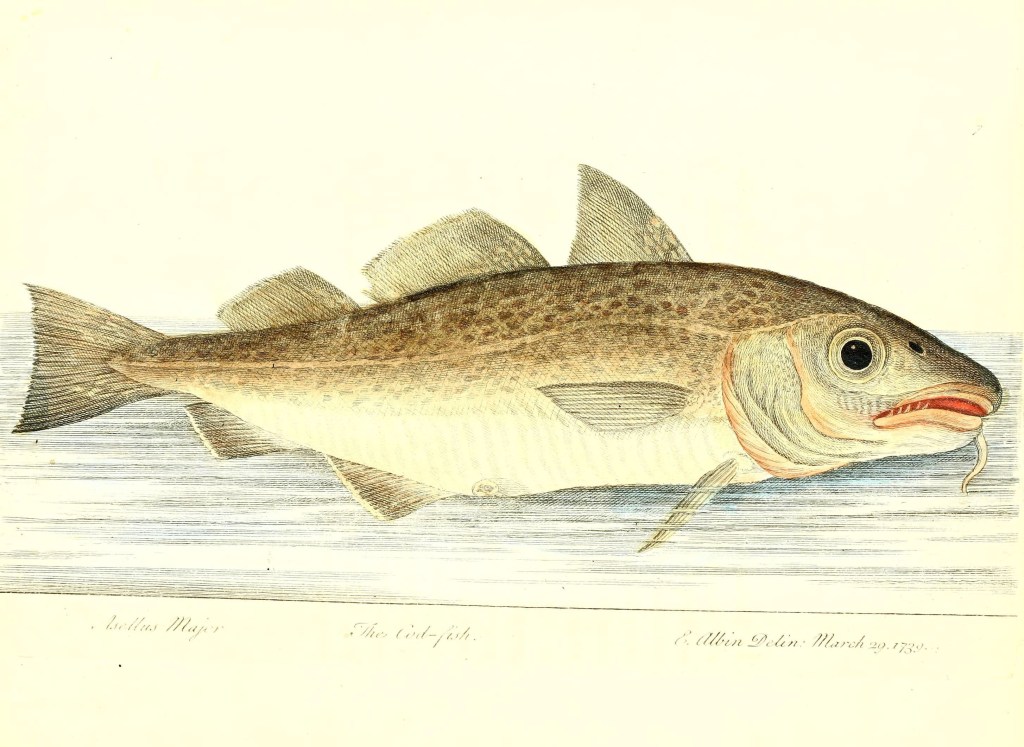
Brian Boies “Cod Flashes”

Cod Flashes

Catch and release
but first, after
the flapping stops,
pull a paint-dripping brush
tight down both
sides of its body.
White to teach
a lesson about survival 
to it and
everyone who sees.

Highly visible
through the muck,
it will travel
far south, 
far north
hugging the river’s top ice
until the danger has passed.

I am painted white inside,
my muscles only know taught.
Different doctors say 
this shouldn’t be happening
to someone my age.
Why so wired
and meditation only makes it worse.
I am counting down.

Cod arrives
at its camouflage destination.
Maybe safe
but ghosts are also white.

Three sheets I layer
to cover the ice,
I too have found a home here.

A red fish fibrillates
inside me.
Seize,
unseize.
With a whimper,
arythma.

If the ghost is me,
if the ghost is which part of me,
fish can fellowship
and compare our woes of white.
Maybe the ghost will be only my mind
and haunting is a boast
of finally free.

But before,
we will sleep
me on these stacked sheets,
the cod, bobbing in the current,
exactly below
my meekly knocking heart.

About the Author: Brian Ed Boies lived by train tracks and transcribed train graffiti and used it as prompts.  This poem is from that process. He has been published by the National Endowment of the Arts and in Punk Planet and ZYZZYVA. A story of his was listed as Notable Nonrequired Reading in 2012. He lives in Sacramento with his wife and daughter.

Image Credit: Public Domain image originally from The history of esculent fish London: Printed for Edward Jeffrey [etc.],1794. Courtesy of the Biodiversity Heritage Library.

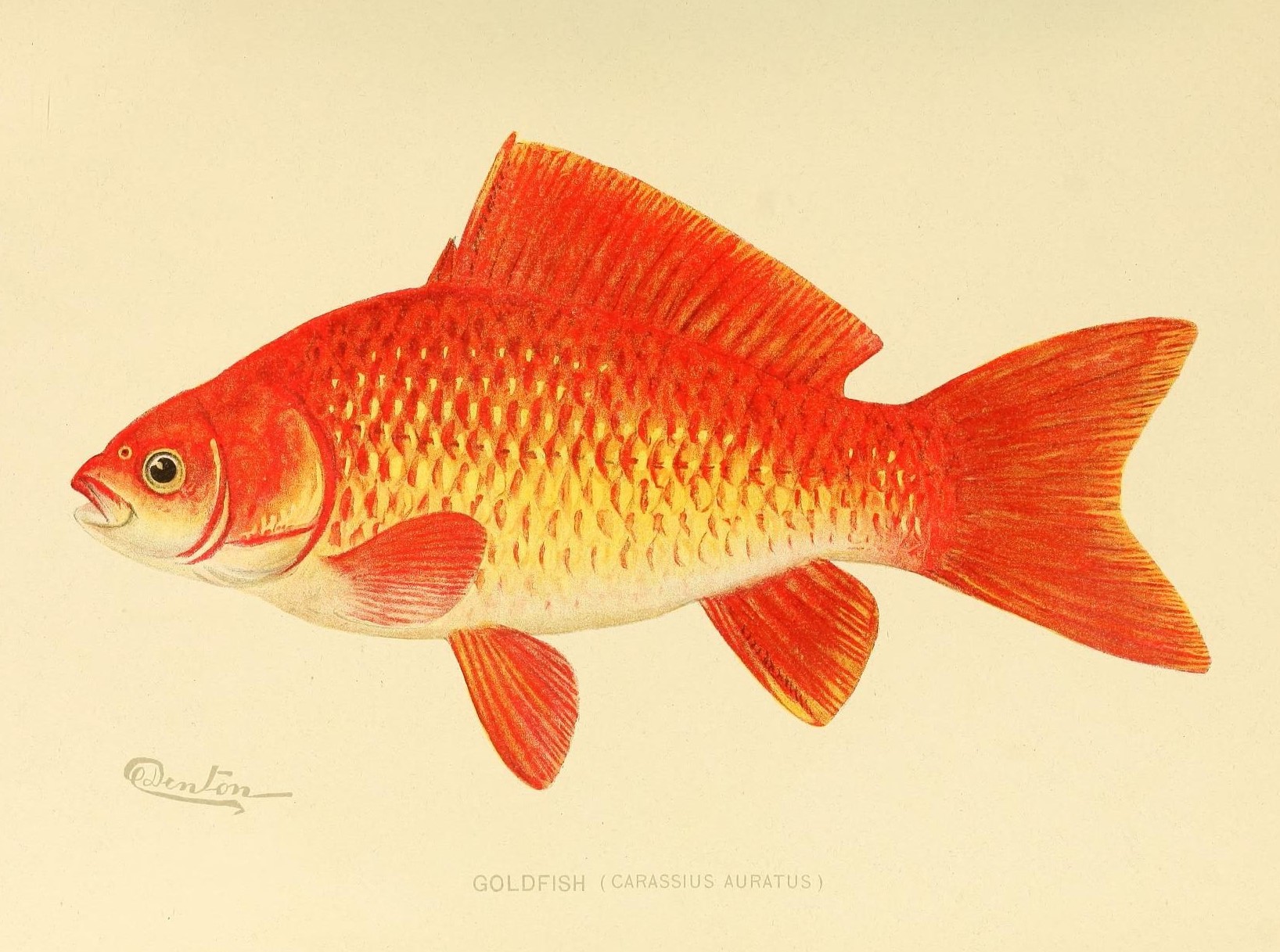
Cheryl A. Rice: “Remember the Goldfish Will Be Dead By Morning”

.

7506916742_3886ef474c_o

.

.

Remember the Goldfish Will Be Dead By Morning, 

as will the thready cobwebs of carnival light
strung above scraps of pavement
that’s seen better days, industrious employees
parking in a fresh lot, neatly painted
plots from end to end,
paint now faded, workers retired,
transferred or deceased.
In the morning, stars will have moved on
to other fairs, or the other side of the globe,
rides beyond not yet unplugged,
not yet spattered with vomit and sweat,
freshly hosed, engines revving.
In the morning, somewhere, there is popcorn
waiting to be heated, holding explosions
tight inside their vegetal chests.
Lemons are being sliced, water chilled,
hot dogs start their hours-long sauna.
But here in our town, all that remains
are tire tracks on the ballfield,
garbage drums full of discarded soda cups,
French fry boats anointed with catsup,
napkins cycling in the breeze.
The sun surveys the damage.
Crews pick debris from the ground,
recycling antics be damned.
And that goldfish you won
tossing rings at impossible pins?
The one you carefully slipped in an empty beer stein
when you got home late, so as to not wake him?
He’s been dead for hours, floating in
glass and baggie, back to tank, egg, essence,
gold all that remains by morning,
a sort of orange sunrise to remind the masses
of reflective vests, steel-toed boots,
the circle of days that we swim around,
in our own bags, without air,
with too much light.

.

.

About the Author: Cheryl A. Rice’s poems have appeared in Home Planet News, Baltimore Review, Up The River, and Misfit Magazine, among others. Recent books include Love’s Compass (Kung Fu Treachery Press), and Until the Words Came (Post Traumatic Press), coauthored with Guy Reed. Her blog is at: http://flyingmonkeyprods.blogspot.com/. Rice lives in New York’s Hudson Valley.

.

Image Credit: Image originally from Annual report 8th; 9th (New York State Forest, Fish and Game Commission) (1902-1903) Image courtesy of the Biodiversity Heritage Library