Cheryl A. Rice: “Crow Will Never Carry A Star Across the Sky”

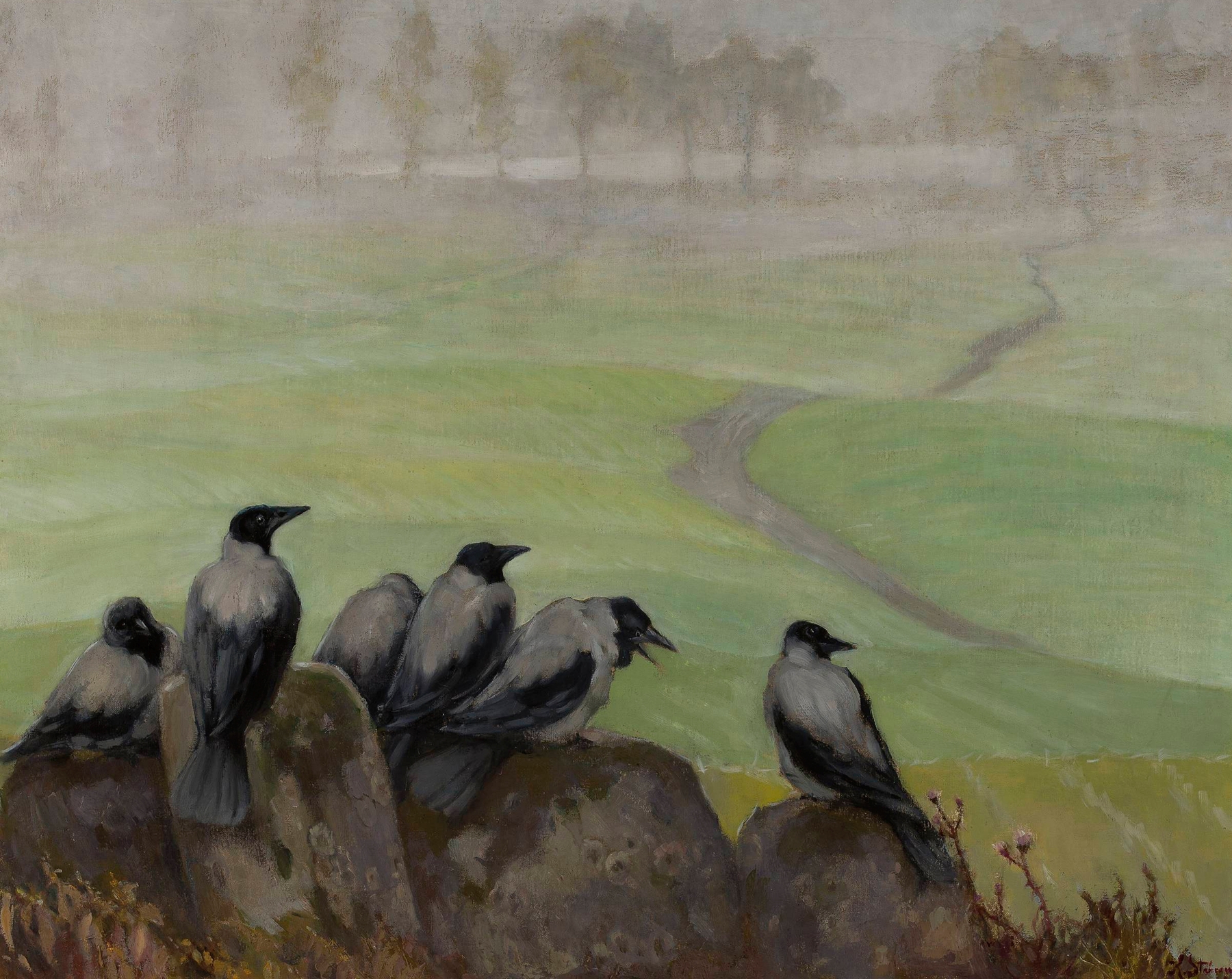
Crow Will Never Carry A Star Across the Sky
-for MJ

“It’s not my job to carry a
self-sufficient body from dawn to dawn.
I’ve got enough on my mind,
what with gathering foodstuffs to tide me over,
making a nest sturdy enough to withstand
kith and kin, raw eggs, new babies.
Stars live lives beyond all that,
provide the only possible light
in that seamless backdrop.

It’s not a matter of choice, no choice about it at all.
Check with Blue Jay, busy bullying inbred Sparrows,
or Cardinal, flitting like a match head from bush to bush,
playing the family man so well you can almost see a
station wagon full of chicks behind him.
Goldfinch, Red-Headed Stranger,
elusive Bluebird of Happiness—
maybe one of them has time
to cart a star around there like some aged queen.

I’ve got my own agenda,
make my own rounds without help
from a creature subject to laws of gravity.
Leave me be. I’ve got a Douglass fir to investigate.
Something is shining on that uppermost branch that calls to me,
seems to be spelling my name in semaphoric signs.”

About the Author: Twice a Best of the Net nominee, Cheryl A. Rice’s books include Dressing for the Unbearable (Flying Monkey Press), Until the Words Came (Post Traumatic Press), and Love’s Compass (Kung Fu Treachery Press). Her monthly column, The Flying Monkey, can be found at https://hvwg.org/, while her occasional blog, Flying Monkey Productions, is at http://flyingmonkeyprods.blogspot.com. Rice can be reached at dorothyy62@yahoo.com.

Image Credit: Kazimierz Stabrowski “Crows- Council of Seniors” (1923) Public domain image courtesy of Artvee
Cheryl A. Rice: “Fishing Both Sides of the River”

Fishing Both Sides of the River
-for Mike James


Between heaven and Earth is orange,
binder I’ve been missing all my life.
Only fish you catch can see in color,
but the ones that can tend to stay
on the right side of the bank.
Reds around me, peevish, gregarious,
shy away from the unmitigated optimism
that is yellow. I see orange now
as the missing link, mediator who can
bring these disparate sides of my palette
back to sanity, plum a distant cousin,
aquamarine the troublesome hue
that started all the fuss.

About the Author: Twice a Best of the Net nominee, Cheryl A. Rice’s books include Dressing for the Unbearable (Flying Monkey Press), Until the Words Came (Post Traumatic Press), and Love’s Compass (Kung Fu Treachery Press). Her monthly column, The Flying Monkey, can be found at https://hvwg.org/, while her occasional blog, Flying Monkey Productions, is at http://flyingmonkeyprods.blogspot.com. Rice can be reached at dorothyy62@yahoo.com.

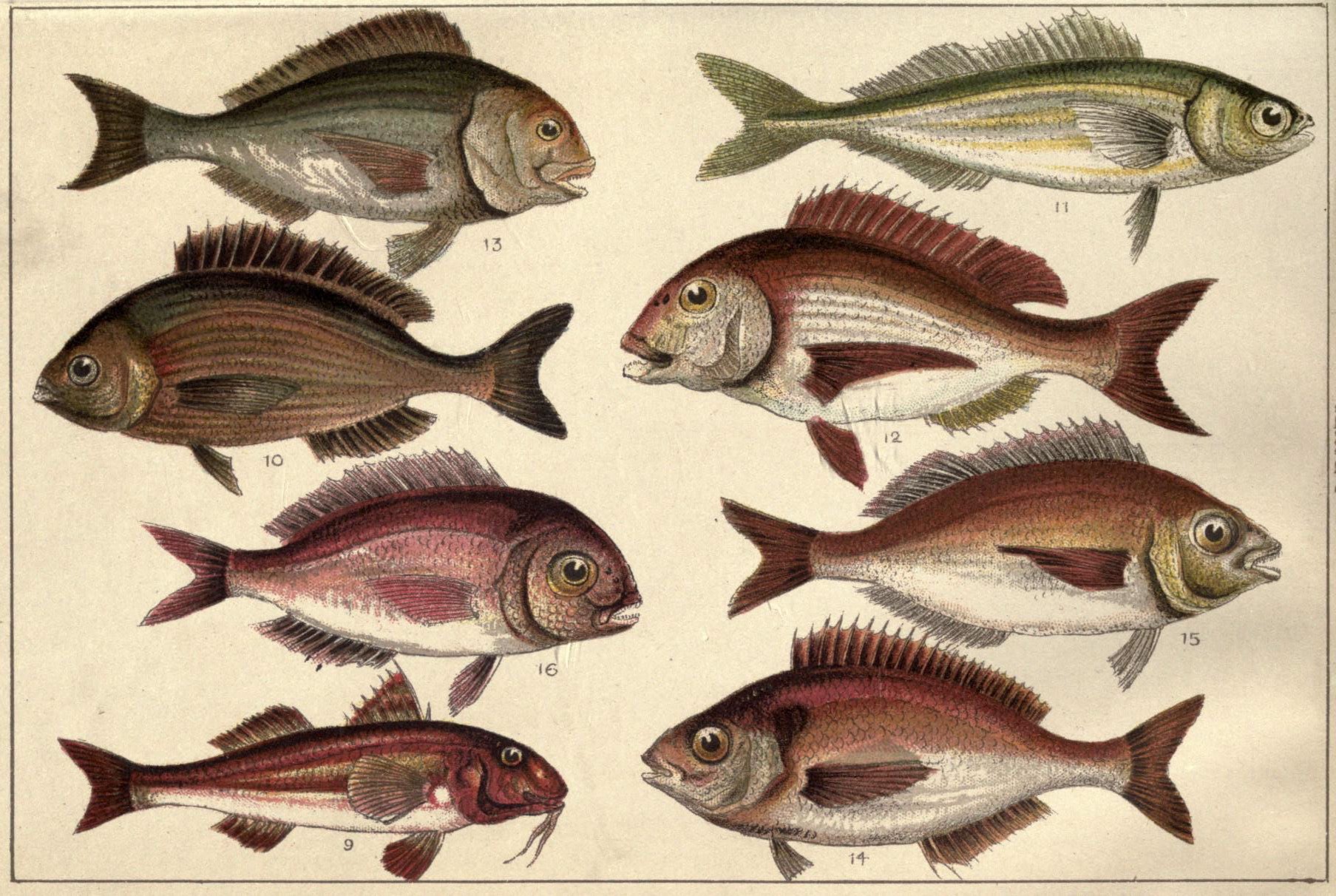
Image Credit: Public domain image originally from Our country’s fishes and how to know them London: Simpkin, Hamilton, Kent & Co.,[1902]. Image courtesy of the Biodiversity Heritage Library

Kellie Diodato: “TAKING MY STUDENTS TO SEE THE MAYANS AND AZTECS BUT THEY TALK ME INTO STARING AT A BUNCH OF DEAD THINGS.”


TAKING MY STUDENTS TO SEE THE MAYANS AND AZTECS BUT THEY TALK ME INTO STARING AT A BUNCH OF DEAD THINGS.

I. Essential question:
What is taxidermy,
and how does taxidermy enhance
your understanding of both the physical and meta
physical world?

II. Lesson Objective:
My students will make a scene. They will be awe-
filled and giddy. They will gallop in stupendous motion,
a herd of happy ponies. They will bounce up four flights
on one foot to pretend-lick dinosaur bones, rush
towards the ominous mosquito exhibit, and they will ask
for my phone. They will want to take a jumping selfie
one where they’re frozen in time, levitating over my multiple
attempts at a headcount. I will not be able to say no to their massive
bright and gleaming eyes when they ask,
just ten more minutes!

III. Objects/Materials Needed:
My students refer to the grizzly bear as “life-like”
and a “giant stuffed-animal.” Do I break the mirage,
tell them that these creatures were once as alive
as they will feel walking back with me to school?
Along the way, they will scream, cry, point towards a pigeon
with its head stomped in. Blood trickles from the bird’s eyes
every time it thrusts its broken neck towards the sky.
They will urge me to call 9-1-1.

IV: Check for Understanding:
Where do we go when we die?

About the Author: Kellie Diodato recently completed her MFA in poetry at Columbia University School of the Arts. She works as a Humanities educator for middle school students. Her writing can be found in Lifelines: The Geisel School of Medicine at Dartmouth Literary and Art Journal, Some Kind Of Opening, and The Pinch, among others.

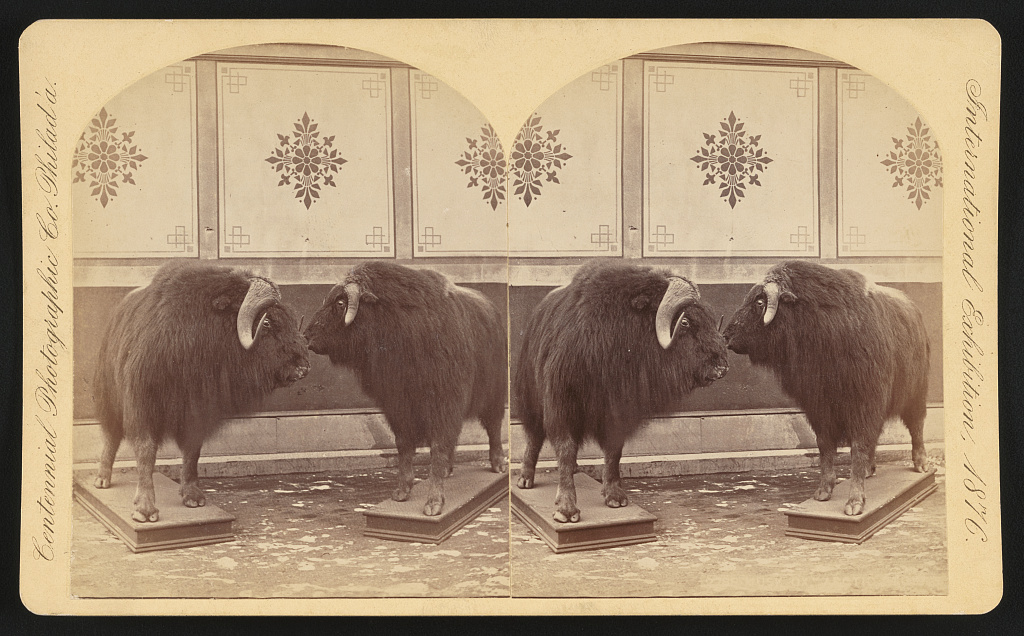
Image Credit: “Taxidermied musk ox” (1876) Public domain image courtesy of the Library of Congress

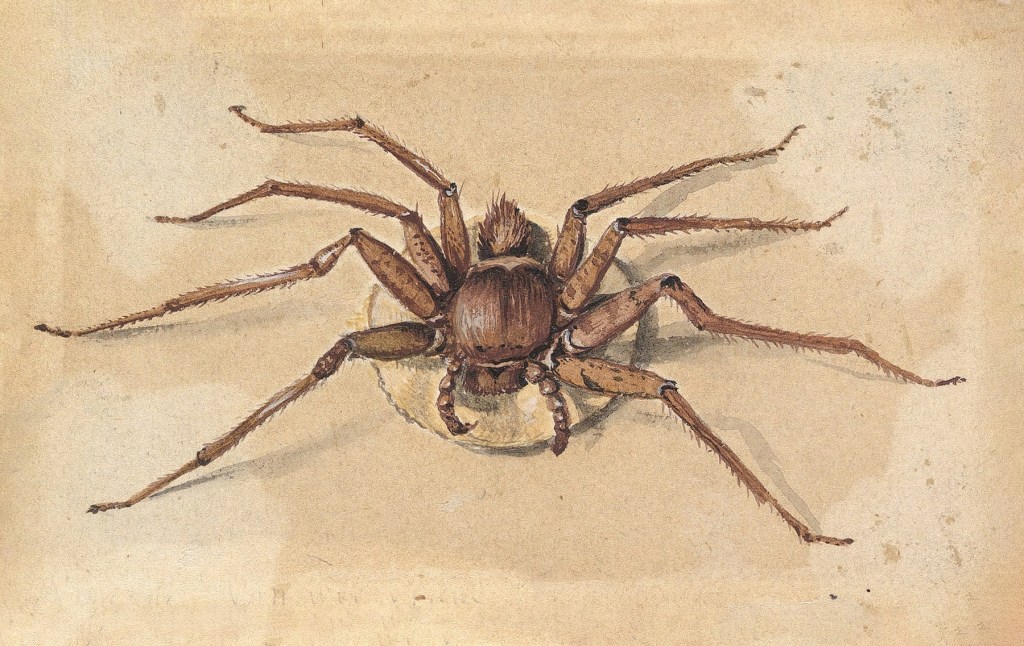
Dan MacIsaac: “Garden Spider”

Garden Spider

She spins her
own soft maze,

snare haloed
like an old radio

microphone
ON THE AIR,

rippling thin
aural rings,

oval waves
of sonic silk.

At the transit heart,
catching fine

veins of light,
she waits

for the pluck
of a male,

tiny harpist,
blindly orphic,

so tender
on a woven

strand of her
high-strung web

that will pulse
under his touch

like a radiant
and terrible lyre.

Note: The diminutive suitor, even if successful in courtship, often becomes dinner
to his cannibalistic mate.

About the Author: Dan MacIsaac writes from Vancouver Island. Brick Books published his collection, Cries from the Ark. His poetry has appeared in many journals and anthologies, including, most recently, in AmericaValley VoicesManzano Mountain Review and Poetica’s Rosenberg Award Collection.

Image Credit: Jan Vincentsz van der Vinne “A Spider” (late 17th–early 18th century) Public domain image courtesy of Artvee
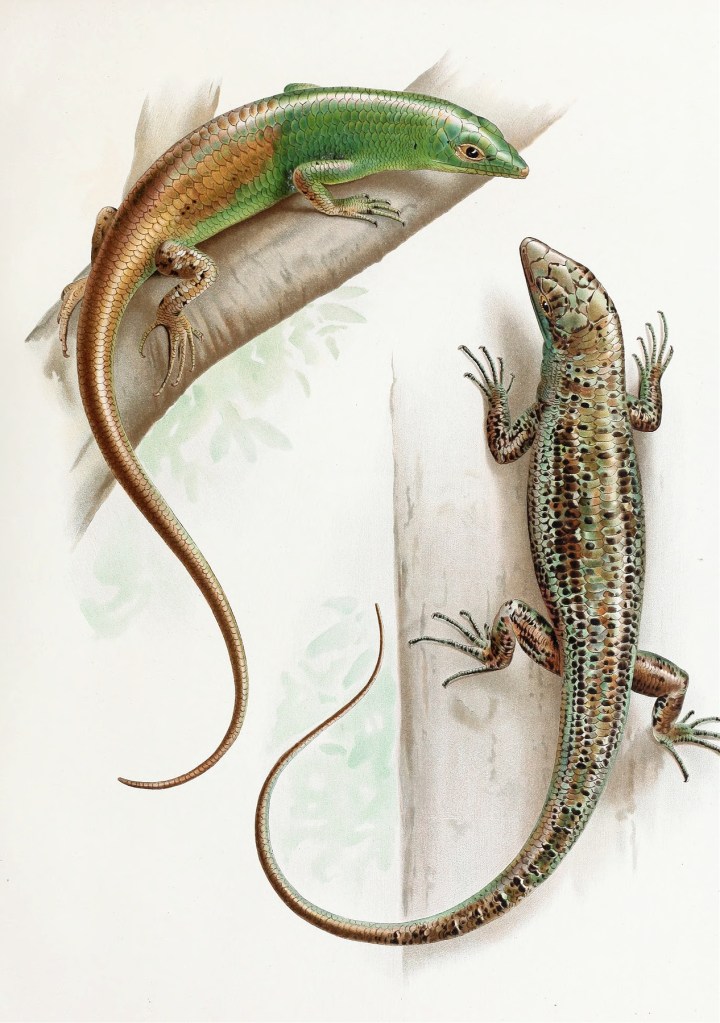
Luis Cuauhtemoc Berriozabal: “The Green Lizard”

The Green Lizard

I felt like a prisoner
in my dreams. I was
under lock and key
at a prison in Paris
like Verlaine, Villon,
and Voltaire. In a dark
cell drawing sketches
was a green lizard.
It spoke French and a
little Spanish. The
sketches were painted
on the walls. The green
lizard was my cell mate.
Its bleeding tongue was
its brush and the walls
were graffitied with red
moons, red stars, and
red mountains. Through
a window in the prison,
the green lizard would
come in and leave through
the bars in the window.
The prison guards would
beat me mercilessly
every morning, never
believing that it was
the green lizard that
bloodied the walls with art.
They asked me where
I hid the paint and why
the sketches were red.

About the Author: Born in Mexico, Luis lives in California and works in the mental health field. His poems have appeared in Blue Collar Review, Escape Into Life, Kendra Steiner Editions, Mad Swirl, and Unlikely Stories. His latest poetry book, Make the Water Laugh, was published by Rogue Wolf Press in 2021.

Image Credit: Thomas Barbour “Dasia Smaragdinum” (1912) Public domain image courtesy of Artvee