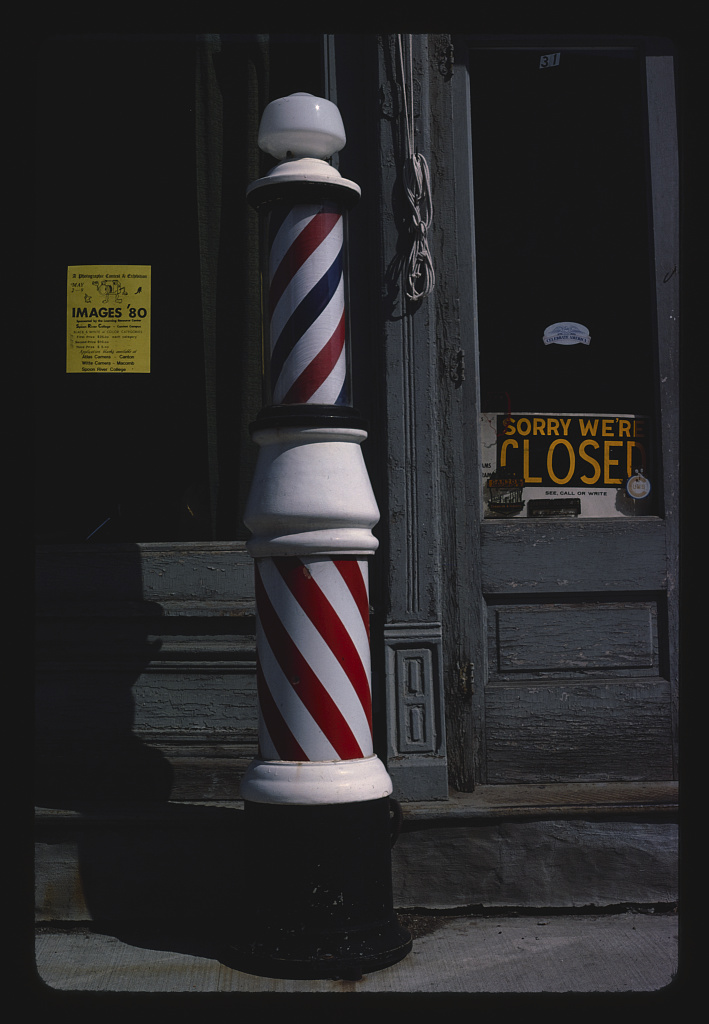
Getting a Haircut from the Only Woman in Monroe County, Mississippi, Who Was Willing to Go to Funeral Homes in the Middle of the Night and Style the Hair of Corpses

My scalp listened, her fingers' telling
phone calls, 3 a.m., when the corpses
were prepped.  She’d wash and dress their hair–
mom’s silvered pixie, granny’s blue helmet–                        .
turn death into a Sunday nap,
so visitors would walk softly, whisper
what they’d left to say.
                                            Wash, rinse, wash, rinse.
She styled by pictures left for her
and aimed for open-casket—
no surprises, but covering surprises.
A gunshot to the temple might untoward
the familiar, might demand nightmare
comb-over; facial cruelties--slashes,
crushed cheekbones--might be concealed
by a Nora’s luxurious swoops,
cascading locks.

I thought how the dead missed out
on what her fingers said, the warmth
of her body on the back of my neck,
a flesh scent, almost floral,  I’d recognize today.

She told me she was never scared.
Indifferent to the opinions of the dead
or just not superstitious, I didn’t know.
I never asked if she talked to them
the way she talked to me--if she passed on gossip,
secrets, the way she’d pack a lunch.

I simply asked if she saw it as a sideline or a calling.
“The dead are only customers,” she said
and leaned me back to rinse my hair.
About the Author: Samuel Prestridge lives and works in Athens, Georgia. He has published work in numerous publications, including Literary Imagination, Style, The Arkansas Review, As It Ought To Be, Poetry Quarterly, Appalachian Quarterly, Paideuma, The Lullwater Review, Poem, Pedagogy, and The Southern Humanities Review.
“I write poetry, he says, “because there are matters that cannot be directly stated, but that are essential to the survival of whatever soul we can still have. Also, I’m no good at interpretive dance, which is the only other option that’s occurred to me.”
He is a post-aspirational man, and his children consider him an adequate father.
Image Credit: John Margolies “Barber pole, Canton, Illinois” (1980)




 As It Ought To Be