Sheila Saunders: “It is still, now”

.

36780433052_f377933e9c_o

.

.

It is still, now

The winds have exhaled with the tide, and the afternoon.
 Here the fields draw in the winter dusk,
drain the westerly plum- juice streaks
greying the pink and yellow 
in slow minutes. 

It is still.
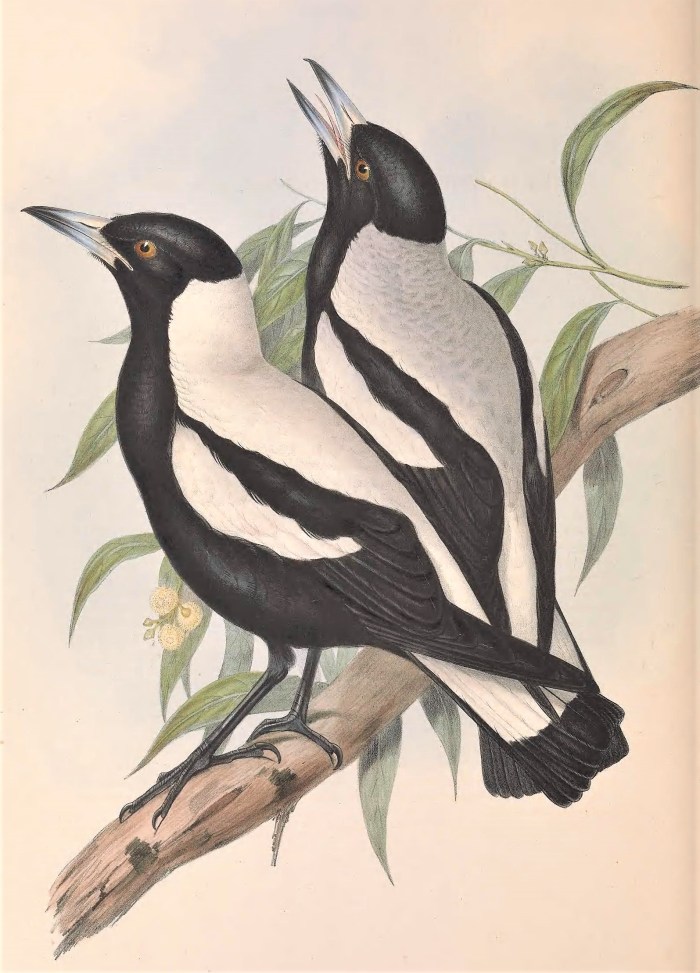
No chatter or shriek from the magpies
dumb on  black poplars’ broom-like branches
or aimlessly flopping over  sodden grass
crossing-  re-crossing. 

A near silence
wraps   the watcher in  comfort, 
who
 not hearing the  air breathing,
nor a leaf slip’s infinitesimal whisper,
is still, too.

.

.

About the Author: Sheila graduated from St Anne’s College, Oxford, with a degree in English Language and Literature, and since then worked as a reporter on local weekly and daily newspapers  in Lancashire, Lincolnshire and Buckinghamshire. After marriage to another journalist in 1961, Sheila brought up three children and continued to write as a freelance, and became involved in community organisations in Wirral, and voluntary work with special needs young people. She has always loved  theatre, music and art, but it is her observation and fascination with  her natural surroundings, including the wildlife of the coast, that has inspired most of her poetry.

.

More by Sheila Saunders: 

April Visitor

.

Image Credit: Image from, The birds of Australia. London, Printed by R. and J. E. Taylor; pub. by the author,[1840]-48. Image courtesy of The Biodiversity Heritage Library (Public Domain)
Jason Baldinger: “temporal, temporary and gone”

.

20220307_095500

.

.

temporal, temporary and gone

it’s black out in bar harbor
days after a thanksgiving 
prayer that was spoken
with no meaning, here it’s 
offseason and sunday
few residents creak 
through the vacant glaze
the early arrival of pitch black
the stars not shielded by light 

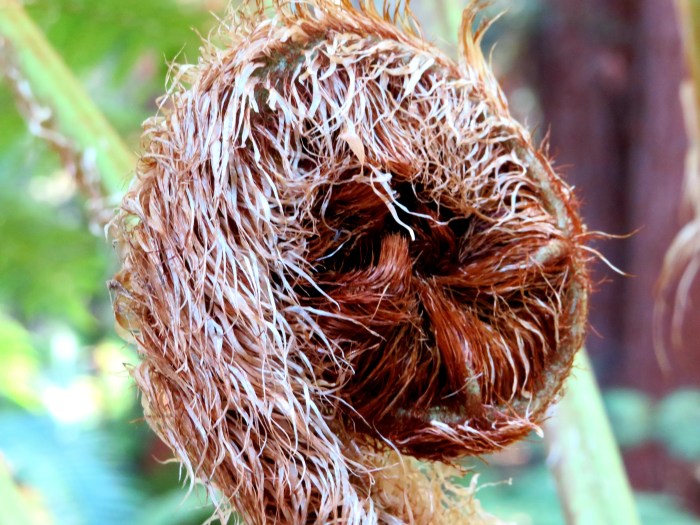
I follow a fiddlehead fern
down to a trout hatchery
where generations of tourist
feasted, fifty cents for each
wild caught dream cooked
over fire, picnic benches
for the family while you wait 

next month, i’ll be miles down coast
walking rehoboth beach with wine
stains and fireworks, dolle’s taffy
orange and boardwalk lights
lead me back from the mouth 
of breakers, footprints already
washed away, the infinite space
stoned and stealing time again
the new year a dragon
slayed at my feet 

these places, theses years
whisk by, dust in my beard
atoms along the air, no meaning
in moments anymore
it all builds to crescendo
I’ll never hear, this reality
a bubble, a vessel through 

tonight, memories flood
a mad swirl of stations 
some past, some present
some future, all materialize
temporal, temporary and gone

.

.

About the Author: Jason Baldinger was recently told he looks like a cross between a lumberjack and a genie. He’s also been told he’s not from Pittsburgh, but actually is the physical manifestation of Pittsburgh. Although unsure of either, he does love wandering the country writing poems.  His newest books include: A Threadbare Universe (Kung Fu Treachery Press), The Afterlife is a Hangover (Stubborn Mule Press) and A History of Backroads Misplaced: Selected Poems 2010-2020 (Kung Fu Treachery). He also has a forthcoming book with James Benger called This Still Life. His work has been widely across print journals and online. You can hear him read his work on Bandcamp and on lp’s by The Gotobeds and Theremonster.

.

More Poetry by Jason Baldinger:

This Ghostly Ambiance

It was a Golden Time

Beauty is a Rare Thing

.

Image Credit: Chase Dimock “Fiddlehead Fern” (2022)

Barbara Daniels: “At Shearness Pool”

.

5632199255_1063c90a70_o

.

.

At Shearness Pool

After rain sandpipers snoop 
for food at the runoff pond 
by the old tennis courts, caught 

in the tides of migration. 
I ask a painter at his easel 
how to live. He says to choose 

exacting silence. Eight turkeys, 
not really wary, step gracefully 
out of the brush. Like a hunter, 

I hold my breath. It’s sudden 
joy to spot an owl mobbed 
by blackbirds, find orioles 

hidden like lovers, like fat 
jewels. I’m happy eating 
my tuna sandwich 

and watching an eagle 
across Shearness Pool. She stuns 
me to stillness. I ask a hiker

how to live. She says 
to watch silver water just 
as the eagle lifts her wings.

.

.

About the Author: Barbara Daniels’ Talk to the Lioness was published by Casa de Cinco Hermanas Press. Her poetry has recently appeared in Concho River Review, Dodging the Rain, and Philadelphia Stories. She received four fellowships from the New Jersey State Council on the Arts, the most recent in 2020.

.

Image Credit: “A beautiful scene of some sandpipers at sunset” courtesy of the Biodiversity Heritage Library (public domain)

Julia Wendell: “Owl”

.

9495763530_ac351a4211_o

.

.

Owl,

High up in the crown
of a Monterey cedar,
saucer-yellow eyes
blinking down at us.
“Bird,” says the wee one.
“Owl,” I specify.
Next morning, he’s still
perched on the shaggy fronds,
a mouse in his talons, blood
stippling his feathers.
“Mouse,” says the girl.
“Dinner,” I elaborate.
I am not above revealing
violent cycles of need
to even the smallest soul.
It will eventually make sense.
She will grow up
and learn to kill and kill and kill—
bugs, engines, books, time, love.
But for now, the bird stays high up 
at the center of our globe.
“Owl,” says the budding girl.
“Life,” says the old one, me.

.

.

About the Author: Julia Wendell‘s sixth volume of poems. THE ART OF FALLING, will be published by FutureCycle Press in February, 2022. She lives in Aiken, South Carolina, and is a three-day event rider.

.

Image Credit: Image from A Natural History of Birds (Public Domain) Image courtesy of The Biodiversity Heritage Library

Ruth Hoberman: “Make Way for Ducklings”

.

51098874826_f041ddb320_o (1)

.

.

Make Way for Ducklings  

Willows drag green fingers through our hair 
as we walk the Public Garden with our granddaughter, 
looking for ducks. I’ve never seen trees like this before,  

she says, climbing the thick roots knobbed like knuckles 
grasping dirt. We want to show her wonders,  we want to
justify—what, the stories we tell her?  

We want to justify the world. All we see are geese 
until two mallards arrive, one green-headed, 
the other gray—Mr. and Mrs., just like the book!  

I don’t mention patriarchy as I point out the male’s 
sunlit green and handsome ringed neck. Both 
seem dignified, content, deserving any help they get  

from nice policemen. So much depends  
on what we don’t discuss as we meander, cold, 
yet almost blinded by the low October sun.  

Then we pass what none of us has ever seen: 
a man decked in xylophones and stuffed dogs, 
birds, bangles, and tambourines, all dangling  

as he growls a bluesy song about sky and wings: 
So hush, little baby, don’t you cry. We watch, 
all three of us amazed as he, too, urges a child  

to trust the world. One of these mornings  
may the world justify our praise.

.

.

About the Author: Ruth Hoberman mainly lives in Chicago. She writes poetry and essays, which have been published in such places as RHINO, Calyx, Smartish Pace, Naugatuck River Review, and Ploughshares.

.

Image Credit: Image from Naturgeschichte der Vögel Mitteleuropas Gera-Untermhaus,F.E. Köhler,1897-1905 [v.1, 1905]. Courtesy of The Biodiversity Heritage Library

Jason Baldinger: “i remember the royal river”

.

service-pnp-det-4a00000-4a07000-4a07900-4a07986v

.

.

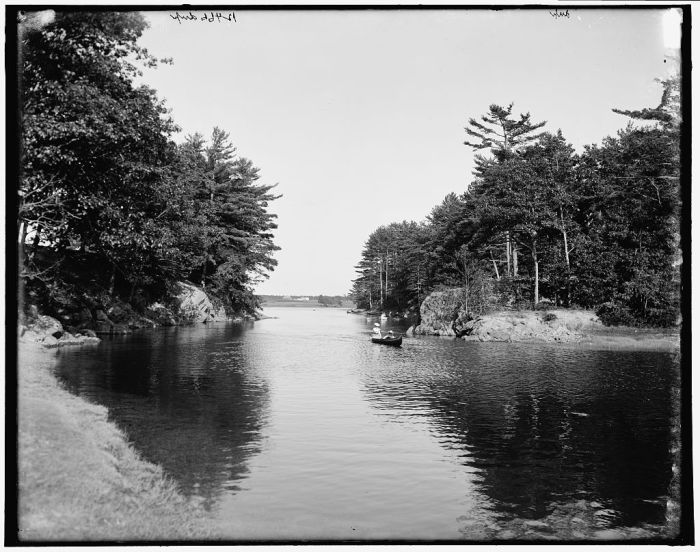
I remember the royal river

I remember the royal river
a bleached skeleton, bones
calloused and raw
these forever miles
the only skin left attached
vermont rain soaked halos 
glow dry in cold july sunshine 

I remember the royal river
mile long rutted driveways
a peninsula that breaks
into islands, black flies 
tall grass and hippie 
mansions lost to the grid
I shake rain tent flaps
drying out in turrets
as backgammon days 
passed picking ticks
off golden retrievers 

I remember the royal river
the maine granite coast
lone trees clawing
to hold the rocks along
the atlantic, ice cold showers
this gaunt face in a tide pool 

I remember the royal river
tequila on the docks
fortification for a last days boogie
gather these atoms south 
with notions of sacco and vanzetti 

I remember the royal river
as a skeleton 
with a compass
left in place 
of memory

.

.

About the Author: Jason Baldinger was recently told he looks like a cross between a lumberjack and a genie. He’s also been told he’s not from Pittsburgh, but actually is the physical manifestation of Pittsburgh. Although unsure of either, he does love wandering the country writing poems.  His newest books include: A Threadbare Universe (Kung Fu Treachery Press), The Afterlife is a Hangover (Stubborn Mule Press) and A History of Backroads Misplaced: Selected Poems 2010-2020 (Kung Fu Treachery). He also has a forthcoming book with James Benger called This Still Life. His work has been widely across print journals and online. You can hear him read his work on Bandcamp and on lp’s by The Gotobeds and Theremonster.

.

More Poetry by Jason Baldinger:

This Ghostly Ambiance

It was a Golden Time

Beauty is a Rare Thing

.

Image Credit: Detroit Publishing Co. “Picnic rocks, Kennebunk River, Kennebunkport, Maine” (1890) The Library of Congress Public Domain.

Ace Boggess: “End of the Fence”

.

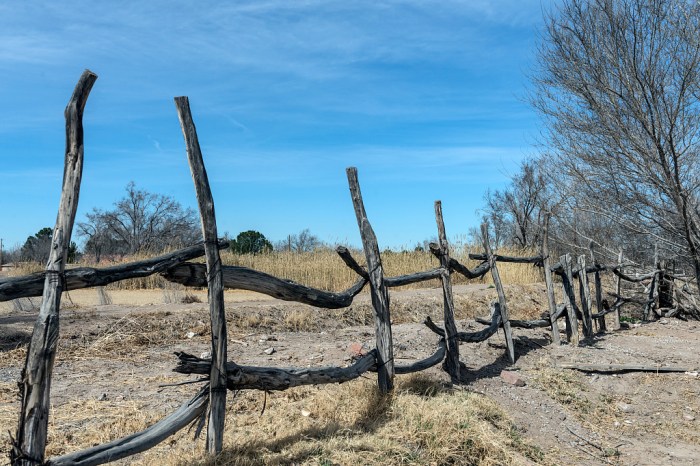
Extremely old wooden fence in the town of San Elizario, near El Paso.

.

.

End of the Fence

Strong winds. A pillar leans.
A beam descends on one side,
angling toward a motorcycle ramp
for squirrels launching themselves
toward flimsy branches.
Wire mesh, loosened, waves
like a nationless flag.

Here is the ruin, lapsing:
all that’s built crumbles,
no matter words spoken,
savior speed-dialed on the phone.

What seemed sturdy all those years
shares news of broken lumber
while the boastful, constant sky
promises other storms, graceless
as madcap dancers in the mud.

.

.

About the Author: Ace Boggess is author of six books of poetry, most recently Escape Envy (Brick Road Poetry Press, 2021). His poems have appeared in Michigan Quarterly Review, Harvard Review, Mid-American Review, River Styx, and other journals. An ex-con, he lives in Charleston, West Virginia, where he writes and tries to stay out of trouble.

.

More by Ace Boggess:

Rock Garden

And Why Am I A Free Man?

Why Did You Try To Sober Up?

.

Image Credit: Carol M. Highsmith “Extremely old wooden fence in the town of San Elizario, near El Paso, Texas” (2014) The Library of Congress

Marissa Perez: “Shark Smile”

.

50707486936_926ff7054c_o

.

.

Shark Smile 

Saturday night out and
I swallow an oyster⸺
adductor muscle, pericardial cavity, party-streamer gills⸺
I have no intention of
consuming the shell, so
I leave it empty and
winking with the sheen of departed
intestine.

How absence is also presence
with serrated teeth so
pretty they can be looped
around my summer-nipped
neck
in beachfront gift shops⸺
Shed
from their host
when they puncture prey and
cannot tear the meat off
clean.

If I had been born with
a body that ended at my collarbones
and with a mouth
less sophisticated than
a bivalve’s
I would have never
been desired
only respected

.

.

About the Author: Marissa Perez is an undergraduate student from Massachusetts. She became the 97th recipient of the Glascock Poetry Prize in 2020 and has appeared in Huizache: The Magazine of Latino Literature.

.

Image Credit: Image from: Iconografia della fauna italica Roma: Tip. Salviucci,1832-1841. Courtesy of the Biodiversity Heritage Library.

Ruth Hoberman: “Planaria”

.

7044672793_bd23a8f608_o

.

.

Planaria 

Over pie, Len talks about worms. Dice them,
he says, and each regrows its missing parts!  

His eyes glow under tangled brows, entranced
by immortality. I picture eyeless

mouths groping for their eyes and mouthless eyes
their mouths. Hungry for their hunger, old

in need of new. We’re old, our gray hair wild
and worried as brambles clinging to a cliff.

The question is where to look. He looks for doors
from body into bliss or second chances—dicing

as self-renewal? recycling as lizard or crow?
Anything to start again. I fork a peach wedge

on my plate. Sweet in my mouth the slice,
the talk with friends.

.

.

About the Author: Ruth Hoberman mainly lives in Chicago. She writes poetry and essays, which have been published in such places as RHINO, Calyx, Smartish Pace, Naugatuck River Review, and Ploughshares.

.

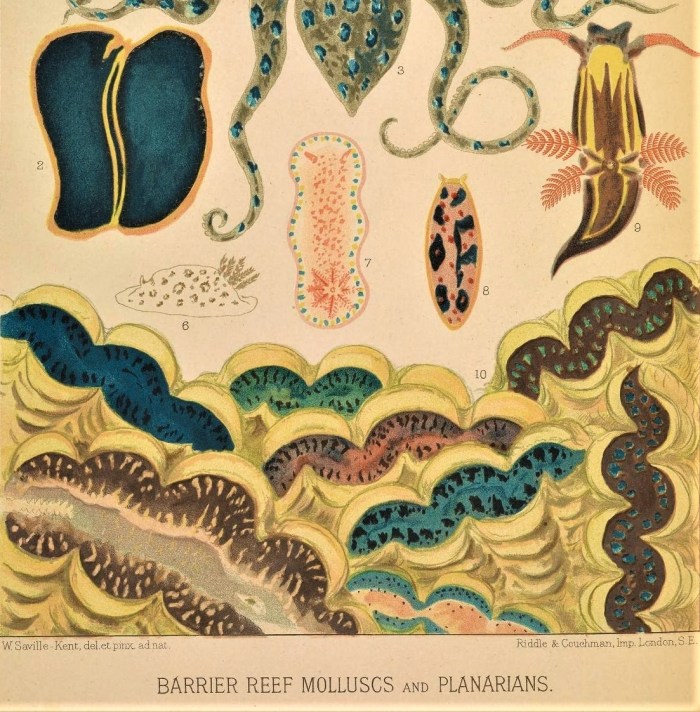
Image Credit: Image from The Great Barrier Reef of Australia;. London :W.H. Allen,[1893]. Courtesy of The Biodiversity Heritage Library

Gerald Friedman: “A Race of the Red-tailed Hawk”

.

86_Black_Warrior

.

.

A Race of the Red-tailed Hawk 

Audubon shot a hawk,
mostly black-brown.  Painting it
while it still lived, he said,
he chocolate-covered its white marks,
tidied its tail pattern,
not thinking both were typical.
He wrote tall stories:
his specimen bred in Louisiana,
feared him only when he carried his gun.
He baptized it in Latin
after his friend Dr. Harlan;
in English, “Black Warrior”,
maybe something good to have
dying or dead
to be depicted as he saw fit.

Morning frost by the Rio Grande.
All summer Harlan’s, black or rare white,
glided down from Alaska
in my mind.  Now
a red-tail screams. At me?
I sneak, a commando,
to capture it with my camera,
barely disturbing
fragile cottonwood leaves.
By some occult sense
it feels me, flies, straight
as limbs slip by.  Out of view.
But I’ll call it a Harlan’s,
tail white constellated in black.
A stereotypical birdwatcher,
I’m already checking my pictures.
One shot caught that tail,
so I’ll get an accepted sighting.

.

.

About the Author: Gerald Friedman grew up in the suburbs of Cleveland, Ohio, and now teaches physics in Santa Fe, New Mexico.  He has published poetry in various magazines, recently Rat’s Ass Review, Entropy, The Daily Drunk, and Better Than Starbucks.

.

Image Credit: Plate 86 of Birds of America by John James Audubon depicting “Black Warrior Falco harlani” Public Domain