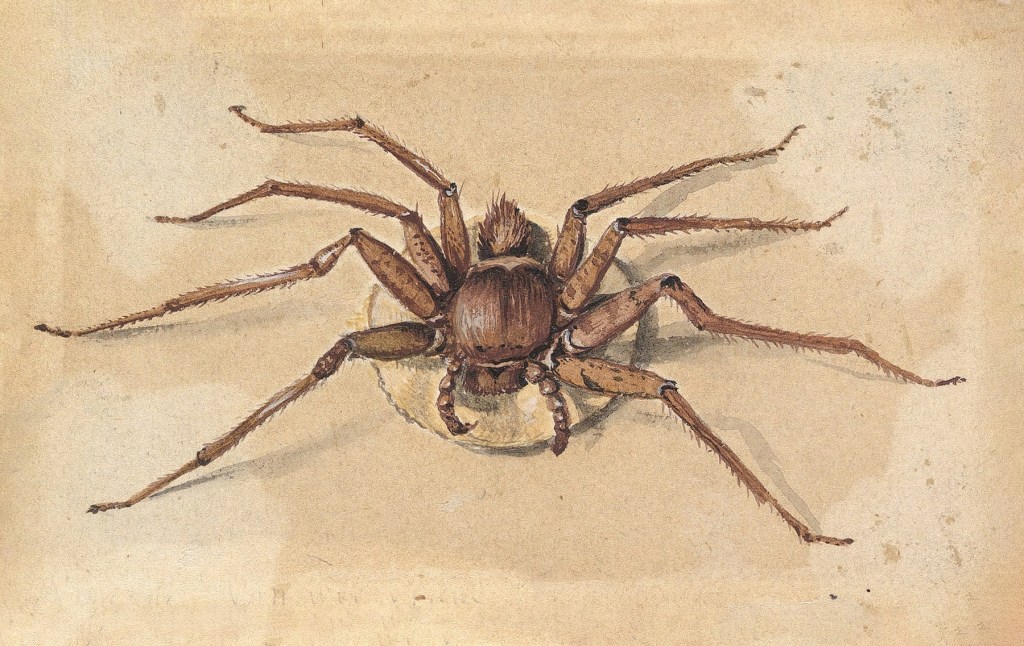
Garden Spider

She spins her
own soft maze,

snare haloed
like an old radio

microphone
ON THE AIR,

rippling thin
aural rings,

oval waves
of sonic silk.

At the transit heart,
catching fine

veins of light,
she waits

for the pluck
of a male,

tiny harpist,
blindly orphic,

so tender
on a woven

strand of her
high-strung web

that will pulse
under his touch

like a radiant
and terrible lyre.

Note: The diminutive suitor, even if successful in courtship, often becomes dinner
to his cannibalistic mate.
About the Author: Dan MacIsaac writes from Vancouver Island. Brick Books published his collection, Cries from the Ark. His poetry has appeared in many journals and anthologies, including, most recently, in America, Valley Voices, Manzano Mountain Review and Poetica’sRosenberg Award Collection.
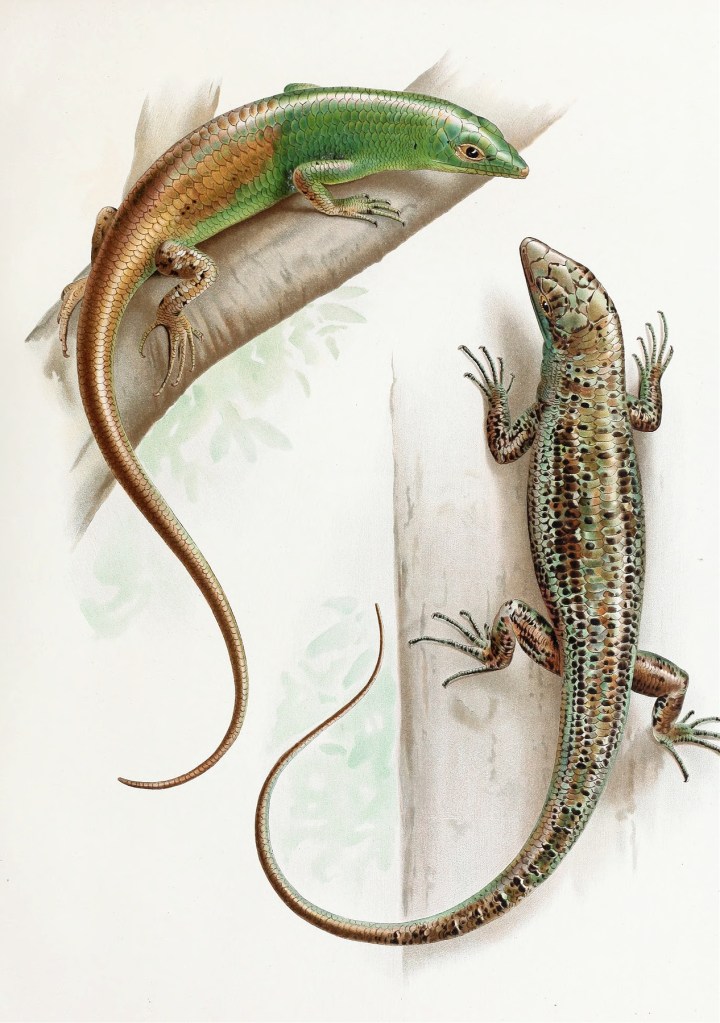
The Green Lizard

I felt like a prisoner
in my dreams. I was
under lock and key
at a prison in Paris
like Verlaine, Villon,
and Voltaire. In a dark
cell drawing sketches
was a green lizard.
It spoke French and a
little Spanish. The
sketches were painted
on the walls. The green
lizard was my cell mate.
Its bleeding tongue was
its brush and the walls
were graffitied with red
moons, red stars, and
red mountains. Through
a window in the prison,
the green lizard would
come in and leave through
the bars in the window.
The prison guards would
beat me mercilessly
every morning, never
believing that it was
the green lizard that
bloodied the walls with art.
They asked me where
I hid the paint and why
the sketches were red.
About the Author: Born in Mexico, Luis lives in California and works in the mental health field. His poems have appeared in Blue Collar Review, Escape Into Life, Kendra Steiner Editions, Mad Swirl, and Unlikely Stories. His latest poetry book, Make the Water Laugh, was published by Rogue Wolf Press in 2021.
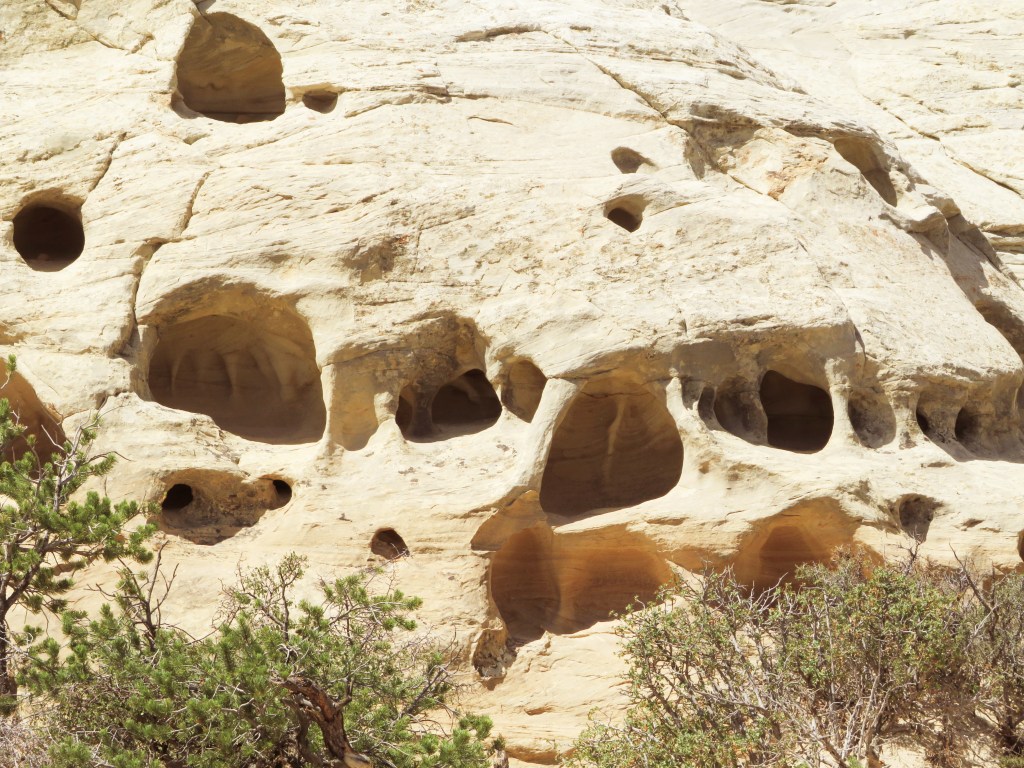
The Topography of Grief

The topography of grief is karst,
riddled with sinkholes
that suddenly open
under your feet, swallow you whole.

I don’t know what I expected
to feel. Not this emptiness.
Not nothing. I don’t cry
at the sight of my dad’s signature.

The letter from probate court
I’ve been expecting. I know
what it contains: a form letter
and a copy of dad’s will.

I cry when I pack his chessboard,
lay the wooden pieces to rest
in their velvet-lined compartments,
close the box, latch the lid.
About the Author: Agnes Vojta grew up in Germany and now lives in Rolla, Missouri where she teaches physics at Missouri S&T and hikes the Ozarks. She is the author of Porous Land, The Eden of Perhaps, and A Coracle for Dreams, all published by Spartan Press. Most recently, she has been collaborating with eight other poets on the book Wild Muse: Ozarks Nature Poetry (Cornerpost Press, 2022.) Her poems have appeared in a variety of magazines; you can read some of them on her website agnesvojta.com.
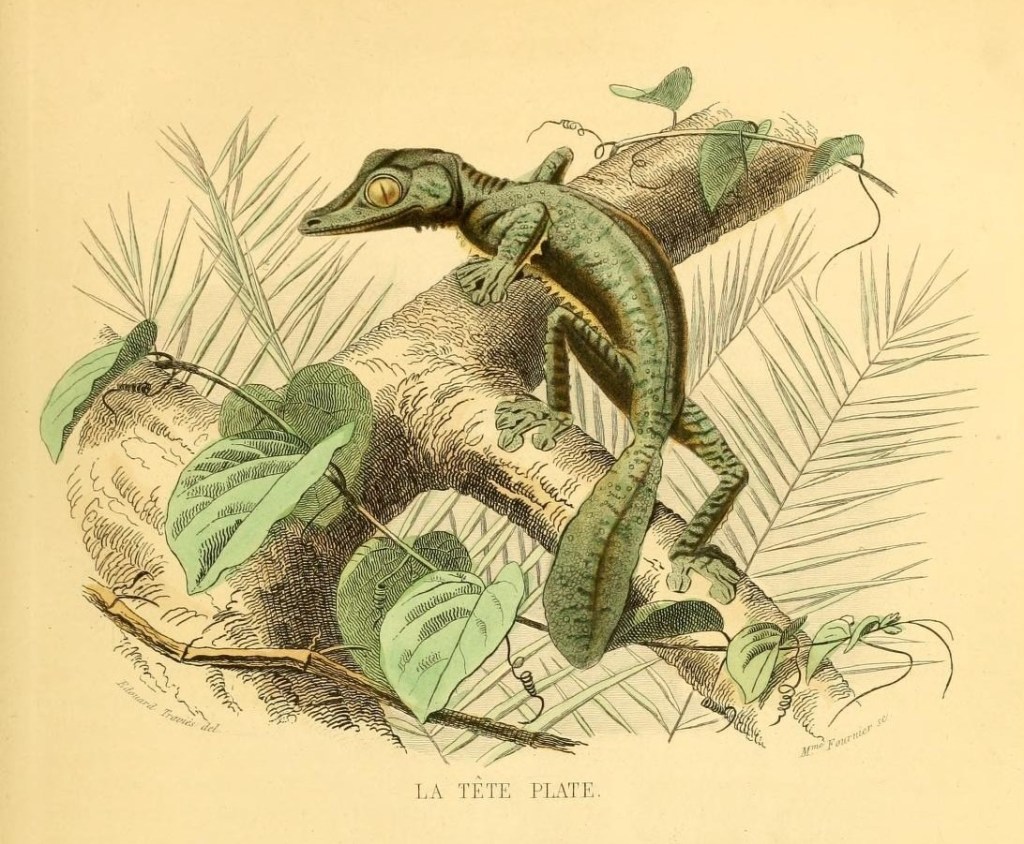
Guidelines for House Gecko


Leave pearl eggs in dark spots—
behind sockets or bookshelves.

Crawl the walls on sticky toes, but if you see people,
scuttle to a crack and hide.

Squeak for help. Chirp for sex.
Eat bugs and multiply.

Let the little ones dash across carpets
but only at night.

You’ll last for years here, hovering
in the laundry room, waiting for roaches

but even if a fleshy hand catches you and drops you
in the grass, don’t panic.

Remember, your name is House.
You know where all the secret passages are.
About the Author: Sarah Carleton writes poetry, edits fiction, plays the banjo, and knits obsessively in Tampa, Florida. Her poems have appeared in numerous publications, including Nimrod, Tar River Poetry, Cider Press Review, The Wild Word, Valparaiso, As It Ought to Be, and New Ohio Review. Sarah’s poems have received nominations for Pushcart and Best of the Net. Her first collection, Notes from the Girl Cave, was published in 2020 by Kelsay Books.
Image Credit: Illustration originally from Histoire naturelle de Lacépède. Paris: Furne, Jouvet et cie. Public domain image courtesy of the Biodiversity Heritage Library.
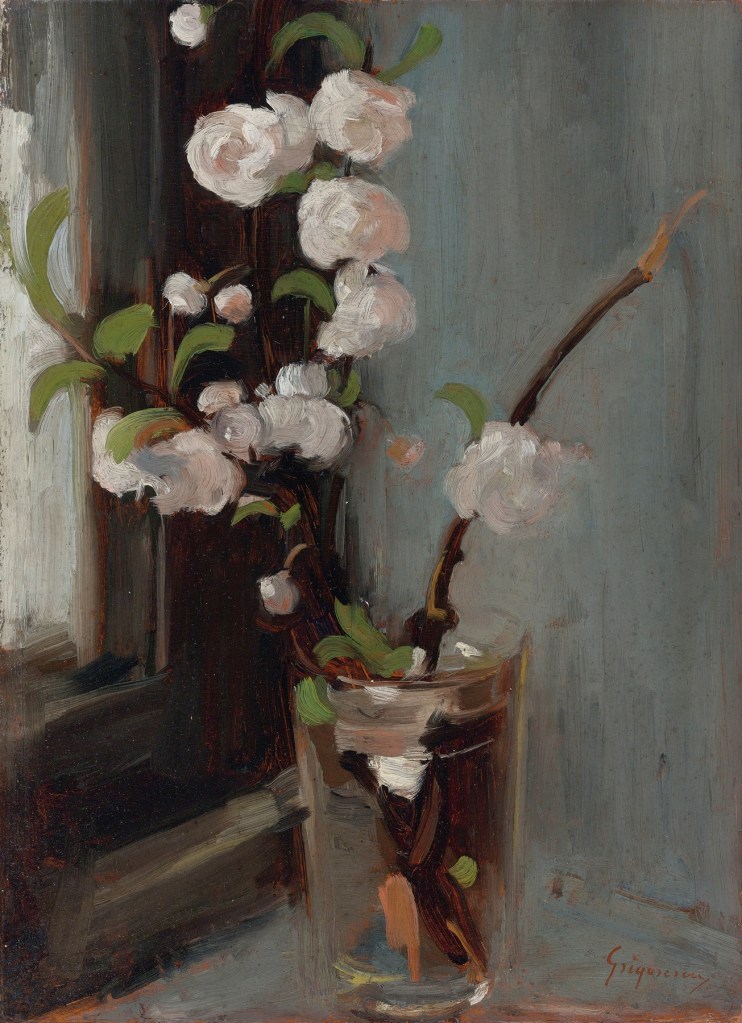
Discontent

Early spring in the subtropics
make me wish for that tree,
fat with apple blossoms,
a host of humming
small folk pollinating
and feasting.

Closing my eyes, I smell
again the freshness
of a cool April morning,
able to call up the seduction
of feathery blossom fingers
on my cheeks.

Would there be felicity
without caressing
losses and ignoring gains,
exalting crystalized narcissus
early March in the north of the North
while succumbing to the exotic wiles
of the glorious cantuta.

Now in the late years of my life
I wish for an Indian summer
instead of a winter of discontent.
About the Author: Rose Mary Boehm is a German-born British national living and writing in Lima, Peru, and author of two novels as well as six poetry collections. Her poetry has been published widely in mostly US poetry reviews (online and print). She was twice nominated for a Pushcart. DO OCEANS HAVE UNDERWATER BORDERS? (Kelsay Books July 2022) and WHISTLING IN THE DARK (Taj Mahal Publishing House July 2022), are both available on Amazon. My seventh collection, SAUDADE, is going to be published by Kelsay early 2023. https://www.rose-mary-boehm-poet.com/
Image Credit: Nicolae Grigorescu “Apple Blossom” Public domain image courtesy of Artvee
the only other thing is nothing
(for will hackney)

got your postcard
from the edge of civilization
in a resort town where
water stopped like time
in the shimmer of 118 degrees
out where the sea level still
can't find the sea

california has eluded me
I haven't seen the salton sea
but I miss zabriske point
I miss armed attendants
pumping expensive gas
under blazing mojave sun
desert rats aware
apocalypse already flashed

the last time we shared a desert
you were celebrating life beginning
as speeches and dances rolled
I was in the parking lot
cold moon rises full
over the sierra blanca

attempts to be a dutiful
if long distanced partner
lonely in the clash
between living with abandon
and living abandoned

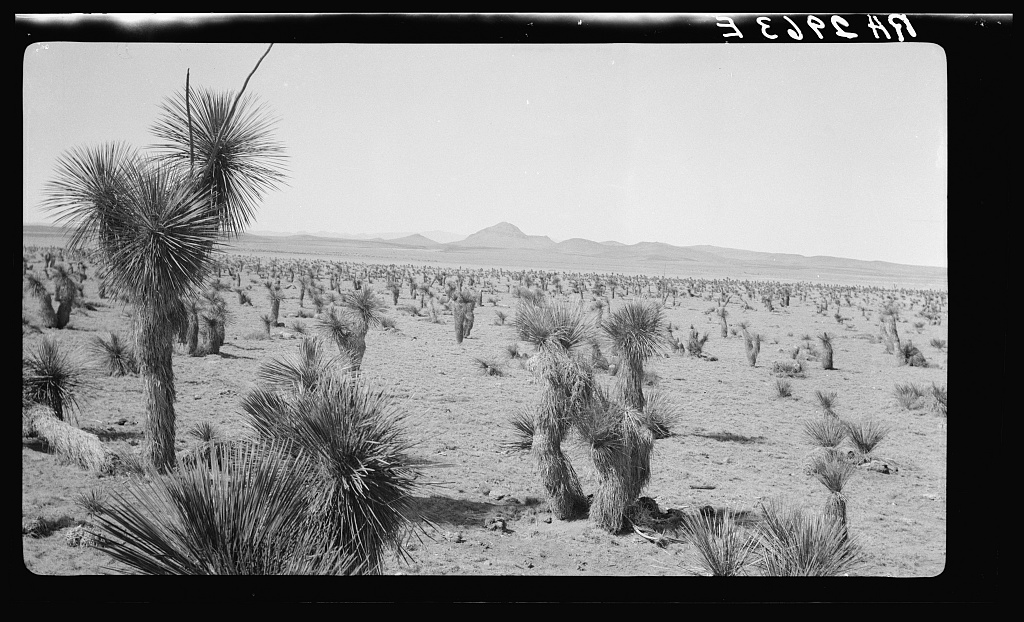
I am yucca, sun bleached
blossoms mummified
while she's hostile
brandishing the shovel
that would bury us

come morning
I start east
my eyes on lubbock

beyond roswell
I spy a pecan grove
symmetrical oasis
stretched miles under
unforgiving sun
park between rows
stand outside myself
the only other thing is nothing
About the Author: Jason Baldinger was recently told he looks like a cross between a lumberjack and a genie. He’s also been told he’s not from Pittsburgh but is the physical manifestation of Pittsburgh. Although unsure of either, he does love wandering the country writing poems. He’s penned fifteen books of poetry the newest of which include: The Afterlife is a Hangover (Stubborn Mule Press) and A History of Backroads Misplaced: Selected Poems 2010-2020 (Kung Fu Treachery), and This Still Life with James Benger. His work has appeared across a wide variety of print journals and online. You can hear him read his work on Bandcamp and on lps by The Gotobeds and Theremonster.
Image Credit: Arthur Rothstein “Type of land on project at Las Cruces, New Mexico. Note large yuccas” (1936) Public Domain photo courtesy of the Library of Congress
A Year Turned Upside Down

Almost all of fall evaporated
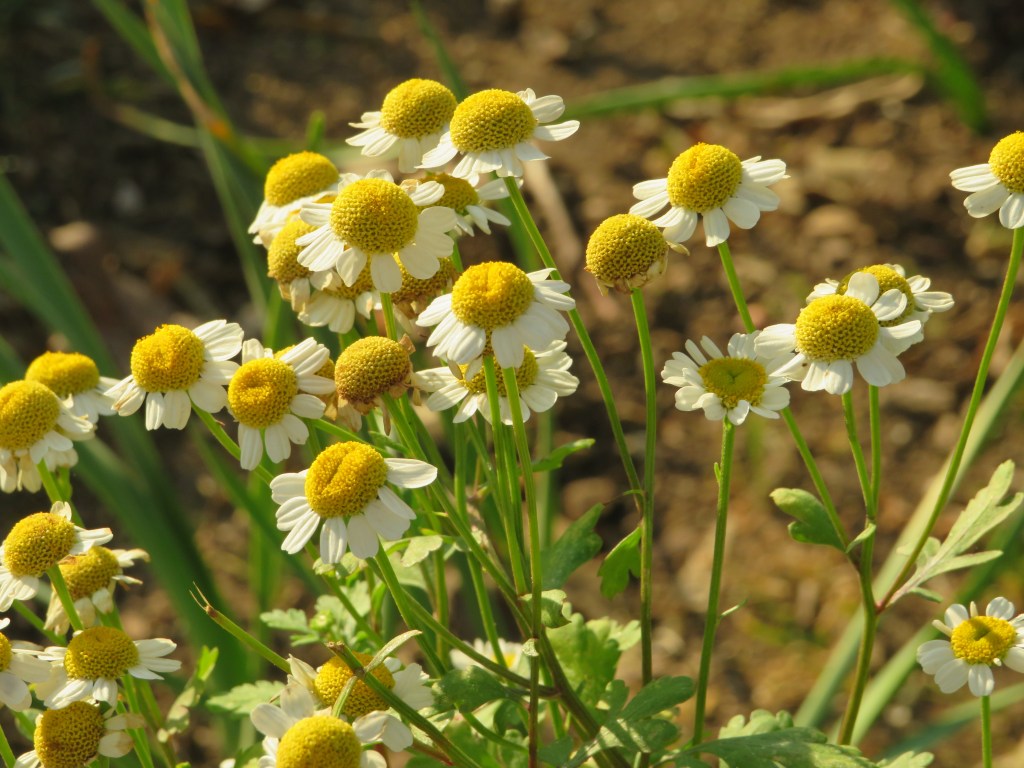
in a flurry of sun. Mayweed’s stars
immobilized by an embarrassment of heat.

Come January, gardenias shot into scent,
clivia burst into a conflagration
of orange. With winter annihilated,

spring spiraled into the disingenuous
sugar of summer, sage withered,
chaparral seethed in a flash of flame.
About the Author: Ruth Bavetta’s poems have appeared in North American Review, Nimrod, Rattle, Slant, American Journal of Poetry, and many other journals and anthologies. She likes the light on November afternoons, the music of Stravinsky, the smell of the ocean. She hates pretense, fundamentalism and sauerkraut.
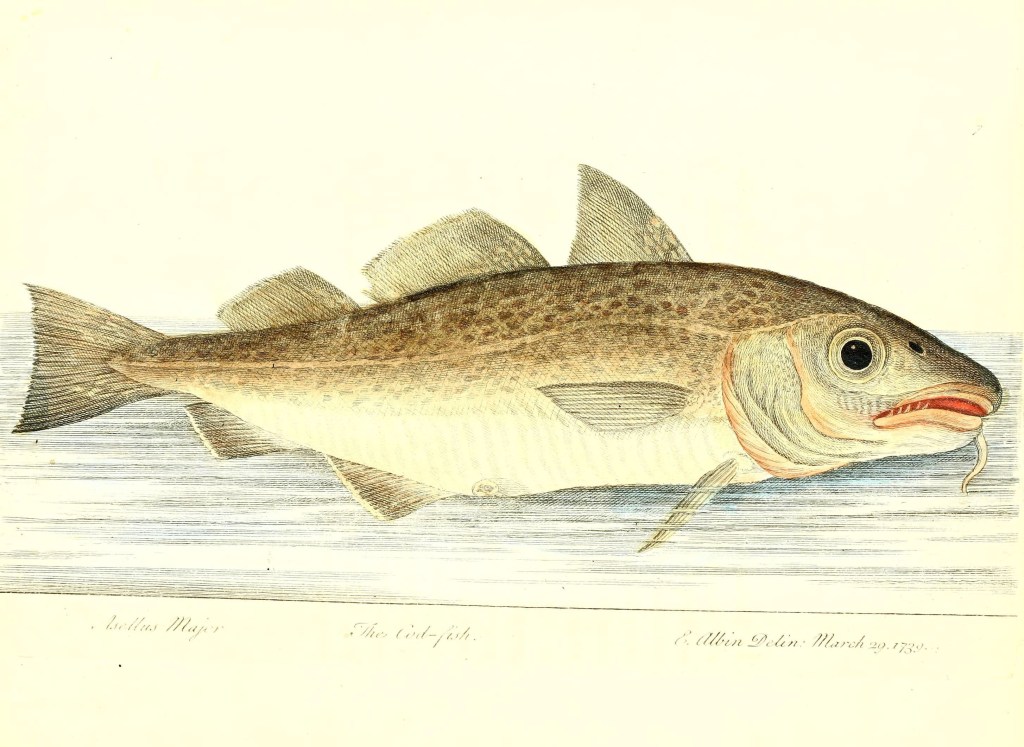
Cod Flashes

Catch and release
but first, after
the flapping stops,
pull a paint-dripping brush
tight down both
sides of its body.
White to teach
a lesson about survival
to it and
everyone who sees.

Highly visible
through the muck,
it will travel
far south,
far north
hugging the river’s top ice
until the danger has passed.

I am painted white inside,
my muscles only know taught.
Different doctors say
this shouldn’t be happening
to someone my age.
Why so wired
and meditation only makes it worse.
I am counting down.

Cod arrives
at its camouflage destination.
Maybe safe
but ghosts are also white.

Three sheets I layer
to cover the ice,
I too have found a home here.

A red fish fibrillates
inside me.
Seize,
unseize.
With a whimper,
arythma.

If the ghost is me,
if the ghost is which part of me,
fish can fellowship
and compare our woes of white.
Maybe the ghost will be only my mind
and haunting is a boast
of finally free.

But before,
we will sleep
me on these stacked sheets,
the cod, bobbing in the current,
exactly below
my meekly knocking heart.
About the Author: Brian Ed Boies lived by train tracks and transcribed train graffiti and used it as prompts. This poem is from that process. He has been published by the National Endowment of the Arts and in Punk Planet and ZYZZYVA. A story of his was listed as Notable Nonrequired Reading in 2012. He lives in Sacramento with his wife and daughter.
Image Credit: Public Domain image originally from The history of esculent fish London: Printed for Edward Jeffrey [etc.],1794. Courtesy of the Biodiversity Heritage Library.
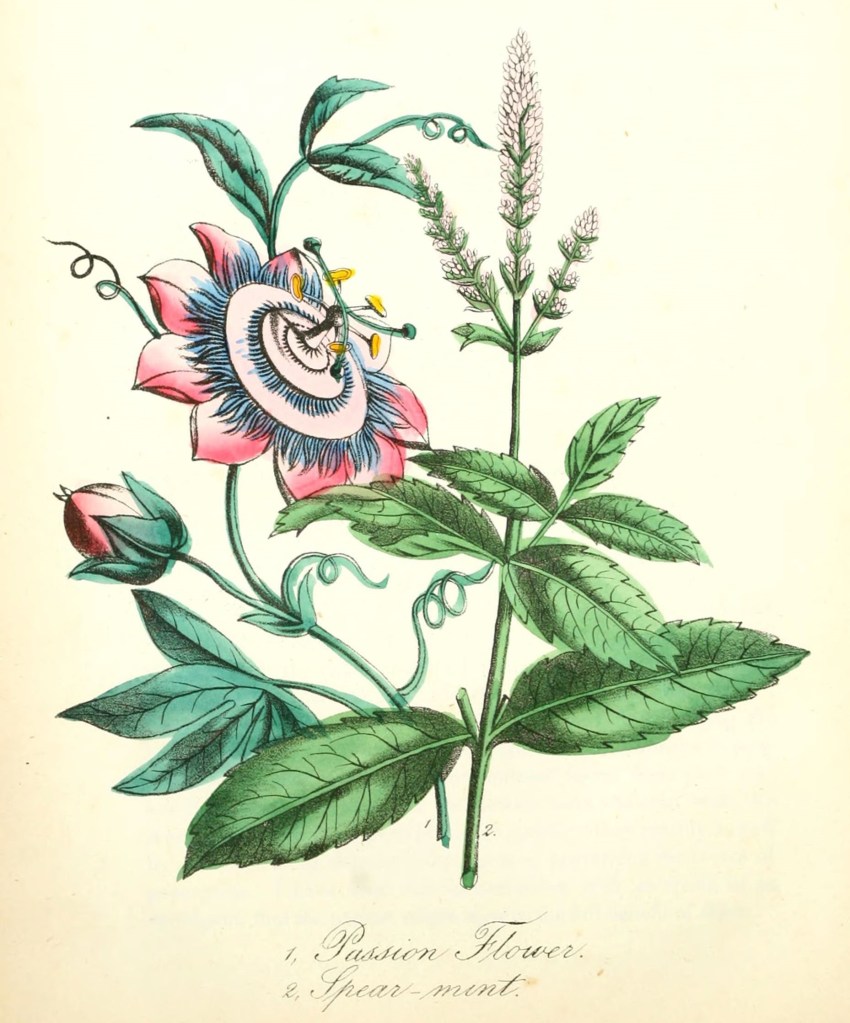
Passion Flowers and Puzzle Boxes


Scientists and poets alike have yet to find
whether certain experimental hybridizations
of radio waves and silver go-go boots in any way
affects the erratic trajectories of UFOs.

Though, they now know that the geometry of fireflies
may have some influence over the delicate symbiosis
of communication satellites, train yards
and Blue Turtle migrations.

However, despite recent controversial reports
there has been no independent confirmation
on whether the random arrangement
of orange blossoms on a city sidewalk,
slick with rain, has any more relation
to the performance of a North Korean
featherweight in the 9th than
a performance of Beethoven’s 9th
by the South Korean Philharmonic does
to the discovery of designs
for a steam-driven engine
written on papyrus.

But, one doesn’t need a steady diet
of coral calcium deposits or subterranean
cold-storage of arcane information
to see that a cracked engine block
is bound, cosmically,
to a crack-baby found
behind a dumpster in an alley
(alive and doing well we’re told),

that beauty-parlor patter is richly infused
with important information regarding escape artistry,
living in the desert, the number “0” AND,
stealing household appliances
(specifically, toaster-ovens, it seems)

and, most importantly,
that a strangely warm winter-breeze
witnessed stirring a light bulb
hanging on the end of a string
will eventually result in a brilliant idea
unfolding like a passionflower or
Chinese puzzle box of infinite digression
somewhere down the integer line

of an, as yet, undetermined causal chain.
About the Author: Jason Ryberg is the author of eighteen books of poetry, six screenplays, a few short stories, a box full of folders, notebooks and scraps of paper that could one day be (loosely) construed as a novel, and, a couple of angry letters to various magazine and newspaper editors. He is currently an artist-in-residence at both The Prospero Institute of Disquieted P/o/e/t/i/c/s and the Osage Arts Community, and is an editor and designer at Spartan Books. His latest collection of poems is The Great American Pyramid Scheme (co-authored with W.E. Leathem, Tim Tarkelly and Mack Thorn, OAC Books, 2022). He lives part-time in Kansas City, MO with a rooster named Little Red and a billygoat named Giuseppe and part-time somewhere in the Ozarks, near the Gasconade River, where there are also many strange and wonderful woodland critters.
Image Credit: The American flora. v.1 New York :Hull & Spencer,1855. Image courtesy of the Biodiversity Heritage Library
Playing at Forever

The ocean never stops its tug of war
with beach sand.  Its great democratic voice
consumes all the laughter and whispered vows
vacationers make on blankets, spread out

under brightly striped umbrellas under
the sun and our tans that end where our suits
begin.  We have come as far away from
our careers as a tide of untimed time

could take us, yet we find there is something
naggingly familiar in the way native
children smile at us.  They coax us to throw
coins they dive for, perhaps their only real

freedom.  Resurfacing, their faces glow
brightly as their palms lined with silver.
Our minds float above us like jellyfish,
permeating our days with stinging

responsibilities.  But here we are
untethered from time’s twins, and our bodies
ache to be calmed, cooled and retuned to whim.
We swim under water, holding our breath,

carefree as children playing at forever,
though we know we must come up for air.
About the Author: Richard Levine, a retired NYC teacher, is the author of Selected Poems, Contiguous States, and five chapbooks. Now in Contest is forthcoming from Fernwood Press. An Advisory Editor of BigCityLit.com, he received the 2021 Connecticut Poetry Society Award, and co-edited “Invasion of Ukraine 2022: Poems.” “The Spoils of War” is forthcoming in American Book Review. website: richardlevine107.com
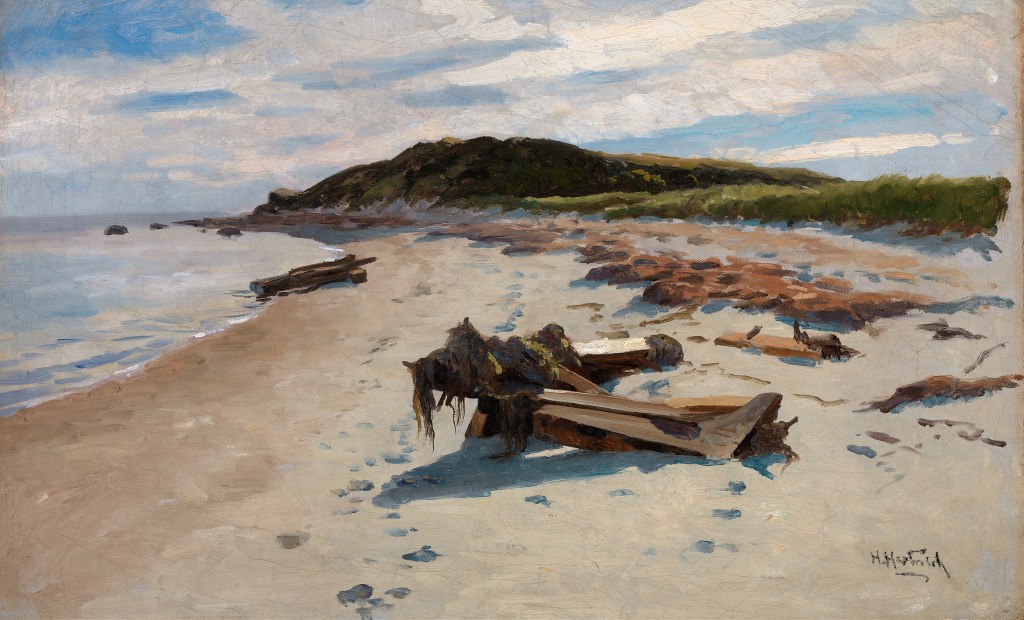
Image Credit: Herman Hartwich “Cape Cod, Beach” (1894) Public domain image courtesy of Artvee
 As It Ought To Be