Royal Rhodes: “The Other Genesis”

The Other Genesis

What do we see outside 
except a canopy of ebony wings, 
garlands of feathery smoke 
moving on blackened water? 
Against the sketchy light 
it looks like a cancer patient 
showing us their fifth x-ray. 
The troubled lungs, highlighted: 
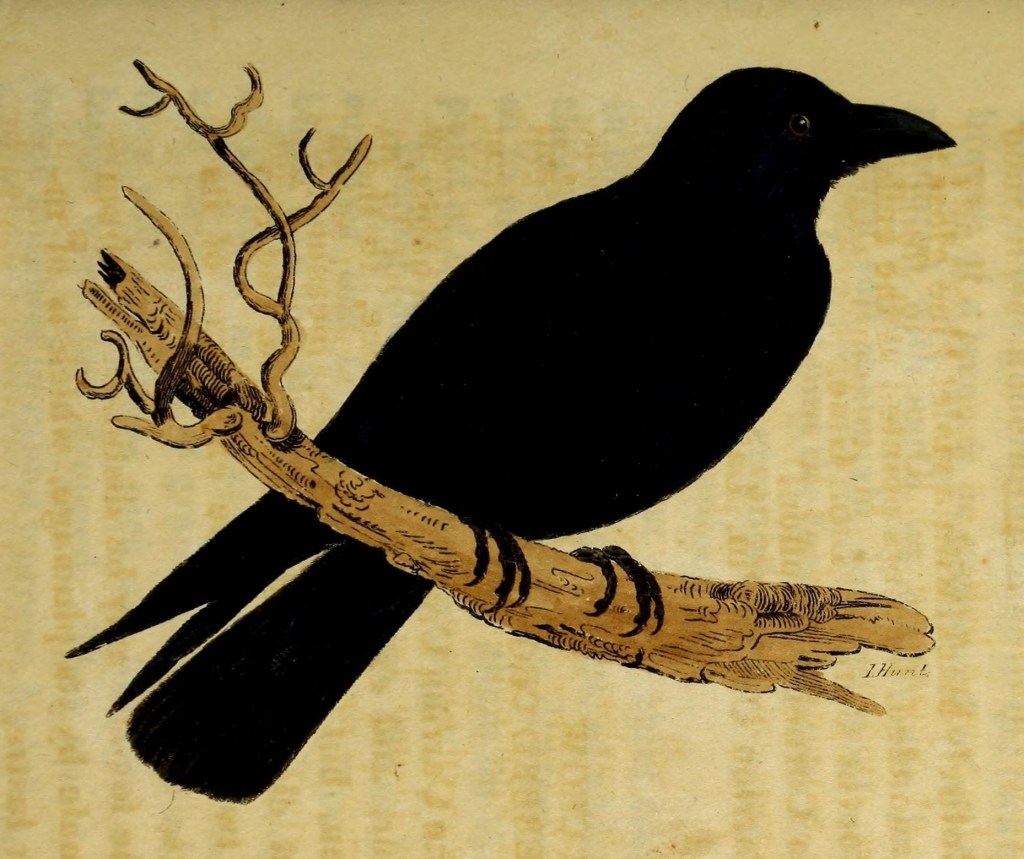
a cage of full-grown crows 
in a space too small for them 
and anxious for routes to escape, 
fanning their jittery wings 
against imprisoning walls. 
Something screamed in fear, 
locked inside us, watching. 
Resistance is useless, absurd, 
trapped in something we are. 
We saw their work when free: 
the substantial killing 
along the state route. They strutted 
around the roadkill, plucking 
at bits of the dying creatures, 
supple as the playful light. 
When will it end? we ask. 
And why did it ever begin? 
We are the understanding they lack. 
So we took them deep inside us. 

About the Author: Royal Rhodes, who was trained in the Classics, is a retired educator who taught classes in global religions and Death & Dying for almost forty years. His poems have appeared in: Ekstasis Poetry, Snakeskin Poetry, The Montreal Review, The Cafe Review, and other places. His poetry/art collaborations have been published with The Catbird [on the Yadkin] Press in North Carolina.

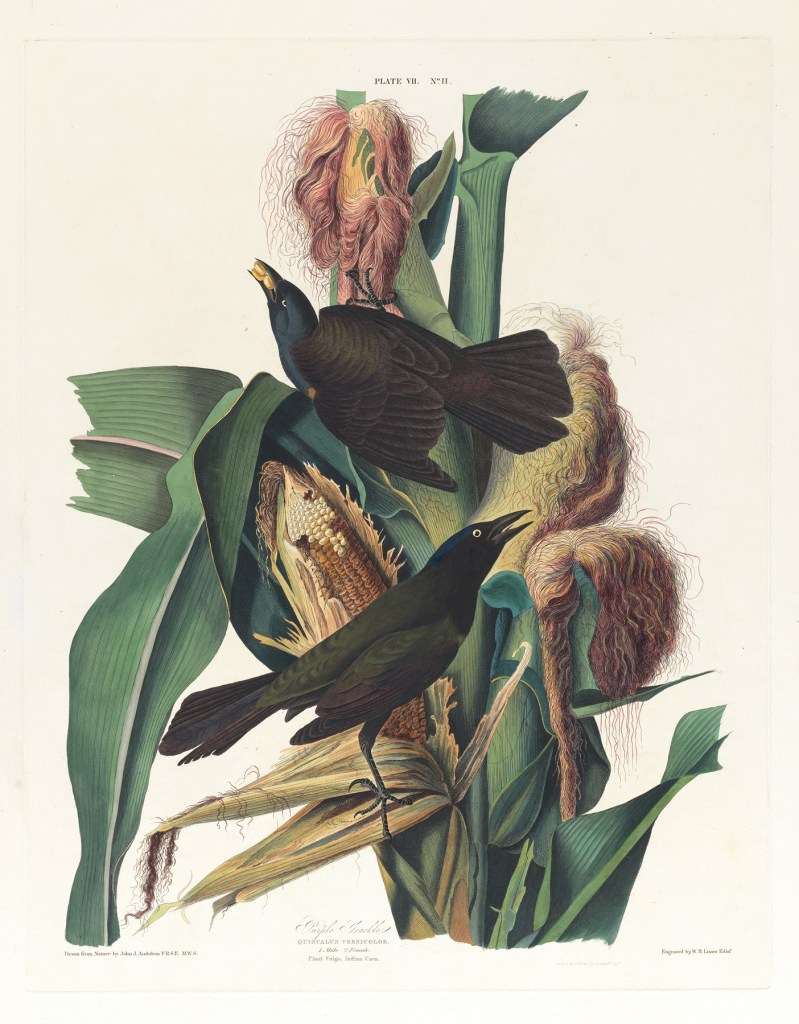
Image Credit: Image originally from British Ornithology: Norwich: Bacon,1815-22. Courtesy of the Biodiversity Heritage Library

Tina Williams: “Two Kinds”

Two Kinds

It was dusk
on a two-lane road
in deep East Texas
and we had not passed
a word for miles
when she said
there are two kinds
of people in the world.
Years later, the turtles 
in my neighborhood 
know nothing of
my friend’s philosophy.
Or how simply 
some things boil down.
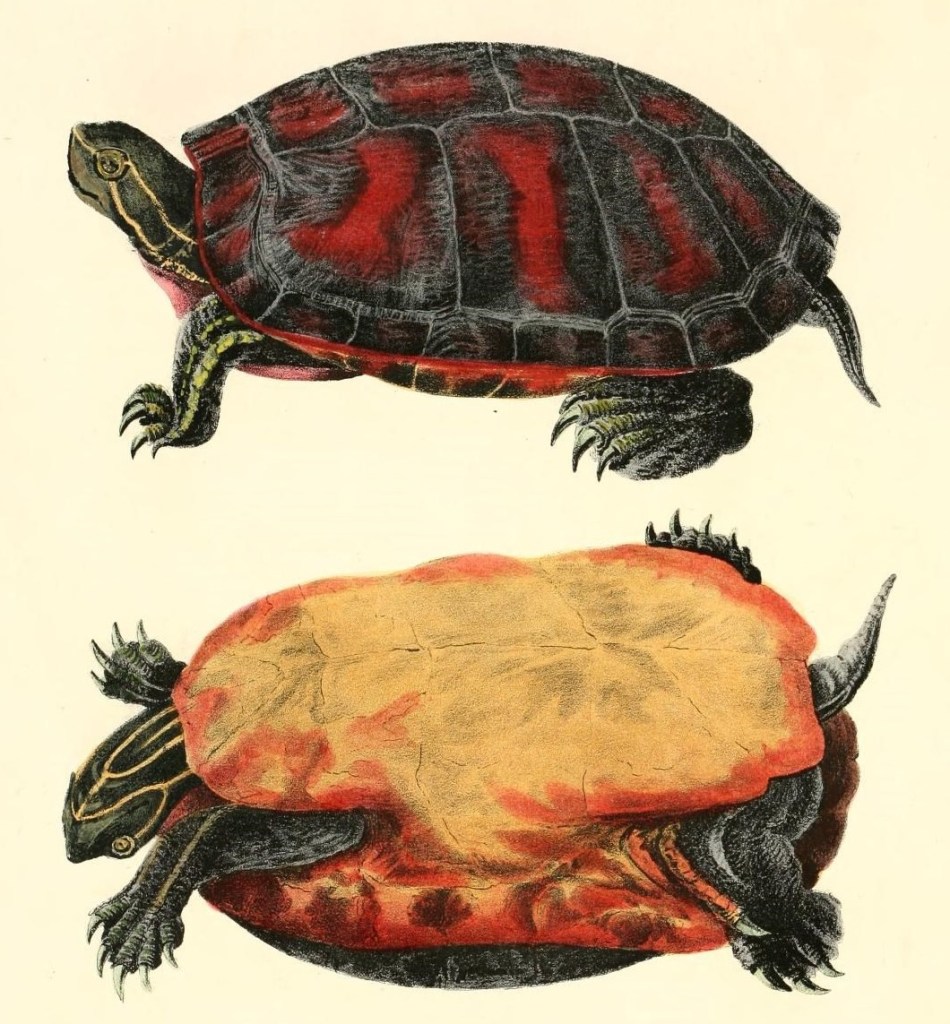
The red-eared slider at my feet,
flipped over and still but still here,
knew seasons.
She knew navigation
and the grass best for nesting. 
Tenacity.
Now, spun senseless
to where the street met the curb,
she lay bloody, mud-baked legs
splayed flat and a gut-deep wound
cracked clean down her belly.

Turtles have inched their way
across hundreds of millions of years,
ducking one mass extinction
after another protected by nothing more
than the home on their back.
Today, the turkey vultures
working a squirrel
three blocks away
will catch wind
of this one at my feet,
an ancient traveler
felled handily enough
by steel on rubber
and the kind who
do not stop.

About the Author: Tina Williams is a former journalism instructor and advertising copywriter living in Austin, TX. Her poems have appeared in or are forthcoming in the New Verse News, Amethyst, Borderlands: Texas Poetry Review, and the Concho River Review.

Image Credit: Public domain image originally published in North American herpetology : Philadelphia, J. Dobson;1842. Courtesy of the Biodiversity Heritage Library

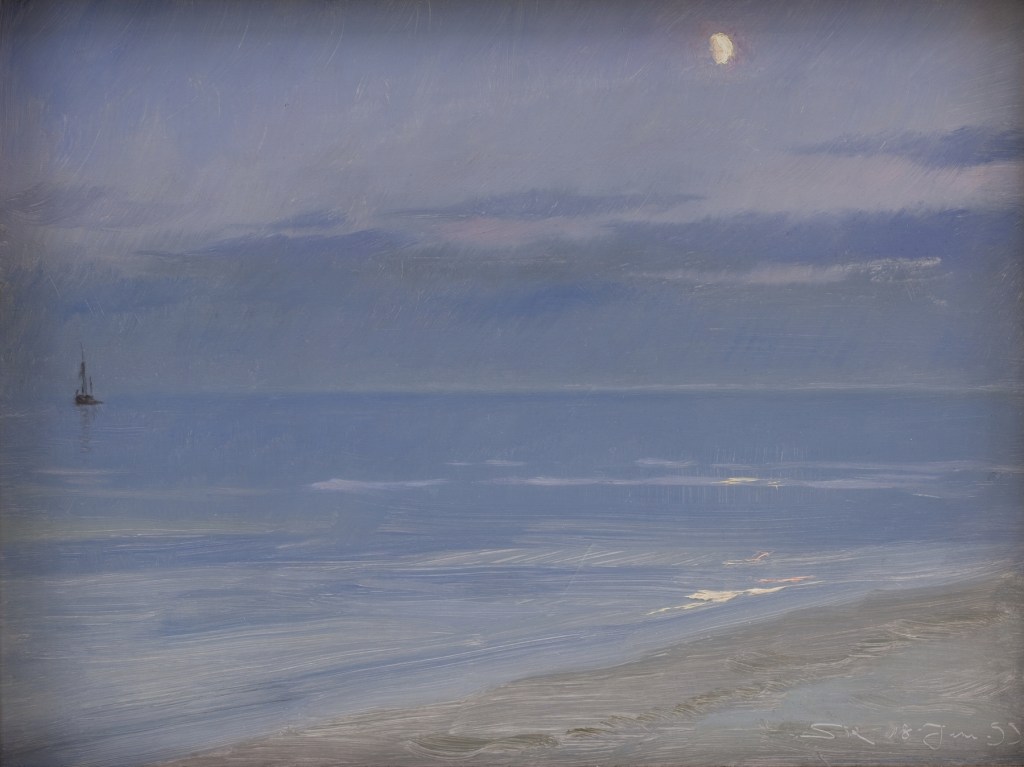
Jason Baldinger: “buttermilk skeleton”

buttermilk skeleton

the moon is a ghost
buttermilk skeleton
rising against afternoon
I cross from maryland
in search of coastal waters
these traditions, these miles
add up still unsolvable

herons fish under loblolly and cypress
these waterways, these estuaries
this sky darkens in gridlock
I walk past the last lights of christmas

a storm blows in
I hear its voice in each wave
eyes focus on speeding clouds

funny, how we don't remember
our lives before the moment
everything changed
years pile up as vacant memories
haunted shelters reveling in abandon
but if I look hard I see myself
a wraith vague within the deluge

crowds shout and cheer
as seconds tick away
fireworks open the sky
a small welcome explosion
we ante up once again
prepare for a grand finale

I pour champagne
down my throat, into foam
water ebbs at the edge of my boots
licks sand clean
all these offerings
another series of prayers
here's to the chaos of the universe

About the Author: Jason Baldinger is a poet and photographer from Pittsburgh, PA. He’s penned fifteen books of poetry the newest of which include: A History of Backroads Misplaced: Selected Poems 2010-2020 (Kung Fu Treachery), and This Still Life (Kung Fu Treachery) with James Benger. His first book of photography, Lazarus, as well as two ekphrastic collaborations (with Rebecca Schumejda and Robert Dean) are forthcoming. His work has appeared across a wide variety of online sites and print journals. You can hear him from various books on Bandcamp and on lps by The Gotobeds and Theremonster. His etsy shop can be found under the tag la belle riviere.

Image Credit: Peder Severin Krøyer “Skagen Beach in Moonlight” (1899) Public domain image courtesy of Artvee
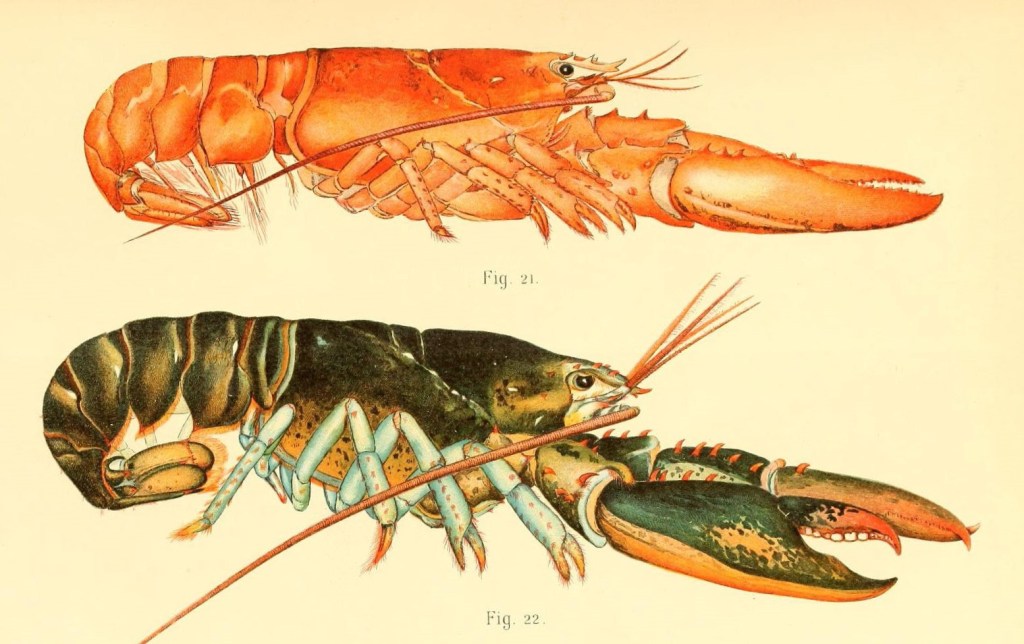
Geneva Webber: “Do you think the lobsters”

Do you think the lobsters

in the tanks at Red Lobster
are really red?
Or are they brackish and imperfect

with the blue rubber bands
around their claws?
Do you think the lobsters

know they could live
half a century
if given the chance?

Do you think the lobsters
know we have to believe
they don’t feel pain?

We sometimes believe that
about our own species too.

Do you think
the lobsters know?

About the Author: Geneva Webber is a sophomore Creative and Professional Writing major and is minoring in Political Science and Women and Gender Studies at the University of Pittsburgh at Greensburg. She is a member of the Writing Club, is Vice President of P.A.W.S. (Pro-activism With Service) and her work has been previously published in The Insider. She has lived in Pittsburgh, Chicago, and small-town Michigan, and derives much of her writing from small, intimate, personal experiences.

.

Image Credit: Courtesy of the Biodiversity Heritage Library. The American lobster Washington: Govt. Print. Off., 1895.

James Croal Jackson: “Poppy”

Poppy

everywhere on the bagel, poppies
in the out of focus fields, poppies

the feeds scroll full of puppies
the home, poppies

what can you say about fireworks
has already exploded

in mouth in blood
we buds. we bud.

grandpa was a farmer
he tended to his poppies

white and wild wind
the wind. white and wild

About the Author: James Croal Jackson works in film production. His most recent chapbooks are Count Seeds With Me (Ethel Zine & Micro-Press, 2022) and Our Past Leaves (Kelsay Books, 2021). Recent poems are in Stirring, White Wall Review, and Vilas Avenue. He edits The Mantle Poetry from Pittsburgh, Pennsylvania. (jamescroaljackson.com)

.

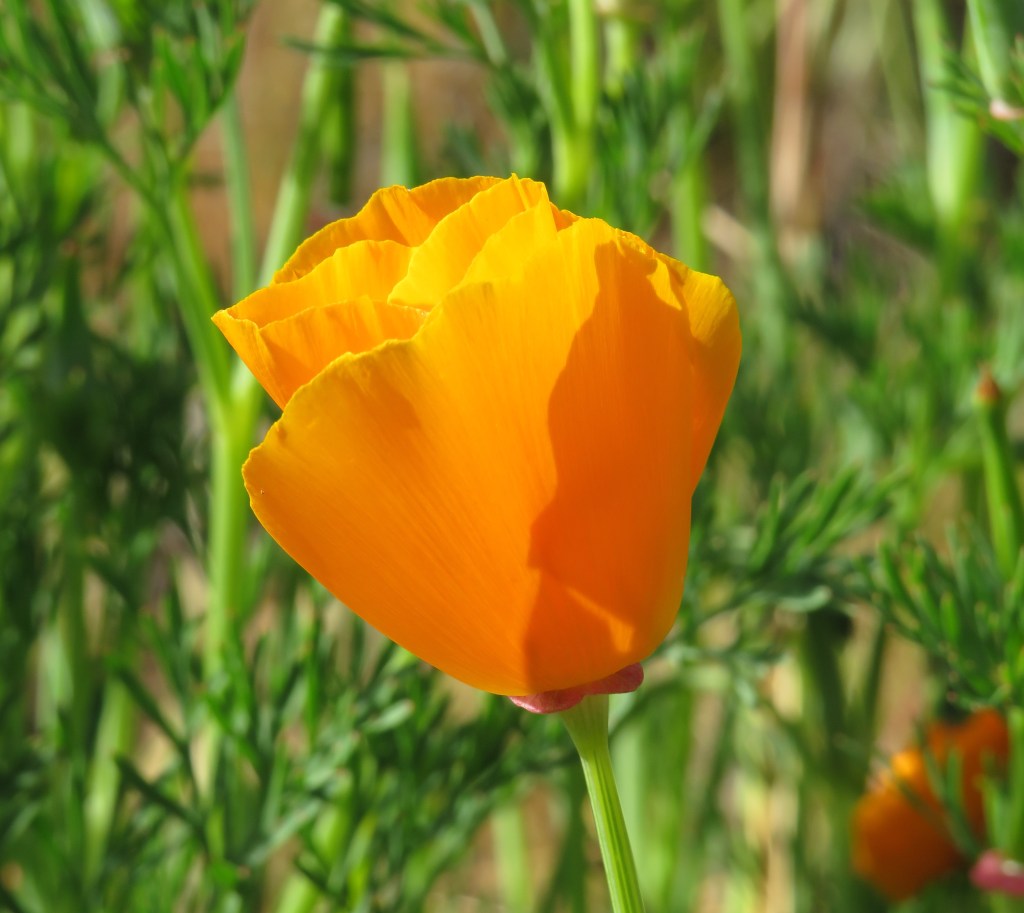
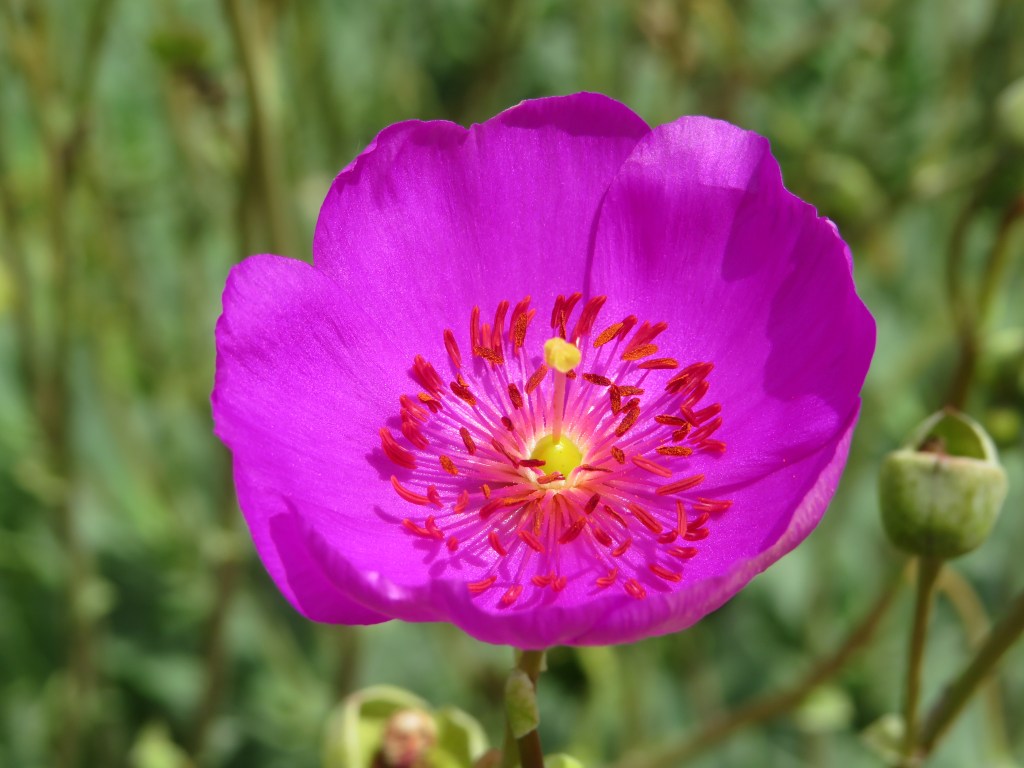
Image Credit: Chase Dimock “Poppy” (2022)

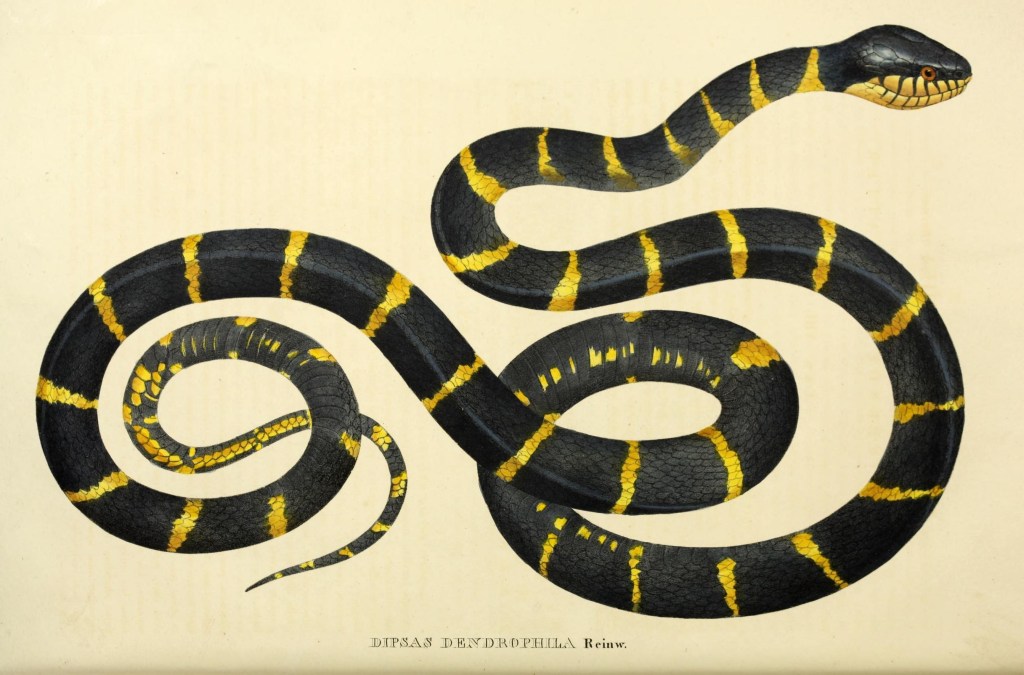
Paul Jones: “Snake”

Snake

I used to be afraid in other ways.
When one fear comes another goes away,
I should count myself lucky in that way.
My fear of apes at night just fell away
when I saw a snake put a rat away.
Those fanged apes were dream creatures anyway.
The snake coiled and crushing. Death underway.
Those sounds. The hissing. A shriek. They outweigh
sleep's imagined deaths. They won't fade away
at dawn. Experience smooths night's highway.
Like rockets, fears race down the straight-away.
Then they take my head for their hideaway.
I used to be afraid in other ways.
But then I saw the black snake's weave and sway.

About the Author: Paul Jones poems have recently appeared in Hudson Review, Grand Little Things, Tar River Poetry, and not so long ago here in As It Ought To Be. His book, Something Wonderful, came from RedHawk Publications in 2021. In 2019, a manuscript of his poems crashed into the lunar surface carried in Israel’s Beresheet Lander. In 2021, he was inducted into the NC State Computer Science Hall of Fame.

.

Image Credit: Image originally published in Descriptiones et icones amphibiorum. Monachii, Stuttgartiae et Tubingae, Sumtibus J.G. Cottae1833. Public domain image courtesy of the Biodiversity Heritage Library

Rose Mary Boehm: “Another ordinary story”

Another ordinary story

Spring, it seems, has changed
its mind. Like a disenchanted lover.
Pink, white, purple and tender greens
encased in winter-hardened water
topped with powdered sugar.
Fulgent in that white winter sun.

One harsh spring morning you
turned. No last glistening glory,
no last display of what
could have been.

About the Author: Rose Mary Boehm is a German-born British national living and writing in Lima, Peru, and author of two novels as well as seven poetry collections. Her poetry has been published widely in mostly US poetry reviews (online and print). She was twice nominated for a Pushcart. Her latest: DO OCEANS HAVE UNDERWATER BORDERS? (Kelsay Books July 2022), WHISTLING IN THE DARK (Ciberwit July 2022), and SAUDADE (December 2022) are available on Amazon. https://www.rose-mary-boehm-poet.com/

.

Image Credit: Chase Dimock “Spring Blossom” (2022)

CL Bledsoe: “A Lightness of Feathers”

A Lightness of Feathers

Who among us hasn't broken a collarbone falling
out of a tree after we climbed into a bird's nest
and pretended to be an egg? The ghost of omelets
gone wrong. Something with feathers condemned
to a passing glance. A side table. Somewhere dust
calls home. I’ll rebuild my life with doilies
and photos of surgeries I’d like to have. Did I mention
so-and-so died after a lifetime of regret and forced
choices? Never forget your name is on someone’s
Do Not Love Again list. No matter how you measure
it, you’ll never have what you’ve lost again. Another
name for insouciance. At least you’re not the kind
of bird that kicks the other eggs out of the nest
when you settle in. It’s the small victories keep
us going and coming. That’s how they get you.
I don’t even know what kind of tree it was.

About the Author: Raised on a rice and catfish farm in eastern Arkansas, CL Bledsoe is the author of more than thirty books, including the poetry collections Riceland, The Bottle Episode, and his newest, Having a Baby to Save a Marriage, as well as his latest novels Goodbye, Mr. Lonely and The Saviors. Bledsoe lives in northern Virginia with his daughter.

.

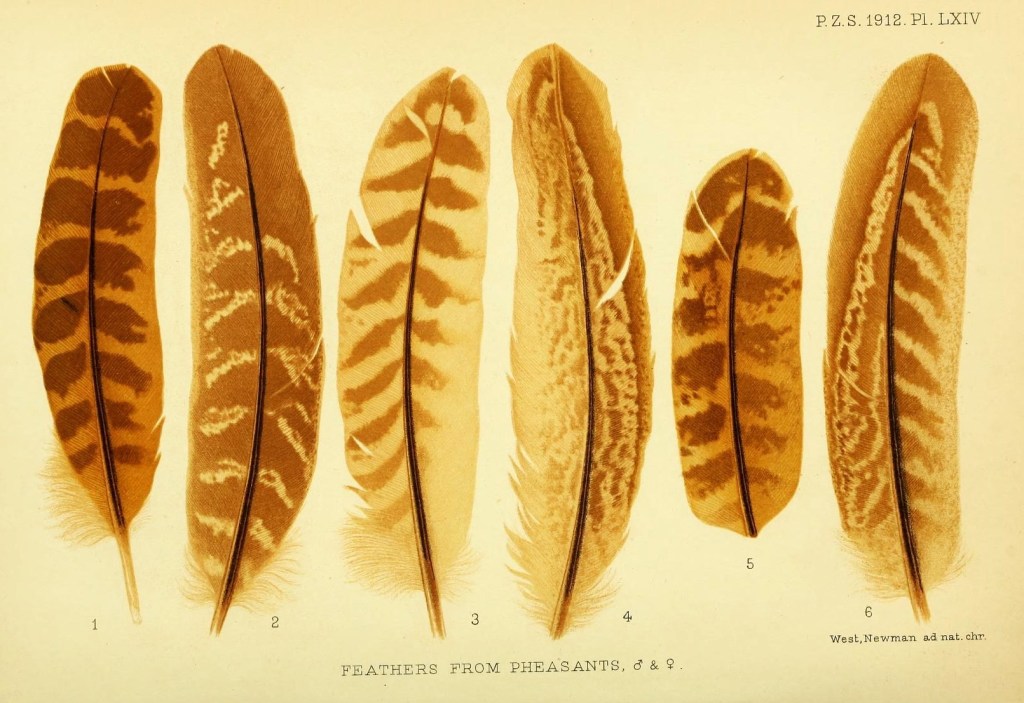
Image Credit: Public domain image originally published in Proceedings of the Zoological Society of London, London : Academic Press. Image courtesy of the Biodiversity Heritage Library

Yvonne Morris: “Floodlight”

Floodlight

The moon’s blank tambourine
amplifies the drizzle’s guitar—

fragile droplets bruised become
sunlit wires of rain. The rising

world finds ruined fountains,
broken stonework converted

to carry running streams.
The wounded sleep to dream

again, when the day’s pain
assembles then disbands.

Loss stretches forward
to its instruments, unpacks

the stars, unravels the tide.
Morning pools the night.

About the Author:  Yvonne Morris lives and works in a small town in Kentucky. Her most recent chapbook is Busy Being Eve (Bass Clef Books, 2022). Her work has appeared in The Galway Review, The Santa Clara Review, Cathexis Northwest Press, The Wild Roof Journal, The Write Launch, and elsewhere.

.

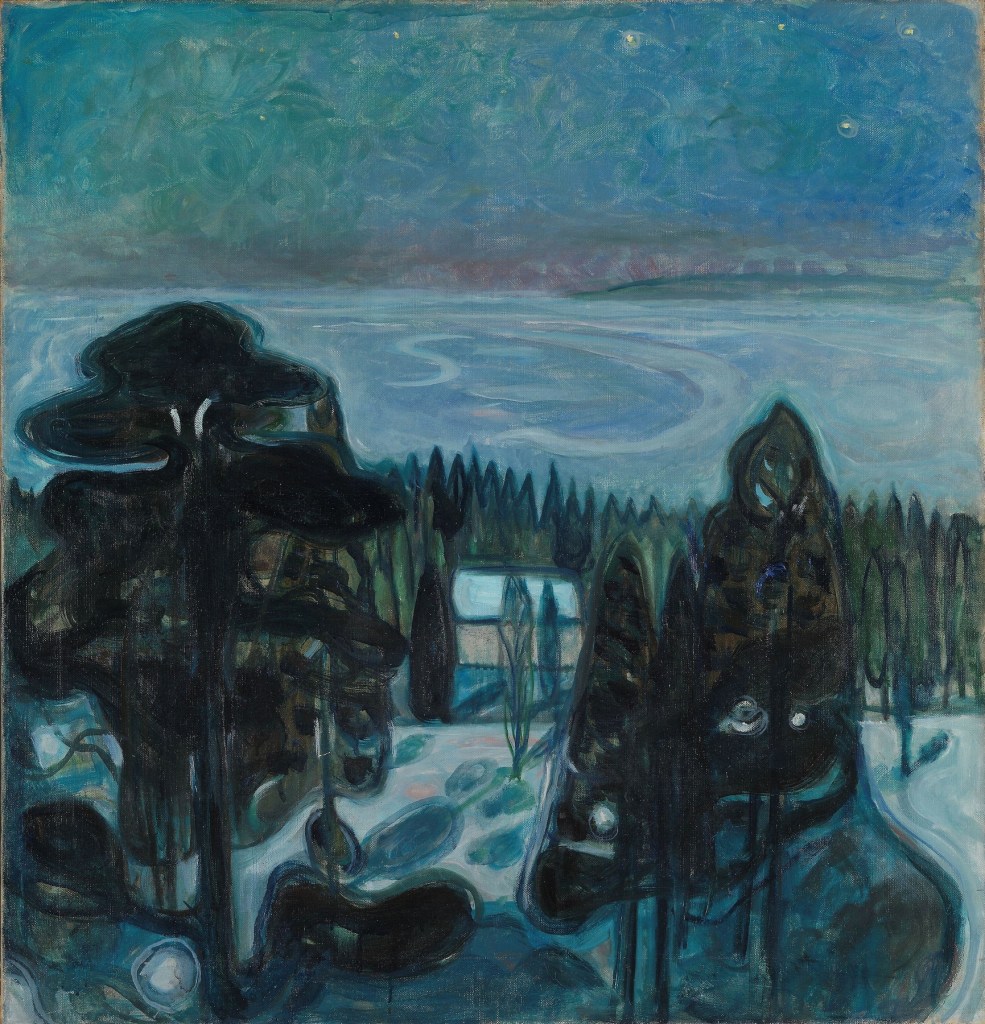
Image Credit: Edvard Munch “White Night” (1890) Public domain image courtesy of Artvee
Dan MacIsaac: “Garden Spider”

Garden Spider

She spins her
own soft maze,

snare haloed
like an old radio

microphone
ON THE AIR,

rippling thin
aural rings,

oval waves
of sonic silk.

At the transit heart,
catching fine

veins of light,
she waits

for the pluck
of a male,

tiny harpist,
blindly orphic,

so tender
on a woven

strand of her
high-strung web

that will pulse
under his touch

like a radiant
and terrible lyre.

Note: The diminutive suitor, even if successful in courtship, often becomes dinner
to his cannibalistic mate.

About the Author: Dan MacIsaac writes from Vancouver Island. Brick Books published his collection, Cries from the Ark. His poetry has appeared in many journals and anthologies, including, most recently, in AmericaValley VoicesManzano Mountain Review and Poetica’s Rosenberg Award Collection.

Image Credit: Jan Vincentsz van der Vinne “A Spider” (late 17th–early 18th century) Public domain image courtesy of Artvee