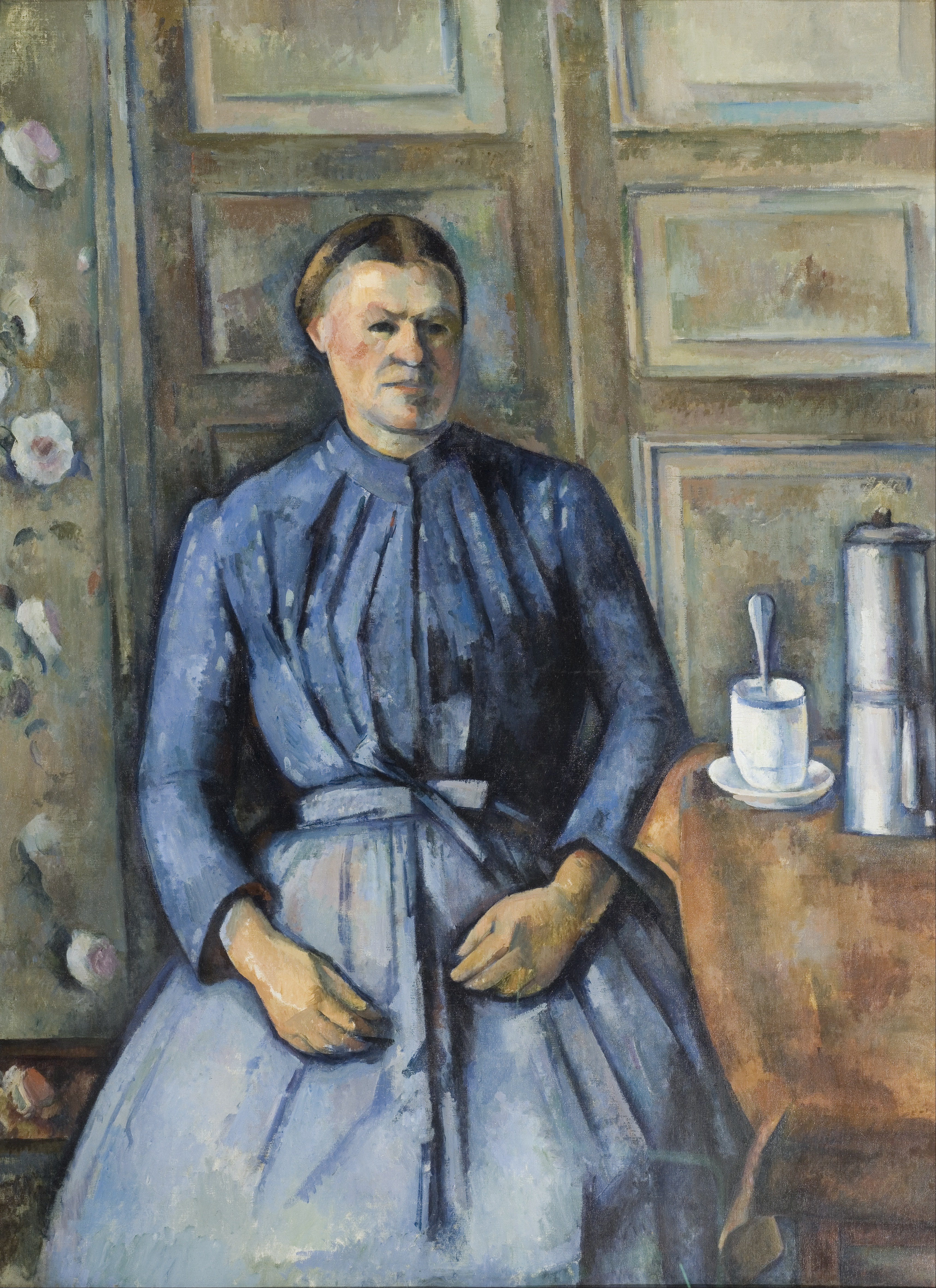
She sits erect on her stool next to the table. Her cup filled with dark brew rests on its saucer beside the pot.
She drops two sugar cubes into her coffee, stirs five times, swirls sweetness into the liquid.
The coffee cools. She’s distracted by a sense of foreboding, handsome face in frown, hands resting in her lap, ready to be clasped in prayer if needed.
About the Author: Robin Wright lives in Southern Indiana. Her work has appeared in As it Ought to Be, The Beatnik Cowboy, Loch Raven Review, One Art, Spank the Carp, The New Verse News, Rat’s Ass Review, Fevers of the Mind, and others. She is a Pushcart Prize nominee, and her first chapbook, Ready or Not, was published by Finishing Line Press in 2020.
Image Credit: Paul Cézanne “Woman With a Coffeepot” (1895) Public domain image courtesy of Wikimedia.
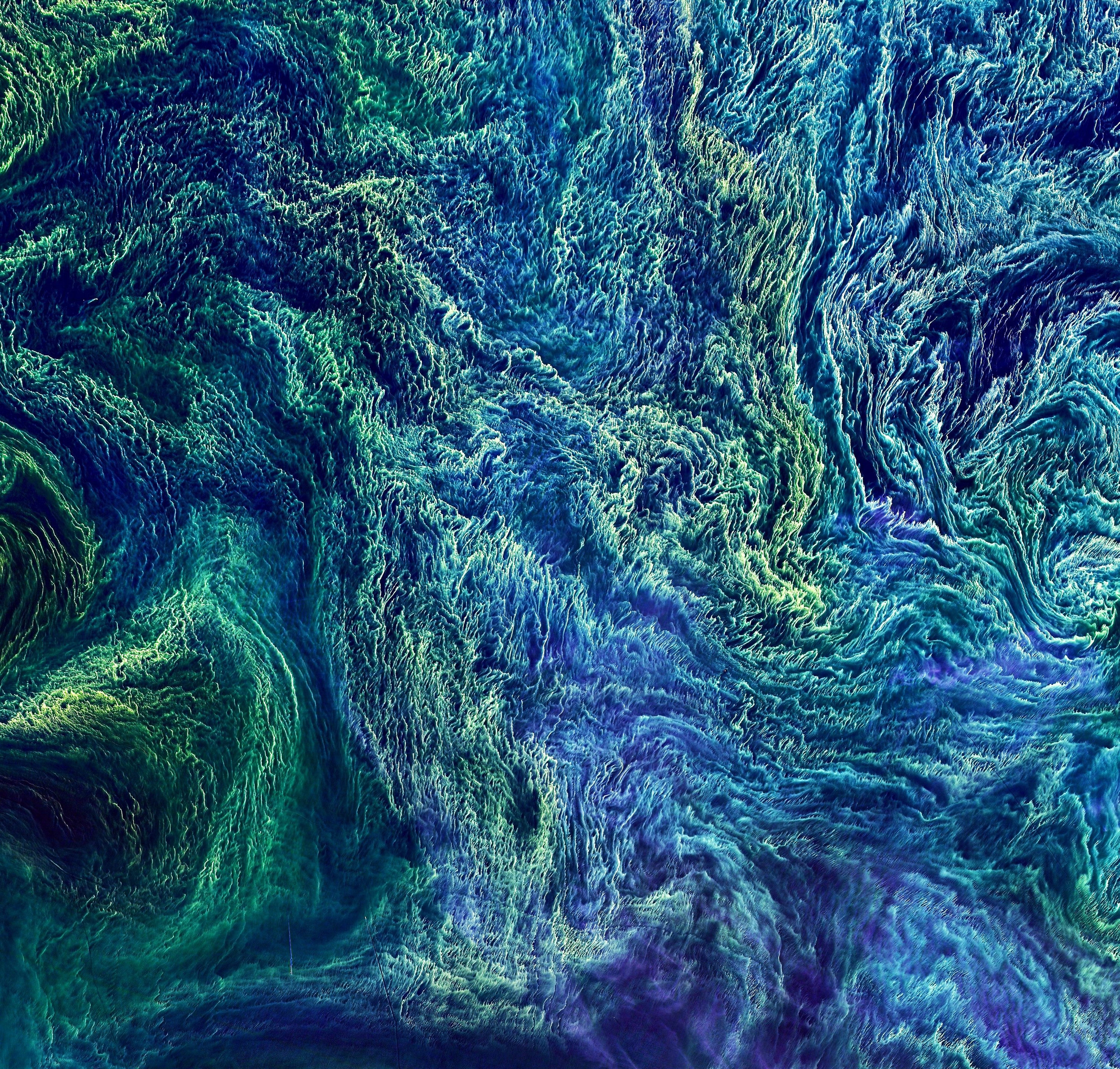
Desire You’d think something like a river is a fixed thing. Maps, no matter how old, keep rivers in the same place. Names change. Boundaries move, or dissolve. Arrows mark migrations and invasions. The river, given erosions and sediment, stays the course.
Like children, or cats, fixity is what adults desire. All things change, with time. This is a truism. But some things change so slowly, so easily unnoted, we assume them permanent and build our imagination around them. To think things can be otherwise is to be a god.
That was the first sin, in the Land Between the Rivers. The Serpent implanted an image in Eve: “What if?” Eden could be different than it was. Paradise lost with options. Wisdom is knowing all that is need not be all there can be. After the Fall, we could no longer accept we simply are. Like the river,
that once enclosed Paradise, and now slowly dies in its way to the delta, we turn against ourselves. We are not enough. Or so I feel. Like the river never rests in its mindless meander, through my works, my days, wants and grasps, kisses, goodbyes, I long to be a fixed thing, without movement, without will and thirst,
to be a standing body of water, a lake, a pond, a flippant backyard pool. But that’s not true. It’s the sea I fear, the end of course, when all the sediment collected over a continent dissolves into salt water. There the river ends. The maps lose their contour. Far at sea, we lose our landmarks. Lost, we drift, and lift our heads to the stars, secure in their heavens.
About the Author: Richard Stimac has published a poetry book Bricolage (Spartan Press), over forty poems in Michigan Quarterly Review, Faultline, and december, and others, nearly two-dozen flash fiction in Blue Mountain, Good Life, Typescript, and several scripts. He is a fiction reader for The Maine Review.
A note to say I agree that your work has much improved. I really enjoy reading it a lot more now. As for me, you know, I can’t help but write when the words come. If I don’t, they will just drift right on away from me. I can’t say, “I will see you later!” and do something else, because the words that were there will surely move on. There’s the sweet refrain of “Come and see me sometime!” Or “Y’all come back again, you hear!” in so many songs. And then the bridge over troubled water where a chord may be added or the tone changes and hope returns anew. The friend may or may not return, except in memory. The circle may bend and be unbroken, and there are spirals, too. Of course, a road may fork and paths may almost equally divide. If you want to see the forest through the trees, take to the trees. Take a full measure of the trees, they say. Return to the roots, and look closely at the leaves. Don’t forget the bark, its touch and feel, the smell and taste of wood, and even the sound it makes or doesn’t make. Use all your senses. I can’t help myself. I digress. Do you get my drift? If this sounds like a poem, it is. Stop, now. See how the light gets in? Just look back up through the canopy.
About the Author: Geraldine Cannon is a poet, scholar, and editor, also working as a Professor of English and Creative Writing at the University of Maine at Fort Kent, under her married name–Becker. She has been published in various journals and anthologies. She published Glad Wilderness (Plain View Press, 2008).. She has been helping others publish, and had stopped sending her own material out, but she was encouraged to do so again, and most recently has a new poem in the Winter issue, Gate of Dawn (Monroe House Press, 2024).
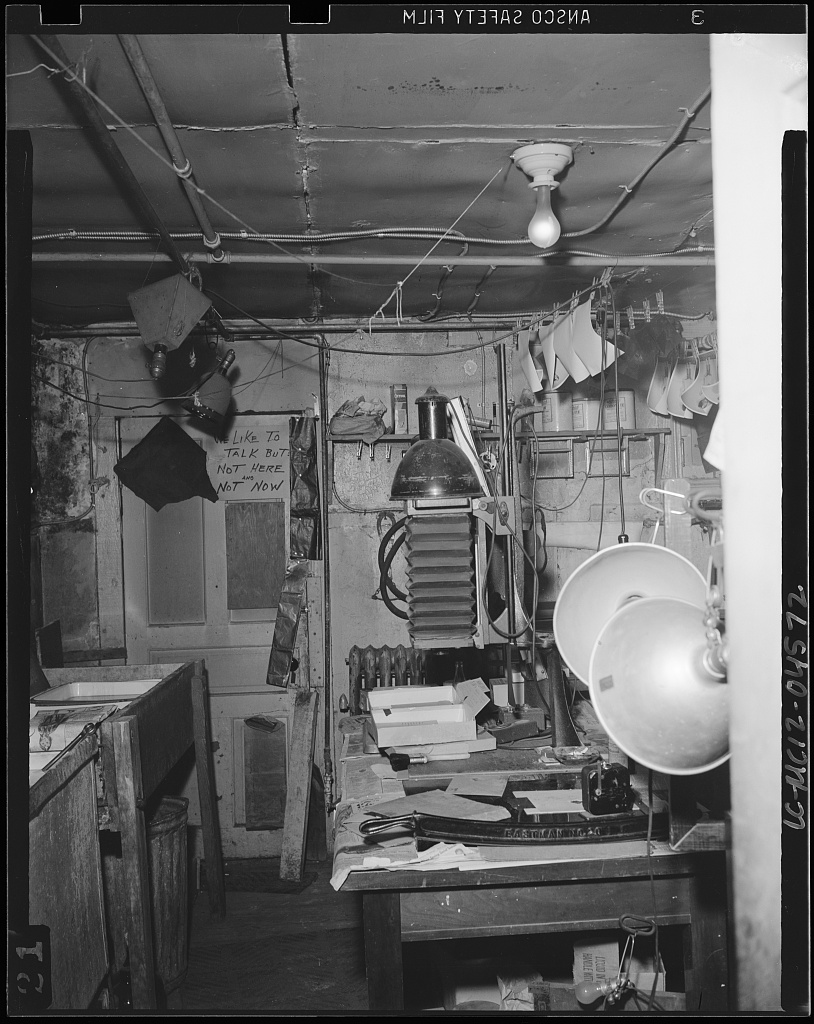
He loves the slow and lonely work. In the orange glow, he watches shadows grow on the paper, darkening shapes blossom.
From his test prints, he knows how long the photo needs to soak in the developer, when to move it to the stop bath, to the fixer.
At the end of the day, ten portraits will hang on the drying line: acrobats, jugglers, stilt-walkers, dancers – street performers, captured
mid-flow. He dislikes poses, and circus acts that are now all about break-neck speed. Speed is not important to him.
He bicycles, travels by train, eschews the subway, walks instead unbothered by his luggage – how can he see if he is underground?
He does not show his photographs. They cover the walls in his house: clowns, mimes, and fire-eaters, none looking towards the audience.
About the Author: Agnes Vojta grew up in Germany and now lives in Rolla, Missouri where she teaches physics at Missouri S&T and hikes the Ozarks. She is the author of Porous Land, The Eden of Perhaps, and A Coracle for Dreams, all published by Spartan Press. Together with eight other poets she collaborated on the book Wild Muse: Ozarks Nature Poetry (Cornerpost Press, 2022.) Her poems have appeared in a variety of magazines; you can read some of them on her website agnesvojta.com.
as the morning d.j. plays something sad from two centuries ago
i hear a stray cat crying outside
opening the window i search for him in the moody dawn
but i have no clue why
we can offer each other no solace today
but just this strange cold misery
that sometimes touches every living thing.
About the Author: John Grochalski is the author of five poetry collections, three novels, and the novella Wolves of Berlin Headline Amateur Night at the Flute and Fiddle Pub (Alien Buddha Press 2024). He currently lives in Brooklyn, New York.
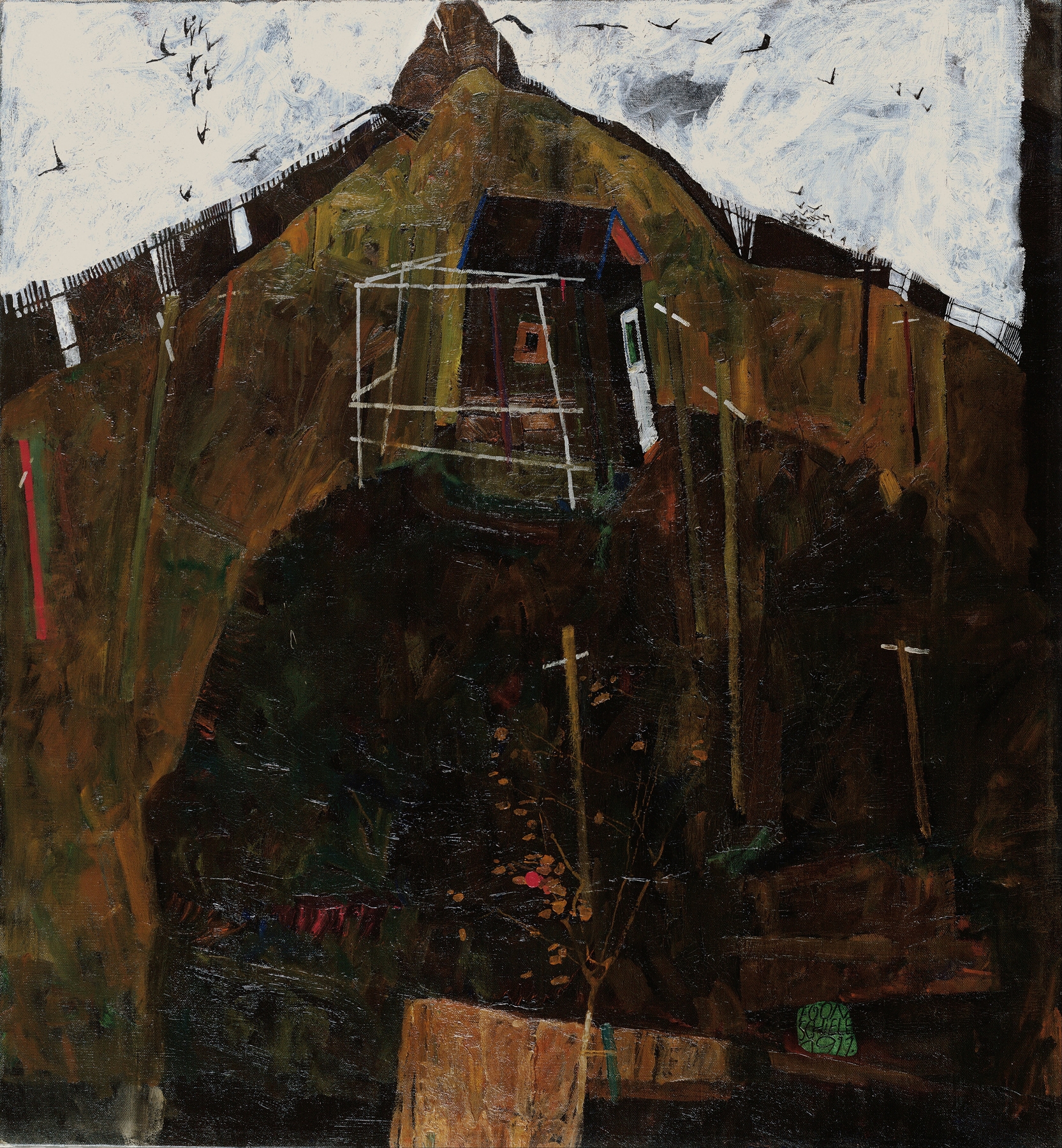
Image Credit:Egon Schiele “Landscape with Raven” (1911) Public domain image courtesy of Artvee
Most people would laugh at the notion that I loved you long before we met.
They wouldn’t understand how your deceased partner sent me to you
or how on our first date, you talked to my late husband in the Starbuck’s bathroom
and promised him you would take care of me– most people would have run, not walked, run.
But I knew, the explanation was in how we were both able to rise up from muddy water
and bloom despite our struggles. Most people would not be able to trace her angelic face
memoralized on your arm or her name tattooed above your heart while making love.
They wouldn’t be able to admire the half-finished painting of her, sitting on an easel in your living room.
Most people would not appreciate the constellations you discovered on my thigh, how I watched you
point out the Big Dipper, Orion’s Belt, and saw what you saw, and saw you. Most people
wouldn’t understand how after you pushed into me for the first time I went to my house, and put
a picture of my late husband back up, not because I wanted him back, because I do, I always will,
but because you turned that door knob, a lotus flower, pushed in through and past the murky waters,
held me tightly as I let out a deep sigh of relief after this long journey to you, and welcomed me home.
About the Author: Rebecca Schumejda is the author of several full-length collections including Falling Forward (sunnyoutside press), Cadillac Men (NYQ Books), Waiting at the Dead End Diner (Bottom Dog Press), Our One-Way Street (NYQ Books) Something Like Forgiveness, a single epic poem accompanied by collage art by Hosho McCreesh (Stubborn Mule Press) and her new collection Sentenced (NYQ Books). She is the co-editor at Trailer Park Quarterly. She received her MA in Poetics from San Francisco State University and her BA from SUNY New Paltz. She lives in New York’s Hudson Valley with her family. You can find her online at: rebecca-schumejda.com
Image Credit: Image originally from Flore des serres et des jardins de l’Europe. A Gand: chez Louis van Houtte, eÌditeur,1845-1880. Image courtesy of the Biodiversity Heritage Library
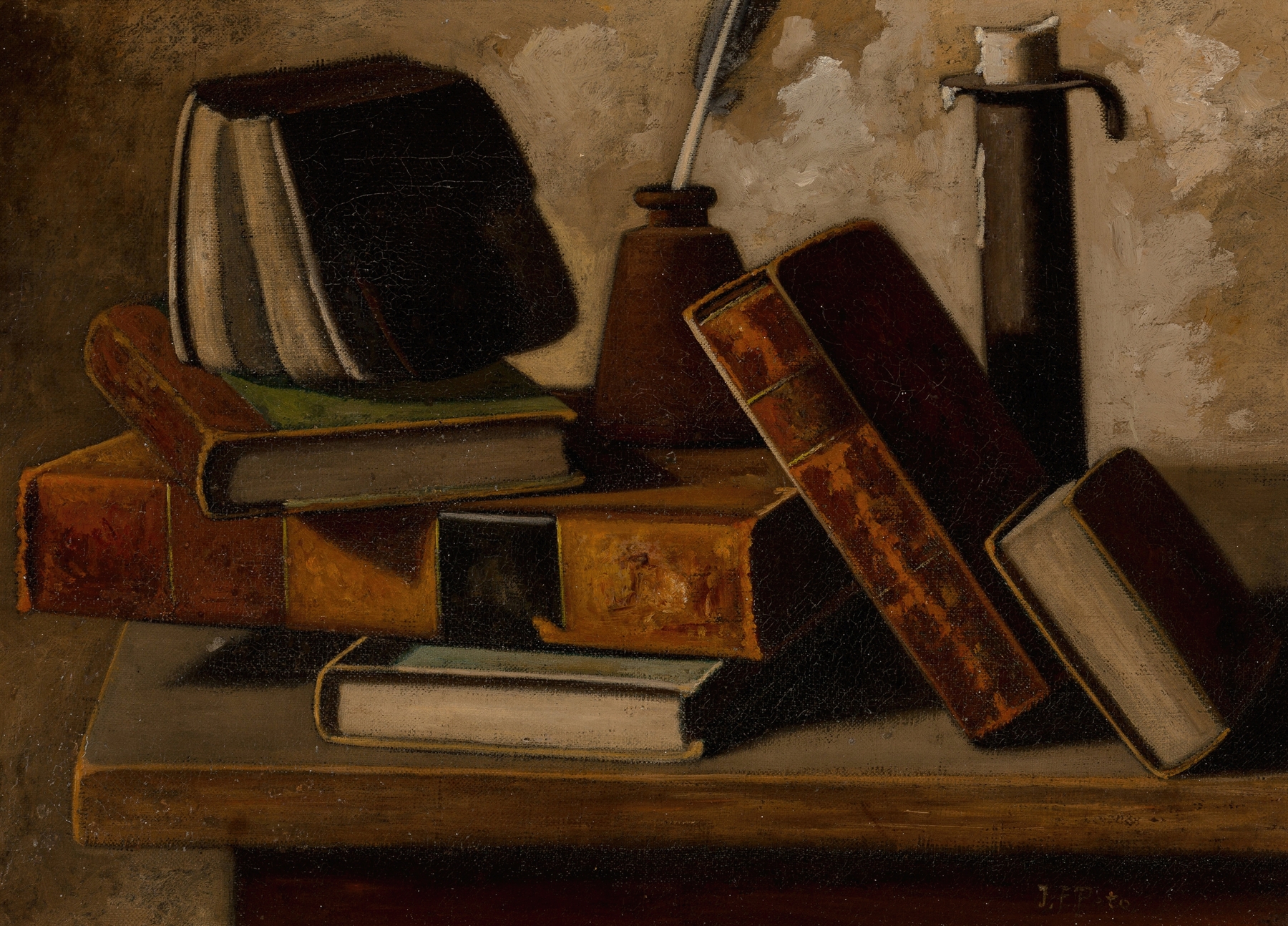
They line the walls on sagging lumber beyond the five-foot shelf of classics. Dog-eared paperbacks, debris depicting what the demi-monde contains within their shop-worn boards, tomes we saved from e-Bay culls that could have paid the urgent rent. They stand like towers from a city tinted in Morocco red, a mystical mandala with a text to read for souls in flames. A row of narrow townhouses lining the banks of a Dutch canal. Beside them stacks of common fiction, whose words would not improve on silence. Here a history of life the sea surrendered smells like tidal pools, its pages soft and curled in waves. In some we think a firewall divides the character and author; in some the writer is transformed. A few of even those we love were books that someone closely read before they called authorities, reporting on their hunted neighbors for crimes against conformity.
Other volumes, spare and slim, help to lip-read what my heart is saying. Everyone it seems knows the standard temperature at which the printed paper burns. But what about the low degree that makes such standard pages freeze? For there are books I have not sold or tossed that press me down to death. They stand and watch me from the shelf. In those you gave as gifts a hundred paper cuts await my blood.
About the Author: Royal Rhodes, who was trained in the Classics, is a retired educator who taught classes in global religions and Death & Dying for almost forty years. His poems have appeared in: Ekstasis Poetry, Snakeskin Poetry, The Montreal Review, The Cafe Review, and other places. His poetry/art collaborations have been published with The Catbird [on the Yadkin] Press in North Carolina.
Image Credit: John Frederick Peto “Still Life with Books, Inkpot, and Candlestick” Public domain image courtesy of Artvee.
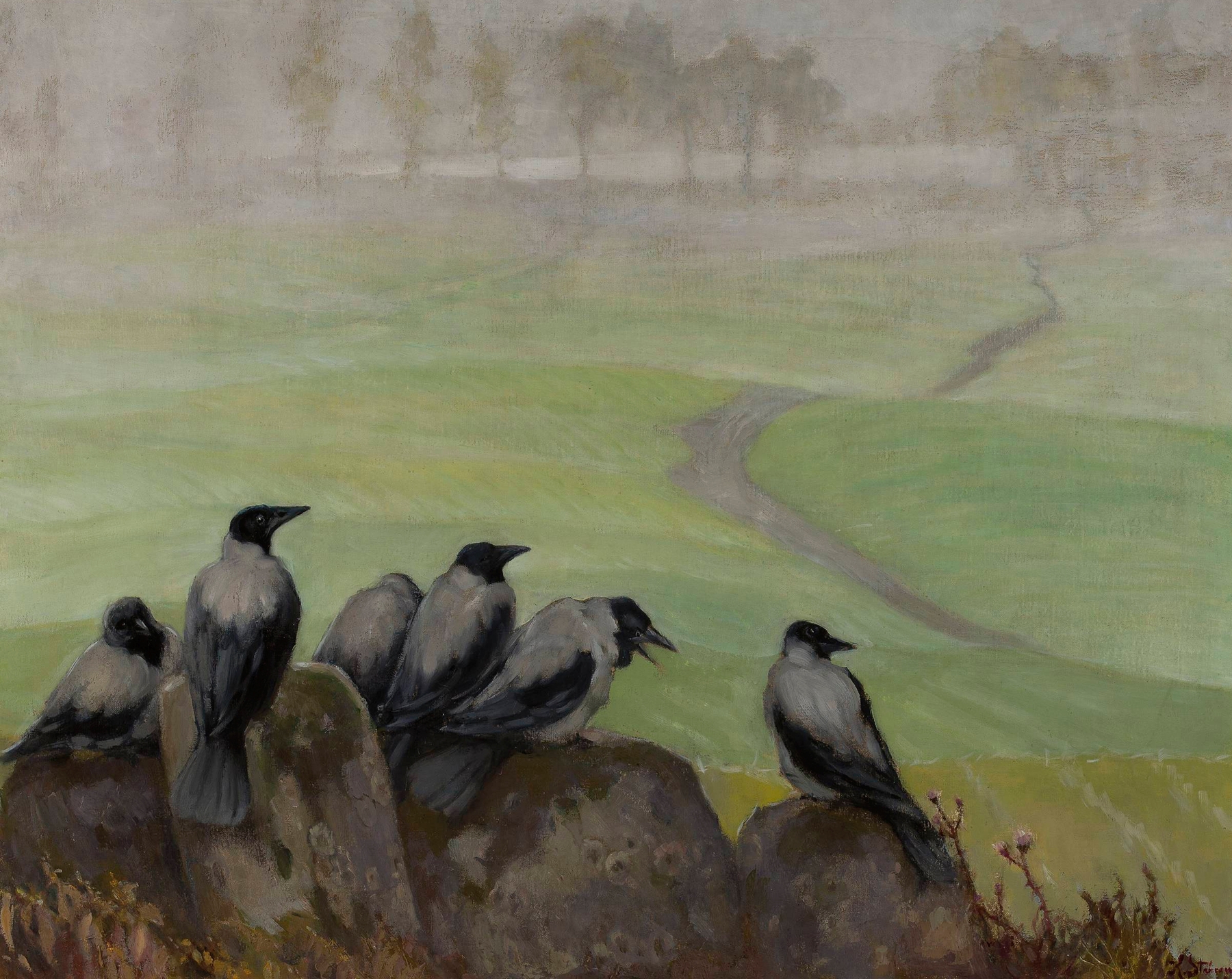
Crow Will Never Carry A Star Across the Sky -for MJ
“It’s not my job to carry a self-sufficient body from dawn to dawn. I’ve got enough on my mind, what with gathering foodstuffs to tide me over, making a nest sturdy enough to withstand kith and kin, raw eggs, new babies. Stars live lives beyond all that, provide the only possible light in that seamless backdrop.
It’s not a matter of choice, no choice about it at all. Check with Blue Jay, busy bullying inbred Sparrows, or Cardinal, flitting like a match head from bush to bush, playing the family man so well you can almost see a station wagon full of chicks behind him. Goldfinch, Red-Headed Stranger, elusive Bluebird of Happiness— maybe one of them has time to cart a star around there like some aged queen.
I’ve got my own agenda, make my own rounds without help from a creature subject to laws of gravity. Leave me be. I’ve got a Douglass fir to investigate. Something is shining on that uppermost branch that calls to me, seems to be spelling my name in semaphoric signs.”
About the Author: Twice a Best of the Net nominee, Cheryl A. Rice’s books include Dressing for the Unbearable (Flying Monkey Press), Until the Words Came (Post Traumatic Press), and Love’s Compass (Kung Fu Treachery Press). Her monthly column, The Flying Monkey, can be found at https://hvwg.org/, while her occasional blog, Flying Monkey Productions, is at http://flyingmonkeyprods.blogspot.com. Rice can be reached at dorothyy62@yahoo.com.
Image Credit:Kazimierz Stabrowski “Crows- Council of Seniors” (1923) Public domain image courtesy of Artvee
Oyster beds rise from tidal pools like spiritual mounds nurturing creation creating calcium shell reefs flashing occasional nacre— mother of pearl prosperity— distracting fishermen with its iridescence before recasting lines opening their third eye and crown chakras, activating, balancing, energizing a dreamscape where meditation of purpose guides each rainy day angler’s quest for silver perch, steelhead, sturgeon, & salmon.
About the Author: An award-winning author, poet, and emeritus English Professor, Sterling Warner’s works have appeared many literary magazines, journals, and anthologies including Anti-Heroin Chic, The Galway Review, Lothlórien Poetry Journal, Ekphrastic Review, and Sparks of Calliope. Warner’s poetry/fiction include Rags and Feathers, Without Wheels, ShadowCat, Edges, Memento Mori: A Chapbook Redux, Serpent’s Tooth, Flytraps, Cracks of Light: Pandemic Poetry & Fiction 2019-2022, Halcyon Days: Collected Fibonacci, Abraxas: Poems (2024), and Masques: Flash Fiction & Short Stories. Presently, Warner writes, hosts/participates in “virtual” poetry readings, turns wood, and enjoys boating and fishing in Washington.
Image Credit: Public domain image originally published in The Naturalist’s Miscellany, or Coloured Figures of Natural Objects. London: printed for Nodder & Co.,1789-1813. Courtesy of the Biodiversity Heritage Library
At the mouth of the cliffside cave, foot braced on a crag, St. Kevin hauls up the rope, arm over serpentine veined arm, five fathoms of it dangling a leather bundle that swings above the lake like a censer. Drawn to the cave’s emptiness, he’d turned his back on the abbey’s monks. Yet they’d pulled the curragh’s oars across the deep to his hand-hewn lair— wise men bearing weekly gifts. Cheese, brown bread, salt fish.
Why would he need paltry routine, his soul now bared to the divine? Cave-coffin his sanctuary. Lake fog his incense.
If anything is holy, everything is.
About the Author: A 2021 Pushcart Prize and Best of the Net nominee, Ken Hines has written poems that appear in AIOTB, Vita Poetica, Ekphrastic Review, Psaltery & Lyre and other magazines. His poem “Driving Test” won the Third Wednesday Journal Annual Poetry Prize. All this scribbling takes place in Richmond, Virginia.
Image Credit: Denzillacey “The Gateway to the monastic city of Glendalough” (2021) CC BY-SA 4.0. Image courtesy of Wikimedia Commons.