L.B. Sedlacek: “Higher Paint”


Higher Paint

A purple and white jitterbug – 
maybe a few times each year
exploding from the sun’s surface:
red blasts of solar flares, charged
particles.

October 2003 the sun blasts
knocks out satellites,
disrupting power grids.  The
rain was magnificent.

A northern aurora (the aurora
borealis) emerges as a glowing
ring.  It alters every 5 seconds.
The motivation – elemental curiosity:
this is what happens when the sun
collides with oxygen.


About the Author: L.B. Sedlacek is an award winning poet and author with poetry and fiction appearing in many different journals and zines.  Her latest poetry books are “The Adventures of Stick People on Cars” (Alien Buddha Press), “The Architect of French Fries” (Presa Press) and “Words and Bones” (Finishing Line Press.)  She is a former Poetry Editor for “ESC! Magazine” and also co-hosted the podcast for the small press, “Coffee House to Go,” for several years.  She teaches poetry at local elementary and middle schools and publishes a free resource for poets, “The Poetry Market Ezine.”  In her free time, LB enjoys swimming, reading, and taking guitar lessons.


More By L.B. Sedlacek:

The Moon’s Trees


Image Credit: “Aurora Borealis over the US Navy Ice Camp Sargo” Public Domain
Jonathan K. Rice: “AAA”


AAA

My car gassed up, 
oil changed, 
tires balanced and rotated.

Roadworthy
all I needed 
was roadmaps. 

I approached the rep
at the counter, 
a young woman

with a Gothic look −
black hair, pale skin, 
black nail polish,

silver nose ring. 
With a smile she asked
how she could help me.

I told her I needed maps. 
Maps of states, cities,
the Eastern Seaboard. 

A few west of the Mississippi.
She was curious where I was heading. 
I told her at the time I wasn’t going that far

but I didn’t trust my cell phone, GPS,
computers and satellites.
What if there’s a Zombie Apocalypse?

What good will technology be?
And who can even read a simple roadmap these days?
Her jaw dropped. She slapped the counter

with an open hand. Exclaimed, 
That’s what I’ve been saying! You never know!
Here, take all the maps you want!

Her coworkers looked on 
as she gave me one of everything.
I left arms full, bottled water,
nonperishable food and can opener next on my list.


About the Author: Jonathan K. Rice edited Iodine Poetry Journal for seventeen years. He is the author of two full-length poetry collections, Killing Time (2015), Ukulele and Other Poems (2006) and a chapbook, Shooting Pool with a Cellist (2003), all published by Main Street Rag Publishing. He is also a visual artist. His poetry and art have appeared in numerous publications, including Cold Mountain Review, Comstock Review, Diaphanous, Empty Mirror, Gargoyle, Inflectionist Review, Levure Litteraire, The Main Street Rag, Wild Goose Poetry Review and the anthologies, Hand in Hand: Poets Respond to Race and The Southern Poetry Anthology VII: North Carolina.


More by Jonathan K. Rice

“Springmaid Pier”

“Cards”

“Stravinsky in the Shower”


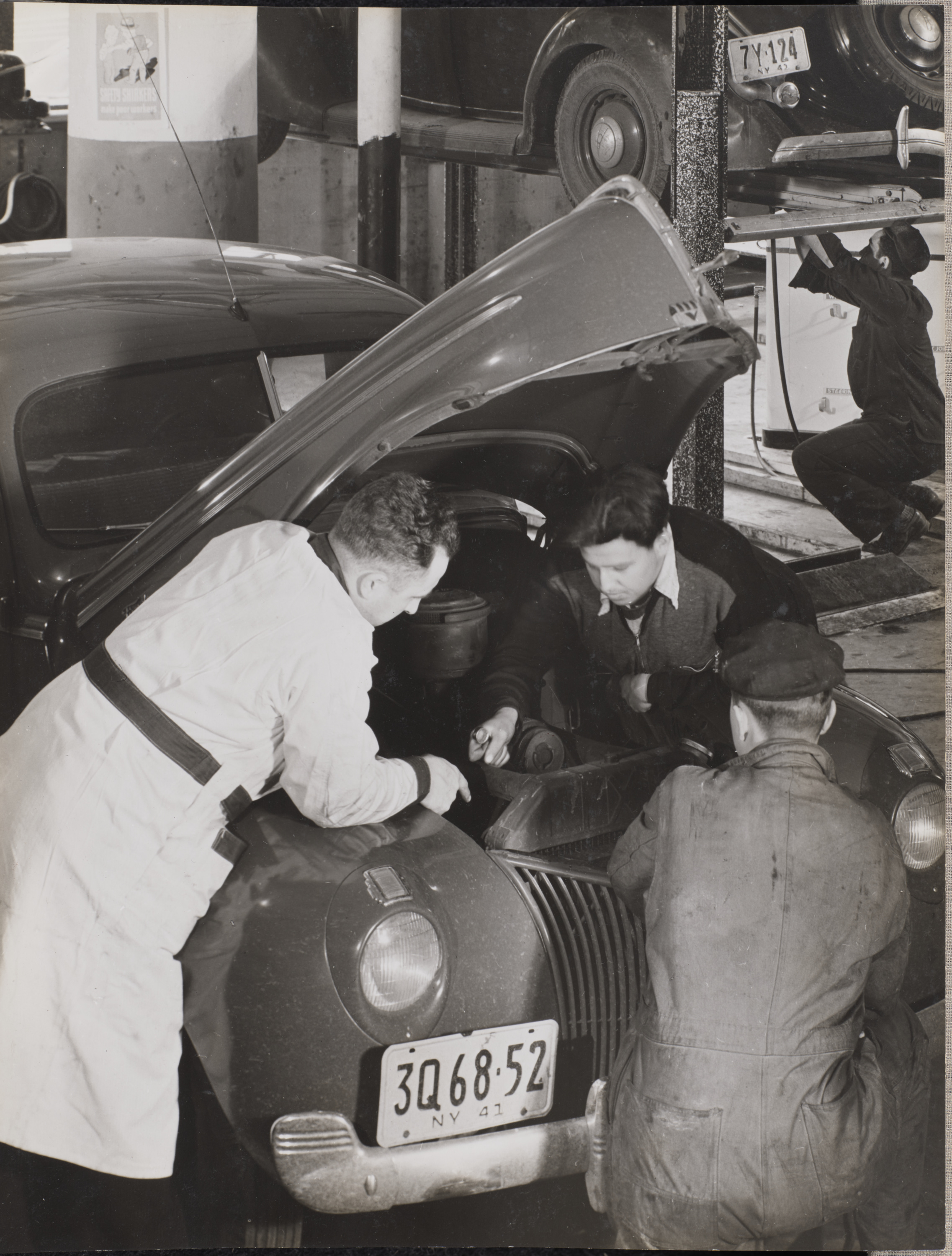
Image Credit: Arnold Eagle “Three men work under the hood of a car” (about 1940–1942) Digital image courtesy of the Getty’s Open Content Program.

Larry Smith: “Union Town”


Union Town

Once a month for decades
he brought home the Catholic Worker
folded gently and laid it on kitchen table,
where it would be picked up, read, 
folded, and laid back again.
A fabric in their lives,
like the Catholic missals
she kept in rubber bands
folded in her dresser drawer.
He spoke little of the mill,
except of friends, left it
at the mill gate where others
might stop in bars to drink
their bitterness away.

Their children are taught by Catholic sisters
of Charity, Franciscans who share
Christ’s preference for the poor by
having them bring cans of food each month,
and at some secret signal near recess
gently bowl them forward on the wooden floor—
twenty cans of green beans, corn, tomato sauce
reaching the blackboard with sweet laughter,
as the Sister feigns surprise, then bends
to gather them up, and they all
bow their heads in thanks.


About the Author: Larry Smith is a poet, fiction writer, and editor-publisher of Bottom Dog Press in Ohio where they feature a Working Lives and an Appalachian Writing Series. He is also the biographer of Kenneth Patchen and Lawrence Ferlinghetti. He lives in Huron, Ohio, along the shores of Lake Erie.


More By Larry Smith: 

No Walls

The Story of Rugs

Wages


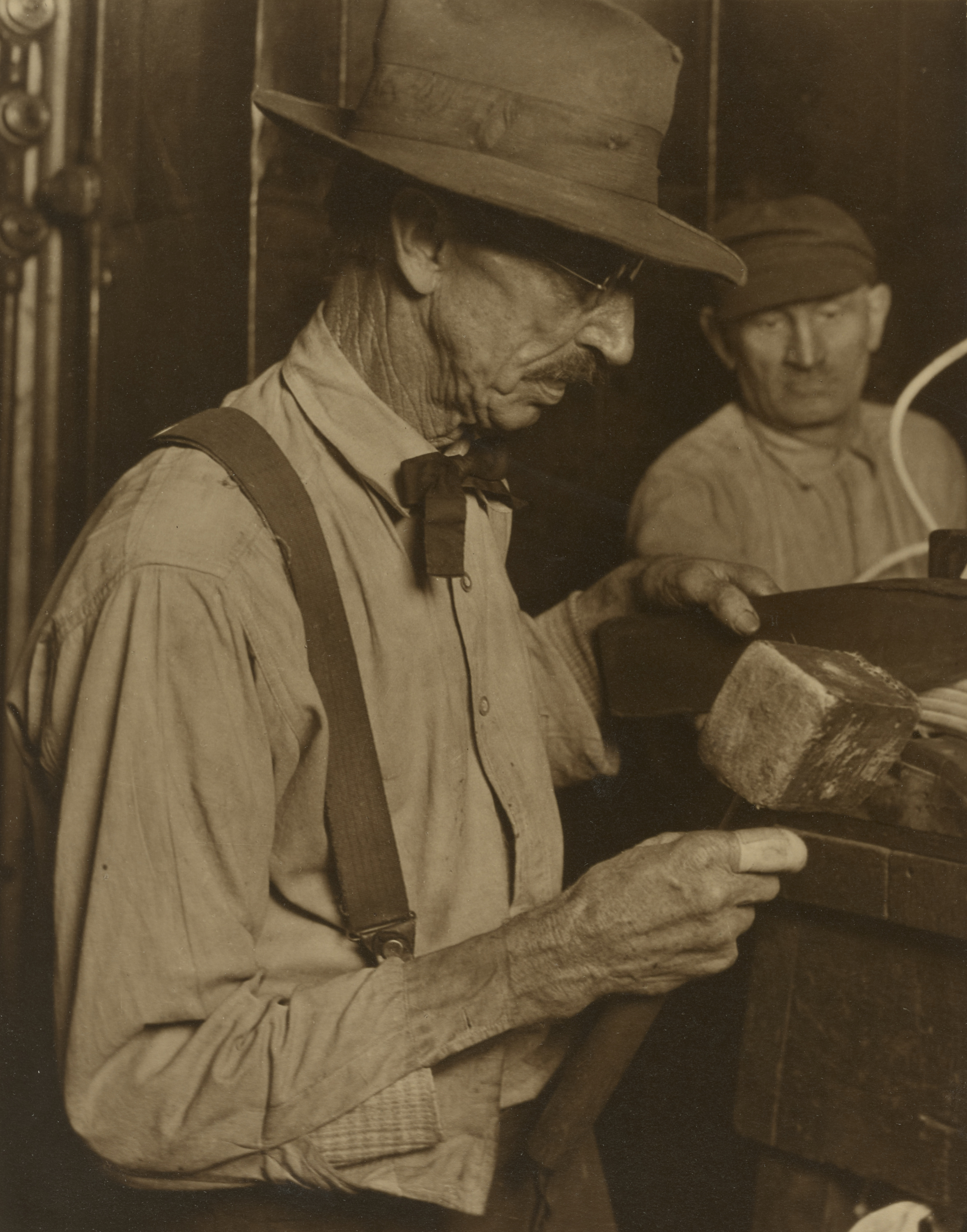
Image Credit: Lewis W. Hine “Furniture Factory Worker or Printer?” (1930s) Digital image courtesy of the Getty’s Open Content Program.

Mike James: “Saint Jayne Mansfield”

(click the image for a bigger size)


About the Author: Mike James makes his home outside Nashville, Tennessee. He has published in numerous magazines throughout the country in such places as Plainsongs, Gargoyle, Birmingham Poetry Review, and Chiron Review. His fifteen poetry collections include: Journeyman’s Suitcase (Luchador), Parades (Alien Buddha), Jumping Drawbridges in Technicolor (Blue Horse), First-Hand Accounts from Made-Up Places (Stubborn Mule), Crows in the Jukebox (Bottom Dog), My Favorite Houseguest (FutureCycle), and Peddler’s Blues (Main Street Rag.) He served as an associate editor of The Kentucky Review and currently serves as an associate editor of Unbroken.


More By Mike James:

Grace

Paul Lynde

Oh Daddy, Give Me A Quarter For The Time Machine


Image Credit: Digital Photo Art of a public domain photo of Jayne Mansfield by Chase Dimock

John Macker: “Abundance “


Abundance     
                 – For Stewart Warren

An 80 year old woman in New Mexico
does tai chi in the dog park
in an abundance of presence
shares the rhythms of her age
gathers in and then releases the
shiftless summer air.     
In Iceland activists hold a funeral for a famous
glacier, on the permanent plaque they 
placed, in English and Icelandic, 
is written to the children:

Only you know if we did it.

In Auden’s memorial poem to Yeats
he wrote: Mad Ireland hurt you into poetry.
Out the window a police car siren’s
pulsating shriek cleaves the morning
into two organic halves, one an act of faith
the other, not so much. We were instructed
by the nuns to say a prayer or cross
ourselves every time we heard one 
until the danger became
innocent whispered echo.

As if nobody had been hurt.

Ireland will plant 400 million trees in the
next 20 years to combat climate change.
So many more will recognize El Degűello
when they hear it than those who’ve
memorized “The Second Coming”. 
A poet friend in New Mexico 
in his last days of hospice
always traveled his own rivers
now they change course, fill him
with their own abundance, tell him
we have all the time in the world.

The purple morning uplifted cosmos petals
a day after rain and the land which has withstood
the emancipation of all these latest hells

never stops singing.


About the Author: John Macker’s latest books are Atlas of Wolves (Stubborn Mule Press, 2019) and The Blues Drink Your Dreams Away: Selected Poems 1983-2018 (Stubborn Mule Press, 2018 and a finalist for a New Mexico/Arizona Book Award.) Macker has lived in Northern New Mexico for 24 years.


More By John Macker:

Last Riff For Chet


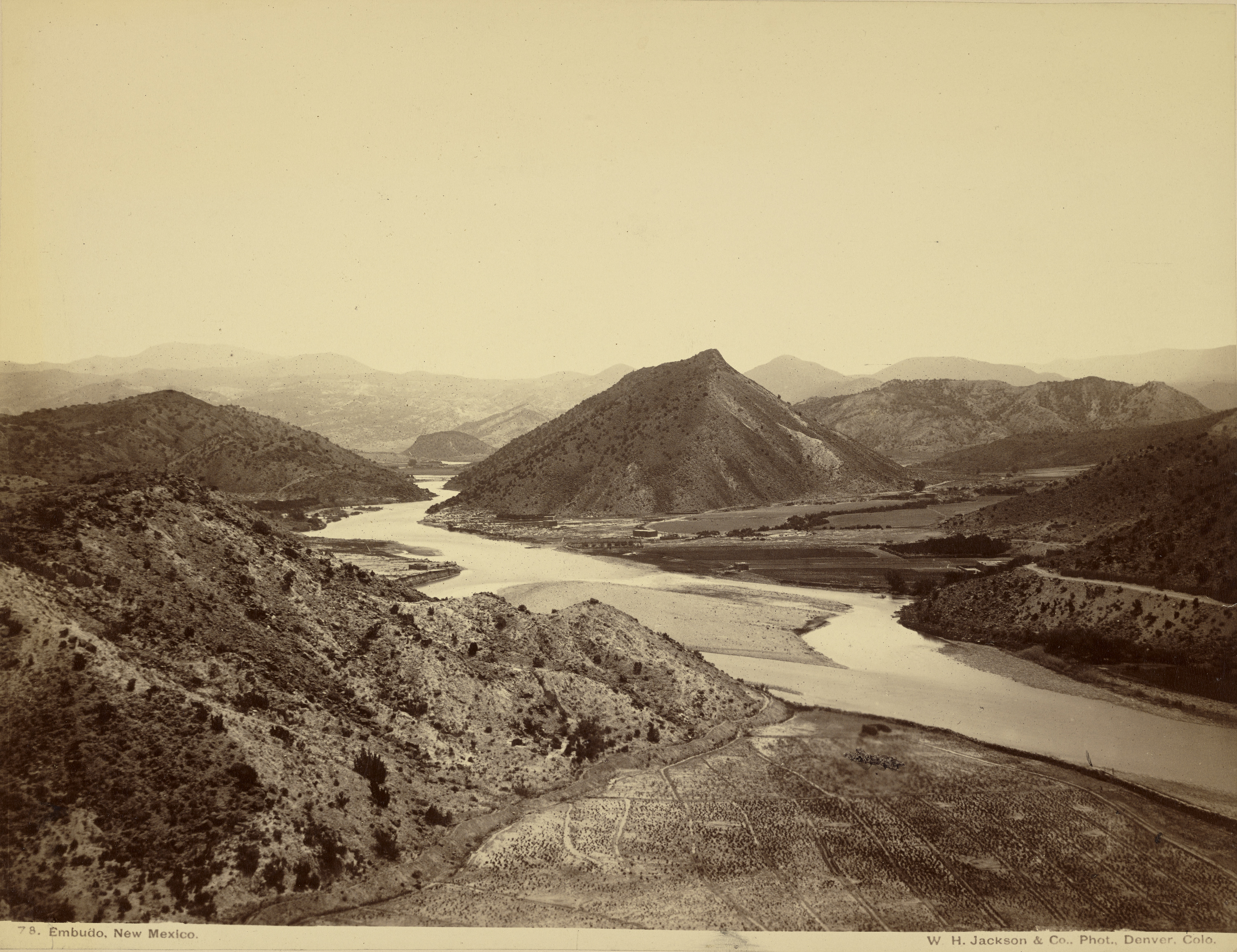
Image Credit: William Henry Jackson “Embudo, New Mexico” (1882) Digital image courtesy of the Getty’s Open Content Program.

Jeff Hardin: “A Word That Means Standing Between Each Moment”


A WORD THAT MEANS STANDING BETWEEN EACH MOMENT

I dreamed I was speaking every language,
no one a stranger, and then I woke to find
the same few words I assemble my life around.

Overnight a dusting of snow has settled into leaves,
into crooks of oaks in the side yard. It takes years 
sometimes to know what sifts down into my thoughts.

Having lived this long has granted me few answers.
I’ve been given only new questions and less
confidence in anything but my own inadequacy.

If only it were possible to pause between each
moment and weigh the implications of what 
came before against what is now coming to be.

I laugh to think of how I once labored to memorize
a poem, to embody its words and carry them forth
into the world. Now I remember only one word: float.


About the Author: Jeff Hardin is the author of six collections of poetry: Fall Sanctuary (Nicholas Roerich Prize); Notes for a Praise Book (Jacar Press Book Award); Restoring the Narrative (Donald Justice Prize); Small RevolutionNo Other Kind of World (X. J. Kennedy Prize), and A Clearing Space in the Middle of BeingThe New Republic, The Hudson Review, The Southern Review, Southwest Review, North American Review, The Gettysburg Review, Poetry Northwest, Hotel Amerika, and Southern Poetry Review have published his poems. He teaches at Columbia State Community College in Columbia, TN.


More By Jeff Hardin:

A Namelessness of Starlings


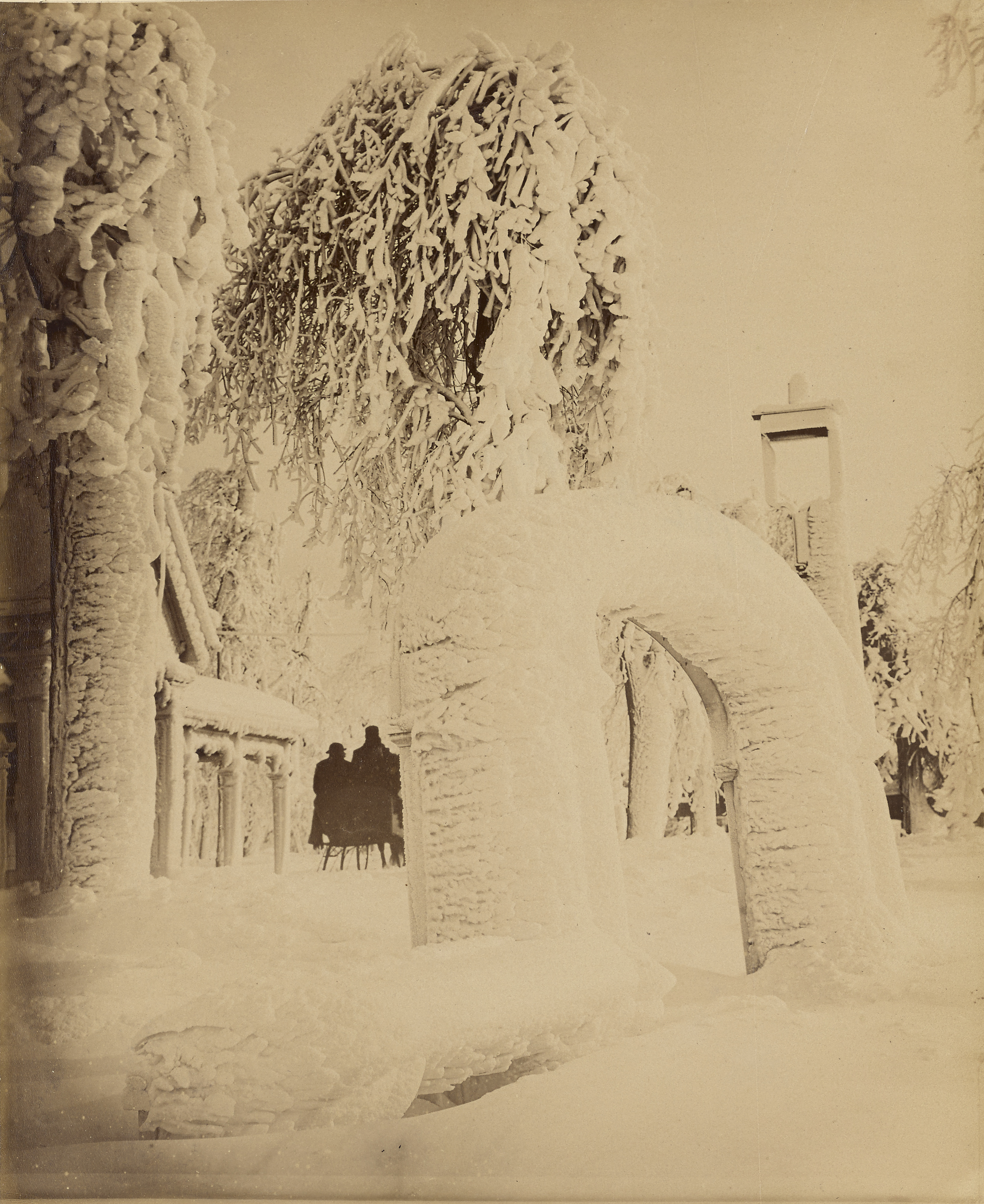
Image Credit: Unknown Maker “Niagara” 1860s – 1880s Digital image courtesy of the Getty’s Open Content Program.

Victor Clevenger: “Milkman’s Mustache”


Editor’s Note: This is the first in a series of poems by Victor Clevenger about his son, nicknamed “The Milkman”


Milkman’s Mustache

i offer him a razor for the first time

he declines it 
like a thirsty hound from hell 
when offered holy water

turning his head from side to side 
in front of a bathroom mirror 

admiring something that looks quite fragile in its infancy

like spiderwebs the color of rust 
that spell out the word masculinity 
in a thin font stretched 

across his cracked lips


About the Author: When not traveling on highways across America, Victor Clevenger spends his days in a Madhouse and his nights writing poetry.  He lives with his second ex-wife, and together they raise children in a small town northeast of Kansas City, MO.  Selected pieces of his work have appeared in print magazines and journals around the world, as well as at a variety of places online.  He is the author of several collections of poetry including Sandpaper Lovin’ (Crisis Chronicles Press, 2017), A Finger in the Hornets’ Nest (Red Flag Poetry, 2018), and Corned Beef Hash By Candlelight (Luchador Press, 2019).


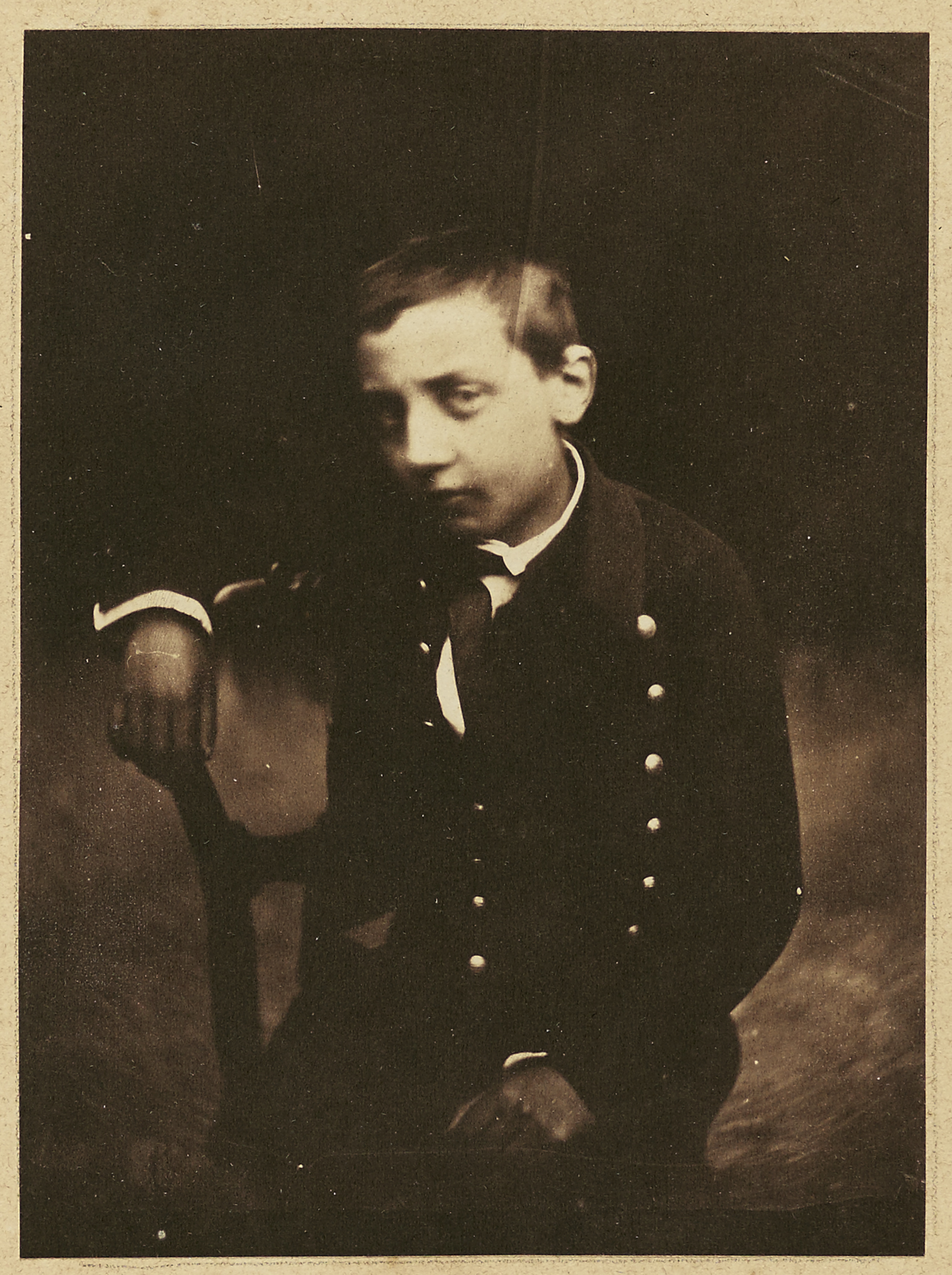
Image Credit: Achille Devéria “Portrait of a Boy” (about 1850–1855) Digital image courtesy of the Getty’s Open Content Program.

Jean Biegun: “Hospice”


Hospice

It’s nothing I can talk about, June— 
I don’t even know how to be here.
I sat once with a friend who was giving 
birth.  That I could do, but you:
I can wash your floor, but I’m no good 
at pushing you to heaven.

Let me try, though, June.  Listen, 
there are 16 hushed angels  
at the edge of the bed, and listen, 
June, they are hugging quite happily
and humming an ethereal anthem.  

I’m not making any of this up.
Easter Bunny and Tooth Fairy 
are here, too, as well as the winner 
of the 6th Annual Spelling Contest 
who crowned you the 7th.  He passed 
on in Viet Nam, 34 years ago this month, 
remember?  

He is kneeling here by your elbow 
and grinning your favorite winning words— 
“grandeur” and “halcyon.”  How did you 
know the letters in “halcyon” back then,
June, without knowing the definition:  
tranquil?

I am counting 7 leprechauns all  
with bunches of 4-leaf clovers ready
to stuff in your hands.  It will be 
a blast,  I can see right now.


[This poem was included in the 2008 Wisconsin Poets Calendar.]


About the Author: Jean Biegun began writing poetry back in 2000 as a way to overcome big-city job stress, and it worked.  Poems have been published in Mobius: The Poetry Magazine, After Hours: A Journal of Chicago Writing and Art, World Haiku Review, Blue Heron Review, Goose River Anthology and many other places.


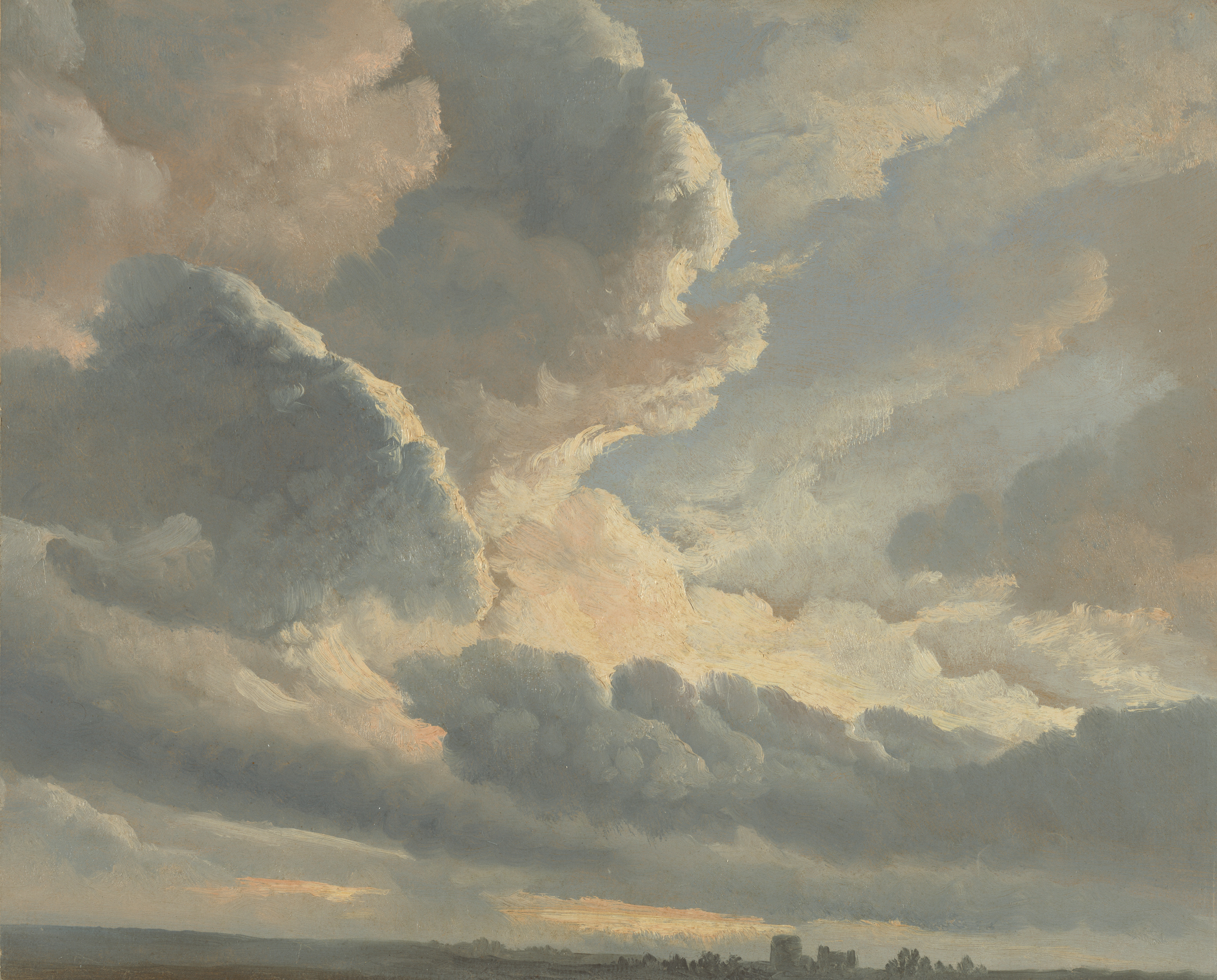
Image Credit: Simon Alexandre Clément Denis “Study of Clouds with a Sunset near Rome” (1786) Digital image courtesy of the Getty’s Open Content Program.

Robert A. Morris: “Natchez Green”


Natchez Green

I was eleven, walking out past Silver Street to 
the river’s edge, headed “under the hill,” a spot
infamous for men who no longer exist and their 
transient killers.  Some say a ghost woman walked

the Mississippi, her body anchored by gold from 
her lover so she could lay beside him at the bottom 
where the bottles turned to jewels.  Looking out, I 
saw something flash, deep emerald, and unbroken, 

glittering in the river silt, waiting like a patient miracle. 
Expecting Laffite’s treasure map. Clutching the cork 
with my teeth, little boy hands twisted. The sharp too 
sour smell gave me a headache, and I stood hearing 

phantoms as the wind made the bottle coo. In the river 
debris, a hand summoning me to the water. I threw 
the bottle, which it accepted, swirling the rank liquor, 
towing it further and further from my shore.


About the Author: Robert A. Morris lives near Baton Rouge and works as a teacher.  Besides poetry, he also writes fiction and bashes out the occasional song on his blue Stratocaster. His work has appeared in The Main Street Rag, Pear Noir, and The Chaffin Review among others.  He is in the final stages of editing a chapbook titled Descending to Blue that he would like to see published in the near future.  For updates, please visit his blog  https://robertamorrisblog.wordpress.com


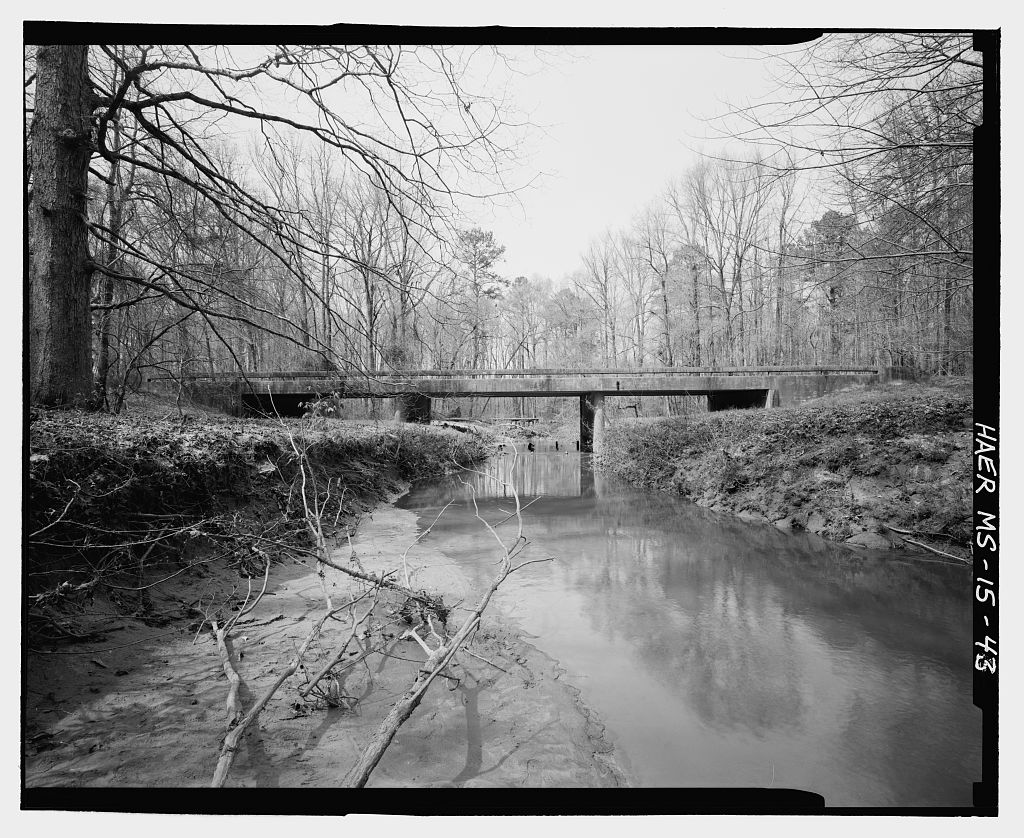
Image Credit: William A. Faust “Natchez Trace Parkway, Located between Natchez, MS & Nashville, TN, Tupelo, Lee County, MS” (1997)

Rob Plath “that which”


that which 

sitting on 
my old green 
couch 
she asked, 
“are you afraid”
& i replied, 
“terrified”
w/ out even 
asking of 
who or what 
& we lifted 
our bottles 
against 
that which 
follows us both 
day & night 
across streets 
beneath sun
& moon
thru doors 
& down corridors 
& into rooms 
of any dimension 
& into dreams 
& moments 
of waking 
& dreams again


About the Author: Rob Plath is a writer from New York. He was once tutored by Allen Ginsberg for two years from 1995-1997.  He has published 22 books and a ton of poems in the small presses over the last 26 years. He lives with his cat and tries his best to stay out of trouble.


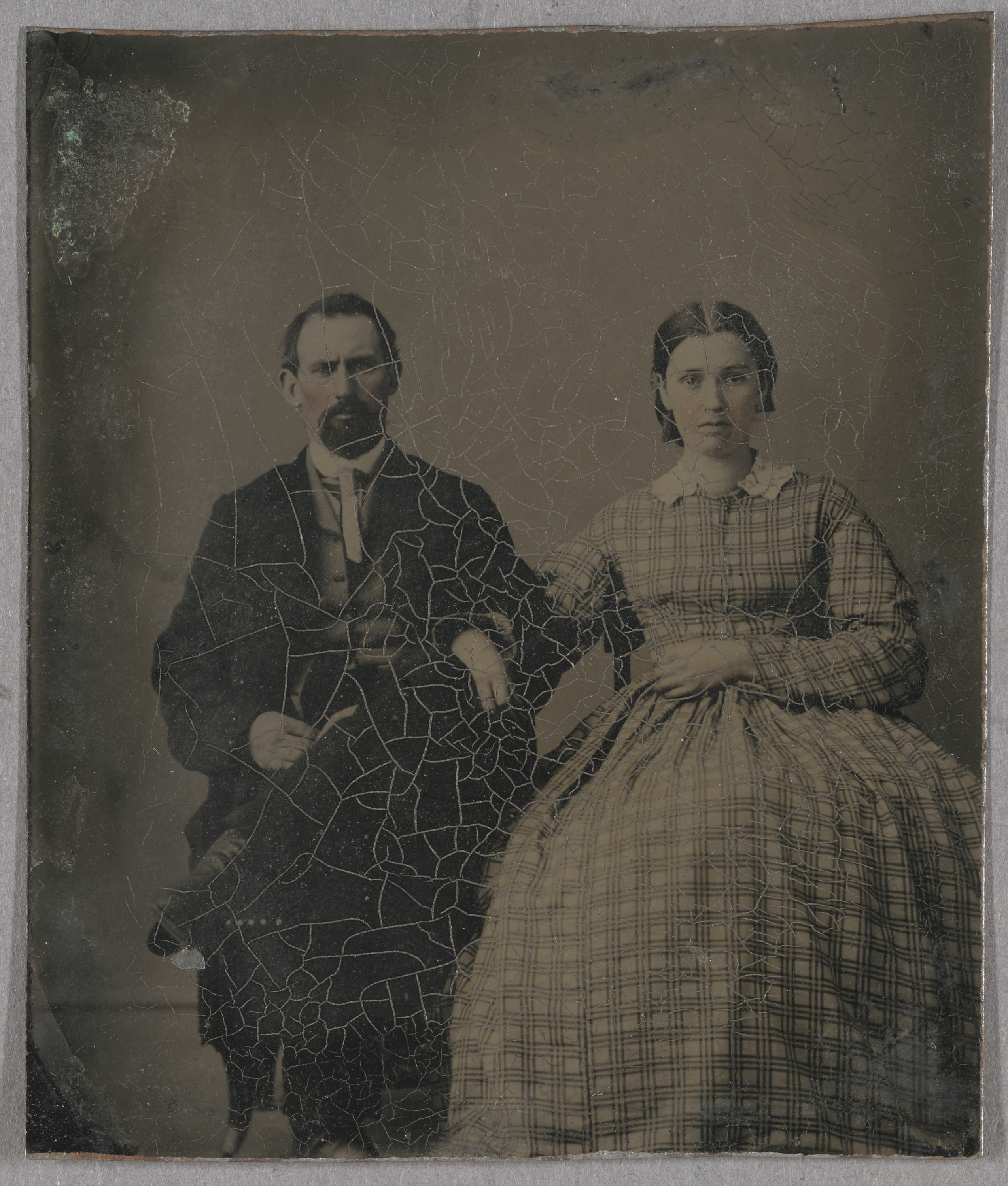
Image Credit: “Portrait of a Couple” Unknown Artist (1860s) Digital image courtesy of the Getty’s Open Content Program.