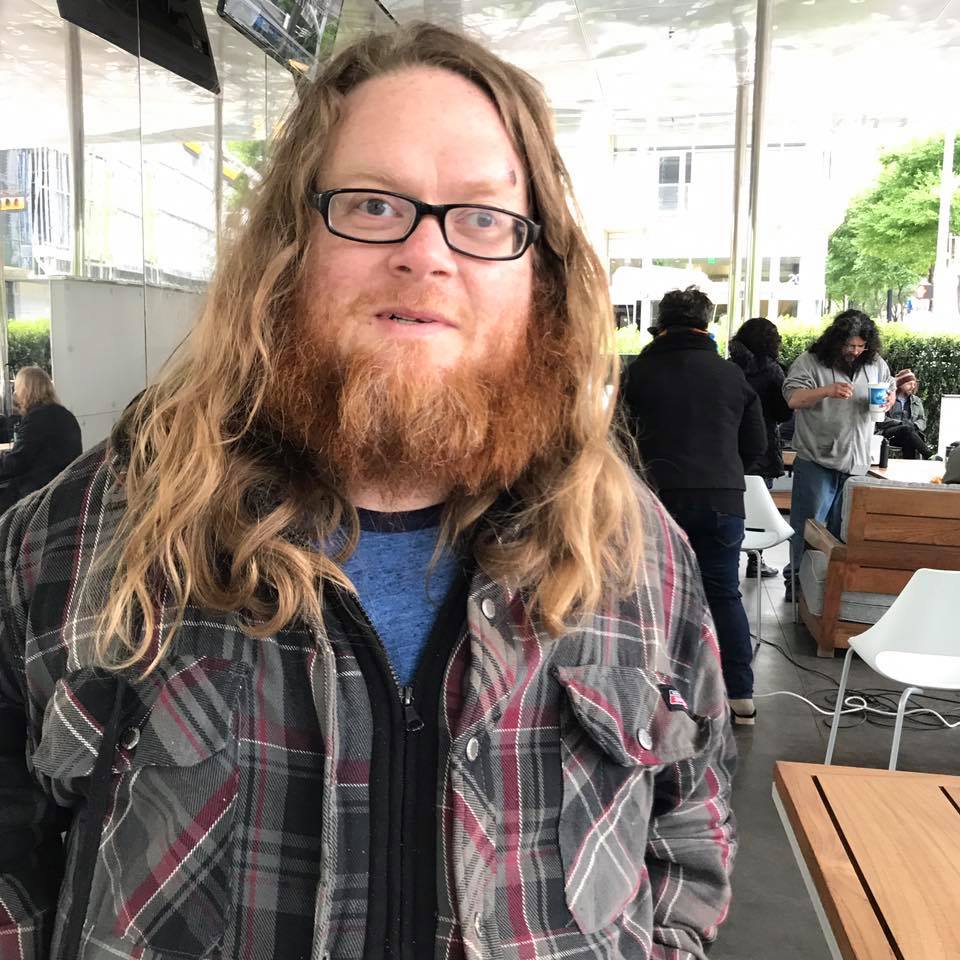
Poetry Soundbite: A Reading and Interview with John Dorsey

.

.

.

Welcome to AIOTB Magazine’s second Poetry Soundbite, an on-going series of poetry readings and interviews. For this edition, we welcome John Dorsey, who will read from his book Sick, a collaborative collection of poems with Daniel Crocker. Dorsey’s poems explore growing up with cerebral palsy and the challenges he faced in an era before our present day accommodations for young people with disabilities.

.

.

About the Author: John Dorsey lived for several years in Toledo, Ohio. He is the author of several collections of poetry, including Teaching the Dead to Sing: The Outlaw’s Prayer (Rose of Sharon Press, 2006), Sodomy is a City in New Jersey (American Mettle Books, 2010), Tombstone Factory, (Epic Rites Press, 2013), Appalachian Frankenstein (GTK Press, 2015) Being the Fire (Tangerine Press, 2016) and Shoot the Messenger (Red Flag Press, 2017),Your Daughter’s Country (Blue Horse Press, 2019),Which Way to the River: Selected Poems 2016-2020 (OAC Books, 2020) and The Prettiest Girl at the Dance (Blue Horse Press, 2020. His work has been nominated for the Pushcart Prize, Best of the Net, and the Stanley Hanks Memorial Poetry Prize. He was the winner of the 2019 Terri Award given out at the Poetry Rendezvous. He may be reached at archerevans@yahoo.com.
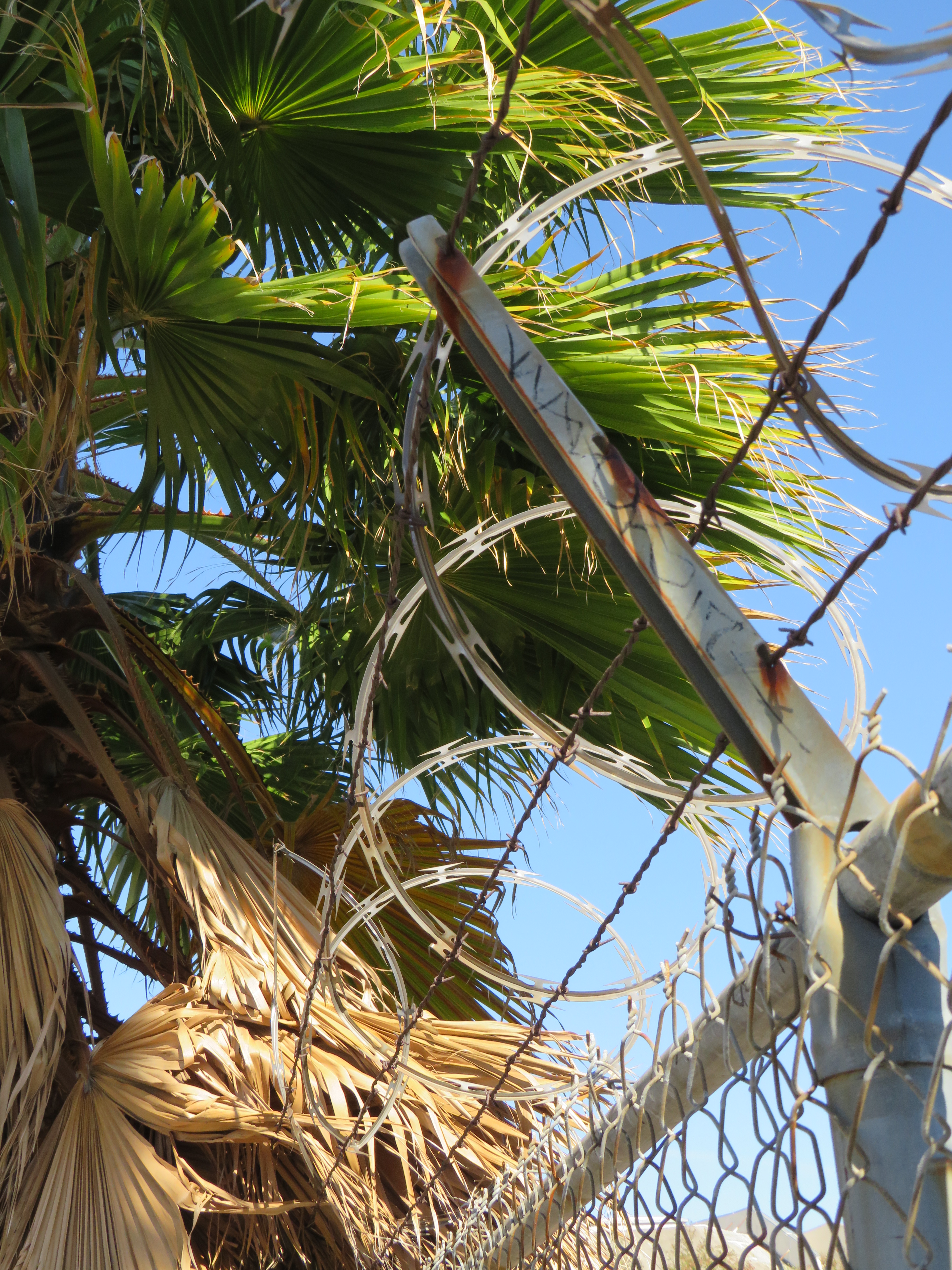

John Brantingham: Five Poems About the Santa Ana Winds

.

.

.

Still for a While

We get a Santa Ana
and wake to streets
full of branches
and trash and a palm tree

that’s crashed down
through the wrought iron fence
around the city yard.
Today, the air is still

for a while, but the winds
always come back,
or they have so far.
The train tracks are

covered in tumbleweeds.
This air that has come down
from the highland deserts
smells clean.

.

.

.

.

News of the Weather

The first weather report I get
is when the airport shifts
its flight pattern directly over us,
and I know the winds are coming.
The breaks in our conversation
as the engines pass above
soon become natural and unnoticed
unless one of us points them out.
The eucalyptus across the train tracks
looks shaggy today. I wonder
what it will look like tomorrow.

.

.

.

.

Just Us

The flags on top of the tax service
and immigration building are torn
to feathers by the Santa Ana winds,
and that feels like a metaphor

for something, but I’m not sure what.
The winds have always felt
more symbol than real to me.
They’re so dry they suck

the water right out of you.
We can see for miles across
the normally smoggy sky, and at night
we get stars. All of these things

might mean something like someone
is out there telling us something
with great clarity that I could see
except that I am limited to being just who I am.

.

.

.

.

Baldy Winds

After the winds
have died down
here in the valley,
they are still rising
a mist of snow
blowing it off the top
of Mt. Baldy,
which I can see
headed straight up
Euclid Avenue.
It’s still early
on a Sunday morning,
and I’m the only one
out in the world
made clean
by the Santa Anas.
The dawn has no transition
through filtered air.
One moment it’s night,
and the next it’s full day.

.

.

.

.

The New Neighbors

When the Santa Ana picks up,
some long haul truckers
pull off the freeways
and park in the neighborhood.

We can see their cabs
in the pale blue lights
of their computers
as they wait out the winds.

When we walk the dog
down the street in the evening,
we invade their space.
This is now their backyard.

.

.

About the Author, John Brantingham: I was the first poet laureate of Sequoia and Kings Canyon National Park, and my work has been featured in hundreds of magazines and in Writer’s Almanac and The Best Small Fictions 2016. I have eleven books of poetry and fiction including my latest fiction collection Life: Orange to Pear (Bamboo Dart Press). I teach at Mt. San Antonio College.

.

Image Credit: Impressions of Southern California by Chase Dimock

Larry Smith: “Grief into Mourning”

.

.

.

Grief into Mourning     

I.
      “Wildflowers don’t care where they grow.”
         -Dolly Parton

A friend has abandoned me
after 40 years, and not
for the first time. Once for five years.
Inside his wall of darkness he has
spit me out like spoiled milk,
and I can’t reach across
to explain. His back turned
he curses my name as he
throws down their phone.
Yet I know he cannot help it.
There is no sin here, only sorrow
and sickness, a grief-pain I carry
inside my head and heart.

And so, I write this to myself
to mourn. In quiet breath
I close my eyes to see his
wounded face in a mirror,
look deep inside his hurt eyes
and step forward to embrace
his figure, as we stand together
breathing forgiveness.

II.
With the taste of grief swelling
my tongue I remember past hurt
keeping us apart. A cherry pie
left out for weeks that I eat with
spoiled milk alone at night.

You said you could never forgive
and so, I walked away, burying it
like a dead child till now
I stare it in the face, swallow regret
and forgive us both.

III.
Placing each stone
beside the bench
where dead friends once sat.

Wild geese overhead
echo their names.

.

.

About the Author: Larry Smith is the editor-publisher of Bottom Dog Press in Ohio, also the author of 6 books of fiction and 8 books of poems, most recently The Pears: Poems. A retired professor of humanities, he lives and works along the shores of Lake Erie in Huron, Ohio.

.

More By Larry Smith:

No Walls

Union Town

At The Country Store

.

Image Credit: Frances Benjamin Johnson. “Bell Flower (campanula)” [between 1915 and 1935] image courtesy of the Library of Congress

Meg Pokrass: “Neurology”

.

imgonline-com-ua-andy-warhol-lZIF5GiJJ2Yz

.

.

Neurology

When he walks in I’m crushed
and loved. My foot grabs the pain,
happy for his entrance lines
thick medical folder as prop.
Monthly he opens the door to my face.
If this ends
I will never get better. He writes
with his red pen all over my heart.
How long will this go on? I ask.
For a long time, he says
pain bringing its own bench

.

.

About the Author: Meg Pokrass is the author of five flash fiction collections and a book of prose poetry, Cellulose Pajamas, for which she received the Blue Light Book Award. Her work has been widely internationally anthologized, most recently in New Micro (W.W. Norton & Co., 2018), Flash Fiction International (W.W. Norton & Co., 2015) and The Best Small Fictions2018, 2019. She serves as Founding Co-Editor of Best Microfiction 2020 and teaches flash fiction online and in person.

.

More by Meg Pokrass:

Blueberry Blue

.

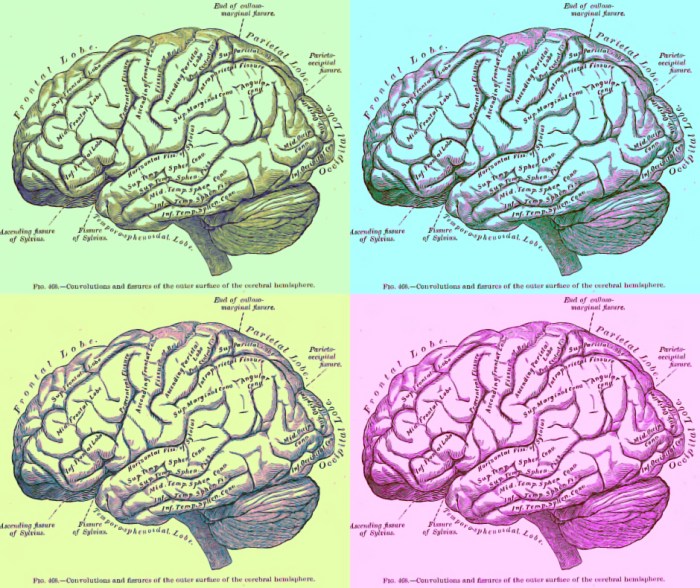
Image Credit: Photo collage adapted from a public domain image from Gray’s Anatomy

John Macker: “Nostalgia Poem”

.

.

.

Nostalgia Poem

Last night, a skunk swaggered
through the yard. Not too long ago
the skies were turbid like a teabag,
empirical proof that once language
abandons the heavens, it becomes
landscape.

At first I thought the day
was about tender aging, backyards &
companionship. The wind not so fierce
to need fire, found my woodpile to ply
its trade against. North is a word that needs
no evidence. Winds and birds come from
it sure in their skins.

For some reason
today it’s Earthboy James Welch and nostalgia
is not fit for a decent burial. A river, an elder
I still love, arrives again gratis and sings through
its teeth. Last night I longed for someplace
until it disappeared.

.

.

About the Author: John Macker grew up in Colorado and has lived in New Mexico for 25 years. He has published 8 full-length books of poetry, 2 audio recordings and several broadsides and chapbooks over 30 years. His most recent are Atlas of Wolves, The Blues Drink Your Dreams Away, Selected Poems 1983-2018, (a 2019 Arizona/New Mexico Book Awards finalist), Desert Threnody, essays and short fiction, and El Rialto (a short prose memoir published by Dry Creek Art Press) In 2019, his poem “Happiness” won a Fischer Poetry Prize finalist citation, sponsored by the Telluride Institute.  His manuscript, Acetylene Sunsets is in progress. He lives with his artist wife Annie and two mutts, Ruby Tuesday and Sean O’Casey. Has grandchildren, will travel.

.

More by John Macker:

Last Riff for Chet

Abundance

.

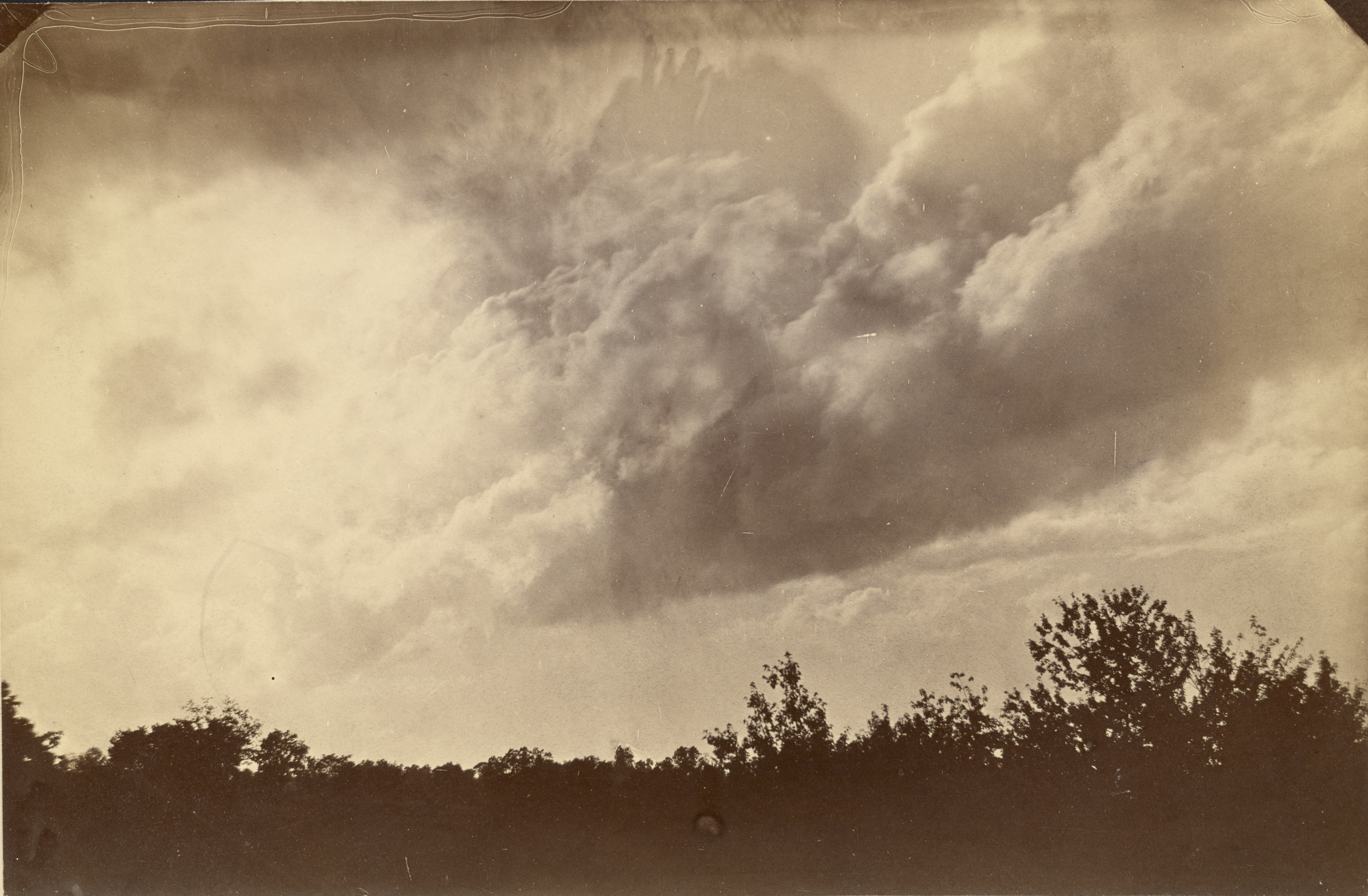
Image Credit: “Cloud study” Unknown maker, American. Digital image courtesy of the Getty’s Open Content Program.

James Diaz: “Lake Origin”

.

.

Lake Origin 

We all have our processes of abandon
Shake a leg
They say
Get a move on
whatever it is
Waiting for us tonight
Can’t be good if it’s a thing you have to rush to
We all have our slow arrivals

Tenderness was a word my mother never used
You couldn’t frighten a boy with tenderness
Could not break a bone with a word
Way you could with something solid

Hit me, my father says
To a man in the deep dark of a trailer
His arm tied off
And ready for a taste of God

Are you ready yet
We’ve a ways to go
Before you can tell the story differently
It’ll take some doing
Rough haul, this

There is no way to know
The weight of what you carry
Until you set it down.

.

.

About the Author: James Diaz is the author of This Someone I Call Stranger (Indolent Books, 2018) and All Things Beautiful Are Bent (Alien Buddha Press, 2021,) as well as the founding Editor of Anti-Heroin Chic. Their work has appeared most recently in Cobra Milk Mag, Bear Creek Gazette, Negative Capability Press, Line Rider Press and Resurrection Mag

.

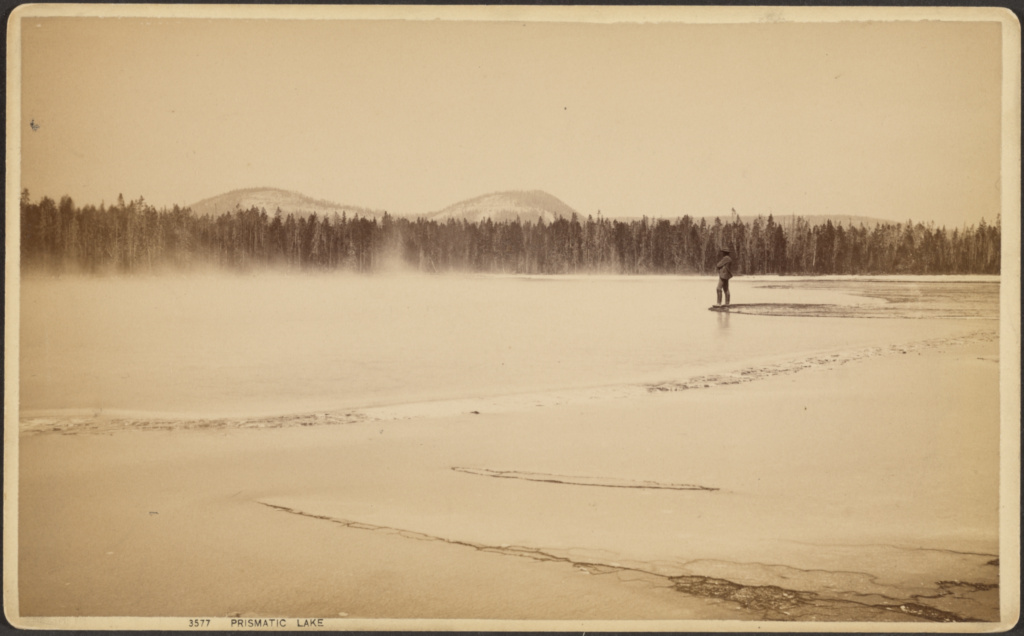
Image Credit: Frank Jay Haynes, “Prismatic Lake” (1881–1889) Digital image courtesy of the Getty’s Open Content Program.

Kelley White: “Why have you made the church so cold?”

.

.

.

Why have you made the church so cold?

The brilliant jewels from your stained glass
clock past my pew. They glow
distant. I try to remember color and light.

Darkness.
You make me remember Stephanie.
Who tried so earnestly to balance on her one foot.
To reach and follow my finger.
Whose eyes stayed crossed.
Cerebellum, tumor.

This could be her grandfather’s church.
The cold steel of the organ.
Her frilled petticoats.
Her too new shoes

Here is my seeking pride at making that diagnosis.
That I spoke the tumor that stole
her balance and sight.

And here is Michael.
Red, blue and yellow falling on my cold arms, crossing my face.
Michael, the brother born to her mother three years after
she slipped into birdsong, held and bathed.

Michael, who leaps, tosses his ball, hops, and counts by sevens.
Who says MaMa told me you knew my sister
You have her picture
Will you show me?

Is this my gift?

.

.

About the Author: Pediatrician Kelley White has worked in inner-city Philadelphia and rural New Hampshire. Her poems have appeared in Exquisite Corpse, Rattle and JAMA. Her recent books are Toxic Environment (Boston Poet Press) and Two Birds in Flame (Beech River Books). She received a 2008 Pennsylvania Council on the Arts grant.

.

Image Credit: Jack E. Boucher ” Sept 1966 DETAIL OF PEW – Trinity Church (P. E.), 651 Pequot Road, Southport, Fairfield County, CT”. Image courtesy of the Library of Congress.

R.T. Castleberry: “Just to Waste the Morning”

.

.

.

Just to Waste the Morning

Too early for dogs barking,
for the train’s rolling whistle,
the sun is seized by night’s glassy course.
November rattles the sidewalk’s seam,
studio apartment windows above
a winter-shuttered pool.
Mealy apple, day old doughnuts for breakfast,
I’ll spend the day finding
the cheapest copy of a desired book,
a match for a print lost to breakup.

Stepping past grapefruit, dropped
and rotting on the sidewalk,
I wear a Bosque Redondo tourist tee
under a German greatcoat,
a twelve dollar haircut beneath a newsboy cap.
Unsteady on the landing,
optical illusions of cracked stone,
pebbled strip, rusty wrought iron
trip me up.
The clinic doctor’s instructions
rattle my last nerve.
Addresses and keys in hand,
like Son House striding his blues pony,
I’ll slake my sorrows in collection remains.

.

.

About the Author: R.T. Castleberry is a widely published poet and critic. His work has appeared in Roanoke Review, Trajectory, Blue Collar Review, White Wall Review, The Alembic and Visitant. Internationally, Castleberry’s work has been published in Canada, Wales, Ireland, Scotland, New Zealand and Antarctica. Mr. Castleberry’s work has been featured in the anthologies, Travois-An Anthology of Texas Poetry, The Weight of Addition, Anthem: A Tribute to Leonard Cohen and You Can Hear the Ocean: An Anthology of Classic and Current Poetry.

.

More By R.T. Castleberry:

Down Cold Lanes

July, Roadhouse Dinner

.

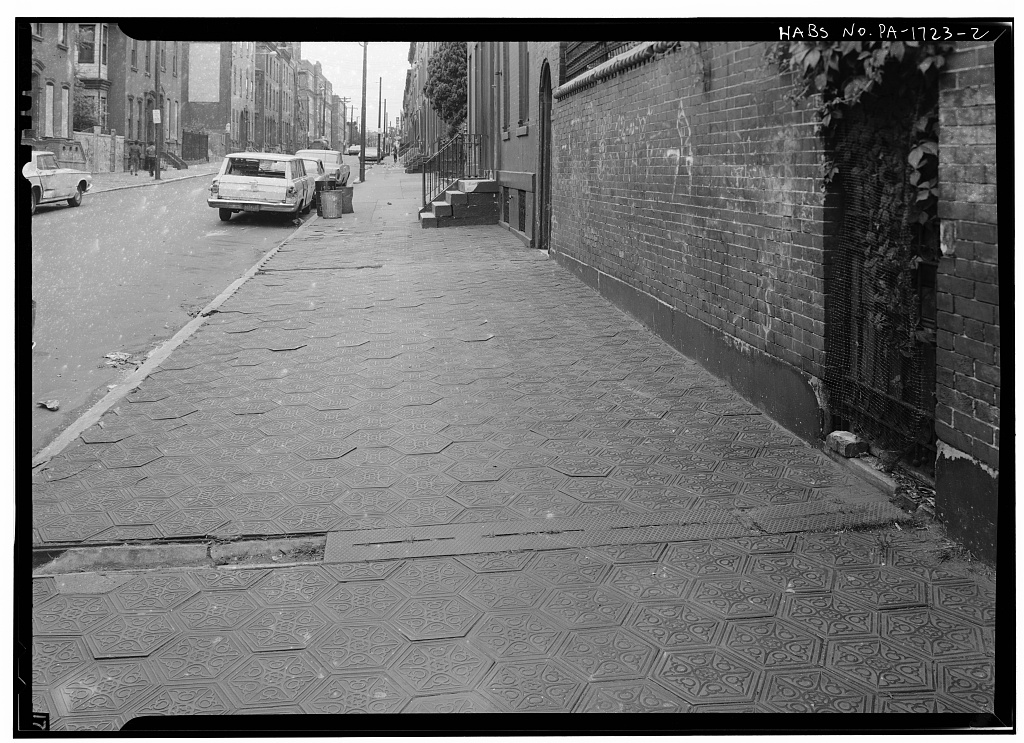
Image Credit: ” VIEW OF SIDEWALK SHOWING IRON TILES – Cast Iron Sidewalk, 1907 North Seventh Street, Philadelphia, Philadelphia County, PA” The Library of Congress

Susan Cossette: “She Waits Behind the Drapes”

.

.

.

She Waits Behind the Drapes
-after Edvard Munch


Gaslit shadows from St. Cloud Street slip through the windowpane.
Unannounced, pecking at her bruised feet.

The otherness has begun.

Hallowed room bathed in crepuscular light,
Occupied only by shadow and impossible stillness. 

The nurses feed her warm chicken noodle soup,
Record vital signs.

She imagines her daughter lying beside her,
Warm breath, soft cheek.
The child remembers things she can no longer.
Grilled cheese sandwiches and tomato soup,
Christmas mornings, drinking warm cocoa after ice skating.

The child is 1,368 miles away.
In her mind,
She is there—
A responsible mourner in training.

Prepared to face the menace,
Prepared to let the dead enter her,
A living organism of memories.

.

.

About the Author: Susan Cossette lives and writes in Minneapolis, Minnesota. The Author of Peggy Sue Messed Up (2017), she is a two-time recipient of the University of Connecticut’s Wallace Stevens Poetry Prize. Her work has appeared or is forthcoming in Rust and Moth, Vita Brevis, Adelaide, Clockwise Cat, Anti-Heroin Chic, The Amethyst Review, Ariel Chart, Poetica Review, Crow & Cross Keys, Loch Raven Review, and in the anthologies Tuesdays at Curley’s and After the Equinox.

.

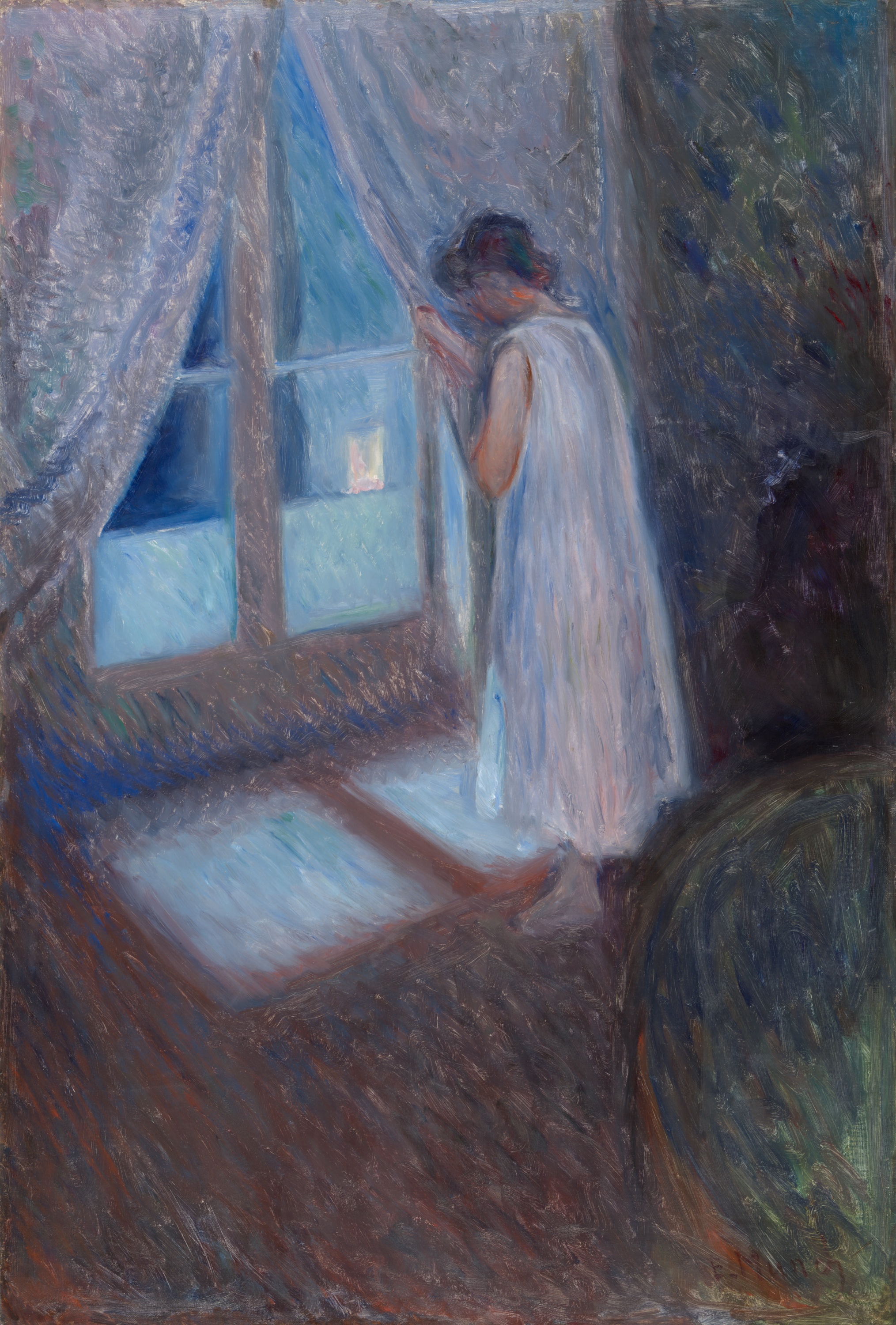
Image Credit: Edvard Munch. “The Girl by the Window,” (1893). The Art Institute of Chicago. Public Domain


Gale Acuff: “Die and you go to Heaven or Hell says”

.

.

.

Die and you go to Heaven or Hell says

our Sunday School teacher so I raise my
hand and ask What if I live forever
and my classmates laugh and I join them but
I’m a hypocrite, I was serious, don’t
tell me that no one out there in the world
hasn’t or maybe even isn’t, some
-one’s as old as the hills of Granny’s chest
or even older, Methuselah-old
but a lot more than that and I wonder
if that could be our teacher, too, she looks
25 but you never know and then
she says Gale, don’t be silly–now please
lead us in the Lord’s Prayer. God damn it.

.

.

About the Author: Gale Acuff has had poetry published in Ascent, Chiron Review, McNeese Review, Adirondack Review, Weber, Florida Review, South Carolina Review, Carolina Quarterly, Arkansas Review, Poem, South Dakota Review, and many other journals. He has authored three books of poetry: Buffalo Nickel (BrickHouse Press, 2004), The Weight of the World (BrickHouse, 2006), and The Story of My Lives (BrickHouse, 2008).

Gale has taught university English in the US, China, and the Palestinian West Bank.

.

More by Gale Acuff:

Rub

.

Image Credit: Ben Shahn “Sunday school, Penderlea Homesteads, North Carolina” (1937) Public Domain photo courtesy of The Library of Congress