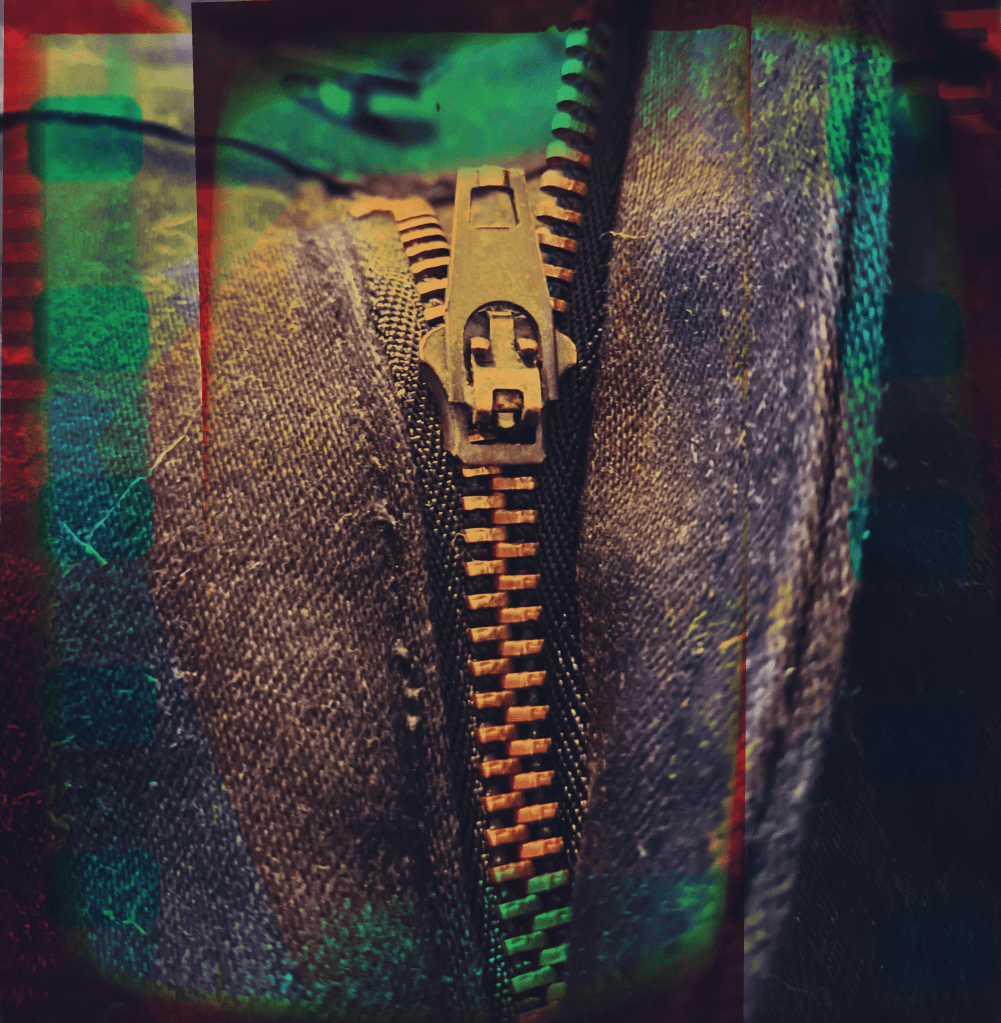
W-D 40™


can of handy
man-

thing
lubricating zippers

awfully
fishy

loosening gears
loosening

sockets and prosthetic
missiles

removing
lipstick

from sticky
indiscretions
About the Author: Kathleen Hellen’s collection Meet Me at the Bottom is forthcoming from Main Street Rag. Her credits include The Only Country Was the Color of My Skin, her award-winning collection Umberto’s Night, published by Washington Writers’ Publishing House, and two chapbooks, The Girl Who Loved Mothra and Pentimento. Featured on Poetry Daily and Verse Daily, her work has appeared in Arts & Letters, The Carolina Quarterly, Cimarron Review. Colorado Review,Massachusetts Review, New Letters, Nimrod, North American Review, Prairie Schooner, Salamander, The Sewanee Review, Southern Humanities Review, Subtropics, The Sycamore Review, Tampa Review Online, West Branch, and Witness, among others. Hellen’s awards include the Thomas Merton poetry prize and prizes from the H.O.W. Journal and Washington Square Review, as well as individual artist awards from the Maryland State Arts Council and the Baltimore Office of Promotion & the Arts.
Sturm and Drang

You start a poem the same way
My father-in-law lit the grill.
Fill a brown paper grocery bag
With a whole measure of briquettes.
Soak the bag and contents
With a liberal amount
Of lawnmower gas.
Set the bag in the middle
Of the round grill top.
From daringly close distance
Toss a lit wooden match
Onto the gas-soaked bag.

My oldest son at four
Watched the explosion
From a guarded distance:
Frightened, thrilled,
Fighting back tears.
It was the first time
He’d seen poetry.
About the Author: A past winner of the Jim Harrison Award for contributions to baseball literature, Tim Peeler has also twice been a Casey Award Finalist (baseball book of the year) and a finalist for the SIBA Award. He lives with his wife, Penny in Hickory, North Carolina, where he directs the academic assistance programs at Catawba Valley Community College. He has published close to a thousand poems, stories, essays, and reviews in magazines, journals, and anthologies and has written sixteen books and three chapbooks. He has five books in the permanent collection at the Baseball Hall of Fame Library in Cooperstown, NY. His recent books include Rough Beast, an Appalachian verse novel about a southern gangster named Larry Ledbetter, Henry River: An American Ruin, poems about an abandoned mill town and film site for The Hunger Games, and Wild in the Strike Zone: Baseball Poems, his third volume of baseball-related poems.
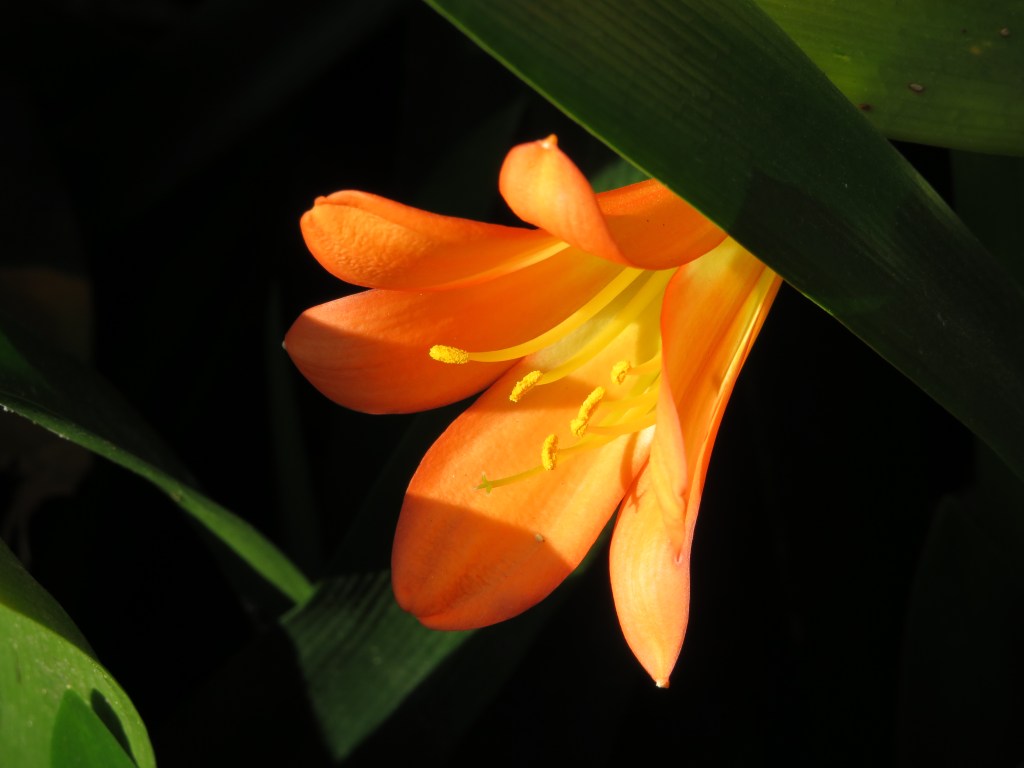
Stargazers

Lilies strain from the mouth
of the vase by the window, open

their throats to the sky, stretching
toward the accumulation of clouds,

furred stamens powdered red
as starling’s blood. The shadows

of the room, the scent of
perfume heavy as tomorrow’s end

held in stasis for seven steady
days as stems collapse in secret

and leaves transmute to slime.
In this world of sorrow and of loss

all things must fail, must come to moss
and murder, must disintegrate

in damp and dust. And we must
open our throats, and swallow.
About the Author: Ruth Bavetta’s poems have appeared in North American Review, Nimrod, Rattle, Slant, American Journal of Poetry, and many other journals and anthologies. She likes the light on November afternoons, the music of Stravinsky, the smell of the ocean. She hates pretense, fundamentalism and sauerkraut.
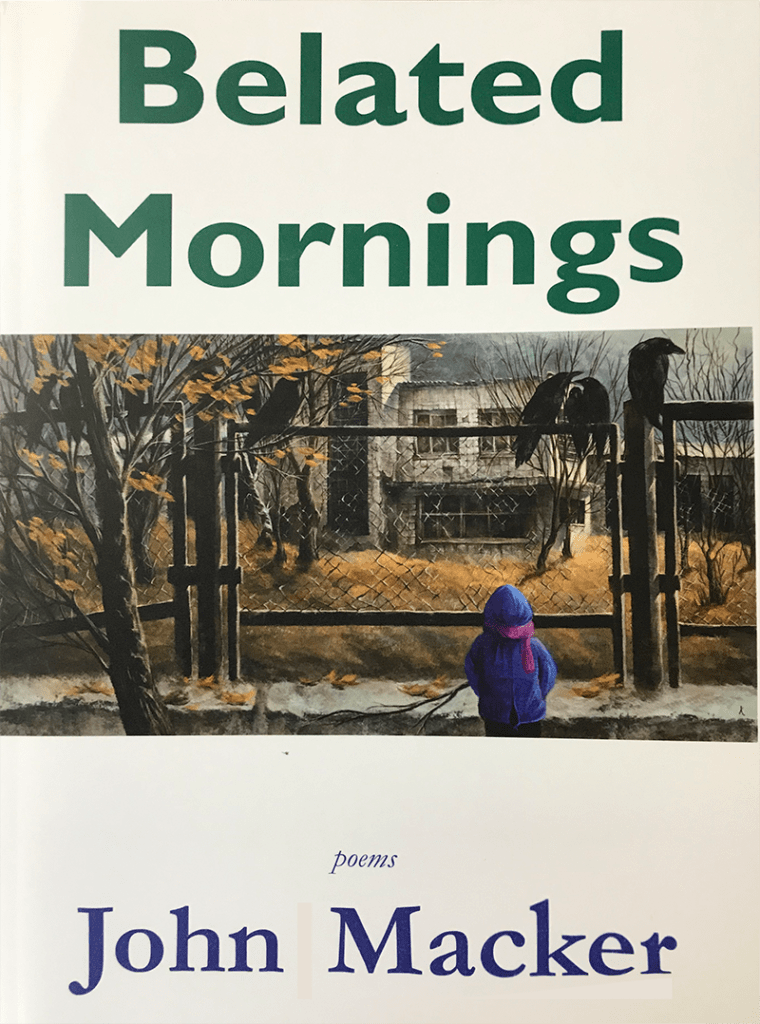
A small book, filled with large poems. I don’t mean the poems take up physical space, they take up brain space. Each one needs to be read, cogitated, chewed, swallowed, and digested, starting from the books’ epigraph, “That is my profession. / I am an archaeologist of morning.” —Charles Olson.
Our odyssey begins with Indian Summer, “Autumn as much a notion as it is / warm day, wind-drawn red crayon / moon above the canyon in slow motion, / a crisp yellow leaf afloat in its singularity / flows down a shadowed stream / into the Roaring Fork, is peace”
Macker takes us through mornings as night becoming light and mornings of memory. We are brought into the confessional in places, as he tells us about his first confession in the poem, St. Louis Blues.
Every poem is a picture, every poem has language and lines that resonate, biophilia ends with, “or hosanna Greta Thunberg’s name / in the church of feral light” and solstice ends with “I fear the longest night of the year / will last until spring” Oh, how many times have I thought that, only without such simple beauty!
The title poem, Belated Morning is a showstopper. “Last night starry-eyed blue whales / swimming over a yellowed desert appeared” and later, “…if you / don’t shine your morning light on the world / you aren’t listening, you aren’t breathing /”
These poems are musical, and accessible to anyone who wants a good story. One does not have to dig deep into hidden meaning and metaphor, one can simply read, and the best way to read any poem is to read it out loud! These poems stopped me several times, just for the sheer beauty of the words and the image they convey.
Stars Born Reaching begins “A rare hard rain at night on a flat / roof sounds like a jazz drummer’s / wet dream or palpitating steps late for / a flight…” I had to stop and remember all the times when it would rain and my grandfather and I would grab a book and go out to the travel trailer, stretch out and read until we went to sleep. And how many times I had to run to catch a connecting flight at the other end of the airport!
The book ends with the gentle hours. A gentle poem in Macker’s kitchen as he’s up and “shedding the shortened sleep” The last words, the words he leaves us with are words we can all hear in our minds, lean back in the chair with a cuppa, and cogitate, no matter our age. “…At my age I / become something I’m not all over again / and it fits me like a glove. Fate is a direction / that won’t let me lose my way.”
I recommend this book to any lover of poetry, as well as those who aren’t quite sure about poetry. Buy this book, it will be a treasure to read and a beacon on your bookshelf reminding you to live—and enjoy your mornings, no matter how you find them.
To purchase this book, please contact the author, John Macker at mackerjohn@yahoo.com. The cost is $10.00 plus s/h of $3.50.
About the Author: Lenora Rain-Lee Good, a Vietnam-era veteran of the WAC was born & raised in Portland OR and now lives in Kennewick, WA. Lenora is the author of three and a third published books of poetry—Blood on the Ground (Redbat Books, 2016), Marking the Hours (Cyberwit.net 2020), and The Bride’s Gate and Other Assorted Writings (Cyberwit.net, 2021). She co-authored Reflections: Life, the River, and Beyond(KDP 2020),with Jim Bumgarner and Jim Thielman, hence “the third.” She may be reached through her website https://coffeebreakescapes.com
Quotations


1.
As a boy in a small village
In the shadow of a short mountain
I asked an old man
The very oldest I knew
Why the world is the way it is.
He told me, “It was always like this.
Even on the first day.”

2.
 An insomniac friend confided,
“I fall asleep quickly if someone
Is watching, attentively.
That’s the only thing
That works. My first wife
Thought it sweet for
A few years.”

3.
One woman to another
In a check-out grocery line:
“I don’t know what he wants
From me, except
That one thing.

Lately, I think
His heart is a fist.”

4.
After a few drinks
Talk turns to
Nightmares.
Recent ones with dog teeth.
Childhood ones which never left.
           “Some dreams wake me up
When credits roll at the end.”

5.
“I’m afraid,” she says,
“I’m always afraid. I think about
Calling on angels for help. Then I remember
I don’t know one angel’s name.”
About the Author: Mike James makes his home outside Nashville, Tennessee. He has published in numerous magazines, large and small, throughout the country. His poetry collections include: Leftover Distances (Luchador), Parades (Alien Buddha), Jumping Drawbridges in Technicolor (Blue Horse), and Crows in the Jukebox (Bottom Dog.) In April, Red Hawk published his 20th collection, Portable Light: Poems 1991-2021.
The History of Rivers

a car with one headlight
bobs and weaves its way through the mud
looking for a pair of missing glasses
what good are they anyway
we can never see where we’re going
only where we’ve been
floods of emotion like this
are only supposed to happen once a century
but we can’t see our way past the rocks
everything only seems to come into focus
after we get out of the water
& raise a glass to the spirits
resting in capsized riverboats
that you’ll never find squinting in the sunlight
listening to the words of that lonesome whippoorwill
singing some far fetched river song.
About the Author: John Dorsey lived for several years in Toledo, Ohio. He is the author of several collections of poetry, including Teaching the Dead to Sing: The Outlaw’s Prayer (Rose of Sharon Press, 2006), Sodomy is a City in New Jersey (American Mettle Books, 2010), Tombstone Factory, (Epic Rites Press, 2013), Appalachian Frankenstein (GTK Press, 2015) Being the Fire (Tangerine Press, 2016) and Shoot the Messenger (Red Flag Poetry, 2017),Your Daughter’s Country (Blue Horse Press, 2019), Which Way to the River: Selected Poems 2016-2020 (OAC Books, 2020), Afterlife Karaoke (Crisis Chronicles Press, 2021) and Sundown at the Redneck Carnival, (Spartan Press, 2022).. His work has been nominated for the Pushcart Prize, Best of the Net, and the Stanley Hanks Memorial Poetry Prize. He was the winner of the 2019 Terri Award given out at the Poetry Rendezvous. He may be reached at archerevans@yahoo.com.
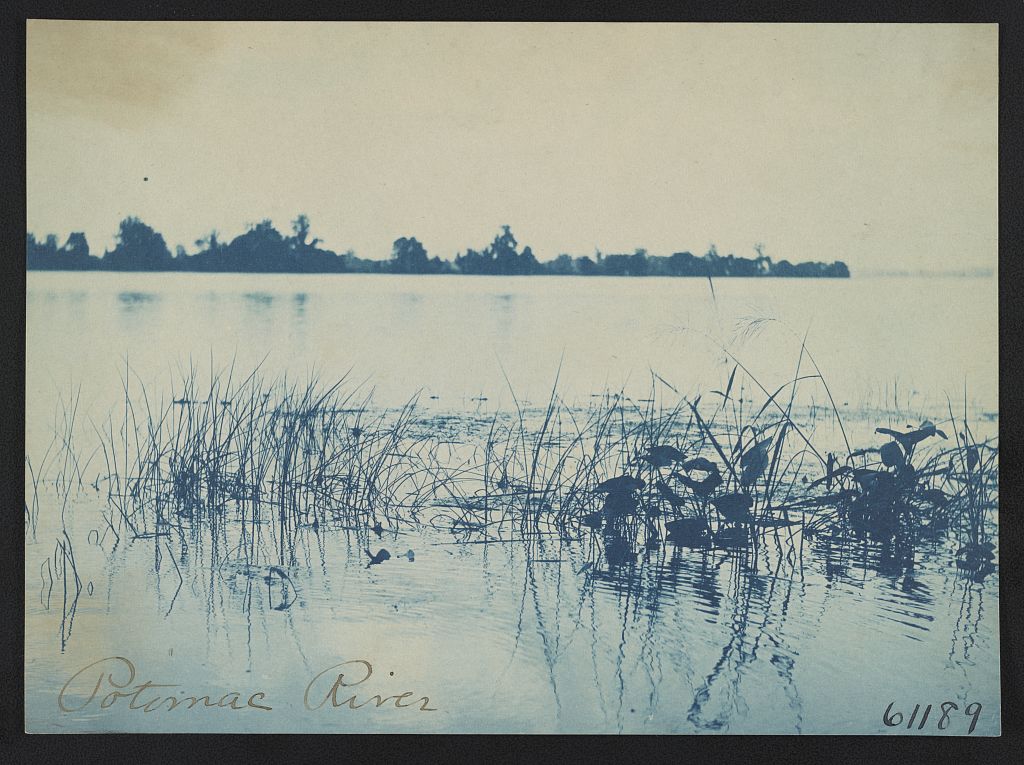
Image Credit: Frances Benjamin Johnston “Potomac River” (1898) Public domain image courtesy of The Library of Congress
A Thread of Winter


sun sends frost into the grass and soil
wind is waiting for the dog to drop the ball

those late night moments when a stretch of freeway
is empty and resents the next vehicle that comes through
but the road can’t change fast enough to assert its will

other times the freeway is so full and heavy
nothing moves and the earth beneath it
dreams of being a river and swimming inside itself

as the river knows without dreaming that
for much of winter, several threads of frozen water
tangle through it, unable to cohere or slow anything

yes heat rises, but in winter cold starts at the top
walking to and from high school in winter, i could
generate heat in the center of my chest and have it
flow outwards, never spent enough time in heat
to generate cold, or a wind that trickles out my pores
not breath, a snack I can walk through
legless walking, how this body could fly
and land safely

what if our solar system was too hot
and we needed the opposite of the sun
to make earth cool enough to live on

what if the only places to live on this planet
were at the equator, what new ways
would we divide time, how would we
vary our wardrobes, what would be
peak vacation times, our birthdays
would be our personal new years

what if the only places to live on this planet
were at the equator, would I get adventurous
or systematically imaginative
About the Author: dan raphael’s poetry collection In the Wordshed will published by Last Word Press this November. More recent poems appear in Fireweed, Trampoline, Rasputin, Haight Ashbury Literary Journal and Unlikely Stories. Most Wednesdays dan writes and records a current events poet for The KBOO Evening News.
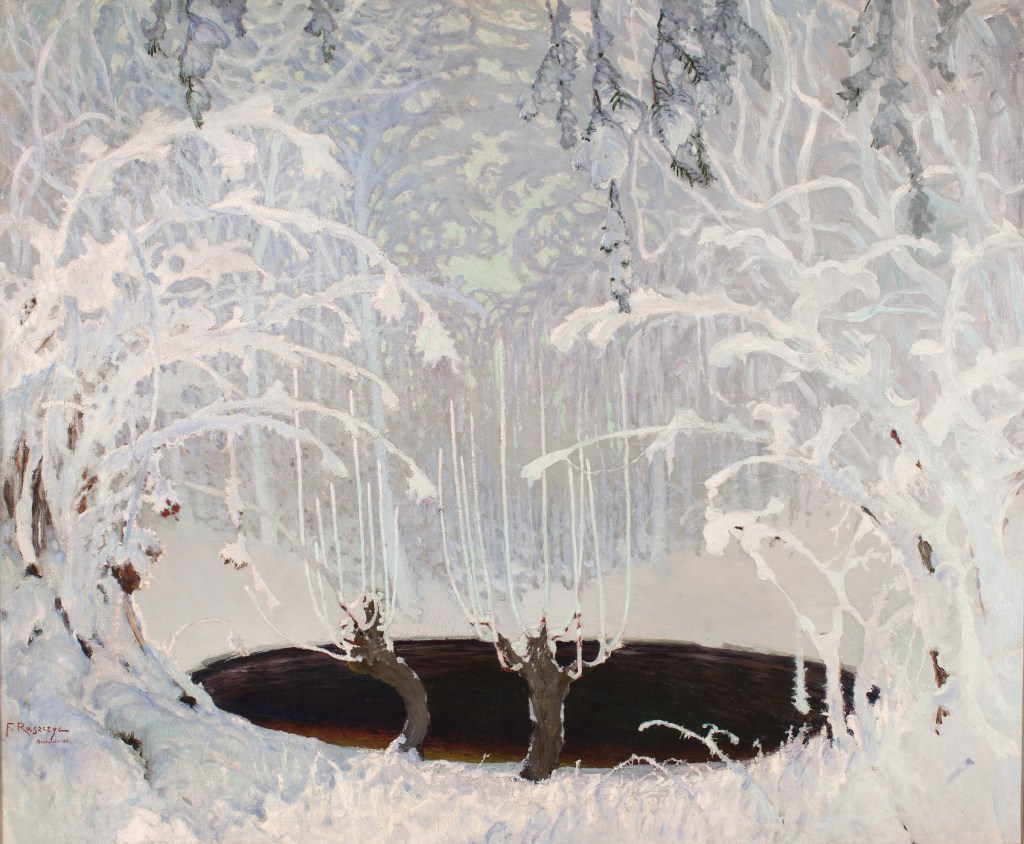
Image Credit: Ferdynand Ruszczyc “Winter Tale” (1904) Public domain image courtesy of Artvee
Anthropomorphic Junkyard

Frigidaires, washers, dryers & sinks
lay side by side, on top, or beneath

water heaters, ovens, bar-b-cue pits
& microwaves—some of them

waste away, relenting a lifetime
without celebrity or a past beyond

energy efficiency—utility taken
for granted unless natural gas lines break,

electric coals burn out, or freon pipes
leak; gloved hands load imperfect devices

in truck beds, trailers & trunks— toss them
sans ceremony: brusquely, rudely, callously

smashed by buckets, crushed under backhoe
wheels, picked up and dropped in heaps

that creak as sunlight heats & expands metal
wail as wind passes through hanging glass doors

sheltering rats day & night, providing refuge
from feral dogs & cats always on the chase

untamed creatures appreciative of blazing sky shade,
predatory animal protection, a rain & snow sanctuary

before transfer stations load rubble & dispose it
in empty asbestos mines at the earth’s core.
About the Author: A Washington-based author, educator, and Pushcart nominee for poetry, Warner’s works have appeared in many international literary magazines, journals, and anthologies such as Street Lit., The Ekphrastic Review, Anti-Heroin Chic, The Fib Review, and Sparks of Calliope. Warner also has written seven volumes of poetry, including Without Wheels, ShadowCat, Memento Mori: A Chapbook Redux, Edges, Rags & Feathers,Serpent’s Tooth, and Flytraps (2021)—as well as. Masques: Flash Fiction & Short Stories. Currently, he writes, hosts virtual poetry readings, and enjoys retirement.
Newspaper On Rainy Day

Woven. The news today is a patchwork of a human breath.
Rivers swell with rain. The boughs of timber steadily clap.

In the wetted dulcet, flumes break then wilt. A denouement
occurs in the pulling on of seagreen socks. Toes push.

Flash! Animation to filament. Tungsten and argon converge
dancing as spindly mayflies in rapid mating before death.

Following the taut yarn to each end; “Engineers say Boeing
Managers pushed to limit safety tests”; “Shoreline man gets

55 years for exploiting girls online”; to another string, alas;
“Man burned at White House”; “Lots of little bits of plastic

wind up inside us”; “Opioid crisis comes to school”. Regret.
Doubt. Concentrate the emotion until the bulb pops black.

The window cascades a drumming, an imbroglio of sounds.
Susurrous and murmurous. Tinkling. A howl rushes by inured

to the violence of people performing. The yowl expounds.
Torrents, arid scapes. Waters lurching and trees aflame.

Paste the clippings along the wall and try to oust the ghosts.
Veiled, bucolic odors of the immediate world start to return.

Circling insects. Droplets begin short burps and gulps.
The ink and paper seem to decompose, life is recontained

in the light seeping, in the bright outdoor backdrop rolling
out a dewy virescent carpet—how cold was the island there?

That past, where I concluded nothing but rapacity and cloud?
Soil in the bed, I make way to the hillside of things rising.
              “Woman wakes after 27 years unconscious”.
About the Author: Renwick Berchild is half literary critic, half poet. She is lead editor of Green Lion Journal and writes at Nothing in Particular Book Review. Her poems have appeared in Porridge Mag,Headline Press, Whimperbang, Free Verse Revolution, Vita Brevis, Streetcake, and other e-zines, anthologies, and journals. She was born and raised on the angry shores of Lake Superior, and now lives in a micro-apartment in Seattle, WA. Find more of her work at www.renwickberchild.com
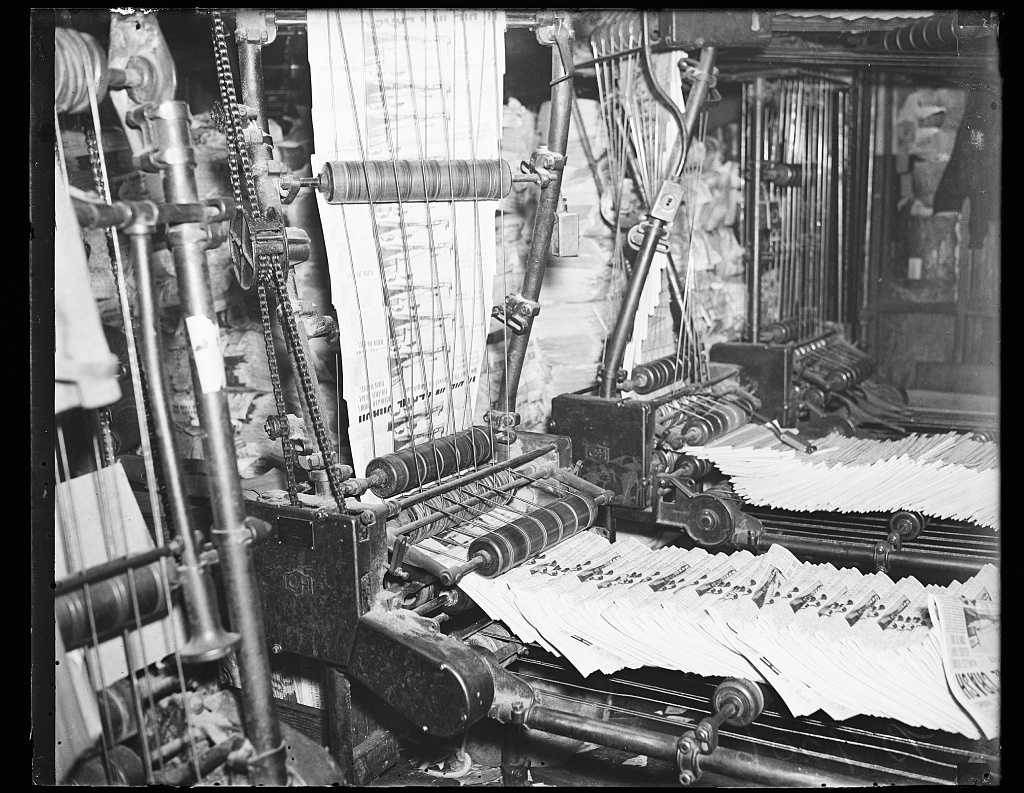
Image Credit: Harris & Ewing “Newspapers coming off press” (1936) Public domain image courtesy of the Library of Congress
VALLEY OF THE DOLLS

The town I came from was in the middle
of nowhere. It was a small farming
community until the locusts showed up.
I suppose you’d call us a tight knit bunch—
we knew what hour it was by the colors we wore,
and we didn’t follow Daylight Savings Time
because it was the work of the devil.
In other words, we were a god-fearing people
but we only believed in the fear part,
and we might have been patriotic but
had no idea what country we lived in.
We loved our children, though we knew
their picnics were really for the yellow jackets.
Adult parties we saw as soap operas
decaying from conviviality to terror.
We had our ups and downs, booms and busts.
There was the time the birds decided
to attack us like they did like in the movie—
we couldn’t have cared less. We were that
kind of town. Our library was a point
of civic pride but the head librarian
kept our dirty fingers away from the books.

In the town square we erected statues
to the unknown soldier, the unknown
conscientious objector, and the unknown
guy in a recliner who doesn’t give a fuck.
And, boy, did we like our drugs or what?
We had parades on holidays. You can
take a wild guess how we handled that.
When you moved away the whole town
gathered at the train station to say good-bye
and warn you to never come back.
There was a rumor that’s where Thomas Wolfe
got the idea for the title of his book.
Fact is, Thomas Wolfe never heard of us.
Of course, people are the same everywhere:
badly carved marionettes jerked about
by a drunken, spastic puppeteer.
I guess looking back it seems kind of idyllic
compared to what I woke up to today.
About the Author: Michael Gushue is co-founder of the DC-based nanopress Poetry Mutual Press. He curates the BAWA poetry reading series in the Brookland and Capitol Hill neighborhoods of DC, and writes the Vrzhu Press poetry & arts blog, Bullets of Love. His books are Pachinko Mouth (Plan B Press), Conrad (Silver Spoon Press), Gathering Down Women (Pudding House Press), and—in collaboration with CL Bledsoe—I Never Promised You A Sea Monkey (Pretzelcoatl Press). He lives in the Brookland neighborhood of Washington, D.C.
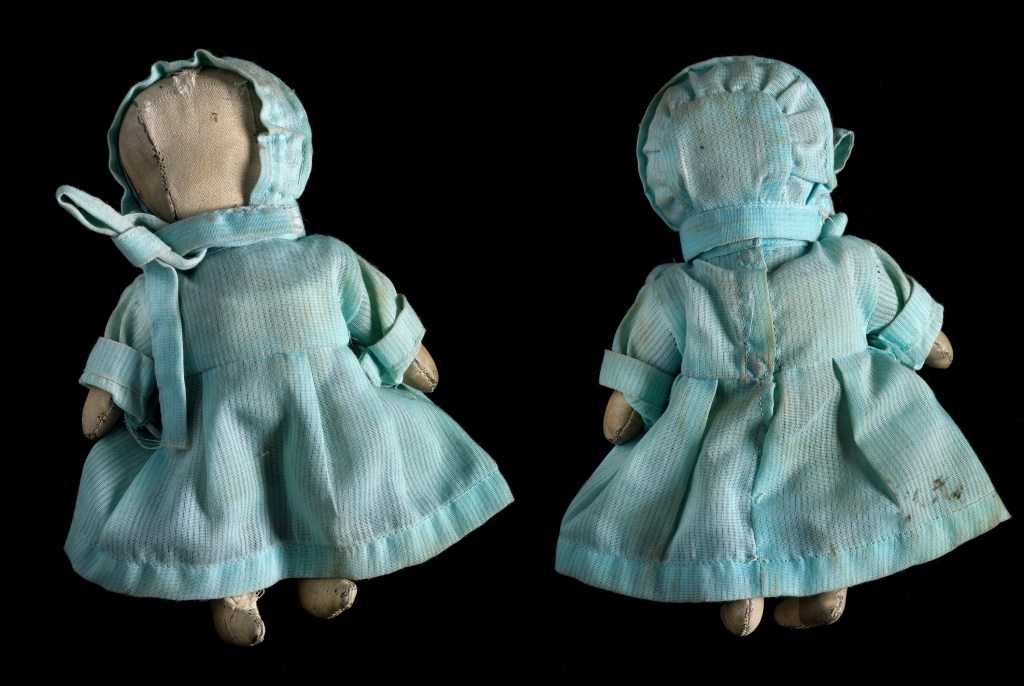
Image Credit: Untitled (Amish Doll) Public domain image courtesy of the Smithsonian American Art Museum, Gift of Patricia Sue Smith
 As It Ought To Be