“Dolly Floats” By Stephen Roger Powers


Dolly Floats

              2012

Pigeon Forge raised Dolly
up on eagle’s wings, and she flew
on those wings of an eagle while
the eagle stared down its nest at the front of the float
and followed it like a donkey after a carrot.
When the parade was over,
Dolly took the stairs through the eagle’s tail
feathers, and popped out the back
like an Easter egg.

              2013

Rocks, an inflatable dinghy, and fresco rapids
rushed forth a lifeguard station
with baywatchful Dolly waving a floatation
board and singing along to her own songs.
She lifted the hem of her red swim
skirt and blew one of the cherry
whistles sewn around it. Policemen
blocked the end where she got off,
so I traffic-sulked to Ole Smoky
Distillery, where I drowned
in samples of every flavor.

             2014

Ole Smoky was the first stop this year.
The guy in overalls who gave me free
cherries sanitized his hands
with White Lightnin’. By the time
I got to the parade, I was corned
for engine-and-ladder Dolly with blazing
spangle-sparkles on her hat.
Her nieces sat with fake
fireworks at the front of the roller-coaster
float. Some of Dolly’s hair stuck
in her lipstick. She pulled it free
and blew a kiss in one motion.

             2015

Dreams came true when Dolly, garnished in red
with gold trim, jack-in-the-boxed from a cake,
her great big yellow wig a flaming candle.
Her beefcake bodyguard hollered at the drone following.
It hovered off backwards like a scared puppy
because she posed her arms at it spread wide
for a picture. Sometimes I wonder if she gets tired
of waggling her hands this way, then that,
this way again, that way again.

            2016

My Tennessee cousin, some unknown
number of removes, called my new
Dollywood Gold Pass a roller coaster license.
The woman working the photo
booth took my picture for it a half-smile,
wind-disheveled second before I was ready. Six o’clock,
out paraded laced-up Dollyized lumberjack boots,
icepick heels more honed than usual. Dolly’s fashion
assistant fastened a seatbelt around Dolly’s waist.
A gristmill float or a riverboat float?
Depends how you looked at the paddle wheels
turning on each side. Blue and white
streamers were fluttery water fill-ins. Either way,
Dolly sat high enough to mark twain.

            2017

Antibiotics pinholed my right hip.
“If I take it easy do you think I could
go to Pigeon Forge on Friday
for Dolly’s annual parade?”
“No.”
Steroids pricked my left hip.
“But you don’t understand—”
“Absolutely not.”
No Dolly Parton on account of doctor’s orders.

             2018

Four months in advance Dolly
announces after 32 years grand
marshaling she will step
down. Social media smells
a conspiracy, because Dolly is guilty
of having stood between Lily and Jane
at the Emmys. Cal Ripken Jr.
will ride a mountain-mural
guitar. A giant baseball will roll
behind him. Maybe next year
the resonant frequency of everyone in the
world singing a Dolly song
at once will parade Dolly
out once more.

.

About the Author: Stephen Roger Powers started writing poetry almost twenty years ago to pass time in the middle of the night when he was too energized to sleep after coming off the stage in comedy clubs around the Midwest. He is the author of The Followers Tale and Hello, Stephen, both published by Salmon Poetry. Other work has appeared in 32 PoemsShenandoahThe Southern Poetry Anthology Volume V: GeorgiaRabbit Ears: TV Poems, and Stone, River, Sky: An Anthology of Georgia PoemsHe hasnt done stand-up in a long time, but every once in a while he finds avenues for the performer he was born to be. He was an extra in Joyful Noise with Queen Latifah and Dolly Parton, and he can be seen if you know just where to look.

“Remembering the Great Flood in the Frozen Food Aisle” By Ronnie Sirmans


REMEMBERING THE GREAT FLOOD IN THE FROZEN FOOD AISLE

0 g. Zero grams: No trans fats, according
to the big numeral and letter on the label.
As I rolled my cart past the frozen foods,
I’d first read zero grams as a word: Og.
The giant who died in the Great Flood.
Or did he?  Some say this freakish ruler
accompanied the ark. His anaconda-fingers
holding tight, his oxen-calves wrapped around
any wood that would not break, his walrus-torso
pressed firmly, resisting the rough breakers.
This supercenter — tools, groceries, sundries,
scented candles and oils of deserts and tropics,
live fish for pets, frozen-boxed fish for eating —
could serve as a modern sepulcher to the king.
Did Og relate to the pachyderms? Did Noah’s
daughters swoon? Can sea elephants blow kisses?
Or did this king’s domain and lineage conclude,
not like the dinosaurs in ash, but in a deluge?

I navigate toward an open aisle
in the archipelago of checkouts,
lighted numerals above cashiers
are north stars guiding my passage.
As I wait, I think Og shows: How little
we know about some very big things.
I get lost in some sermons’ sameness.
In church this Sunday morning,
they might even talk about Noah
or the other fantastic seafarer Jonah,
but I am instead listening to the beep
as an infrared scanner says this
is the price I must pay for a case
of bottled water, so much water.

.

About the Author: Ronnie Sirmans is a digital editor for a print newspaper in Atlanta, and his poems have appeared in Gargoyle, The South Carolina Review, Tar River Poetry, BlazeVOX, The American Journal of Poetry, Deep South Magazine, and elsewhere.


Image Credit: Digital photo collage by Chase Dimock

“Creatures of Our Better Nature” By John Dorsey


Creatures of Our Better Nature

as i stop to watch the gossip of a bluebird
through a dirty glass window
i think it is november
& i’m sipping champagne
on a half built deck
in the woods
that may never get finished

just me & some lonely bluebird
fluttering our wings
like crazed teenagers
mauling each other
in front of some steamy glass sunset
on some makeout mountain
that even time
can’t look away from  

for a few seconds i am that bird
& that bird is me

& we are both beautiful here

when all at once
the sun wraps its fingers
around our throats
& begins to sing.

.

About the Author: John Dorsey lived for several years in Toledo, Ohio. He is the author of several collections of poetry, including Teaching the Dead to Sing: The Outlaw’s Prayer (Rose of Sharon Press, 2006), Sodomy is a City in New Jersey (American Mettle Books, 2010), Tombstone Factory, (Epic Rites Press, 2013), Appalachian Frankenstein (GTK Press, 2015) Being the Fire (Tangerine Press, 2016) and Shoot the Messenger (Red Flag Press, 2017). He is the current Poet Laureate of Belle, MO. His work has been nominated for the Pushcart Prize. He may be reached at archerevans@yahoo.com


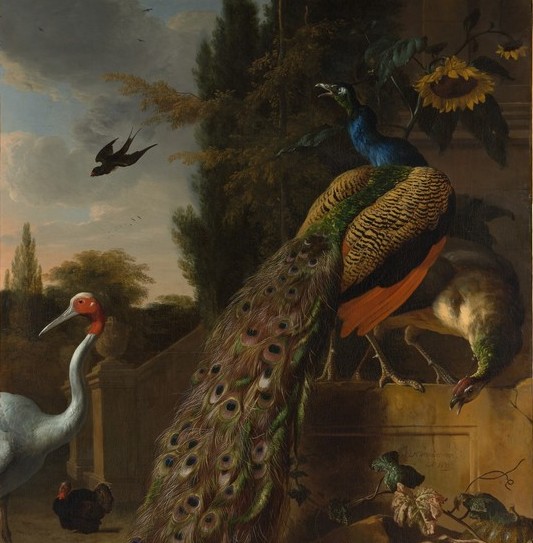
Image Credit: “Peacocks” by Melchior d’ Hondecoeter

2018: A Year in Poetry

.

2018: A Year in Poetry

By Chase Dimock


In 2018, As It Ought To Be proudly to featured astounding work by many brilliant poets. As the Managing Editor, I can say that my favorite part of the job is getting to know our contributors and building a platform for their voices to be heard. It’s an amazing privilege to work with so many talented writers. You can access an archive of As It Ought To Be’s year in poetry right here. Below are some highlights of the year by our frequent contributors.

Our Saturday Poetry Series editors Sivan Butler-Rotholz, Alan Toltzis, and Anne Graue featured some fresh voices in the world of poetry and provided insightful commentary on their work.

John Dorsey mourned with us in a remembrance of Anthony Bourdain.

Daniel Crocker summoned the Incredible Hulk to discuss bipolar disorder.

Margaret Crocker spoke volumes about the silencing of women.

Mike James gave us a preview of the ghazals in his new book and wrote a tribute to one my heroes, Paul Lynde.

Ruth Bavetta glowed in an illuminated desert

Rebecca Schumejda’s series examined the impact of incarceration on communities and families.

Bunkong Tuon contributed a series on the experience of immigrants in America.

Lynn Houston concluded a series of poems about her relationship with a veteran of the war in Afghanistan.

Tobi Alfier and Jeff Alfier both whisked us away with their travel poems and intimate landscapes.

Kevin Ridgeway transmitted the golden era of late night television

Tim Peeler wrote a tribute to one of my favorite poets, Hart Crane

Stephen Roger Powers flew us to O’Brien’s Tower on the Cliffs of Moher

Jason Ryberg ruminated on the forms and shapes poetry can take in our lives

John Sweet channeled the pain and brilliance of Jackson Pollock

Sean Karns froze a performance perfectly in time.

Roy Bentley’s pop culture compendium spanned Nosferatu, Steve McQueen, and Ringo Starr

Ryan Quinn Flanagan did the heavy lifting of the artistic process

Steve Cushman reignited the past

Jonathan K. Rice took us on a stroll down the pier

Howie Good reminded us all things are photographable.

Mike Acker charted the cracks in our cultural divisions

Lou Ella Hickman brought new perspective to the Adam and Eve story

David Chorlton explored the mysticism of relics

.

Thanks again to all our contributors from 2018. We already have some amazing poems waiting on deck for 2019. And, just as a reminder, we are always accepting submissions. Check out our contact/submit page for more information.

.

About the Author: Chase Dimock is the Managing Editor of As It Ought To Be. He holds a PhD in Comparative Literature from the University of Illinois and his scholarship has appeared in College LiteratureWestern American Literature, and numerous edited anthologies. His works of literary criticism have appeared in Mayday MagazineThe Lambda Literary ReviewModern American Poetry, and Dissertation Reviews. For more of his work, check out ChaseDimock.com.


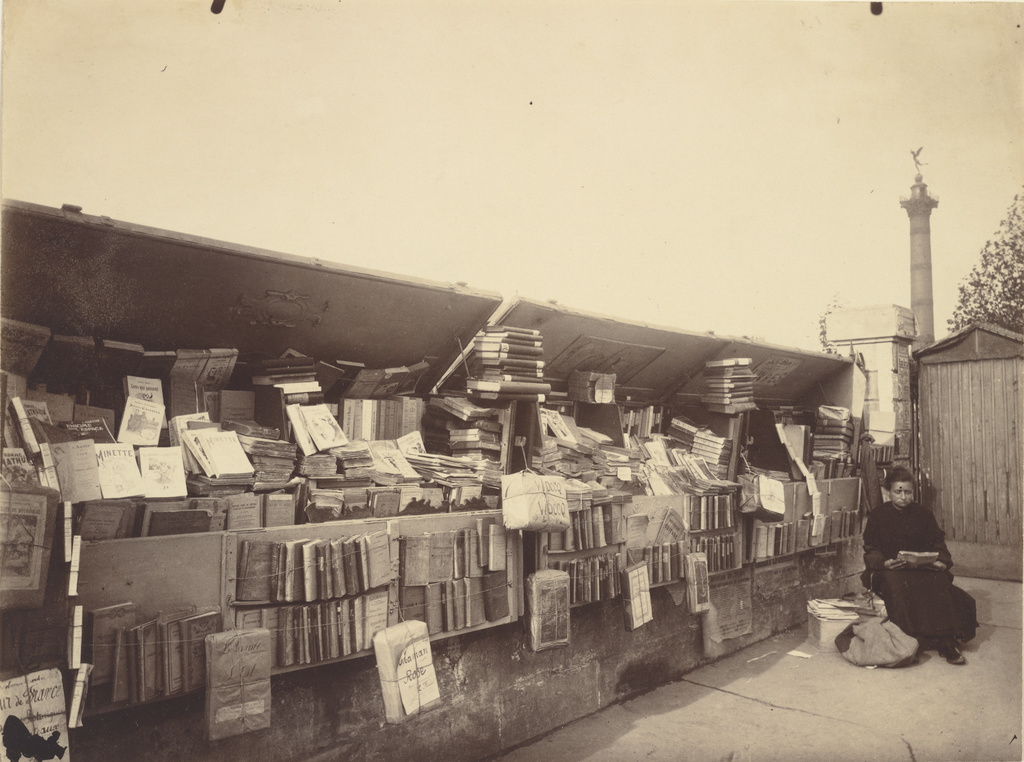
Image Credit: Eugène Atget “Place de la Bastille” Digital image courtesy of the Getty’s Open Content Program


Small Gifts

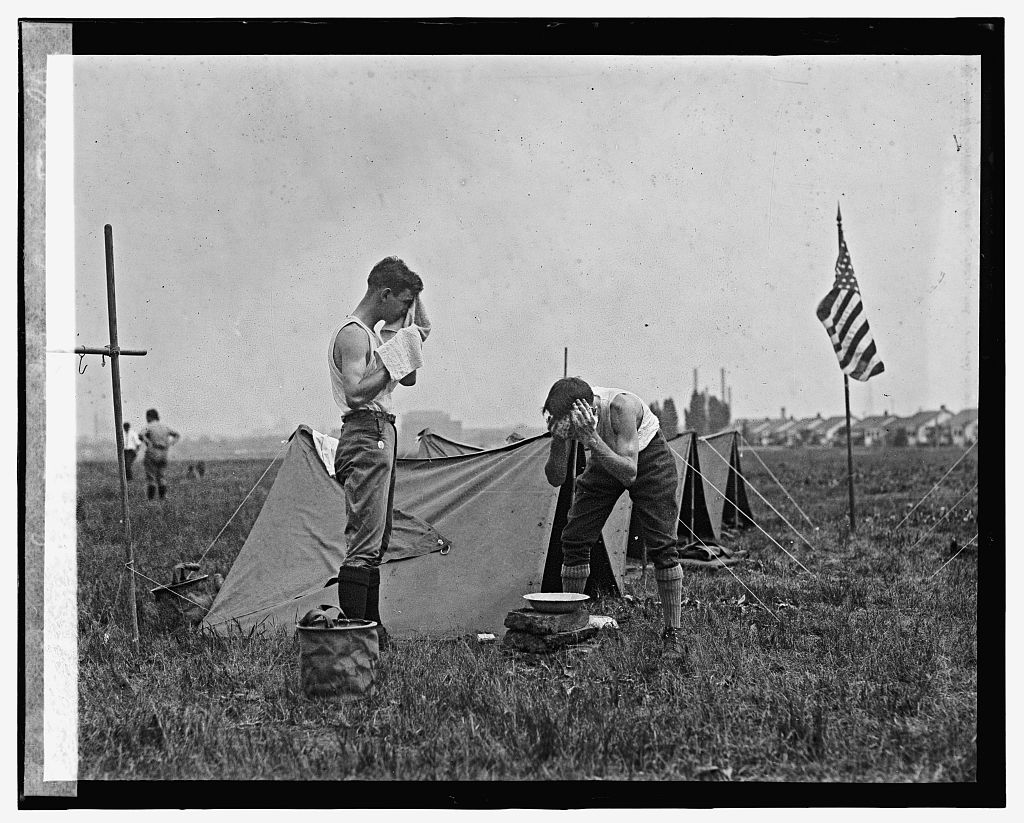
“Boy Scouts At Bowling Field” The Library of Congress

Small Gifts

By Steve Cushman


Small Gifts

She held the ball of dryer lint out for me
said this will help you start a fire.  It
was the night before my first camping trip
with my son’s Boy Scout troop.  It’s
important, she said, to appear as if you
know what you’re doing. Thanks, I said,
but what  do I do with it?  She smiled,
took me by the hand and led me outside
lit the match and touched it to the lint ball.
She didn’t say anything else, and I didn’t ask,
As we watched the flame catch and grow.

.

About the Author: Steve Cushman has published three novels, including the 2004 Novello-Award Winning Portisville.  His first poetry collection, How Birds Fly, is the winner of the 2018 Lena Shull Book Award.

First-Hand Accounts From Made-Up Places: An Interview With Poet Mike James

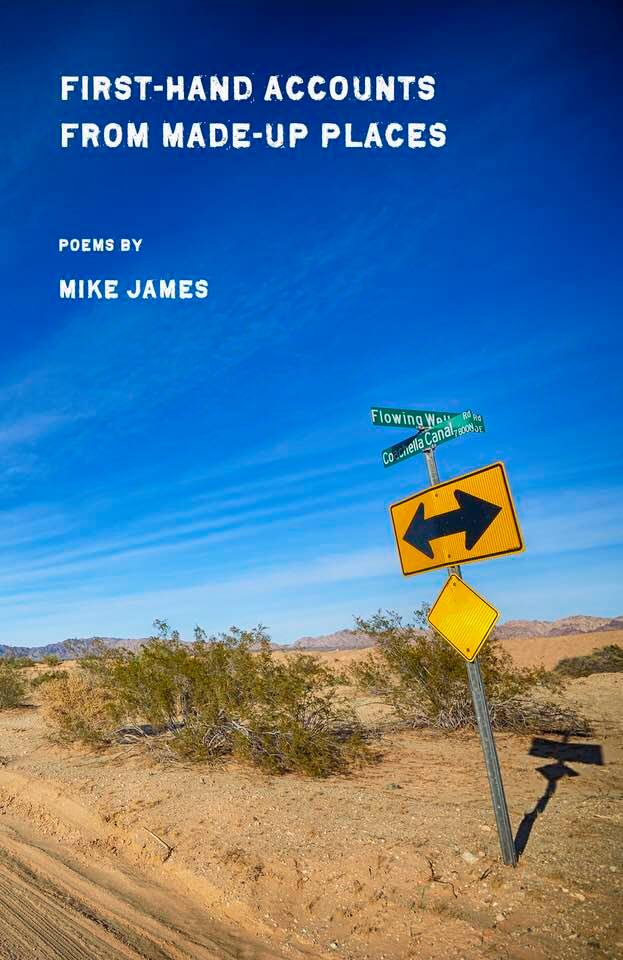
First-Hand Accounts From Made-Up Places:

An Interview With Poet Mike James

By Chase Dimock

When you read Mike James’ new book of poetry, you realize that the contradiction in the title is the intersection where his creativity dwells. For James, the most interesting subjects are those we either overlook and need to re-examine, or we deem impossible and thus need to invent. These are first-hand accounts, but Mike James has many hands. He is a cartographer of the margins, whether that means the almost-icons sitting just left of the spotlight, or the eccentricities in mainstream society you can only see if you look awry.

Take his series of poems on Grant Wood’s paintings for instance. In them, he teases out the subversive, frustrated eroticism embedded in the denim overalls of Americana. He writes about flamboyance and excess, but with an exactitude of language. At first, you think his ghazals and prose poems wander through their subjects, until you get to the destination, and then you realize he took you on a precisely planned path you had never seen on the maps. These are the made-up places we all live in, and Mike James knows the routes where the dirt roads glitter.

Chase Dimock: Anyone who has been following your work will notice that you have been extremely prolific lately with diverse interests in themes and forms. Last year, you published two books: My Favorite House Guest, a collection of prose poems about pop culture icons, and Crows in the Jukebox, which draws a lot on your family history with an almost minimalist use of language. Where does First-Hand Accounts From Made-Up Places fit into your evolution as a poet? How do its themes and forms reflect where you are as a writer and a man today?

Mike James: I have very broad tastes. I love jazz and disco, classical and country. I love action movies and documentaries. I mention this because it’s applicable in how I approach my writing. I’m always interested in what I haven’t done and I tend to really run with my passions. The musicians I truly love (Bob Dylan, Miles Davis, Arthur Russell, David Bowie) all work/worked with a wide variety of styles. That’s how I approach my writing. So many of the poets who really interest me are ones who don’t have a settled “house style”, but instead work with an expansive scope.

The new collection is divided into three different sections. The first section is a sequence of ghazals. That’s a form I’ve tinkered with for years. The ghazals were the catalyst for this collection. I wrote the sequence in order, excluding the poems I discarded, with the idea that chronology would impose a structure.

The second section is mainly free verse, mostly centered on the work of Grant Wood. The final section is prose poems which are not, mainly, pop culture centered in the way that the poems in My Favorite Houseguest are.  Prose poems are wonderful because they are so liberating in regards to subject matter and expectations. I feel like I’m a different poet when I’m writing prose poems. My prose poems tend to be a more absurdist and chattily surreal.

The new collection provides an overview of my current interests in both subject matter and technique. These poems, I hope, show a comfort level with a wide variety of themes and with a wide range of technique. On a very personal level, the biggest difference between the work I’m doing now and the work I did ten years ago is that I’m much more willing to embrace failure and to follow any squirrel up any tree.  My subjects are more open and more varied now. I’ve let go of the old concepts of the kind of poet I want to be. These days, I enjoy writing more than ever before. I’m certainly much more relaxed about the wrong turns I take. I hope that joy transfers to the reader. Continue reading “First-Hand Accounts From Made-Up Places: An Interview With Poet Mike James”

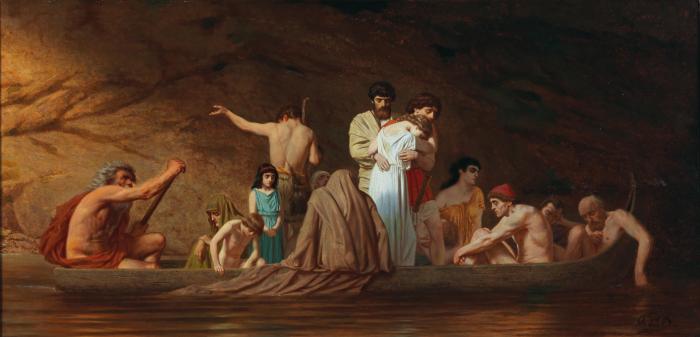
“Anthony Bourdain Crosses the River of the Dead” By John Dorsey


Otto_Brausewetter_Die_Barke_des_Charon


Anthony Bourdain Crosses the River of the Dead

& there is nothing to eat
a mouse carrying a ham sandwich died
in the corner of the room

its stomach full with pride

but that seems like centuries ago
when mice did things like that
when the outline of a young mother’s thigh
could evoke the holy spirit

when we were all the afterlife of the party

when all of our hungry closets got fed

when love danced around
every corner
of our heart

with no reservations.

.

Check out our interview with John Dorsey on his book, Letting the Meat Rest.

.

About the Author: John Dorsey lived for several years in Toledo, Ohio. He is the author of several collections of poetry, including Teaching the Dead to Sing: The Outlaw’s Prayer (Rose of Sharon Press, 2006), Sodomy is a City in New Jersey (American Mettle Books, 2010), Tombstone Factory, (Epic Rites Press, 2013), Appalachian Frankenstein (GTK Press, 2015) Being the Fire (Tangerine Press, 2016) and Shoot the Messenger (Red Flag Press, 2017). He is the current Poet Laureate of Belle, MO. His work has been nominated for the Pushcart Prize. He may be reached at archerevans@yahoo.com


More by John Dorsey:

Punk Rock at 45

Picker

Poem for Curtis Hayes


Image Credit: “Charon’s Boat” By Otto Brausewetter

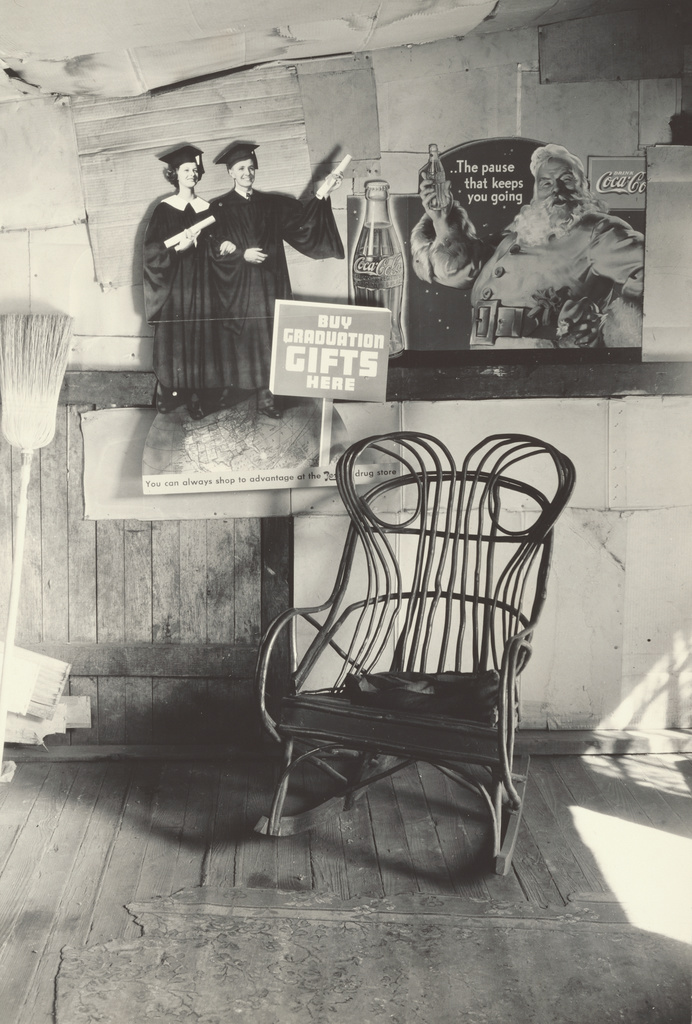
Larry

Walker Evans (1935) Digital image courtesy of the Getty’s Open Content Program

.

Larry

By Tim Peeler


Larry

There’s an owl-faced hillbilly boy staring at me across
The Cracker Barrel dining room where I’m sat back to the fireplace,
Waiting on pecan-crusted catfish, cornbread,
Collards, contemporary country music with its TV accent
Bursting forth like busted springs—that boy
Probably thinks I’m as old as the shit hanging on wall
To authenticate somehow this cattle drive of victuals,
And in the old days I would have frightened him or challenged
His daddy to step outside, but now I know I am just
Another spectacle pinned to the walls of the living
To someway make it look real.

.

About the Author: A past winner of the Jim Harrison Award for contributions to baseball literature, Tim Peeler has also twice been a Casey Award Finalist (baseball book of the year) and a finalist for the SIBA Award. He lives with his wife, Penny in Hickory, North Carolina, where he directs the academic assistance programs at Catawba Valley Community College. He has published close to a thousand poems, stories, essays, and reviews in magazines, journals, and anthologies and has written sixteen books and three chapbooks. He has five books in the permanent collection at the Baseball Hall of Fame Library in Cooperstown, NY. His recent books include Rough Beast, an Appalachian verse novel about a southern gangster named Larry Ledbetter, Henry River: An American Ruin, poems about an abandoned mill town and film site for The Hunger Games, and Wild in the Strike Zone: Baseball Poems, his third volume of baseball-related poems.

“The Art of Acquiescence” By Margaret Crocker


THE ART OF ACQUIESCENCE

To be a woman
in this world
is to bend and curve and slip around its corners
like a snake in the river.

The river has always been there,
the current
and the rocky banks,
the tangle of roots,
a snapping turtle,
a stray foot
or fish just larger than you.
Your role is not to disturb, no.
Look at you!
You have no bones to do so!

All you want is a bug,
a minnow,
a stray lizard,
sunshine
and a warm rock.
But the foot is there,
the current
and the hook.
And you will contort yourself
to meet them all.

.

About the Author: Margaret Crocker is an artist, writer, wife, mother, daughter, sister and thief. She collects stray animals and has this weird fantasy of being on The Great British Baking Show, despite the fact she uses a bread machine. She knows little but proclaims much. There is much we don’t know about her.


More By Margaret Crocker:

Me, and the Hecate

My Joints Hurt And Other Fascinating Topics Of Conversation

Mental Health Portraits


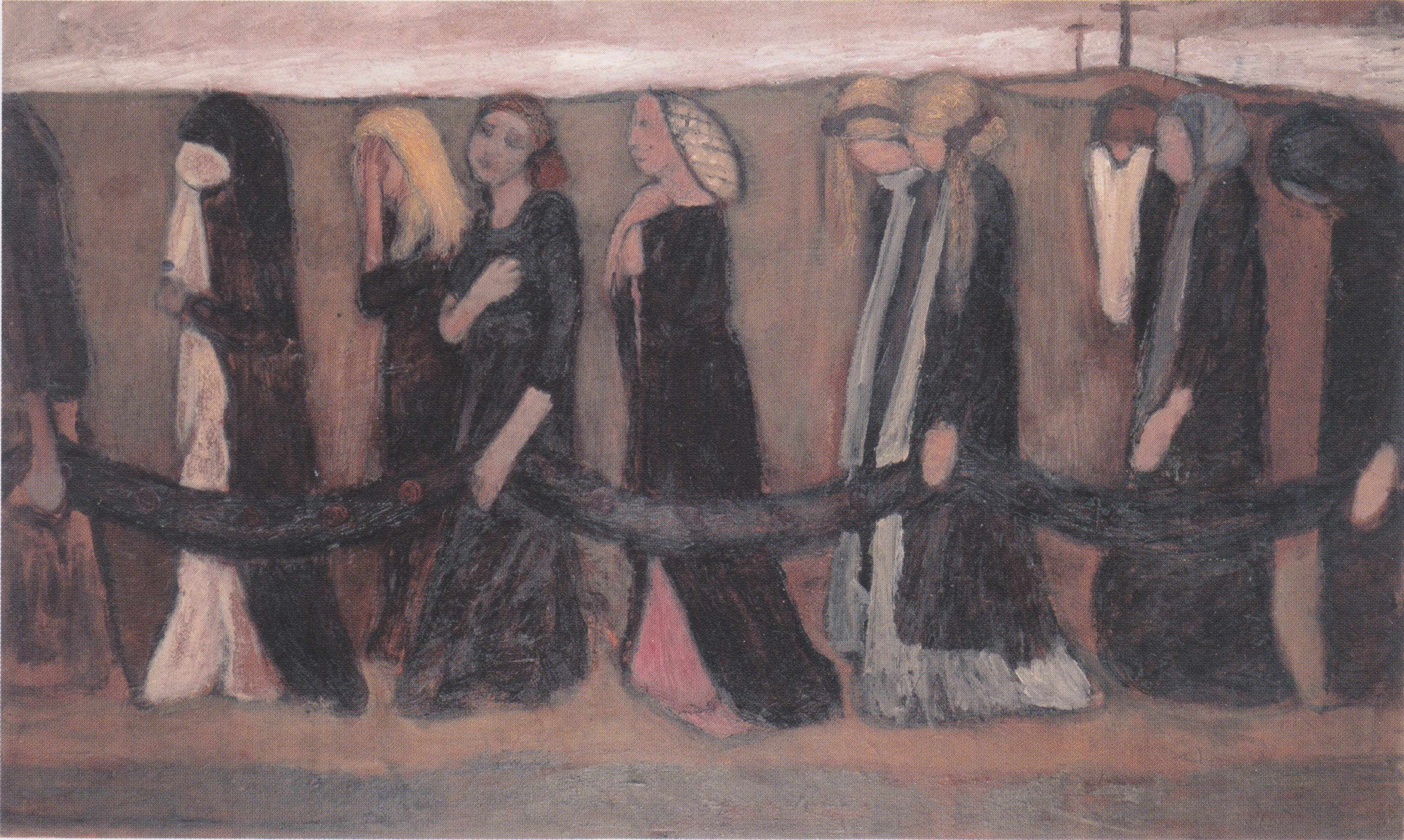
Image Credit: Paula Modersohn-Becker “Die Klagender Frauen” (1902)

Maiden Voyage

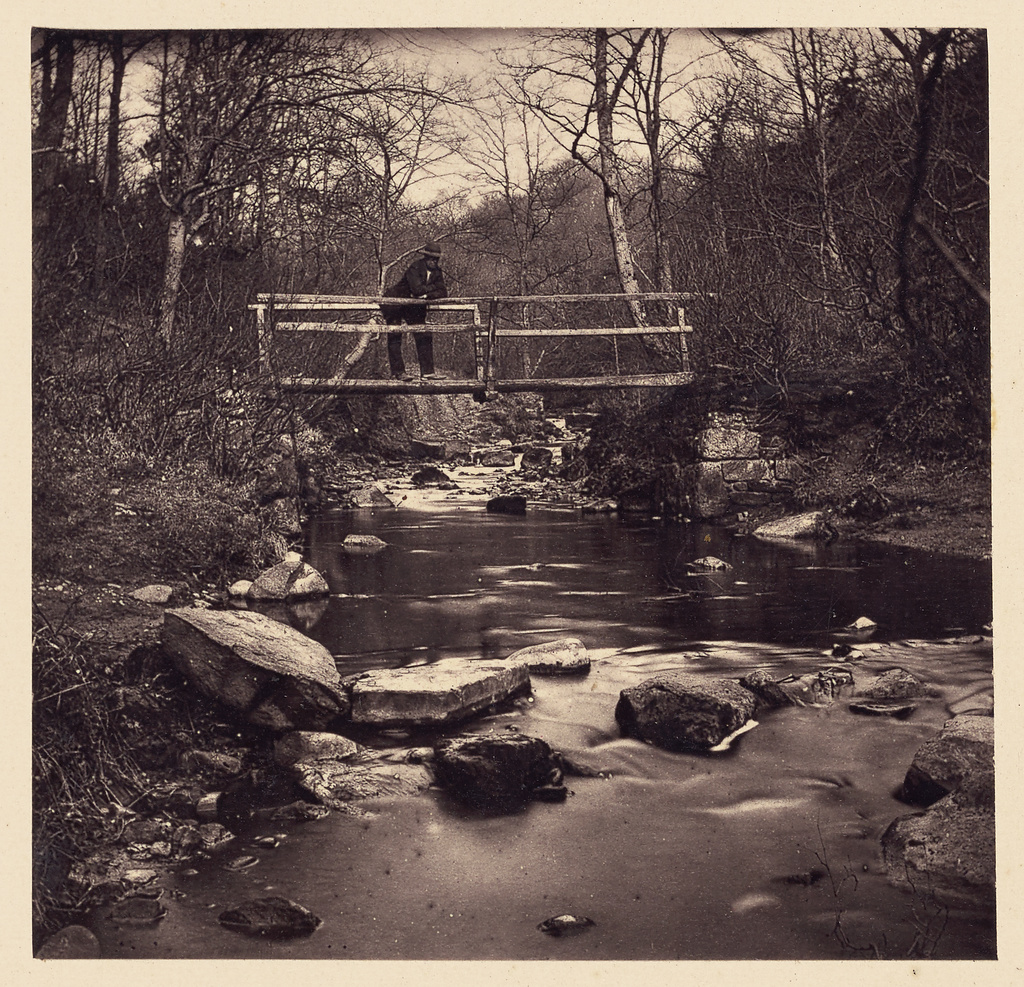
Arthur Brown “Man on Bridge” Digital image courtesy of the Getty’s Open Content Program

Maiden Voyage

By Howie Good


Maiden Voyage

All things are photographable. Two days ago it was a ruined farmer walking slowly over a country bridge, as if looking for a place to jump. Yesterday it was a man washing a car. Today it was a woman arranging a light-up plastic Jesus in a front yard. Meanwhile, the few children ever visible in this broken part of the world seemed even fewer than usual. Does that surprise you? The only explanation I heard I heard at the barbershop. It was that the Titanic sailed at dawn.


About the Author: Howie Good is the author of The Loser’s Guide to Street Fighting, winner of the 2017 Lorien Prize.  His latest collection is I’m Not a Robot from Tolsun Books. He co-edits the journals UnLost and Unbroken  with Dale Wisely.