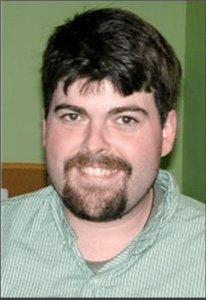
First-Hand Accounts From Made-Up Places: An Interview With Poet Mike James

First-Hand Accounts From Made-Up Places:

An Interview With Poet Mike James

By Chase Dimock

When you read Mike James’ new book of poetry, you realize that the contradiction in the title is the intersection where his creativity dwells. For James, the most interesting subjects are those we either overlook and need to re-examine, or we deem impossible and thus need to invent. These are first-hand accounts, but Mike James has many hands. He is a cartographer of the margins, whether that means the almost-icons sitting just left of the spotlight, or the eccentricities in mainstream society you can only see if you look awry.

Take his series of poems on Grant Wood’s paintings for instance. In them, he teases out the subversive, frustrated eroticism embedded in the denim overalls of Americana. He writes about flamboyance and excess, but with an exactitude of language. At first, you think his ghazals and prose poems wander through their subjects, until you get to the destination, and then you realize he took you on a precisely planned path you had never seen on the maps. These are the made-up places we all live in, and Mike James knows the routes where the dirt roads glitter.

Chase Dimock: Anyone who has been following your work will notice that you have been extremely prolific lately with diverse interests in themes and forms. Last year, you published two books: My Favorite House Guest, a collection of prose poems about pop culture icons, and Crows in the Jukebox, which draws a lot on your family history with an almost minimalist use of language. Where does First-Hand Accounts From Made-Up Places fit into your evolution as a poet? How do its themes and forms reflect where you are as a writer and a man today?

Mike James: I have very broad tastes. I love jazz and disco, classical and country. I love action movies and documentaries. I mention this because it’s applicable in how I approach my writing. I’m always interested in what I haven’t done and I tend to really run with my passions. The musicians I truly love (Bob Dylan, Miles Davis, Arthur Russell, David Bowie) all work/worked with a wide variety of styles. That’s how I approach my writing. So many of the poets who really interest me are ones who don’t have a settled “house style”, but instead work with an expansive scope.

The new collection is divided into three different sections. The first section is a sequence of ghazals. That’s a form I’ve tinkered with for years. The ghazals were the catalyst for this collection. I wrote the sequence in order, excluding the poems I discarded, with the idea that chronology would impose a structure.

The second section is mainly free verse, mostly centered on the work of Grant Wood. The final section is prose poems which are not, mainly, pop culture centered in the way that the poems in My Favorite Houseguest are.  Prose poems are wonderful because they are so liberating in regards to subject matter and expectations. I feel like I’m a different poet when I’m writing prose poems. My prose poems tend to be a more absurdist and chattily surreal.

The new collection provides an overview of my current interests in both subject matter and technique. These poems, I hope, show a comfort level with a wide variety of themes and with a wide range of technique. On a very personal level, the biggest difference between the work I’m doing now and the work I did ten years ago is that I’m much more willing to embrace failure and to follow any squirrel up any tree.  My subjects are more open and more varied now. I’ve let go of the old concepts of the kind of poet I want to be. These days, I enjoy writing more than ever before. I’m certainly much more relaxed about the wrong turns I take. I hope that joy transfers to the reader. Continue reading “First-Hand Accounts From Made-Up Places: An Interview With Poet Mike James”

He Brought His Canvases Over

“Two Heads” By Paul Klee (1932)


He Brought His Canvases Over

By Ryan Quinn Flanagan


He Brought His Canvases Over

and he kept hauling these giant paintings
through the front door
so that I began to wonder how he had carried
them all over, the cabbies get mad if you fill
their car with paintings because they know artists
are poor and someone will have to carry the
damn things, and he keeps passing me off to the next
one before I can even really see the last and asking me
if I think it is finished and I remind him that I am
not a painter and that high school was hard to finish
so I am probably not the best judge
and he tells me he quit smoking, hasn’t sucked
a single glory stick in weeks and I put some tea on
to steep because I can see we will be here for a while…  
do you need some help?, I ask.
I can manage, he assures me. There are only
a couple more.
I watch him bring them in like an invading
army making its last entrance
into the spackled bowels of faulty plumbing.

.

About the Author: Ryan Quinn Flanagan is a Canadian-born author residing in Elliot Lake, Ontario, Canada with his wife and many mounds of snow.  His work can be found both in print and online in such places as: Evergreen Review, The New York Quarterly, Cultural Weekly, In Between Hangovers, Red Fez, and The Oklahoma Review.

SATURDAY POETRY SERIES PRESENTS: NICKY BEER

By Nicky Beer:


DEAR BRUCE WAYNE,

My parents are dead, too.
A dirty, self-cannibalizing Gotham—
I also claim it, its city limits
built by my skin. I slough
and slough, but the city remains.
Tell me, if you’d watched
your mother’s face go
a slow yellow after they cut
off her breast, if you’d watched
your father’s mind get chewed down
to spasms, who would
you fight then? What broken
string of pearls would you chase
into the gutter? Lucky boy
to have an enemy.

*
Admit it—what bugs you
the most about the Joker
is his drag. You suspect
his crayoned mouth a lampoon
of your dead mother.
But don’t you crave,
sometimes, to be a little
tacky? Doesn’t the all-black
bore after a while?
Even your sweet ride can’t help
but leave a little fart of flames
in its wake.
How many others
glare from the shadows
at a one-man parade
in a loud costume, blowing
glitter kisses at grim Justice?
You just think you want
to kill him for better reasons.
What kind of person would trade
laughter for righteousness?

*
Every woman goes out
knowing what you think
you alone had sussed:
the world is a dark alley
hiding a gun in its mouth.
It has more than enough
reasons to make you
cover your face.
The moon waxes. The bruise
wanes. Every woman
is Batman.


Today’s poem first appeared in Issue Four of Cherry Tree, February 2018, and is reprinted here with permission from the poet.


Nicky Beer is the author of The Octopus Game (Carnegie Mellon, 2015) and The Diminishing House (Carnegie Mellon 2010), both winners of the Colorado Book Award for Poetry. She has received awards and fellowships from the National Endowment for the Arts, the Poetry Foundation, the MacDowell Colony, and the Bread Loaf Writers’ Conference. She is an associate professor at the University of Colorado Denver, and a poetry editor for the journal Copper Nickel. You can find her on Twitter at @nbeerpoet.

Guest Editor’s Note: As with all epistolary poems, this one is meant not only for the recipient—in this case Bruce Wayne—but is addressed to readers located in this complicated and frustrating time and place in history. The first line is reminiscent of a fan letter, choosing a shared experience between fan and celebrity that brings them together in some way, but the feeling that they are kindred spirits stops there. What follows in that stanza are philosophical questions about death and justice in the voice of someone who needs to find an enemy to rail against and a tragedy to seek retribution for in order to feel heroic power associated with that “Lucky boy” in line 14. The first stanza braces the reader for more questions for this hero who everyone has been led to believe fights diabolic evil in the world wherever it rears its head and who seems to have misunderstood what it is he is fighting against.

The two stanzas that follow further distance the hero from the letter writer and anyone who holds him in heroic esteem. The second stanza brilliantly questions Mr. Wayne about what really bugs him about the Joker and suggests that perhaps he harbors some jealousy for the evildoer’s colorful style, reducing the Batmobile to a “sweet ride” that can only leave “a little fart of flames / in its wake.” The speaker uses some cunning psychoanalysis on the Caped Crusader, deflating his motives and weakening his stature as a revered hero. The third stanza reveals truths women have always known about the nature of this “dirty, self-cannibalizing Gotham” we live in and how women cope every day in a world that “is a dark alley / hiding a gun in its mouth.” The final lines are a punch just below Batman’s utility belt that knocks the air out of his alter ego, reducing him to a bruise that wanes.

Want to read more by and about Nicky Beer?
Nicky Beer’s Official Website


Guest Editor Anne Graue is the author of Fig Tree in Winter (Dancing Girl Press), and has published poems in literary journals and anthologies, including The Book of Donuts (Terrapin Books), Blood and Roses: A Devotional for Aphrodite and Venus (Bibliotheca Alexandrina), Gluttony (Pure Slush Books), The Plath Poetry Project, One Sentence Poems, Random Sample Review, Into the Void Magazine, Allegro Poetry Magazine, and Rivet Journal.

A NOTE FROM THE MANAGING EDITOR:

After nearly ten years as Contributing Editor of this series, it is an honor and a unique opportunity to share this space with a number of guest editors, including the editor featured here today. I am thrilled to usher in an era of new voices in poetry as the Managing Editor of this series.

Viva la poesia!
Sivan, Managing Editor
Saturday Poetry Series, AIOTB


“Anthony Bourdain Crosses the River of the Dead” By John Dorsey


Otto_Brausewetter_Die_Barke_des_Charon


Anthony Bourdain Crosses the River of the Dead

& there is nothing to eat
a mouse carrying a ham sandwich died
in the corner of the room

its stomach full with pride

but that seems like centuries ago
when mice did things like that
when the outline of a young mother’s thigh
could evoke the holy spirit

when we were all the afterlife of the party

when all of our hungry closets got fed

when love danced around
every corner
of our heart

with no reservations.

.

Check out our interview with John Dorsey on his book, Letting the Meat Rest.

.

About the Author: John Dorsey lived for several years in Toledo, Ohio. He is the author of several collections of poetry, including Teaching the Dead to Sing: The Outlaw’s Prayer (Rose of Sharon Press, 2006), Sodomy is a City in New Jersey (American Mettle Books, 2010), Tombstone Factory, (Epic Rites Press, 2013), Appalachian Frankenstein (GTK Press, 2015) Being the Fire (Tangerine Press, 2016) and Shoot the Messenger (Red Flag Press, 2017). He is the current Poet Laureate of Belle, MO. His work has been nominated for the Pushcart Prize. He may be reached at archerevans@yahoo.com


More by John Dorsey:

Punk Rock at 45

Picker

Poem for Curtis Hayes


Image Credit: “Charon’s Boat” By Otto Brausewetter

Larry

Walker Evans (1935) Digital image courtesy of the Getty’s Open Content Program

.

Larry

By Tim Peeler


Larry

There’s an owl-faced hillbilly boy staring at me across
The Cracker Barrel dining room where I’m sat back to the fireplace,
Waiting on pecan-crusted catfish, cornbread,
Collards, contemporary country music with its TV accent
Bursting forth like busted springs—that boy
Probably thinks I’m as old as the shit hanging on wall
To authenticate somehow this cattle drive of victuals,
And in the old days I would have frightened him or challenged
His daddy to step outside, but now I know I am just
Another spectacle pinned to the walls of the living
To someway make it look real.

.

About the Author: A past winner of the Jim Harrison Award for contributions to baseball literature, Tim Peeler has also twice been a Casey Award Finalist (baseball book of the year) and a finalist for the SIBA Award. He lives with his wife, Penny in Hickory, North Carolina, where he directs the academic assistance programs at Catawba Valley Community College. He has published close to a thousand poems, stories, essays, and reviews in magazines, journals, and anthologies and has written sixteen books and three chapbooks. He has five books in the permanent collection at the Baseball Hall of Fame Library in Cooperstown, NY. His recent books include Rough Beast, an Appalachian verse novel about a southern gangster named Larry Ledbetter, Henry River: An American Ruin, poems about an abandoned mill town and film site for The Hunger Games, and Wild in the Strike Zone: Baseball Poems, his third volume of baseball-related poems.

“The Art of Acquiescence” By Margaret Crocker


THE ART OF ACQUIESCENCE

To be a woman
in this world
is to bend and curve and slip around its corners
like a snake in the river.

The river has always been there,
the current
and the rocky banks,
the tangle of roots,
a snapping turtle,
a stray foot
or fish just larger than you.
Your role is not to disturb, no.
Look at you!
You have no bones to do so!

All you want is a bug,
a minnow,
a stray lizard,
sunshine
and a warm rock.
But the foot is there,
the current
and the hook.
And you will contort yourself
to meet them all.

.

About the Author: Margaret Crocker is an artist, writer, wife, mother, daughter, sister and thief. She collects stray animals and has this weird fantasy of being on The Great British Baking Show, despite the fact she uses a bread machine. She knows little but proclaims much. There is much we don’t know about her.


More By Margaret Crocker:

Me, and the Hecate

My Joints Hurt And Other Fascinating Topics Of Conversation

Mental Health Portraits


Image Credit: Paula Modersohn-Becker “Die Klagender Frauen” (1902)

Maiden Voyage

Arthur Brown “Man on Bridge” Digital image courtesy of the Getty’s Open Content Program

Maiden Voyage

By Howie Good


Maiden Voyage

All things are photographable. Two days ago it was a ruined farmer walking slowly over a country bridge, as if looking for a place to jump. Yesterday it was a man washing a car. Today it was a woman arranging a light-up plastic Jesus in a front yard. Meanwhile, the few children ever visible in this broken part of the world seemed even fewer than usual. Does that surprise you? The only explanation I heard I heard at the barbershop. It was that the Titanic sailed at dawn.


About the Author: Howie Good is the author of The Loser’s Guide to Street Fighting, winner of the 2017 Lorien Prize.  His latest collection is I’m Not a Robot from Tolsun Books. He co-edits the journals UnLost and Unbroken  with Dale Wisely.

“Mull to Ulva” By Tobi Alfier


Mull to Ulva

Because the distance from land-shore to island
is a fingersnap in the constant of all time.

Because the tides bless fishermen and landlocked alike, full creels
the harvest here, no watery graves, no heartsong, no tears.

Because the store displays bait and boat, strong needles
for sewing the lace of fishing line, not delicate woman-lace.

Because the sun burns with savage brightness, much
as the evening stars will burn unwatched and un-wished upon.

Because the ghosts of old souls and older relics own
the dark, with nary a mortal light upon any land, sea or shore.

Because here, no one interprets the thousand pin-pricks
composing a symphony in the eggy blackness of night.

Because the fragrance of this summer conjures
memory after memory of all pasts and futures.

Because there is no caretaker, no guardian to aid thin fog
search the inlet for branch or crevice with which to gain purchase—

I wish to walk barefoot on old stone, become one with the earth and sea,
learn their secrets, raise my arms to the stars. Palm to palm, our hearts.

.

(This poem was originally published in Down Anstruther Way)


About the Author: Tobi Alfier (Cogswell) is a multiple Pushcart nominee and multiple Best of the Net nominee.  Her chapbook “Down Anstruther Way” (Scotland poems) was published by FutureCycle Press. Her full-length collection “Somewhere, Anywhere, Doesn’t Matter Where” was published by Aldrich Press. “Slices of Alice & Other Character Studies” was just published by Cholla Needles Press. She is co-editor of San Pedro River Review (www.bluehorsepress.com).


More by Tobi Alfier:

Possession Sound, Whidbey Island, Washington

Cape Split


Image Credit: Peter Henry Emerson “Cantley: Wherries Waiting for the Turn of                  the Tide” Digital image courtesy of the Getty’s Open Content Program


The Ferry Captain

“Captain in the Rain at Cleggan Pier, Ireland.” By Jeffrey Alfier


The Ferry Captain

By Jeffrey Alfier


The Ferry Captain

He is the hull, diesel and waterline that mark him,
ligature of fists on the wheel. He is bow wave
and sting of spindrift, inlets sprawled with waterfowl,
tidewrack, a mind drawing tangent lines no one sees.
The wheelhouse is his tabernacle in the wilderness.
He’s a bulkhead’s argument with rust, a pennant’s
argument with gales. Spend enough of your life
at sea and you can tell windward from leeward
by the taste of wind alone. At a small remove,
just back of the helm, passengers serry against
north Atlantic cold, their voices clipped
by gusts keening through antenna wires.
Sheltered waters far astern, he is the rote cadence
of the deck crew’s footfalls. He won’t worry how late
he gets home, how long he’ll stand with his back
to the seawall, a phone ringing somewhere without
his answer, the sea a rhythm locked in his heart.

,

(This poem originally appeared in The Storm Petrel: Poems of Ireland (Grayson Books, 2014)

.

About the Author: Jeffrey Alfier is 2018 winner of the Angela Consolo Manckiewick Poetry Prize, from Lummox Press. In 2014 he won the Kithara Book Prize, judged by Dennis Maloney. Publication credits include Crab Orchard ReviewSouthern Poetry ReviewAtlanta Review, Copper NickelEmerson ReviewIron Horse Literary ReviewKestrelHotel AmerikaMidwest QuarterlyPoetry Ireland Review and South Carolina Review. He is author of The Wolf YearlingIdyll for a Vanishing RiverFugue for a Desert MountainAnthem for Pacific Avenue: California PoemsSouthbound Express to Bayhead: New Jersey PoemsThe Red Stag at Carrbridge: Scotland PoemsBleak Music – a photo and poetry collaboration with poet Larry D. Thomas and The Storm Petrel: Poems of Ireland. He is founder and co-editor at Blue Horse Press and San Pedro River Review. An Air Force veteran, he is a member of Iraq and Afghanistan Veterans of America.

What Do You Call This? Bubba Ganush?

Pierre Bonnard “Basket of Fruit: Oranges and Persimmons”


What Do You Call This? Bubba Ganush?

By Mike Acker


What Do You Call This? Bubba Ganush?

They hug and whisper kind words
in the other’s ears. They share
their home-cooked fares, and
delight in the quaintness of
the other’s ways and customs.
They express with kinder words
their surprise at the other’s warmth
and grace. They admire each other’s
moral codes and are surprised
at the similarities of both
their devils and their saints.
But as soon as the formalities
come to a peaceful end, they both
return to the open arms of their
jealous gods.

.

About the Author: Mike Acker lives in Vancouver, British Columbia. He has lived in various parts of the world; his early education was in German and French. While living in California, he worked as a professional translator. Mike enjoys writing short poetry, especially with the intent of exploring the possibilities latent in a single image.