Matthew Wallenstein: “Washington”

.

service-pnp-highsm-50400-50459v

.

.

Washington

Low 
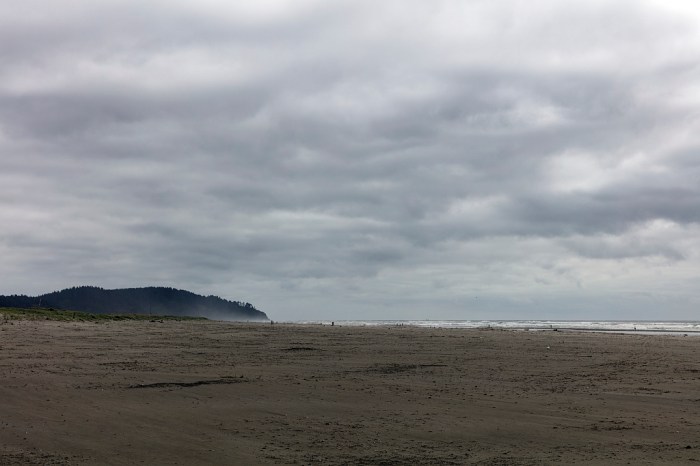
tide. Across the bay 
the mountains are blue in moving fog. 
Animal 
corpse
in the brown grass. 
Headless and skinned.
About the size of a dog. Max says 
he thinks it is a deer that went 
In the ocean and drowned, 
washed up on shore. I nod, 
I don’t smile and I don’t mention its flippers.
Around a bend 
on the beach we find another—
skinned, headless. 
Its ribs grey, yellow, bending 
from its pile of body. It smells 
like seawater and rot. 
The flippers are splaying out 
more obviously this time, 
he sees them. 
“Oh,” he says, “it’s a seal, they are seals.”
I don’t let him forget 
that he thought it was a deer 
that went swimming.

.

About the Author: Matthew Wallenstein is a writer and tattooer. He lives in the Rust Belt. Much of his work concerns growing up in poor rural New Hampshire, the deportation of his wife, and mental illness, though it also captures every day life.

.

Image Credit: Carol M. Highsmith, “A distant shoreline view in a Washington State town fittingly called Long Beach, since it advertises its 28-mile-long Pacific Ocean strand as “the world’s longest beach.” (2018) The Library of Congress

John Brantingham: “Joan Miro’s Portrait of Vincent Nubiola”

.

Vincent_Nubiola_Miro

.

.

Joan Miro’s Portrait of Vincent Nubiola

Before he started painting, Miro had 
a nervous breakdown, which seems rational
given that this was Spain, and a quiet hell
had cracked open in Europe, his world gone mad,
and what could he do but watch and resist
as Franco and Adolph got together 
to dream up cynical new ways to sneer
at what could be if we would just coexist.
And then Miro started to paint, which seems
more than rational. More than sane. Portrait 
of Vincent Nubiola was an early piece.
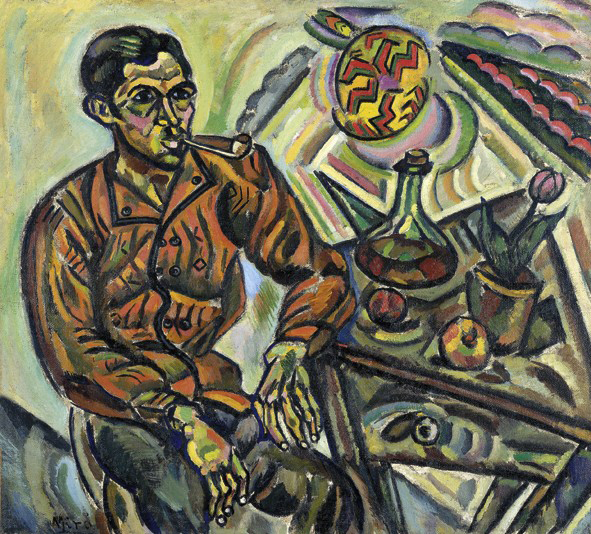
Miro catches him in a pipe-smoking daydream,
his elbow resting on a table with fruit,
a tulip, and wine. He’s at the kind of ease

that Miro must have dreamed of. Fields stretch
out beyond him, fields where he will no doubt
return for the day’s work, worrying about
things that matter while Miro will sketch
and paint and find a place where he can stand
against what is coming. He will turn 
toward the surreal, even as Europe’s dictators
call it degenerate, and it is banned.
I imagine the two of them, Miro 
still young, but wise enough to be alarmed
at what is building. Nubiola is
a professor of agriculture who knows
Miro’s genius, a man with training and wisdom.
They sit and talk of the coming hostilities.

“It feels like the end of everything that’s right,”
my imagined Joan says. Vincent replies,
“Every generation feels this. It’s an endless fight.”
And Joan can foresee an endless night
of terror. He thinks of all who will die
and to him it is the end of everything that’s right.
And Vincent remembers stories of knights
in his childhood and King Alfonso’s lies,
and he knows this is an endless fight.
Old men get a sexual thrill at the sight
of young men dying. They get off on cries
of anguish, and maybe it’s the end of right,
but he tells Joan they’ll keep moving despite
the horror of old men’s pornography.
This, Vincent tells Joan, must remain an endless fight
because these old men live for this kind of blight,
but this world was made for Miro’s kind of beauty.
We must keep going to keep everything right.
That is the beauty of our endless fight.

.

.

About the Author: John Brantingham was Sequoia and Kings Canyon National Parks’ first poet laureate. His work has been featured in hundreds of magazines, Writers Almanac and The Best Small Fictions 2016. He has nineteen books of poetry and fiction including his latest, Life: Orange to Pear (Bamboo Dart Press). He teaches at Mt. San Antonio College.

.

Image Credit: Joan Miro “Portrait of Vincent Nubiola” (1917) Public Domain

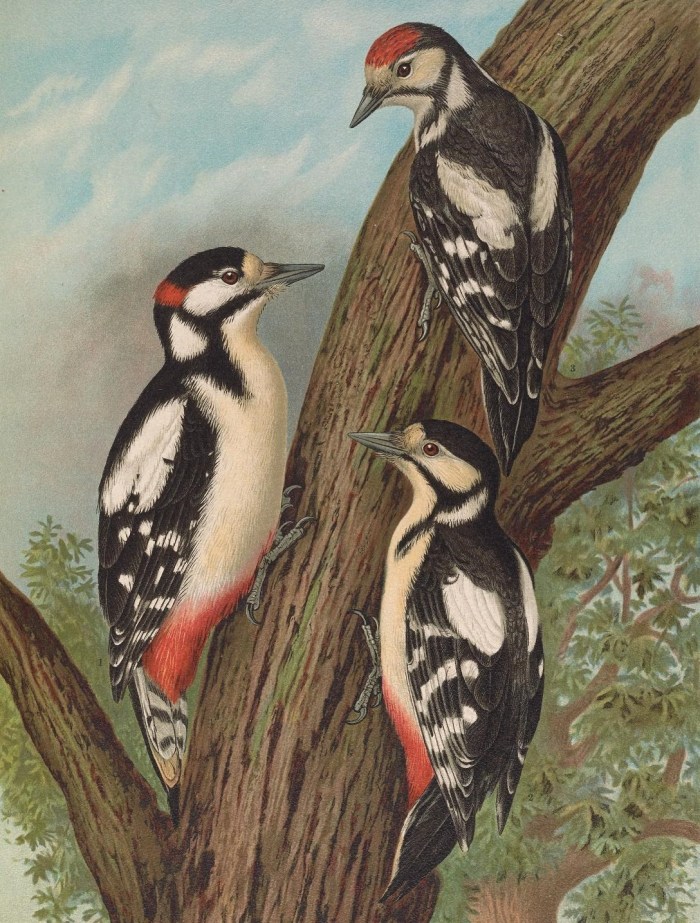
Joanna George: “woodpeckers”

.

51068443446_0dee97a4bd_o

.

.

Screenshot 2022-03-16 140342

.

.

About the Author: Joanna George (She/Her) writes from Pondicherry, India. Her poems appear or are forthcoming in Parentheses Journal, Cordite Poetry Review, Isele magazine, Honey Literary, Borderlands: Texas Poetry Review, West Trestle Review, Lumiere Review, Paddler Press and others. She tweets at j_leaseofhope.

.

Image Credit: Image from Naturgeschichte der Vögel Mitteleuropas Gera-Untermhaus,F.E. Köhler,1897-1905 [v.1, 1905] Courtesy of the Biodiversity Heritage Library (public domain)

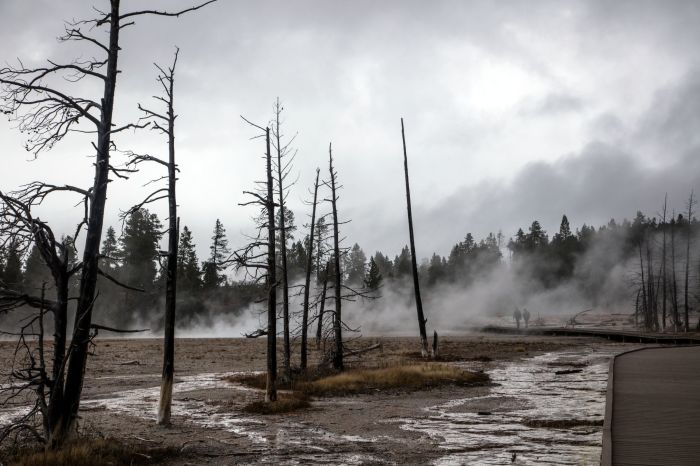
Bill Griffin: “Prescribed Burn”

.iiif-service_pnp_highsm_35400_35420-full-pct_25-0-default


.

.

Prescribed Burn

          hotter
than the rangers intended,
judgment of flame
on vine & brier,
jellied gas vengeance
tears sapling chokehold:
          it’s time, 
past time, juices boil 
and crack and twenty feet up
long needles scorch
a black shroud
          but wait
until spring, green crown
emerging from char,
heartwood alive,
and at each tree’s feet
an oblation of
          nourishing ash;

          forgive me 
for the tangle of all 
our years: it’s time, past time,
thorns twisted between us,
          my fear
of hot words, flamed feelings,
my fear of burning ignoring 
litter and scrub
prone to flare with a spark
and now how high
might the fury rise?
          but wait,
some lively shoot 
has still struggled up
from the core: 
thank you for feeding it, thanks
for the strength of your own
          sweet heartwood,
but most of all 
thank you for
          the match.

.

.

About the Author: Bill Griffin is a naturalist who lives in rural North Carolina. His poetry has appeared in NC Literary Review, Tar River Poetry, Southern Poetry Review and elsewhere. His ecopoetry collection, Snake Den Ridge, a Bestiary (March Street Press 2008), is set in the Great Smoky Mountains. Bill features Southern poets, nature photography, and microessays at this blog: http://Griffin.Poetry.com.

.

Image Credit: Carol M. Highsmith “Remnants of a previous forest fire in Yellowstone National Park, in the northwest corner of the western state of Wyoming” (2015) The Library of Congress (Public Domain)

Sheila Saunders: “It is still, now”

.

36780433052_f377933e9c_o

.

.

It is still, now

The winds have exhaled with the tide, and the afternoon.
 Here the fields draw in the winter dusk,
drain the westerly plum- juice streaks
greying the pink and yellow 
in slow minutes. 

It is still.
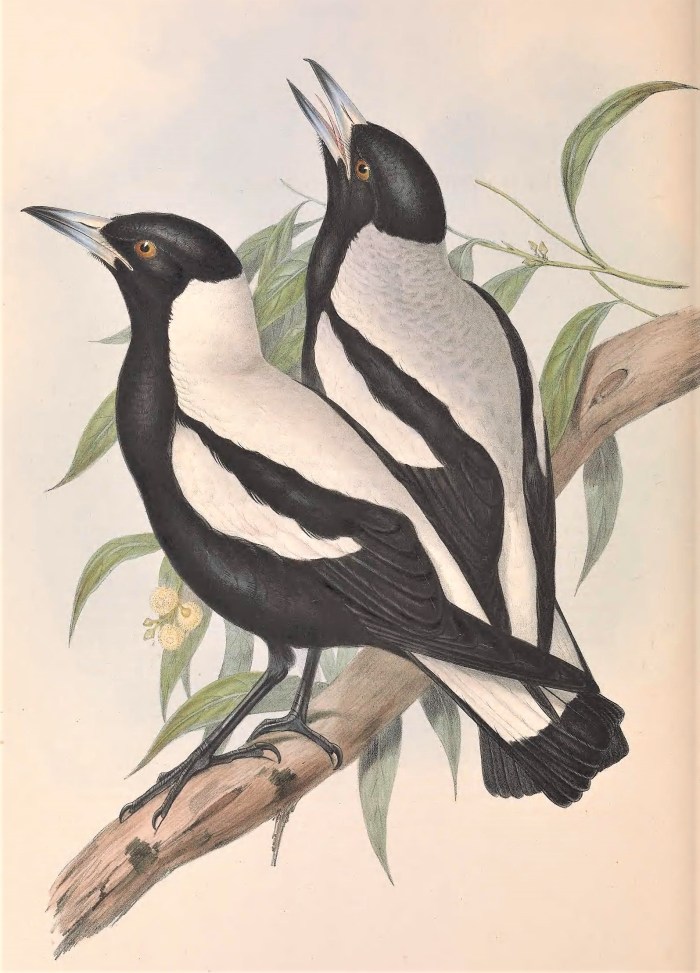
No chatter or shriek from the magpies
dumb on  black poplars’ broom-like branches
or aimlessly flopping over  sodden grass
crossing-  re-crossing. 

A near silence
wraps   the watcher in  comfort, 
who
 not hearing the  air breathing,
nor a leaf slip’s infinitesimal whisper,
is still, too.

.

.

About the Author: Sheila graduated from St Anne’s College, Oxford, with a degree in English Language and Literature, and since then worked as a reporter on local weekly and daily newspapers  in Lancashire, Lincolnshire and Buckinghamshire. After marriage to another journalist in 1961, Sheila brought up three children and continued to write as a freelance, and became involved in community organisations in Wirral, and voluntary work with special needs young people. She has always loved  theatre, music and art, but it is her observation and fascination with  her natural surroundings, including the wildlife of the coast, that has inspired most of her poetry.

.

More by Sheila Saunders: 

April Visitor

.

Image Credit: Image from, The birds of Australia. London, Printed by R. and J. E. Taylor; pub. by the author,[1840]-48. Image courtesy of The Biodiversity Heritage Library (Public Domain)

Jason Baldinger: “temporal, temporary and gone”

.

20220307_095500

.

.

temporal, temporary and gone

it’s black out in bar harbor
days after a thanksgiving 
prayer that was spoken
with no meaning, here it’s 
offseason and sunday
few residents creak 
through the vacant glaze
the early arrival of pitch black
the stars not shielded by light 

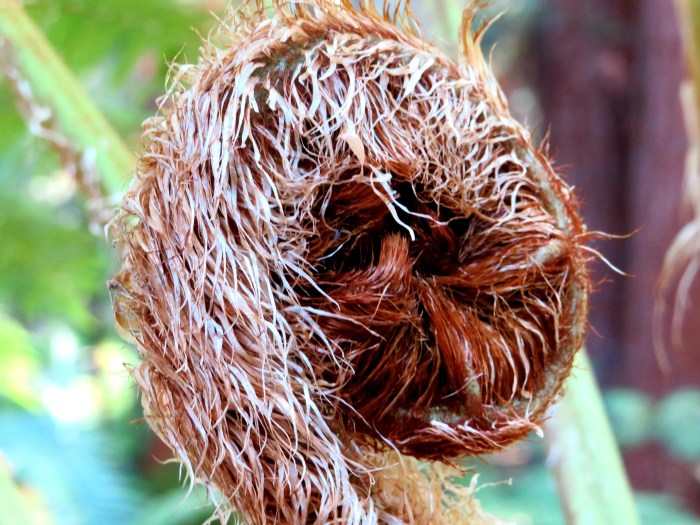
I follow a fiddlehead fern
down to a trout hatchery
where generations of tourist
feasted, fifty cents for each
wild caught dream cooked
over fire, picnic benches
for the family while you wait 

next month, i’ll be miles down coast
walking rehoboth beach with wine
stains and fireworks, dolle’s taffy
orange and boardwalk lights
lead me back from the mouth 
of breakers, footprints already
washed away, the infinite space
stoned and stealing time again
the new year a dragon
slayed at my feet 

these places, theses years
whisk by, dust in my beard
atoms along the air, no meaning
in moments anymore
it all builds to crescendo
I’ll never hear, this reality
a bubble, a vessel through 

tonight, memories flood
a mad swirl of stations 
some past, some present
some future, all materialize
temporal, temporary and gone

.

.

About the Author: Jason Baldinger was recently told he looks like a cross between a lumberjack and a genie. He’s also been told he’s not from Pittsburgh, but actually is the physical manifestation of Pittsburgh. Although unsure of either, he does love wandering the country writing poems.  His newest books include: A Threadbare Universe (Kung Fu Treachery Press), The Afterlife is a Hangover (Stubborn Mule Press) and A History of Backroads Misplaced: Selected Poems 2010-2020 (Kung Fu Treachery). He also has a forthcoming book with James Benger called This Still Life. His work has been widely across print journals and online. You can hear him read his work on Bandcamp and on lp’s by The Gotobeds and Theremonster.

.

More Poetry by Jason Baldinger:

This Ghostly Ambiance

It was a Golden Time

Beauty is a Rare Thing

.

Image Credit: Chase Dimock “Fiddlehead Fern” (2022)

Mike James: “Consequences of Elections”

.

20220304_095805

.

.

Consequences of Elections

It was about the time I added plastic house plants to my apartment. Fake foliage works for every season. I was still getting postcards from an ex-lover with a return address of Undisclosed Location. I’d given up Frisbee in favor of sitting very quietly in a favorite, stuffed chair. Much of my thought given to the new parliament. The old majority tossed out in favor of a coterie of meteorologists, nail technicians, and film noir enthusiasts. People were optimistic. I was agnostic. I never expected the wind to take on a new color which shimmered at the spectrum’s edge. And the wind blew the same as always. Though the moon, that old coin, seemed closer, brighter. It could just be I spent more time looking up. I no longer foraged with neighbors for cigarette butts and lost dreams.

.

.

About the Author: Mike James makes his home outside Nashville, Tennessee. He has published in numerous magazines, large and small, throughout the country. His poetry collections include: Leftover Distances (Luchador), Parades (Alien Buddha), Jumping Drawbridges in Technicolor (Blue Horse), and Crows in the Jukebox (Bottom Dog.)  In April, Red Hawk will publish his 20th collection, Portable Light: Poems 1991-2021.

.

More By Mike James:

Paul Lynde

Grace

Saint Jayne Mansfield

.

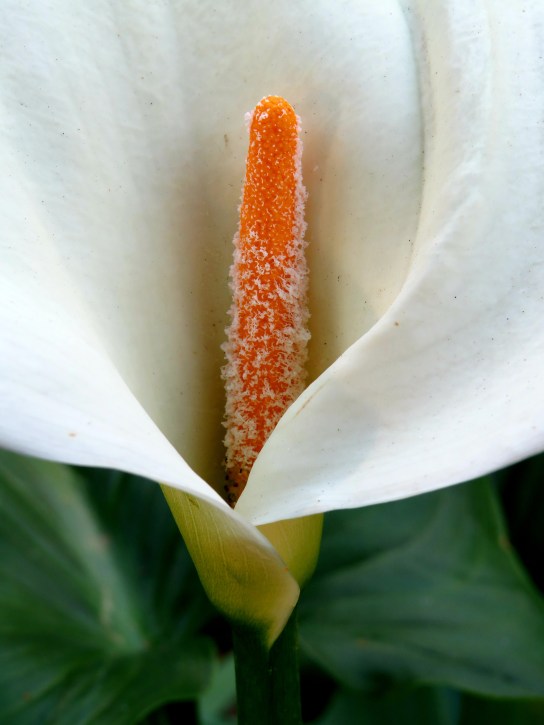
Image Credit: Chase Dimock “Descanso Calla Lily” (2022)

Barbara Daniels: “At Shearness Pool”

.

5632199255_1063c90a70_o

.

.

At Shearness Pool

After rain sandpipers snoop 
for food at the runoff pond 
by the old tennis courts, caught 

in the tides of migration. 
I ask a painter at his easel 
how to live. He says to choose 

exacting silence. Eight turkeys, 
not really wary, step gracefully 
out of the brush. Like a hunter, 

I hold my breath. It’s sudden 
joy to spot an owl mobbed 
by blackbirds, find orioles 

hidden like lovers, like fat 
jewels. I’m happy eating 
my tuna sandwich 

and watching an eagle 
across Shearness Pool. She stuns 
me to stillness. I ask a hiker

how to live. She says 
to watch silver water just 
as the eagle lifts her wings.

.

.

About the Author: Barbara Daniels’ Talk to the Lioness was published by Casa de Cinco Hermanas Press. Her poetry has recently appeared in Concho River Review, Dodging the Rain, and Philadelphia Stories. She received four fellowships from the New Jersey State Council on the Arts, the most recent in 2020.

.

Image Credit: “A beautiful scene of some sandpipers at sunset” courtesy of the Biodiversity Heritage Library (public domain)

Howie Good: “A Theory of Justice”

.

service-pnp-fsac-1a34000-1a34900-1a34971v

.

.

A Theory of Justice

The medical assistant asked in a flat, toneless bureaucratic voice how I would describe the pain. Stabbing? Aching? Sharp? Dull? She entered my answer on the form, but without showing any actual interest in it. A philosopher once said – or should have – that a society is only as just as its treatment of its most vulnerable members: the old, the sick, the poor. Using a dropper, I strategically place .50 milliliters of Triple M tincture under my tongue. I wait fifteen, twenty minutes, and then gray-clad troops burst from the treeline with a rebel yell. The tongue is all muscle.

.

.

About the Author: Howie Good is the author of Failed Haiku, a poetry collection that is the co-winner of the 2021 Grey Book Press Chapbook Contest and scheduled for publication in summer 2022.

.

More By Howie Good:

The View from Here

Reason to Believe

People Get Ready

.

Image Credit: Howard R Hollem “Transfusion donor bottles, Baxter Lab., Glenview, Ill.” Library of Congress, Prints & Photographs Division, Farm Security Administration/Office of War Information Color Photographs. (public domain)

Julia Wendell: “Owl”

.

9495763530_ac351a4211_o

.

.

Owl,

High up in the crown
of a Monterey cedar,
saucer-yellow eyes
blinking down at us.
“Bird,” says the wee one.
“Owl,” I specify.
Next morning, he’s still
perched on the shaggy fronds,
a mouse in his talons, blood
stippling his feathers.
“Mouse,” says the girl.
“Dinner,” I elaborate.
I am not above revealing
violent cycles of need
to even the smallest soul.
It will eventually make sense.
She will grow up
and learn to kill and kill and kill—
bugs, engines, books, time, love.
But for now, the bird stays high up 
at the center of our globe.
“Owl,” says the budding girl.
“Life,” says the old one, me.

.

.

About the Author: Julia Wendell‘s sixth volume of poems. THE ART OF FALLING, will be published by FutureCycle Press in February, 2022. She lives in Aiken, South Carolina, and is a three-day event rider.

.

Image Credit: Image from A Natural History of Birds (Public Domain) Image courtesy of The Biodiversity Heritage Library