
“Malverns” By Michael Hurst
“The Names of Birds” By Paula Reed Nancarrow
“Bird-Banding at Camp” By Gerald Friedman
“A Life in Art” By Paul Ilechko
“Havok” By Richard Stimac
“And Then There Was Death” By Connie Woodring
“The Traitor” By James Duncan
Magazine
“Malverns” By Michael Hurst
“The Names of Birds” By Paula Reed Nancarrow
“Bird-Banding at Camp” By Gerald Friedman
“A Life in Art” By Paul Ilechko
“Havok” By Richard Stimac
“And Then There Was Death” By Connie Woodring
“The Traitor” By James Duncan

“Shelley” By Andi Horowitz
“Ode to the Serenity Prayer” By Alex Stolis
“From a History of Servitude” By R.T. Castleberry
“Displaced Existence” By LB Sedlacek
“Nick Drake, The Handsome Fox” By Chris Pellizzari
“In A Dream, An Earthquake” By Sam Culotta
“The Way We Know Before We Know” By Karen Paul Holmes
“Floaters” By Dudley Stone
“A Stranger Stands to Say a Few Words” By Daniel Edward Moore

“Loss Prevention Specialists” By Mary Kathryn Jablonski
“Breaking Up, Breaking Apart, Breaking Down” By Devin Brookshire
“Dead Birds” By Tim Peeler
“I Sample the Sea” By Alice Teeter
“Beyond Casper” By Ken Gierke
“Meatsuits” By Rebecca Schumejda
“Dressing Up” By Jason Visconti
“Proverbs” By Larry Smith
“Gone Fishing” By Agnes Vojta
“An Angrier Shade of Blue” By Troy Schoultz

“Skeletons in the Waffle House” By Joe Mills
“Desire” By Richard Stimac
“A Song for Biofilms” By Sue Blaustein
“Lotus Flower” By Rebecca Schumejda
“Early Morning” By Robin Wright
“Concerning the Current Drift of Words” By Geraldine Cannon
“Darkroom” By Agnes Vojta
“Poem for Kacie” By John Dorsey
“Solace” By John Grochalski

“Books” By Royal Rhodes
“After The Drought” By Jason Visconti
“Annas Bay Anglers” By Sterling Warner
“The Recluse of Glendalough” By Ken Hines
“Crow Will Never Carry A Star Across the Sky” By Cheryl A. Rice
“Winter Solstice 2023” By Leslie M. Rupracht
“Goodnight, Saint Peregrine” By Rebecca Schumejda
“April Fools’ Day – In All Good Fun” By Geraldine Cannon
“the last vestige of tiki” By Jason Baldinger
“Waking up in India to the News that Mike is Dead” By Agnes Vojta
“Invisible Ink” By M.J. Arcangelini
“Fishing Both Sides of the River” By Cheryl A. Rice
“Floods and Fires” By James Croal Jackson
“On a Cold Afternoon at the Sit-N-Bull” By John Dorsey
“Running for the Bus in a Rainstorm” By Diana Rosen
“In Memory Of” By Howie Good
“the aforementioned skyline” By Jason Baldinger

“i hear it through the static,” By John Compton
“The Calm Before” By Jason Ryberg
“Taking My Students To See The Mayans And Aztecs But They Talk Me Into Staring At A Bunch Of Dead Things” By Kellie Diodato
“Ruminations of an Airplane Passenger Before the Flight Turned Around & Returned to its Departure Airport” By G.M.H. Thompson
“Getting a Haircut from the Only Woman in Monroe County, Mississippi, Who Was Willing to Go to Funeral Homes in the Middle of the Night and Style the Hair of Corpses” By Samuel Prestridge

“Pissant” By S. Stephanie
“How Birdwatching Saved Your Life” By Justin Karcher
“Privacy Setting” By Sarah Carleton
“My Favorite Poet in Town” By Michael Layne Heath
“Dear Eve,” By Jessica Wickens
“Sonnet for Redecorating Plato’s Cave” By Paul Ilechko
“Religion” By Ace Boggess
“In Memoriam” By Howie Good
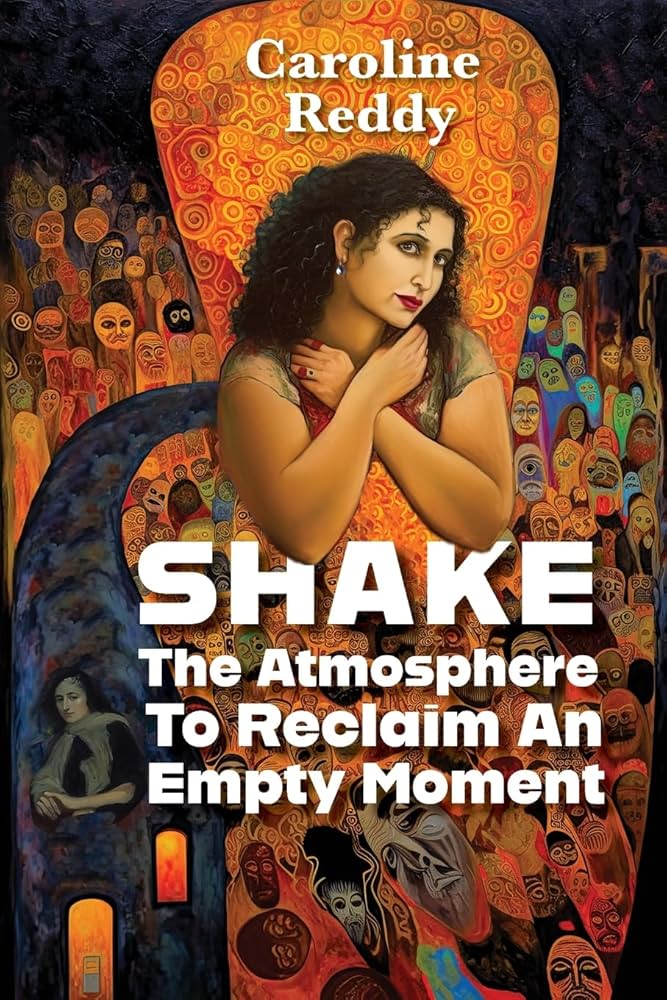
A Review of
Shake the Atmosphere to Reclaim an Empty Moment
By Caroline Reddy
In Caroline Reddy’s Shake the Atmosphere to Reclaim an Empty Moment she emerges from the skull of modern warfare and violence a fully grown Athena, in her “steampunk space suit / underneath the human skin” wielding her weapons of language: “I release my daggers / after years of betrayal / molting into a warrior.” Being of Iranian and Ghanaian heritage, she brings the power and songs of her elders as a way to unify the world’s discord: “My ancestors / who protected mountains, / climb on opposite / sides of the world / to bring me harmony.” Through her poignant and powerful verse, Reddy triumphs in her goal to preserve the holiness: “After our last dokusan / when I told you about / how music had been murdered / you requested / that I keep the legacy / of the world alive.”
She has been through terror herself, in Tehran: “Hold still child / to the fuzzy blanket / until the siren stops” and she knows the fear of the children in current conflicts, Ukraine, Gaza, and how to somehow heal and transmute these atrocities into song of spirit: “We have learned that harsh moments / can be alchemized into particles of light / that unfurl from Indra’s net / to help us on our ascension.”
In this way, her book becomes timely and crucial to somehow processing our present grief and anger at the continued killing of innocents on this earth. Reddy, in assuming the role of poetic warrior and magician, allows us to ride the brightness of her robe, the glint of her spear, the clarity of her words. We feel this with her because we have been there: “but i had been beaten / and belittled by so many / that i didn’t believe / in my own myth.” But this is an intimate battle done in the darkest places, and this is what makes it even more transformative once the light is found:
I closed my eyes and let the tears drip
and dreamt of the quartz crystals to pour,
for the light of Earendil appeared
and the planets smiled
as I began to widen:
beyond the shadows
beyond the bitter wind.

She transforms ashes into fire, necrotic tissue into stem cells, violence into compassion and unity. As she states:
Songs rise from the ashes
as Qoqnoos burns away debris
of thistles and last bits of sterile soil
from the chambers of my heart.

The spring Equinox brings Nowruz
as I tumble through tombs
and burst from beneath the snow
like a lustrous tulip.


In this collection, Reddy takes in all of the rancor and cruelty she has faced, and others continue to suffer, and reanimates them as feathered things which guide us also to emerge from this torment as changed beings. She becomes a mother of birds, of hope: “I dream of a womb / where the ashes of a wondered bird / do not spoil.” With much of the poetry written being one of victimhood and being caged within a sadness or a trauma, Reddy’s work elevates to a level of one who has walked the desert for forty days and forty nights and who has come back with these ethereal and thunderous truths, this glowing body and this glowing sword. This is a wonderous book. Reddy invites us to all to once again believe our own myths.
About the Author: Scott Ferry helps our veterans heal as a RN in the Seattle area. His book Sapphires on the Graves is coming out from Glass Lyre Press in late 2024.
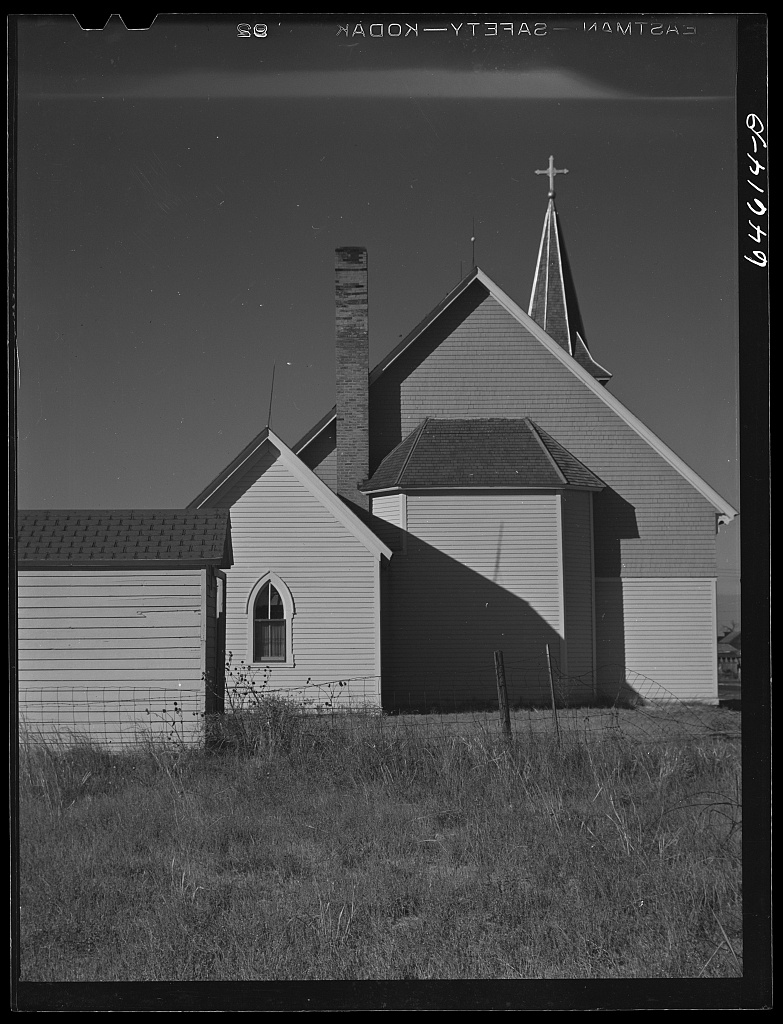
Funereal Geometry:  The Evangelical Congregation Concludes the Funeral by Singing “In Christ, There is No East or West / No North or South,” while Outside the Church and Midway Up, a Steeplejack Tests to See the Steeple’s True

If a plumbline’s run from Heaven’s door bell
to the red baize on Satan’s pool table;
and if such a line bisects their steeple;
and if the steeple’s perpendicular—

perpendicular, foursquare, ever true--
to the church’s temporal foundation,
the workman’s spirit level always rules
theology and recalibration.

Lacking such, the skewed will keep on skewing,
will mime secular drift–anathema
to the faith and the faithful, those who cleave
to the steeple's cleft, crowd a receding

circumference, and create a holy
right angle to the vertical axis.
That’s why the steeplejack’s climbed the steeple
even as the funeral rumbles, smacks

around his calibrations.   He’s allowed
no room for error in the elders’ view:
the journeyman’s warrant is the last word
in church doctrine.  The steeple must be true,

must aim straight up.  The soul shoots for a pole
implied by the steeple.  Off-plumb slivers
of a bubble, who knows where the launched soul
might end up.  Heaven's the point of a pin.
About the Author: Samuel Prestridge lives and works in Athens, Georgia. He has published work in numerous publications, including Literary Imagination, Style, The Arkansas Review, As It Ought To Be, Poetry Quarterly, Appalachian Quarterly, Paideuma, The Lullwater Review, Poem, Juke Joint, and The Southern Humanities Review.
He is a post-aspirational man whose first book A Dog’s Job of Work is seeking publication. He is currently an Associate Professor of English at the University of North Georgia. His children concede that he is, generally, an adequate father.
Image Credit: John Vachon “Zell, South Dakota. Church buildings” (1942) Public domain image courtesy of the Library of Congress
 As It Ought To Be