V.S. Ramstack: “And since you are part of this world, you too are changeable”

And since you are part of this world, you too are changeable
after Ovid’s Metamorphoses

an axolotl, to regrow my cut off limbs,
parts of the heart still beating beneath
the water, iodizing myself toward land

and what of those leaves you gave me in june?
especially the one i kept pressed in a book, a little
cry betwixt these metamorphoses

Ovid prayed we’d remove ourselves
from this self-taught banishment, this black & blue
sea borne ten times over by swallowed sand

but this is to say: i am not asking you to be
concerned by my hurt, only by my change
the way flowers ripped from soil will only wilt

About the Author: V.S. Ramstack is a poet breathing in Chicago. She received her BA in English + Gender, Women, & Sexuality studies from University of Minnesota and her MFA from Columbia College Chicago. Previous work can be found in PositCurator MagazineAnti-Heroin ChicAcross the Margin, and elsewhere.

.

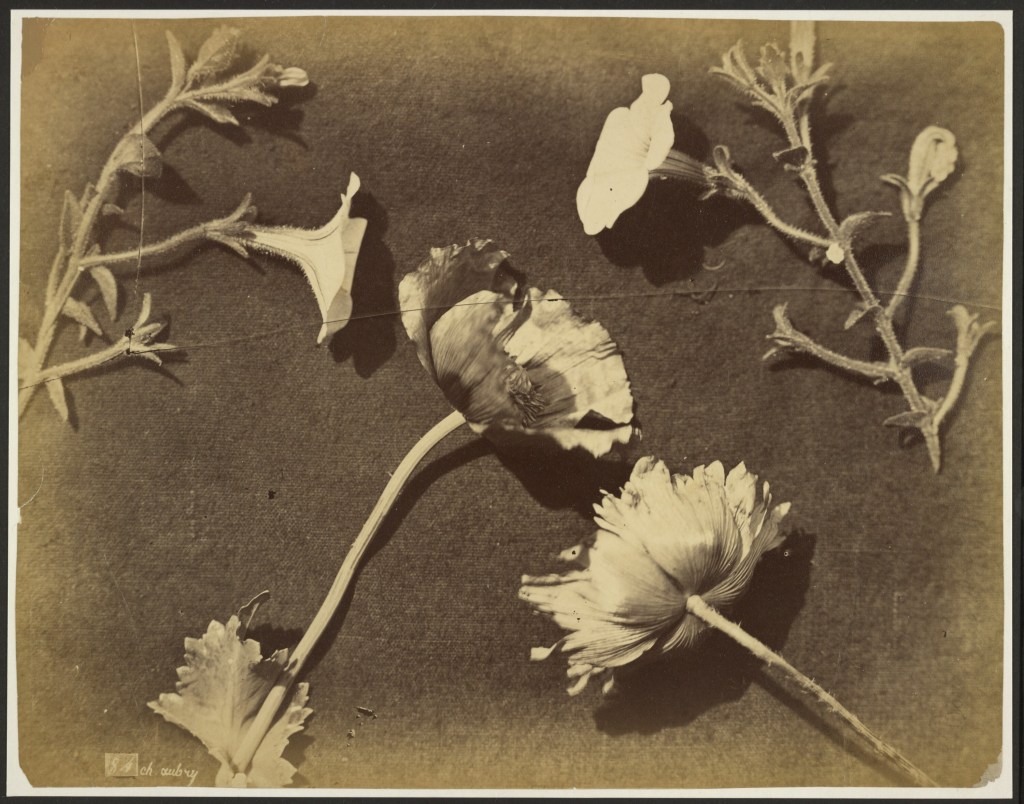
Image Credit: Charles Aubry “Flower Still Life” Digital image courtesy of the Getty’s Open Content Program

Holly Day: “The End of It”

The End of It

It’s very important to have your spot picked out to wait out the end of the world. The spot you want to be to be Raptured from. Wherever it is you want to be when the meteors slam into the planet. Wherever you want to be when the floodwaters rise up and drag everything to the sea. Have some snacks packed, because all this could take a while. Dress appropriately. Or, because it’s the End, don’t wear anything at all. Call your mother. Don’t forget to feed the dog. Let everyone you love know that even though this spot you’ve chosen to watch the world end from isn’t anywhere near them, and even though you can’t be bothered to be with them in person, you are thinking about them, right now. And really, as always, it’s the thought that counts.

About the Author: Holly Day’s writing has recently appeared in Analog SF, The Hong Kong Review, and Appalachian Journal, and her hobbies include kicking and screaming at vending machines.

.

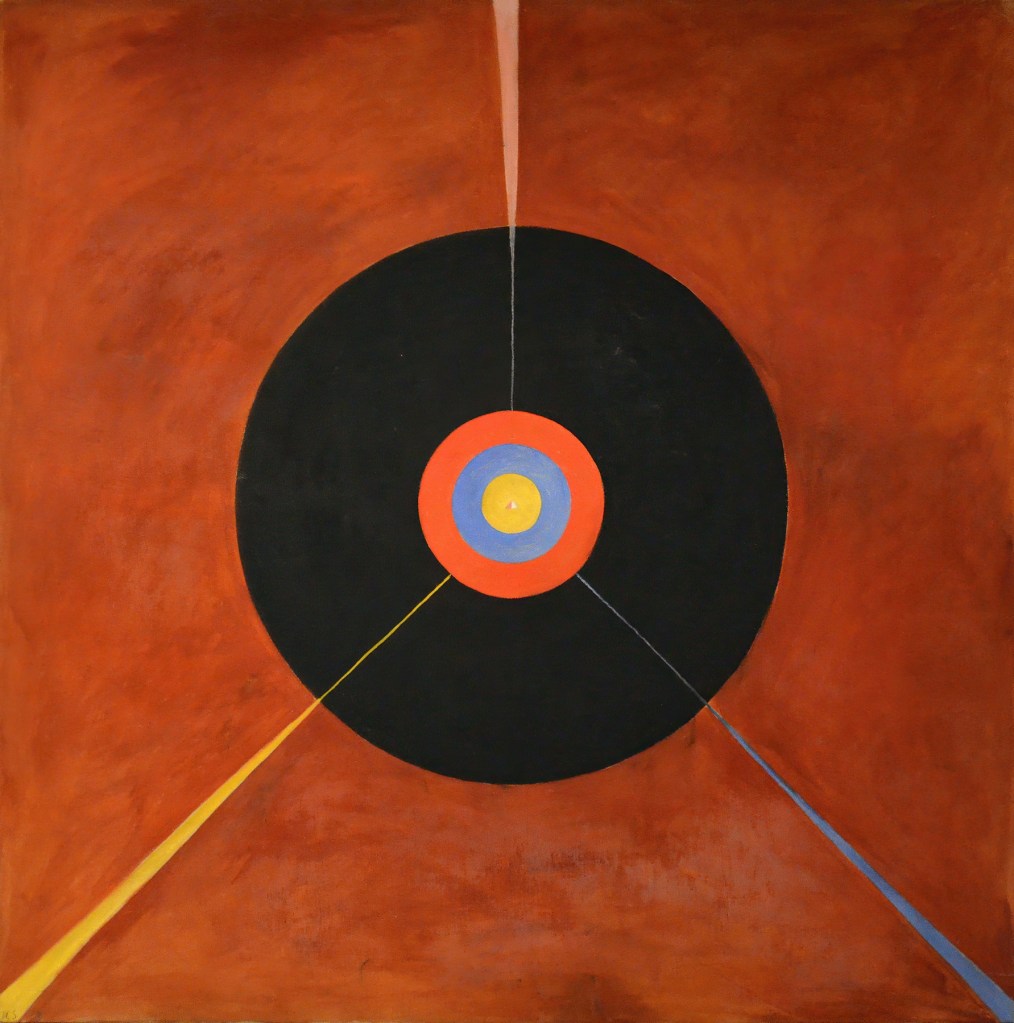
Image Credit: Hilma af KlintThe Swan, No. 18″ (1914 -1915) Public domain image courtesy of Artvee

Agnes Vojta: “The Topography of Grief”

The Topography of Grief

The topography of grief is karst,
riddled with sinkholes
that suddenly open
under your feet, swallow you whole.

I don’t know what I expected
to feel. Not this emptiness.
Not nothing. I don’t cry
at the sight of my dad’s signature.

The letter from probate court
I’ve been expecting. I know
what it contains: a form letter
and a copy of dad’s will.

I cry when I pack his chessboard,
lay the wooden pieces to rest
in their velvet-lined compartments,
close the box, latch the lid.

About the Author: Agnes Vojta grew up in Germany and now lives in Rolla, Missouri where she teaches physics at Missouri S&T and hikes the Ozarks. She is the author of Porous Land, The Eden of Perhaps, and A Coracle for Dreams, all published by Spartan Press. Most recently, she has been collaborating with eight other poets on the book Wild Muse: Ozarks Nature Poetry (Cornerpost Press, 2022.) Her poems have appeared in a variety of magazines; you can read some of them on her website agnesvojta.com.

.

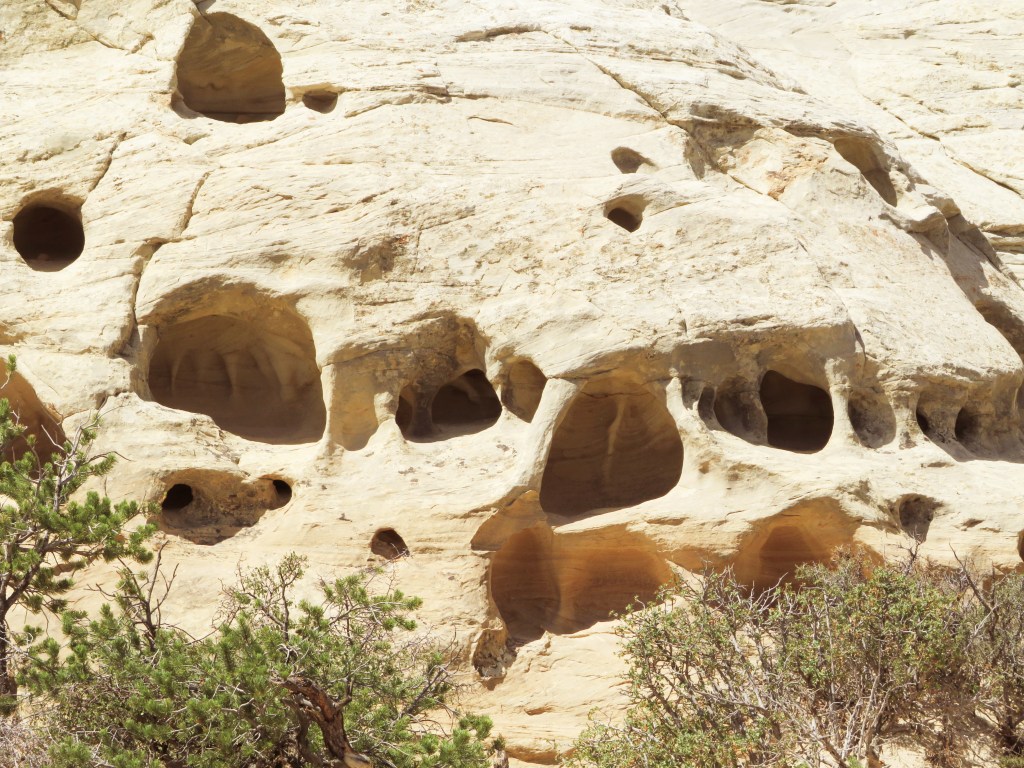
Image Credit: Chase Dimock “Utah Karst” (2021)

Alexander Lazarus Wolff: “Self-Portrait as Ariel from The Tempest”

Self-Portrait as Ariel from The Tempest

I have returned from the wreck, from that ship
	     you tossed with your tempest. The crew lay
                        unharmed, as you would know, 
	                            and they rest on the shore

where kaleidoscopic shells are scattered about
	    and where the sea slides up only to recede.
		        I serenaded them with my song, which,
                                    like my essence, belongs entirely to you: 

Full fathom five thy father lies;
            Of his bones are coral made;
                       Those are pearls that were his eyes:
	                             Nothing of him that doth fade…

By nature, my body belongs to the four winds,
	     and to them, one day, it will return. 
		       But, for now, I am an extension of your mind,
			            and I attend to your bidding 

as the sun comes out of hiding. The crew
	      has awoken and daylight spreads across
		        our island. I will return to my tree
			            until I’m to sing again.

About the Author: Alexander Lazarus Wolff is a writer of poetry and creative nonfiction. His work has been published or is forthcoming in The Best American Poetry online, The Citron Review, NDQ, Black Fox Literary Magazine, South Florida Poetry Journal, Serotonin, and elsewhere. He was awarded first place in the Poetry Society of Virginia’s Undergraduate Award. He is a poetry editor for The Plentitudes and is an undergraduate at the College of William and Mary. You can find him and more of his work on Facebook: https://www.facebook.com/wolffalex108/ on Instagram: @wolffalex108 and at www.alexanderlazaruswolff.com

.

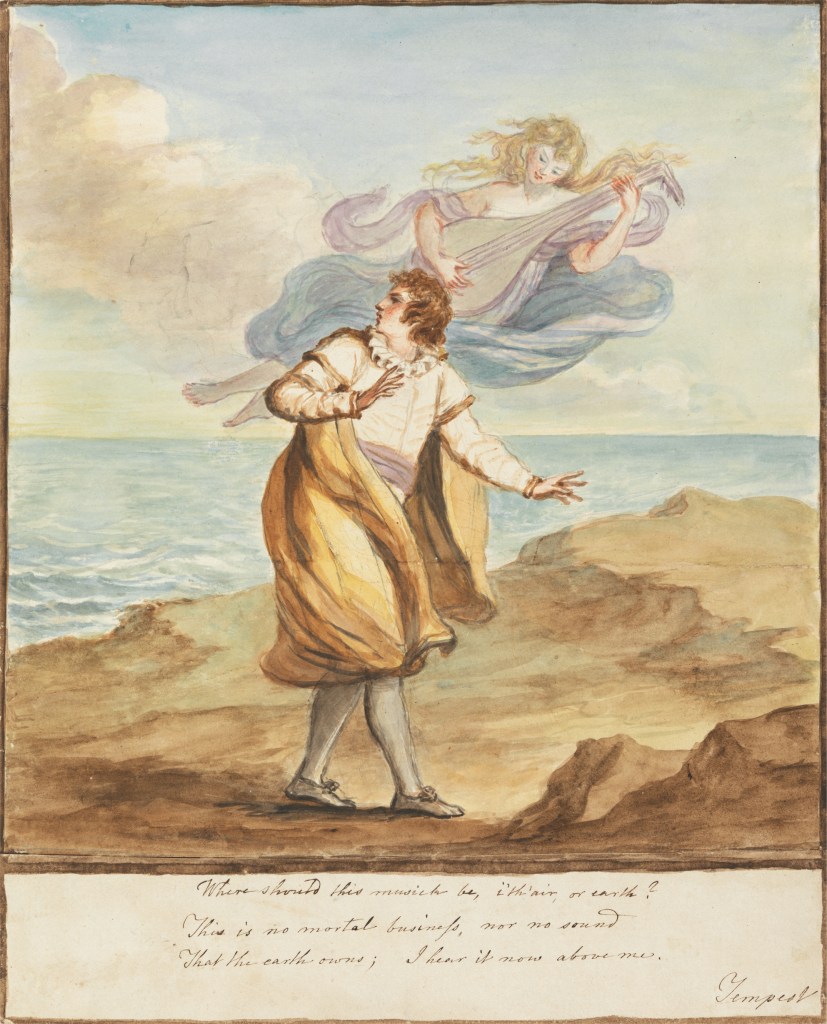
Image Credit: Mary Hoare “Ferdinand and Ariel” (1781) Public Domain image courtesy of Artvee

Ace Boggess: “Why I can’t Play Poker”

Why I Can’t Play Poker


Cards feel like collectibles,
each ace the Honus Wagner.

I prefer not to lay them down,
give them up. Weakness 

of character: I love chaos after losing,
one of those rare times 

anger & emptiness overlap 
enough to scorch a desert twice. 

Besides, I think, what if I won?
How could I bear reality?

To surrender failings I embrace 
like a childhood toy? To gain 

but sacrifice my desperation,
doubt? I’d have to be a different me,

neither my goal nor a solution,
more like deodorant sprayed on later.

I’d rather not play a hand again,
except these sailboats in the hole:

how they glide across the table,
how they carry me farther out to sea

About the Author:Ace Boggess is author of six books of poetry, most recently Escape Envy (Brick Road Poetry Press, 2021). His poems have appeared in Michigan Quarterly Review, Harvard Review, Mid-American Review, River Styx, and other journals. An ex-con, he lives in Charleston, West Virginia, where he writes and tries to stay out of trouble.

.

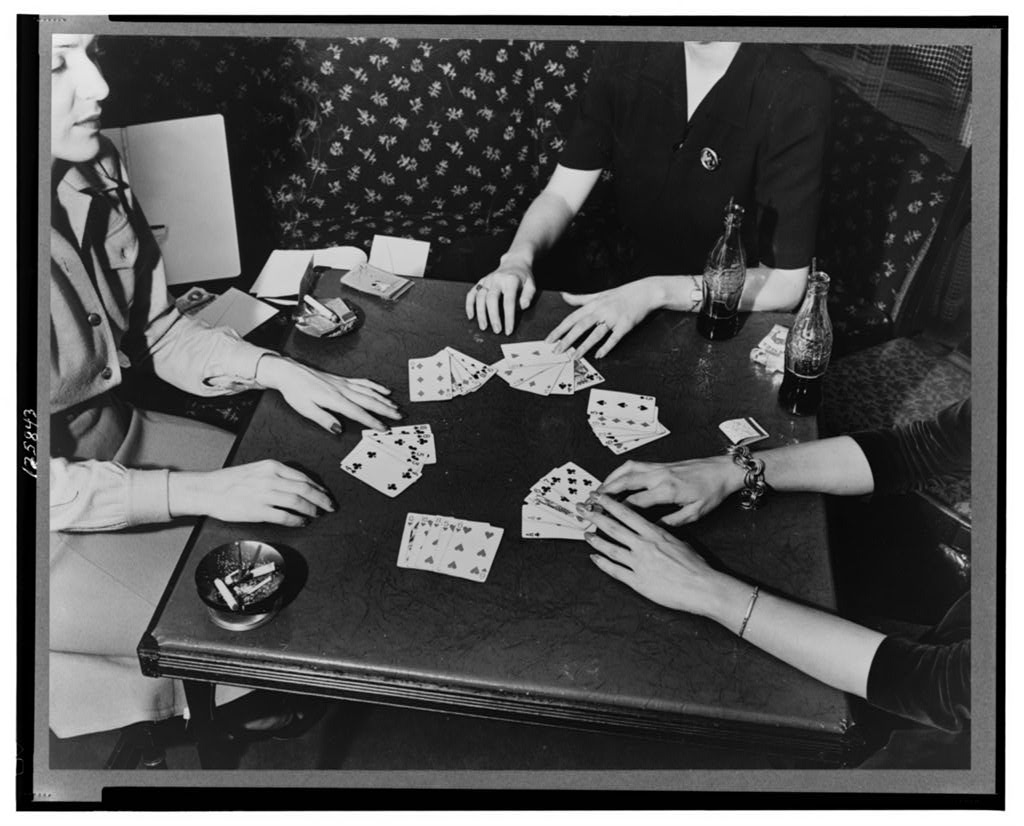
Image Credit: Arthur S. Siegel “Detroit, Michigan. Poker hand and hands of girl players” (1941) Public domain image courtesy of the Library of Congress.

Paul Lamar “August 5, 2020 (for Mark)”

 August 5, 2020 (for Mark)

Enclosed with you. But rather with? No one,
Of course. We’ve fashioned decades side by side,
And some days it’s as if we’ve just begun
To see each other’s core. Pandemic’s slide
Into confusion makes life sharper than
The blurry days of running here and there,
Compelled and scattered. No need to plan
Each moment now-- my grasp is light as air
Though never tighter on what matters most:
Our children. Neighbors. Music. Books. The yard.
And thoughts about the wider world: the lost
Of every sort! The earth. I know what’s hard
Is yet to come, but soon we’ll crack the door,
And live in ways we should have lived before.

About the Author: Paul Lamar lives with his husband, Mark, in Albany, NY, where he teaches poetry, fiction, and memoir workshops; reviews theater for a local paper; and conducts a chorus. Over many years (he just attended his 55th college reunion, mirabile dictu!) his poems and stories have appeared in Prairie Schooner, Steam Ticket, Bloodroot, Southern Review, Off the Coast, etc.

.

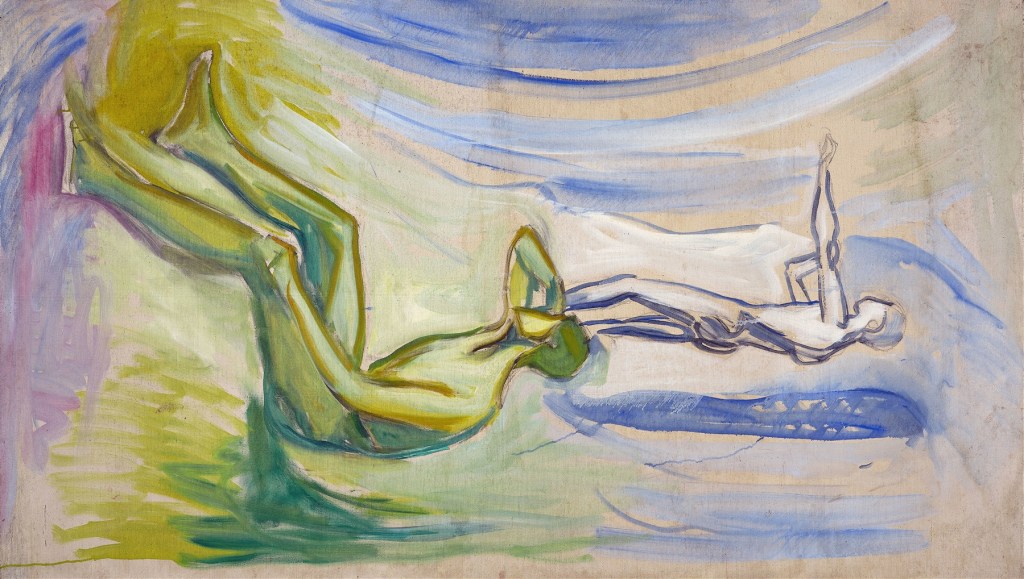
Image Credit: Edvard Munch “Men Turning Toward the Sun” Public domain image courtesy of Artvee

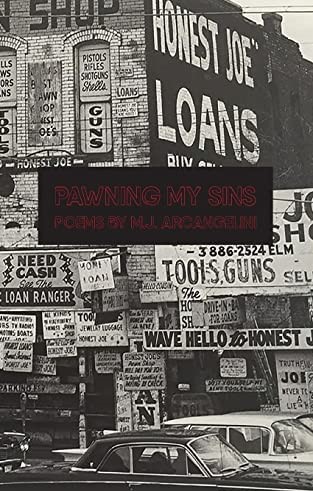
Evan Myquest Reviews Pawning My Sins By M.J. Arcangelini

A Review of

Pawning My Sins

By M.J. Arcangelini

..


The depth and breadth of Joe Arcangelini’s life must make his confessional appearance in this volume of poetry one bad-ass day in the publishing world. The eponymous first poem has his first confession of the book—that he wouldn’t get much of a return at his mystical sin pawnshop. And this is his first sin of a lie to confess to the reader. Going by the sins in this book, I’m thinking Joe’s got a damn good pawn stub in his mitts.


Joe takes us through his experiences: weed patch sentry duty, the booze, and the seedy North Beach hotel stays, and even more life on the “interesting” side of town. We definitely have some librarians clutching pearls and clucking tongues going on here. Fret not, librarians, we have no full-monty tell-all here. What we have is an honest accounting of a wild life told in poetry—because that is what Joe Arcangelini is good at these days.


Especially at lines like these about the clearing out of his Dad’s place, “The bed that witnessed such tender gymnastics” not kept, but keeping the “1920s straight razor, a 1903 Colt .38 revolver, a decayed molar.” All those embedded memories offloaded to the page.


You don’t have to read very far to see that once past the deprecation of the first poem, the reader is off and running on what would singe the local padre’s “heard it all” ears in a confessional. Sure that the ears listening nearby are perked toward that booth.


Yes, Joe is raising the shades in Pawning My Sins. He is confessing to the angels (and us), but he wants the pawnbroker’s cash, not some nebulous absolution. I love the stark, honest, eloquent writing going on here. We get treated to both the significance and the insignificance of a life in these pages. The midnight quill scritching Joe is sharing has the oldest of intentions “not to do what I have done.” The thing I dig with this book of poems is that there is not a lot of resignation and sadness here. It is even hard to see apologetic regret. You know Joe will write another great book and move on from the fizzled fireworks, the hitchhiking, the rehabs, and lost friends and lovers—because in the clarity of his writing there is a survivor here, and we sure count on this loveable gentleman to go on “pawning” more of these wonderful poems off on us.


Collect those tickets, Joe, and get every last dime you are entitled to, because surviving and becoming the gentle artist we finally meet here is well deserved.

.

Pawning My Sins
M.J. Arcangelini
Luchador Press 2022
Big Tuna, TX (cool) –98 pages

About the Author: Evan Myquest lives in the Sierra foothills near Sacramento, CA. He has been married to his wife, Eva, for 47 years. His poetry has appeared alongside Jack Hirschman, Patti Smith, Leonard Cohen, Jim Carroll, and many others across the US and in Italy as well as translated and performed on video by Rome’s maestro Beppe Costa. His latest poetry collection, Cold Blue Roses, is available at Amazon in print and Kindle editions. This is his second book review, his first appeared in Ingrid Swanberg’s “Abraxas” about “Dorsey/Wagner.”
Sarah Carleton: “Guidelines for House Gecko”

Guidelines for House Gecko


Leave pearl eggs in dark spots—
behind sockets or bookshelves.

Crawl the walls on sticky toes, but if you see people,
scuttle to a crack and hide.

Squeak for help. Chirp for sex.
Eat bugs and multiply. 

Let the little ones dash across carpets 
but only at night.

You’ll last for years here, hovering 
in the laundry room, waiting for roaches

but even if a fleshy hand catches you and drops you
in the grass, don’t panic.

Remember, your name is House. 
You know where all the secret passages are.

About the Author: Sarah Carleton writes poetry, edits fiction, plays the banjo, and knits obsessively in Tampa, Florida. Her poems have appeared in numerous publications, including Nimrod, Tar River Poetry, Cider Press Review, The Wild Word, Valparaiso, As It Ought to Be, and New Ohio Review. Sarah’s poems have received nominations for Pushcart and Best of the Net. Her first collection, Notes from the Girl Cave, was published in 2020 by Kelsay Books.

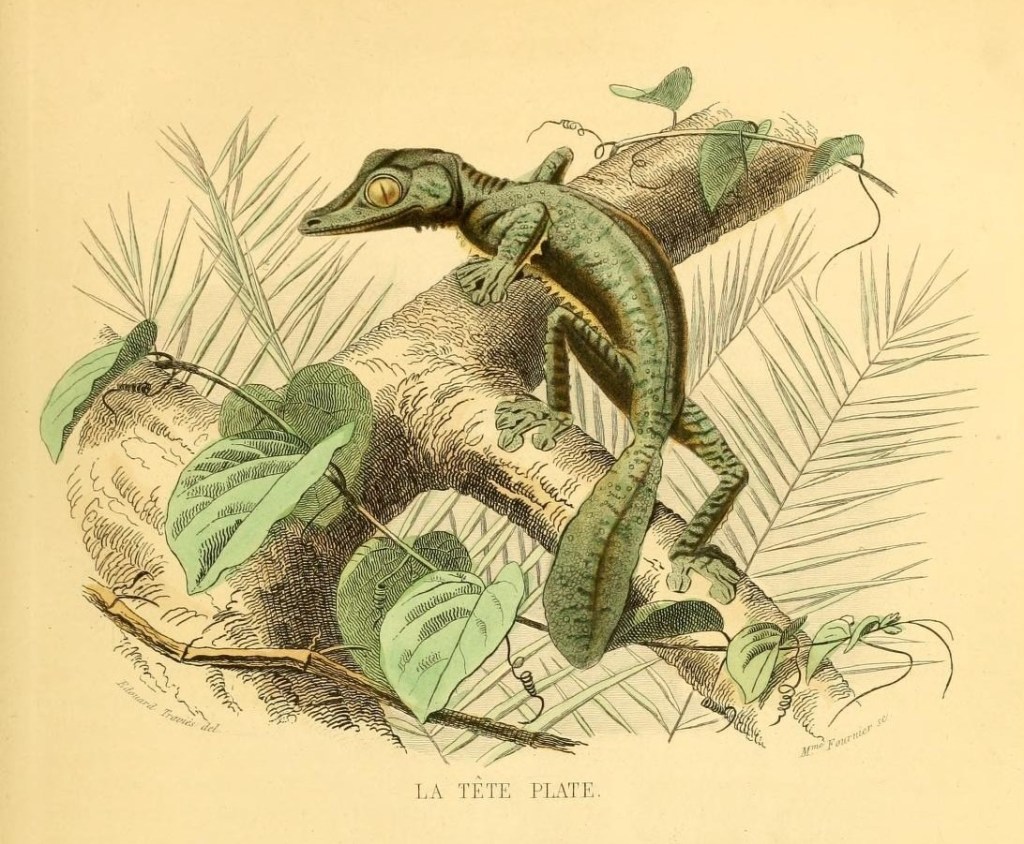
Image Credit: Illustration originally from Histoire naturelle de Lacépède. Paris: Furne, Jouvet et cie. Public domain image courtesy of the Biodiversity Heritage Library.

Steve Brisendine: “Found Boy”

Found Boy

Warm night wind, jukebox echoes, 
a long slow undertongue afterburn 
of pipe smoke and Tullamore Dew –

but there's no second star to be seen, 
only this thin high overcast and a 
streetlight gleam off a left-hand ring,

so it's a right turn onto my street,  
straight on to a slip-in-quietly bed,
a cubicle too early in the morning.

About the Author: Steve Brisendine lives, works and wrestles with words in Mission, Kansas. His most recent poetry collections are Salt Holds No Secret But This (Spartan Press, 2022) and To Dance with Cassiopeia and Die (Alien Buddha Press, 2022), a “split collaboration” with his former pen name of Stephen Clay Dearborn. His first collection, The Words We Do Not Have (Spartan Press, 2021) was nominated for the Thorpe Menn Literary Excellence Award. He is a two-time finalist for the Derick Burleson Poetry Prize. His work has appeared in Flint Hills Review, Modern Haiku, Connecticut River Review and elsewhere.

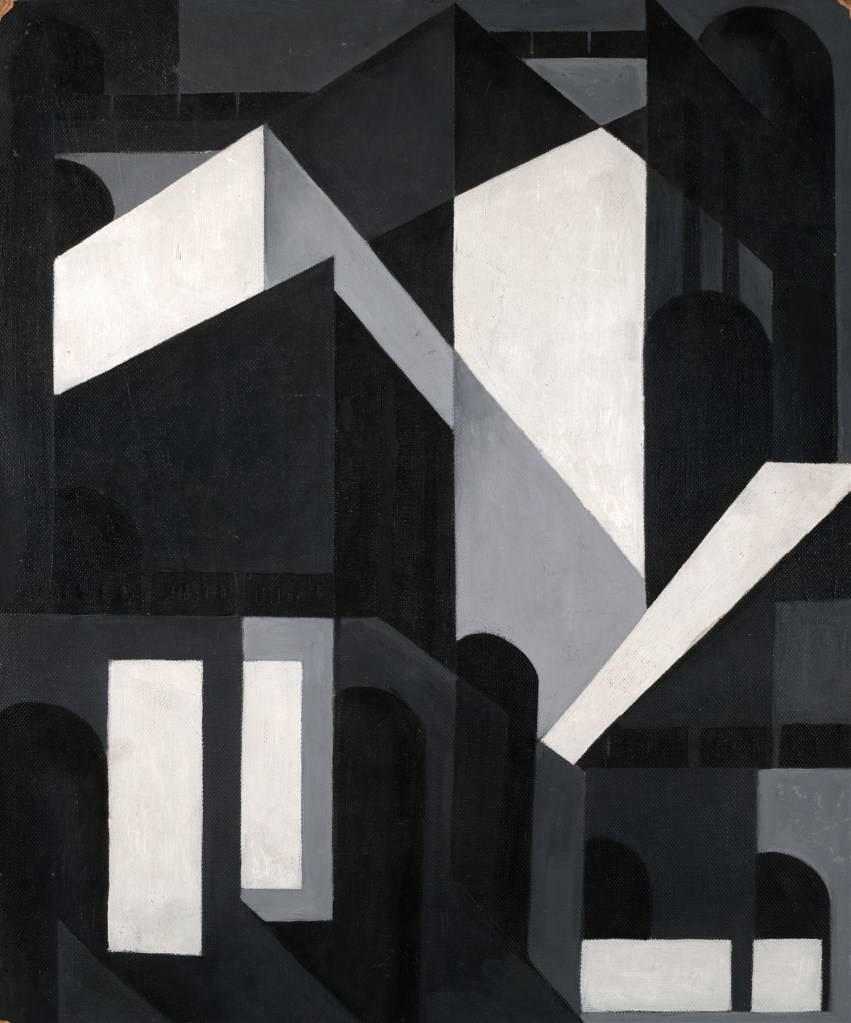
Image Credit: Louis Lozowick “City Shapes” (1922) Public domain image courtesy of Artvee

Rose Mary Boehm: “Discontent”

Discontent 

Early spring in the subtropics 
make me wish for that tree, 
fat with apple blossoms, 
a host of humming 
small folk pollinating 
and feasting. 

Closing my eyes, I smell 
again the freshness
of a cool April morning, 
able to call up the seduction 
of feathery blossom fingers 
on my cheeks. 

Would there be felicity 
without caressing 
losses and ignoring gains, 
exalting crystalized narcissus 
early March in the north of the North 
while succumbing to the exotic wiles 
of the glorious cantuta. 

Now in the late years of my life 
I wish for an Indian summer 
instead of a winter of discontent.

About the Author: Rose Mary Boehm is a German-born British national living and writing in Lima, Peru, and author of two novels as well as six poetry collections. Her poetry has been published widely in mostly US poetry reviews (online and print). She was twice nominated for a Pushcart. DO OCEANS HAVE UNDERWATER BORDERS? (Kelsay Books July 2022) and WHISTLING IN THE DARK (Taj Mahal Publishing House July 2022), are both available on Amazon. My seventh collection, SAUDADE, is going to be published by Kelsay early 2023. https://www.rose-mary-boehm-poet.com/

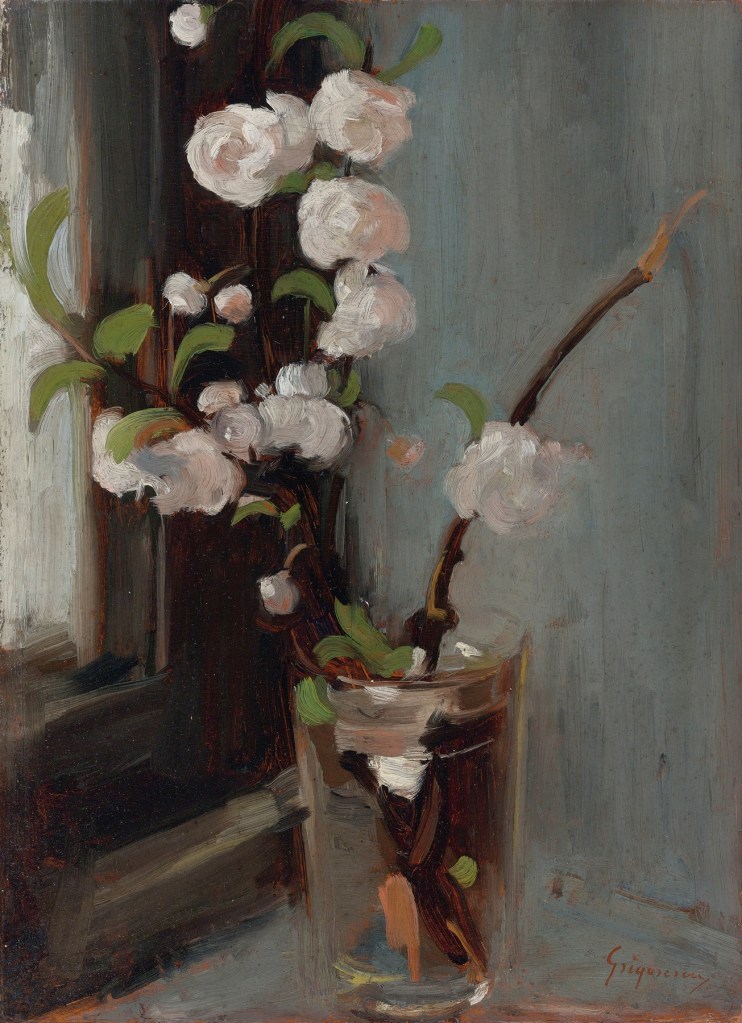
Image Credit: Nicolae Grigorescu “Apple Blossom” Public domain image courtesy of Artvee