A Night at the Opera
(Leoš Janáček’s The Cunning Little Vixen)

We have such great seats at the opera
in the first balcony and the first thing
my wife asks--to switch places because

the woman’s perfume clogs
her sinuses, her sniffles barely covered
by the orchestra’s agitated tuning.

Then it hits me, toward the end
of the Overture, the aromatic woman,
whose arm lightly touches mine,

and whose dark hair flicks in time
to the music is simultaneously
onstage with the cast and off.

But it’s not until the young fox cub
is captured by the forester and taken
home, penned-in as a pet

that I grasp what’s going on.
The Vixen is her role, for now and ever,
first as a student, then a pro, aging out

of the part, no longer having enough pert.
Presently, though, she’s the one
wreaking havoc among the chickens,

slaughtering the hens, escaping deep
into the forest realm of predators—bears, wolves,
poachers. At the end there is no mewling

in her barely audible, muffled, soprano.
Instead, I hear only pure joy,
even as the curtain drops

as she is trapped and killed
and her rich dark pelt offered
to someone’s bride as a wedding gift.
About the Author: Leonard Kress has published poetry, translations, non-fiction, and fiction in Missouri Review, Tupelo, Massachusetts Review, Iowa Review, American Poetry Review, Harvard Review, etc. Among his collections are The Orpheus Complex, Walk Like Bo Diddley. Living in the Candy Store and Other Poems and his new verse translation of the Polish Romantic epic, Pan Tadeusz by Adam Mickiewicz. Craniotomy Sestinas appeared in 2021 and Foxholes in 2025.
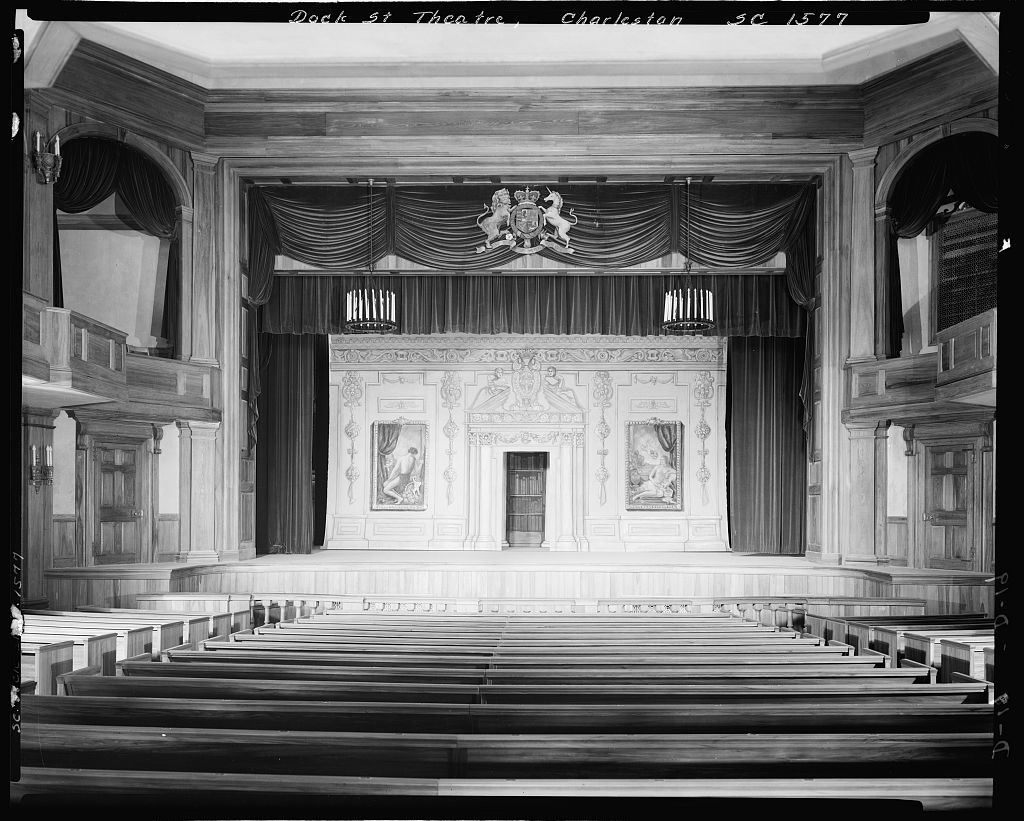
Image Credit: Frances Benjamin Johnson “Dock Street Theatre, Charleston, Charleston County, South Carolina” (1936) Public domain image courtesy of The Library of Congress
 As It Ought To Be