Agnes Vojta: “Love, After Fifty Years”


Love, after fifty years,

is an old woman
riding the bus
for an hour
to a nursing home.

Her husband does not speak.
She does not have much
to say, but today his fingers
closed around her hand.

She stays until the end
of the allowed time.
She will have just missed
the bus. She wanders

the cobblestone streets
of the small town.
Most shops closed at five.
A bakery is still open.

She buys a cookie
to eat on the way.
It is autumn, the dusk
falls early. She rides

home through the dark.
When she steps into her empty
house, she hopes
she will get to do this
again soon.


About the Author: Agnes Vojta grew up in Germany and now lives in Rolla, Missouri where she teaches physics at Missouri S&T and hikes the Ozarks. She is the author of Porous Land (Spartan Press, 2019) and The Eden of Perhaps (Spartan Press, 2020), and her poems have appeared in a variety of magazines.


More By Agnes Vojta:

Legend

Sisyphus Calls It Quits

Flotsam


Image Credit: Jack Delano “Old woman waiting for a bus in front of her house. Newtown, Connecticut” (1940) The Library of Congress (Public Domain)

John Dorsey: “The Prettiest Girl in Byron, Missouri”


The Prettiest Girl in Byron, Missouri

hasn’t seen the sun in months
she sits cross legged in the rain
waiting for her turn to dance

scratching out the image
of a paper heart
in the mud

it’s the only way
she can remember
what her grandmother’s face
even looked like now

water rolls down her tin roof
in search of deliverance

overgrown weeds hiss in the wind
wrapping around her toes
like jump rope

squealing in an empty field.


John Dorsey lived for several years in Toledo, Ohio. He is the author of several collections of poetry, including Teaching the Dead to Sing: The Outlaw’s Prayer (Rose of Sharon Press, 2006), Sodomy is a City in New Jersey (American Mettle Books, 2010), Tombstone Factory, (Epic Rites Press, 2013), Appalachian Frankenstein (GTK Press, 2015) Being the Fire (Tangerine Press, 2016) and Shoot the Messenger (Red Flag Press, 2017),Your Daughter’s Country (Blue Horse Press, 2019),Which Way to the River: Selected Poems 2016-2020 (OAC Books, 2020) and The Prettiest Girl at the Dance (Blue Horse Press, 2020. His work has been nominated for the Pushcart Prize, Best of the Net, and the Stanley Hanks Memorial Poetry Prize. He was the winner of the 2019 Terri Award given out at the Poetry Rendezvous. He may be reached at archerevans@yahoo.com.


More By John Dorsey:

Anthony Bourdain Crosses the River of the Dead

Punk Rock at 45

Perpetual Motion


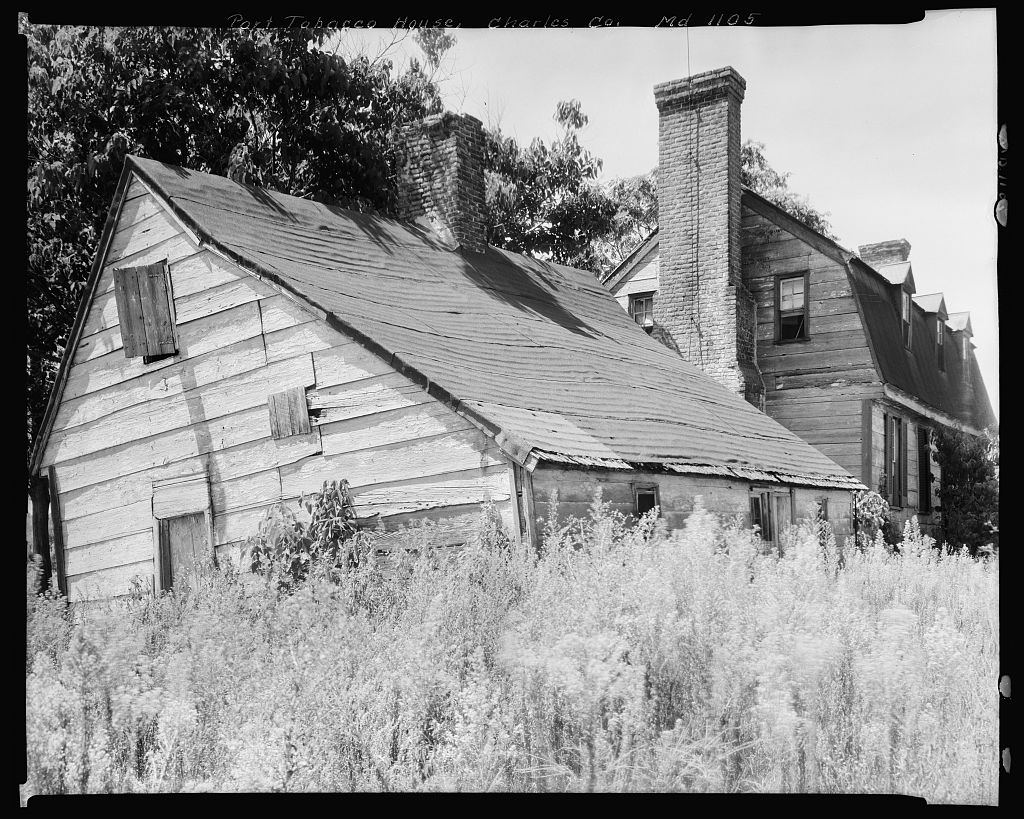
Image Credit: Frances Benjamin Johnston “Port Tobacco Houses, Port Tobacco, Charles County, Maryland” (1936-1937) The Library of Congress.

Tim Peeler: “Last Poem Before Zoloft”


Last Poem Before Zoloft

Is that an ink pen or a bullet?
I can’t tell, you know how long
Are some of those shells.
I see a teenaged boy child
Listening to “Any Major Dude”
Thinking of when to come out.
Outside the rain drums
The triple pane basement window.
Inside a half-crippled black lab
Watches a baseball game.
I ran through what seemed like
An ocean of time to get here
To find myself invisible.
The ages will be the ages
As the rat snake snugs himself
Around the water pipe in the crawlspace.
What do you mean, how will we go on?
We will wear goggles.
We will carry spears.


About the Author: A past winner of the Jim Harrison Award for contributions to baseball literature, Tim Peeler has also twice been a Casey Award Finalist (baseball book of the year) and a finalist for the SIBA Award. He lives with his wife, Penny in Hickory, North Carolina, where he directs the academic assistance programs at Catawba Valley Community College. He has published close to a thousand poems, stories, essays, and reviews in magazines, journals, and anthologies and has written sixteen books and three chapbooks. He has five books in the permanent collection at the Baseball Hall of Fame Library in Cooperstown, NY. His recent books include Rough Beast, an Appalachian verse novel about a southern gangster named Larry Ledbetter, Henry River: An American Ruin, poems about an abandoned mill town and film site for The Hunger Games, and Wild in the Strike Zone: Baseball Poems, his third volume of baseball-related poems.


More By Tim Peeler:

Modernist Hay Making

Paramnesia 2

Ballers 2, the Star’s Monologue 3


Image Credit: Robert Shymanski: “Attic, crawl space, view east and southeast from north center (part 1 of triptych view) – Hegeler Carus Mansion, 1307 Seventh Street, La Salle, La Salle County, IL”(2008) The Library of Congress

Michael Masarof: “Holy Girl”


Holy Girl

She parked other people’s cars
We walked on the Long Island Sound
The boats crushing the shore
She fixed teeth
She was in the mouth all day
Open
Close
Turn
She crushed the clutch
Turned the wheel all the way
Motor off
Shoving that steel pick deep into the gums
I howled
With delight
When we walked the night righteous
The limbs cautious
Air ripe I fell


About the Author: Michael Masarof is a writer and director born in New York and residing in Los Angeles. Michael received his MFA in Film Directing from New York University’s Maurice Kanbar Institute of Film & Television’s Graduate film program at the Tisch School of The Arts, where he was the recipient of the Jane Rosenthal Scholarship and the Warner Bros. Production Grant. Michael’s short film You Should Have The Body won the first place prize at the International Munich Festival of Film Schools. It also screened as a special presentation at the Berlinale, as well as on Channel 3SAT in Germany. First Love, Michael’s debut feature film that the LA Times called intimate, is currently streaming on Amazon.


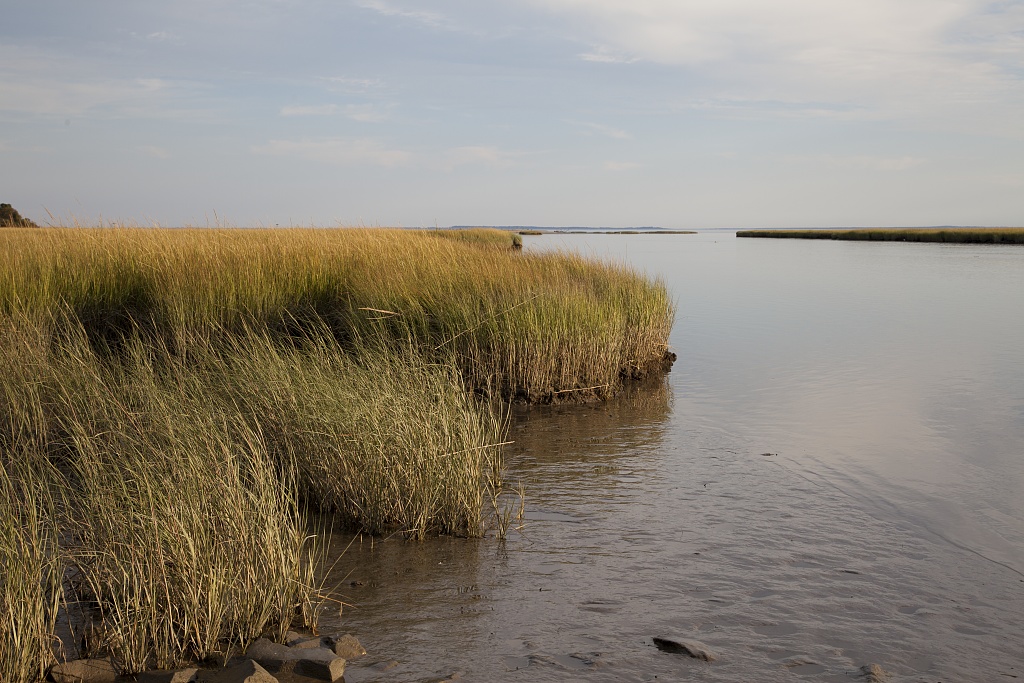
Image Credit: Carol M. Highsmith “Looking out over the marshes in Long Island Sound near Westport, Connecticut” (2011) The Library of Congress

Joseph Mills: When the Dance Instructor Says “Follow Your Partner’s Lead”


When the Dance Instructor Says “Follow Your Partner’s Lead”

Ignore the imperative,
the possessive “your,”
the complicated questions
of trust and simply ask,
how you can both
“follow your partner’s lead.”

Wouldn’t that be
an Escher painting,
a Moebius strip?

I’m following you
following me
following you
following…

and perhaps that’s the point.
Most in relationships
understand the ebb and flow
that occurs, the changing
of places and leads
over the day and days and years.
Of what good is it
to assign positions
to the wave and the water?
Which hand is responsible
for what happens
when hand meets hand?


About the Author, Joseph Mills: A faculty member at the University of North Carolina School of the Arts, I have published six collections of poetry, most recently “Exit, pursued by a bear” which consists of poems triggered by stage directions in Shakespeare. My book “This Miraculous Turning” was awarded the North Carolina Roanoke-Chowan Award for Poetry for its exploration of race and family. Last year I published my debut work of fiction, “Bleachers: 54 linked fictions” which takes place at a youth soccer game.


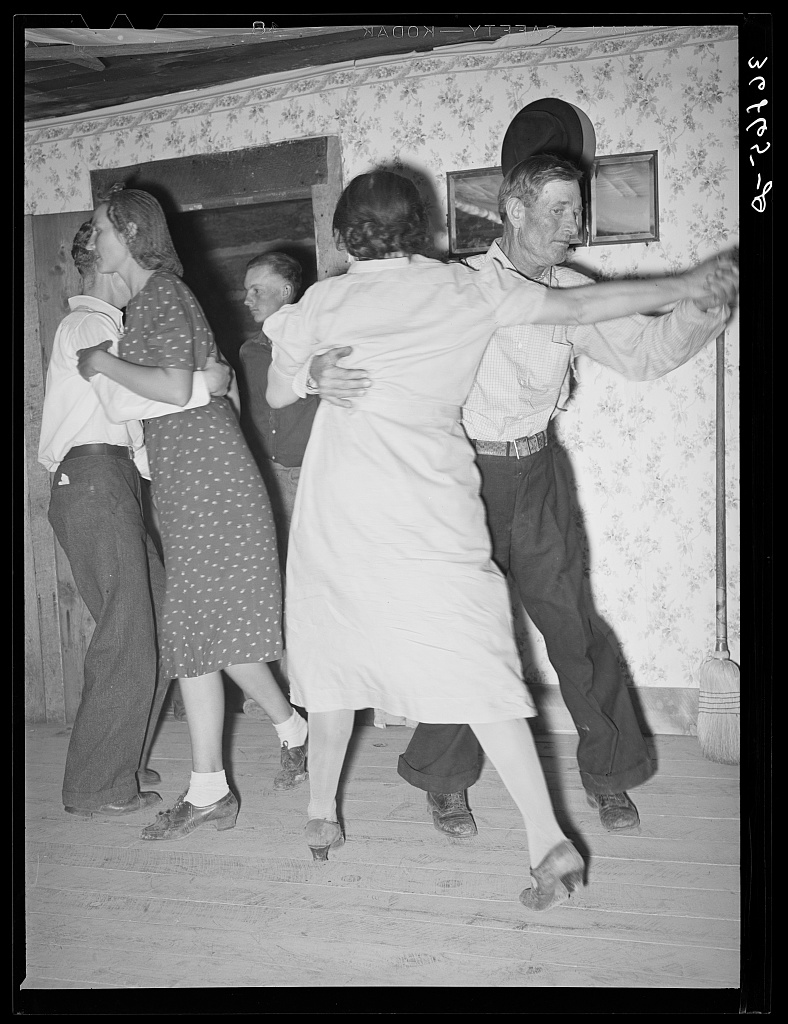
Image Credit: Russell Lee “Round dance. Pie Town, New Mexico. Among people where square dancing is the usual form of dancing, regular ball room dancing is called “round dancing” (1940) The Library of Congress

Nadia Arioli: “On “I Walk Without Echo” by Kay Sage”


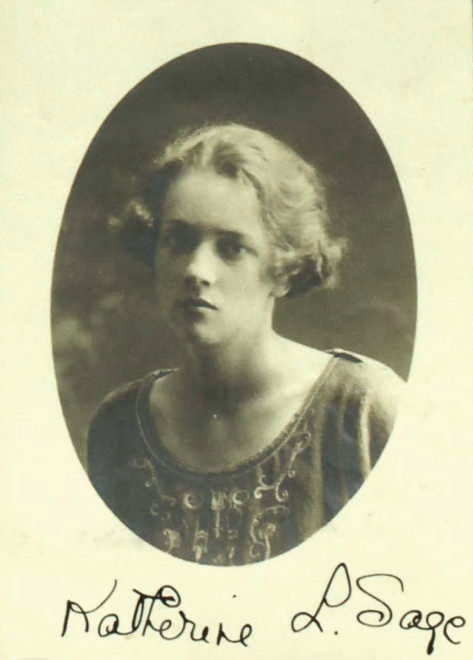
(You can view Sage’s painting “I Walk Without Echo” here)


On “I Walk Without Echo” by Kay Sage

To be a woman is to be caustic
with no power. To instigate

but not to burn. A bellyless earthquake,
a doctor’s bill that goes on and on.

They say we were made second.
Helpmate, companion, never the main

story. A plot point in a chapter
about blood. We go back,

the feminine parts of ourselves,
fetus Matryoshka dolls.

My mother said I looked like one
as a baby. I thought she meant I was

one. I learned in an encyclopedia
I was right. My mother was in utero

with ova. An ovum became half
of me. I’ve still got most my eggs.

To be second but half already there
and while carrying half of the next feels

like a mathematical anomaly,
the kind that would fill a volume.

I sat holding up my dress, bent into three
points: head, knees, one between. Lips

out like shellfish. I want to walk
without echo. I wait on a porcelain ear.

I picture it—perfectly round O’s
of red. Such a bright color in the dark.

I will it: I walk without echo.
Bleed, damn you.


About the Author: Nadia Arioli (nee Wolnisty) is the founder and editor in chief of Thimble Literary Magazine. Their work has appeared or is forthcoming in Spry, SWWIM, Apogee, Penn Review, McNeese Review, Kissing Dynamite, Bateau, Heavy Feather Review, Whale Road Review, SOFTBLOW, and others. They have chapbooks from Cringe-Worthy Poetry Collective, Dancing Girl Press, and a full-length from Spartan.


Mj Taylor: “my drunken alibi”


my drunken alibi
cd not pass

erased from her life
like chalk

a best friend
a spirit intertwined

gone like
the setting sun

it’s been two years
& the words hang

heavy on my lips
the would-have-been’s

the old man’s regret
like a halo

the snow falls in
nebraska & i cant help

but think of
you in this cold

in mill
valley


About the Author: Mj Taylor is a poet living in NE. He has been nominated for the Pushcart prize as well as Best of the Net. He has two chapbooks, “Rattled” (kleft Jaw Press) & Skee-Ball at the Holy Arcade (River Dog). He can be reached at mktaylorjr93@gmail.com


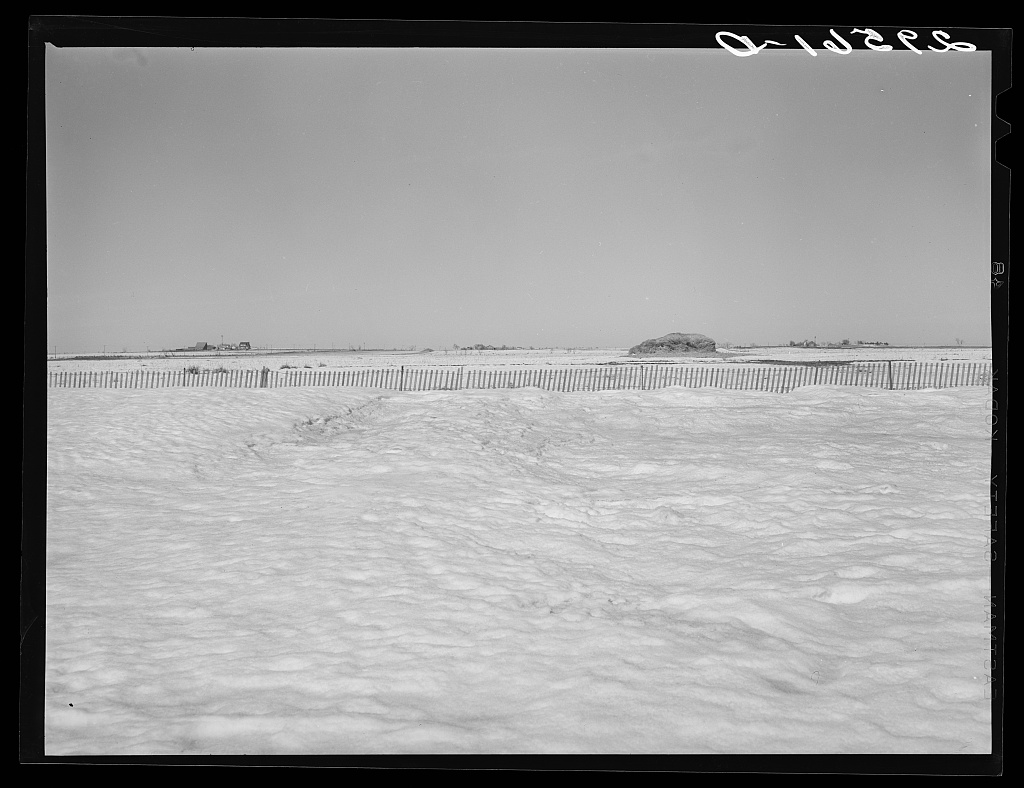
Image Credit: Arthur Rothstein “Melting snow. Hayes County, Nebraska” (1940) The Library of Congress

Omobolanle Alashe: “Posterity’s Grave”


Posterity’s Grave

The early hours of Tuesday morning
saw Providence donning a dark cloak
with stars across the somber fabric
and blood running through its weft
She was majestic in all her gore-ish regalia,
off to till the earth for premature graves
This was neither intended nor planned
then again, nothing ever is
and Providence knew this as she gathered wood for early coffins
and sowed seeds for our chrysanthemums
Her tears would water the soil
that covers our graves in black roses.

Burial shrouds make for subtle foreshadows in times like these.


About the Author: Omobolanle Alashe is an emerging African writer who sees the power in words and the beauty in their expression (as dark as they may come). She juggles life as an undergraduate law student, poet and language enthusiast. Some of her work may be seen in Clumsy Spider Publishing, Tell! Africa Publishing, As It Ought To Be Magazine, OyeDrum Magazine among others. She has an anthology in the works and hopes to publish it soon.

You may contact her at bolanlealashe@gmail.com and @bo.la.nle_a (Instagram).


More by Omobolanle Alashe:

Cherish


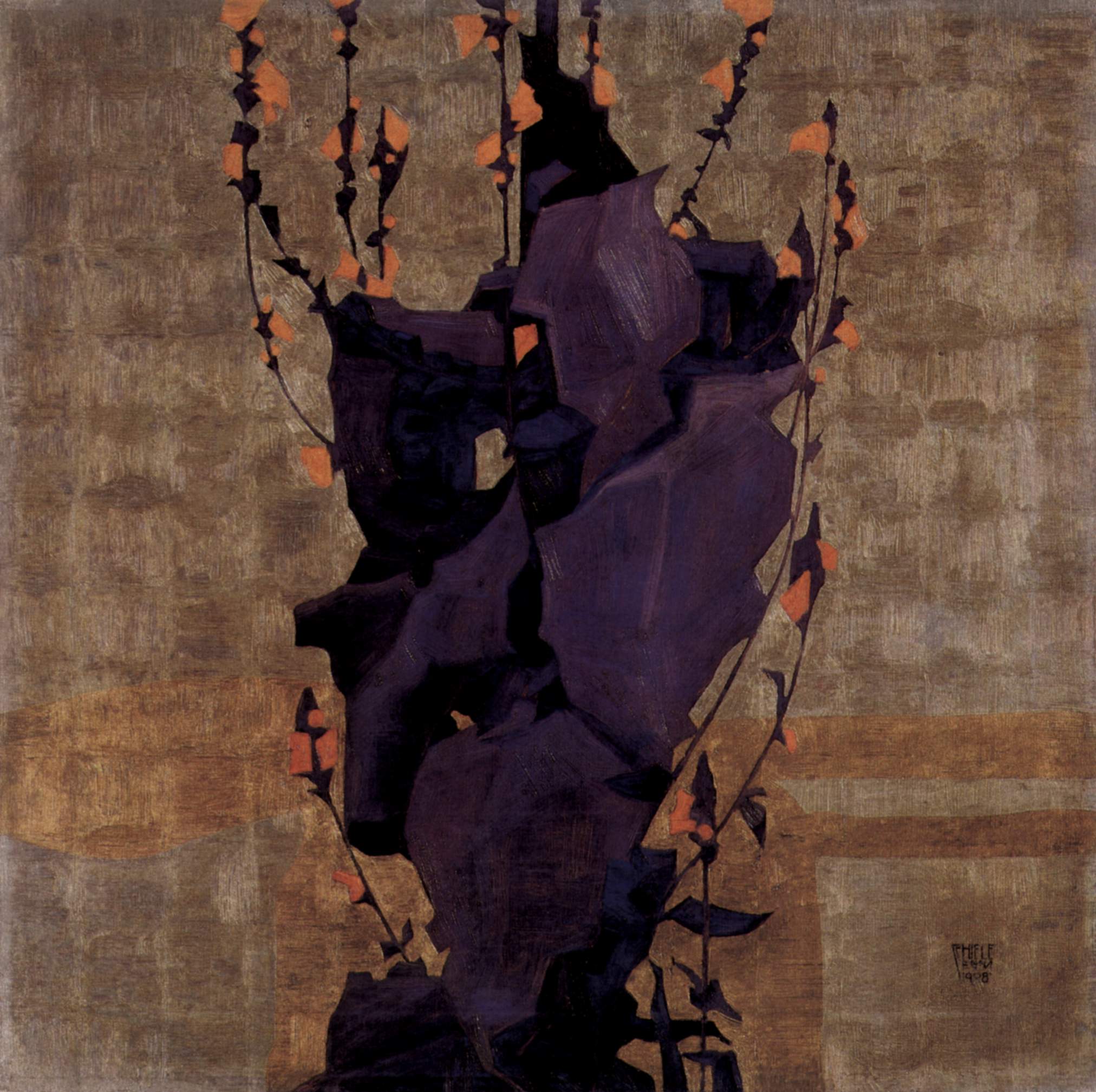
Image Credit: Still Life by Egon Scheile (1908) Public Domain

Paul Koniecki: “1976”


1976

the Bicentennial Minute
is playing on the cathode
ray tube in the corner

in the yard around
the house you’ll own
for fifty years

half-full November
is an annual feast
eleven twelfths gone

and i am ten
someone said an old score
i am the skin of broken grapes

in the house alone
to hide or burn it down
your drinking makes me drunk

fire requires an accelerant
hiding is another kind
heart racing faster

holding one’s breath
takes oxygen
away

the harder you try
to be an empty room
each year i blow one more candle

wishing beyond invisibility
to disinvent
myself


About the Author: Paul Koniecki lives and writes in Dallas, Texas. He was once chosen for the John Ashbery Home School Residency. He is the Associate Editor of Thimble Literary Journal.


More by Paul Koniecki :

today the sky is
a flag that helps everyone


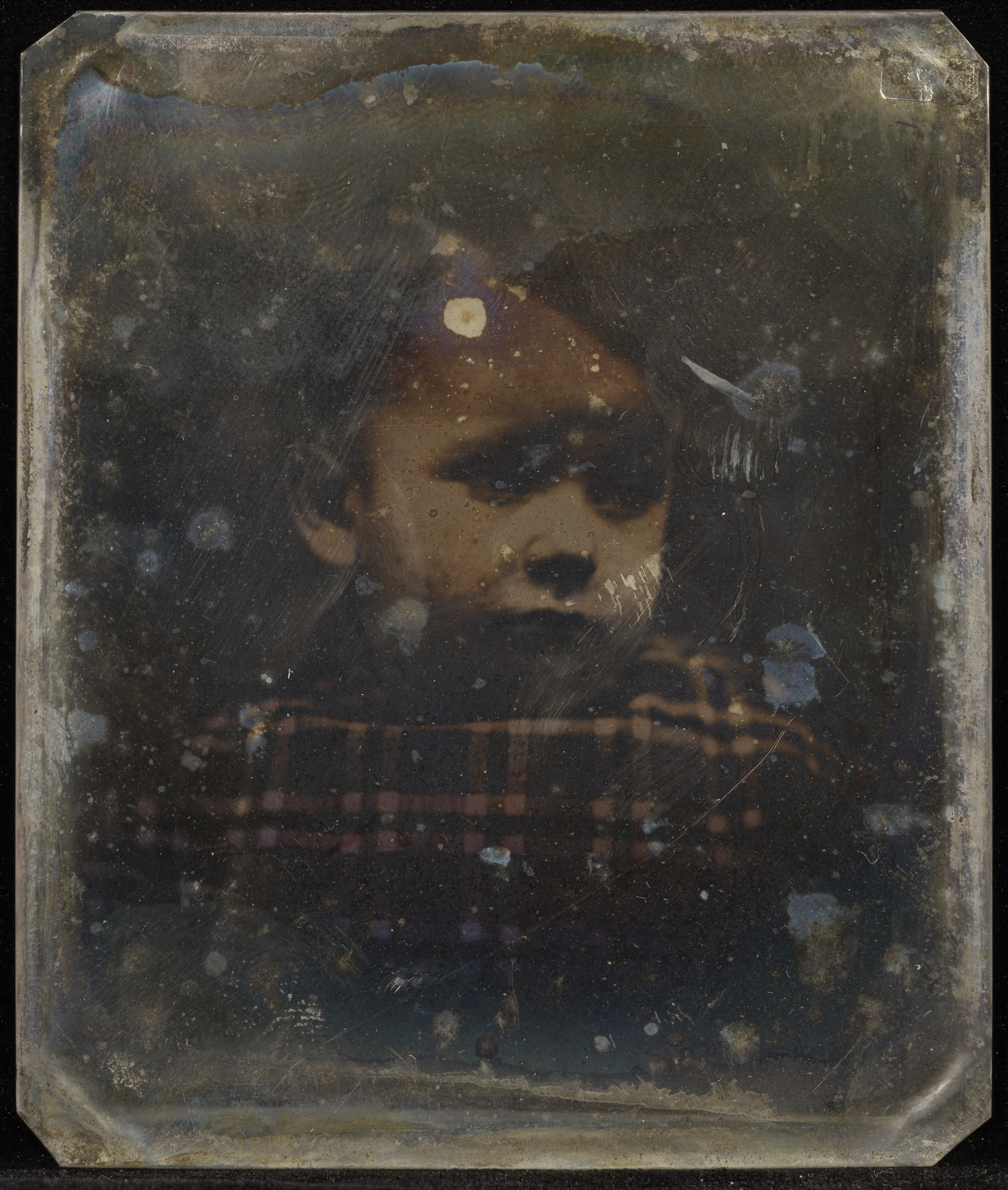
Image Credit: Benjamin Franklin Upton “Portrait of a little boy named, Frank” 1851–1856 Digital image courtesy of the Getty’s Open Content Program.

Christopher Carrico: “Skepticism, Fantasy, and the QAnon Shaman”

Embed from Getty Images

Skepticism, Fantasy,

and the QAnon Shaman

By Christopher Carrico


“It looks like Floki has taken Congress!” my Mom texted me as the horned, painted, spear-wielding “QAnon Shaman” with neo-Norse tatts took the Senate floor.

“Where was the security?!” people asked. Well… they were right there aiding and abetting. The Capitol Police opened the gates and let everyone in.


We’ve been social distancing for 10 months, and the radical skepticism which has been eating away at us for years seems to have taken on even more malignant forms. Young earth creationists and climate change deniers helped pave the way for anti-vaxxers, “fake news”, “pizza gate”, “Plandemic”, and Trump claiming that he won the election in a “massive landslide victory”.

I find myself slipping into quarantine solipsism sometimes myself. A neurotic patient, turning away from reality because it seems unbearable. None of the social tools of reality testing readily at hand.

Who will talk back to the fantasy world that both the Viking LARP-er and the American President are living in? The postmodern constructivists who suddenly plant signs in their yards claiming that “Science is Real”?

Oddly, perplexingly, Empiricists have been enablers for Mysticism.

Usually thought to be among the Mystics himself, I have no idea who Yeats was thinking of when he said, over 100 years ago, that “The best lack all conviction, while the worst / Are full of passionate intensity.” But I can’t count the times I’ve thought of that quote over the course of the last three decades.

For the left, for decades we’ve seen defeat after defeat, causing us to question everything that we thought we knew. Even ideas of a minimum of social democracy are ruled out of line and targeted for elimination. In just the few months leading up to lockdown, we’d seen a wave of new assaults against Latin America’s Pink Tide, including a coup in Bolivia, and we saw liberals close ranks and portray moderates like Corbyn and Sanders as dangerous radicals.

Meanwhile the far right exploits these moments of skepticism and doubt: adding a dispute with the germ theory of disease to its ones with climate change and evolution. Unafraid to directly assault reality. Each morning our days start with news briefings of neo-fascist surrealism being taken to new heights.

We have no reason whatsoever to think that lukewarm liberals will clap back when and if they are at the helm. “Return to Normal” and “Nothing would fundamentally change” are their slogans. And they will use our Trump and COVID-era fears as pretenses for reinforcing the workings of the National Security State. They will refuse to directly confront the radical right – in the name of “unity and healing” for the “whole nation”. Imagine a scenario in a few years when a leader a lot like Trump emerges, but who is not a completely incompetent ass. Will the strength of American “democratic” institutions protect us then? There is no telling where it will all end.

Continue reading “Christopher Carrico: “Skepticism, Fantasy, and the QAnon Shaman””