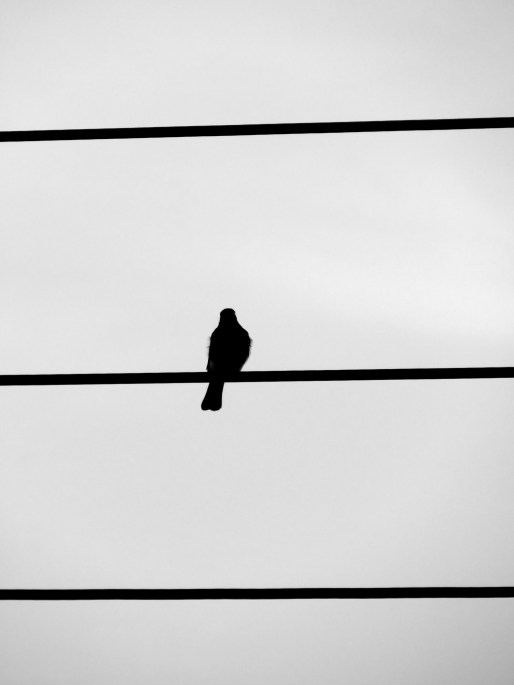
Maryfrances Wagner: “Losing Cousin Carolyn”

.

20200816083609_IMG_0808

.

.

Losing Cousin Carolyn

The news came via Facebook.  Simple Obit.
Immediate family only.  This is the age of Covid.
This is the time of dying alone.  Grieving alone.

We sat in a funeral home pew the last time I saw
Carolyn, cousins lined up together as we always are
when we say goodbye, in this case to our last uncle.

Despite opposite views, we shared a life together,
weddings, reunions, death.  A time to share family
stories or photos we found in a parent’s basement.

I imagine her sons graveside with their father,
no chairs, no flower sprays, no family circling them.
Her brother hundreds of miles away, kidneys failing.

I drive past the house where they lived when we
played Fish or paper dolls on her bedroom floor.
It seems so small.  The shutters and window box sag.

A vacant birdhouse sways near an empty feeder. A clump
of limp jonquils wave, and their old Dragon Blood Sedum
I loved pokes through the broken arms of a gargoyle.

.

.

About the Author: Maryfrances Wagner’s books include Salvatore’s Daughter, Light Subtracts Itself, Red Silk (Thorpe Menn Book Award for Literary Excellence), Dioramas, Pouf, The Silence of Red Glass, and The Immigrants’ New Camera. Poems have appeared in New Letters, Midwest Quarterly, Laurel Review, Natural Bridge, Voices in Italian Americana, Unsettling America:  An Anthology of Contemporary Multicultural Poetry (Penguin Books), Literature Across Cultures (Pearson/Longman), Bearing Witness, The Dream Book, An Anthology of Writings by Italian American Women (American Book Award from the Before Columbus Foundation), et.al.  She co-edits I-70 Review and served as Missouri’s Individual Artist of the Year for 2020.

.

More by Maryfrances Wagner:

Dreaming Through Covid

.

Image Credit: Chase Dimock “Bird on Wire” (2020)
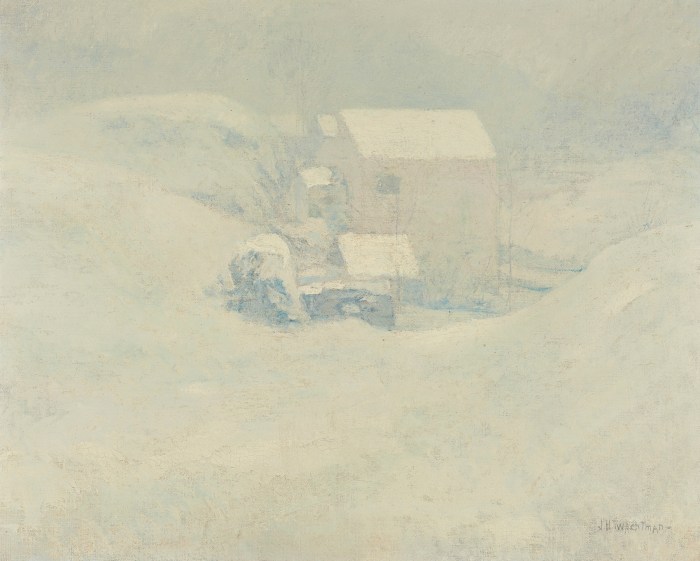
Greg Field “White”

.

505421ldsdl

.

.

White

Who can hold the color of the moon,
a porcelain saucer of sweet cream?
The curse of skin at times translucent,
blue veins like gold coursing through quartz.
Pink and red meat glow through with promise.
Its tide of tumbling spindrift seeking
to dissolve all else, to consume even people
poking along in the sand.
Wading through snow carrying thick black books
with tiny type flowing through pages
like marauding ants snapping at the air
they spread through forests and plains,
a seething blizzard that demands
of all falling under, the pure flag of surrender.

.

.

About the Author: Greg Field is a writer, artist, and musician living in Independence, Missouri with his wife, poet Maryfrances Wagner.  His poems have appeared in many journals and anthologies to include New letters and Chiron Review.  His new book, from Mammoth Press, is Black Heart, which focuses on his Native American heritage.  He is a co-editor of the I-70 Review.  His paintings are in private collections all over the country.  He plays drums for the improvisational jazz band River Cow Orchestra.

.

Image Credit: John Henry Twachtman “Snow” (public domain)

Sam Barbee: “Hybrid”

.

.

.

Hybrid

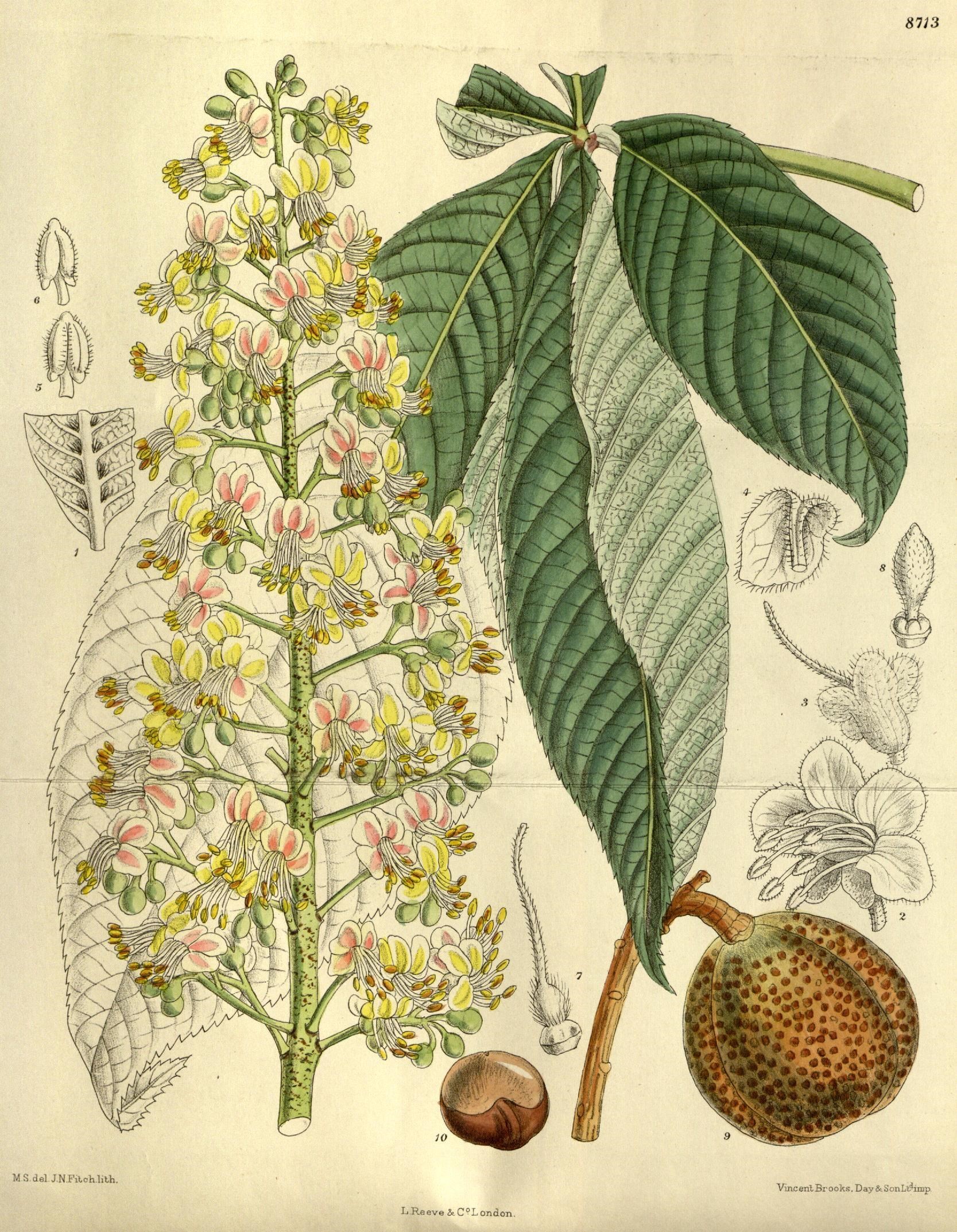
After blight, our chestnut forests
rotted.  Their shadows now emerge,
suffering in furniture and mirror frames,
within unconsecrated slights of legend.

A ring of scientists now cross-breed
remaining Chestnuts with a Chinese genus,
conjuring a stubborn breed, not quite clones,
but another noble effort resistant to demise.

Wooden spooled crib where our grandchild lies
hosts our echo, a remnant thrashing
versus what life will offer, wandering on
with the deceased against what wind strikes down.

So much put asunder, crumbling stumps
rootless and toothless beneath heaven
in a forest felled in microscopic confusion,
among graves where the mighty stood.

.

.

About the Author: Sam Barbee’s poems have appeared Poetry South, The NC Literary Review, Crucible, Asheville Poetry Review, The Southern Poetry Anthology VII: North Carolina, Georgia Journal, Kakalak, and Pembroke Magazine, among others; plus on-line journals Vox Poetica, The Voices Project, Courtland Review, and The New Verse News. 

His second poetry collection, That Rain We Needed (2016, Press 53), was a nominee for the Roanoke-Chowan Award as one of North Carolina’s best poetry collections of 2016.  He was awarded an “Emerging Artist’s Grant” from the Winston-Salem Arts Council to publish his first collection Changes of Venue (Mount Olive Press); has been a featured poet on the North Carolina Public Radio Station WFDD; received the 59th Poet Laureate Award from the North Carolina Poetry Society for his poem “The Blood Watch”; and is a Pushcart nominee.

.

Image Credit: Illustration originally from Curtis’s Botanical Magazine.London ; New York [etc.] : Academic Press [etc.]. Image Courtesy of the Biodiversity Heritage Library. Public Domain

Sue Blaustein: “Rest In Peace”

.

.

.


Rest in Peace

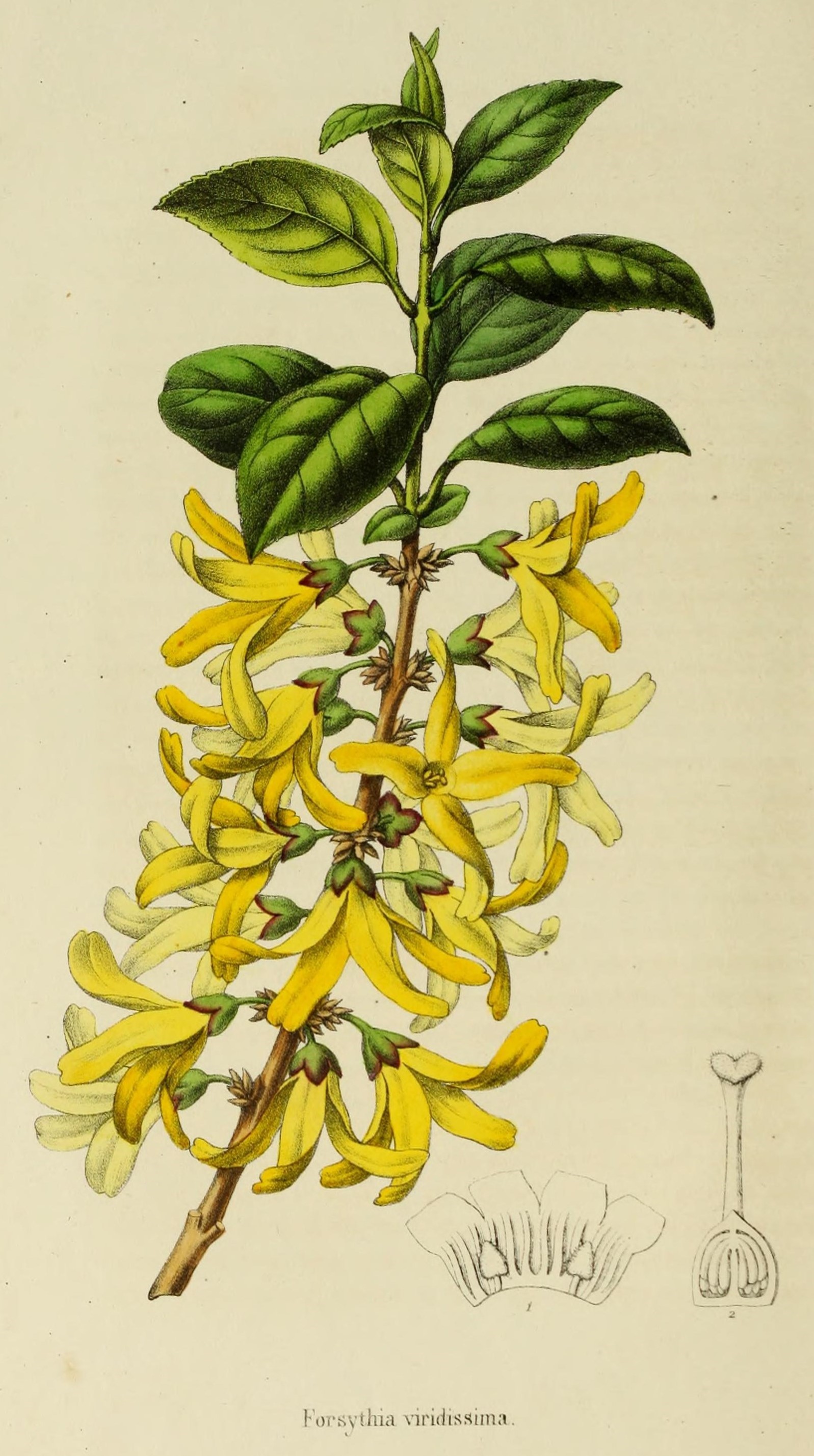
Forsythias come into bloom. Then magnolias.
This is the week it happens.

Early evening  – radio drivetime – I
head south on Holton Street.

The ad on the back
of the bus I’m following

is CALL 411-PAIN.
That’s easy to remember!

411 is kind of like 911, and PAIN
            is self-explanatory.

The whole bus – for this ad – is a puke pink.
Puke pink 411-PAIN. The bus and I

cross Auer Avenue, where a magnolia
            rules the northeast corner.

Timing! The blossoms, the bus, the blossoms…
            pink, puke pink, pink.

The tree fades in my rearview.
I still follow the bus, puke pink PAIN for my eyes.

For my ears and tender heart –
drivetime reports of celebrity deaths.

An NBA legend’s son lost at 33,
from asthma. Asthma? With all the drugs they have?

Steroids, non-steroids, inhalers…
On TV, asthma is vanquished. Or at least tamed. 

Then, an actor. He was in his eighties –
old enough to go. Notable because,

as the deejay explained, He played
Cousin Itt on the Addams Family. 

Rest in Peace, Cousin Itt.
The deejay spoke with respect, 

yet you could tell it was fun for him
to say Cousin Itt so solemnly.

Blossoms, a puke pink bus, 411 PAIN
for my eyes. And, for my ears

and sore heart Rest in Peace, Cousin Itt.
It gentled an April afternoon. 

.

.

About the Author: Sue Blaustein is the author of “In the Field, Autobiography of an Inspector”. Her publication credits and bio can be found at www.sueblaustein.com. Sue retired from the Milwaukee Health Department in 2016, and is an active volunteer. She blogs for ExFabula (“Connecting Milwaukee Through Real Stories”), serves as an interviewer/writer for the “My Life My Story” program at the Zablocki VA Medical Center, and chases insects at the Milwaukee Urban Ecology Center.

.

More by Sue Blaustein:

A Song for Harvest Spiders

A Song for Noise

The Old Ways

,

Image Credit: Digitally enhanced illustration from “Annales de la Société royale d’agriculture et de botanique de Gand” Société royale d’agriculture et de botanique,1845-1849. Courtesy of the Biodiversity Heritage Library. Creative Commons License 2.0.


Guy Elston: “Green”

.

33887799773_0710ec9366_o

.

.

Green

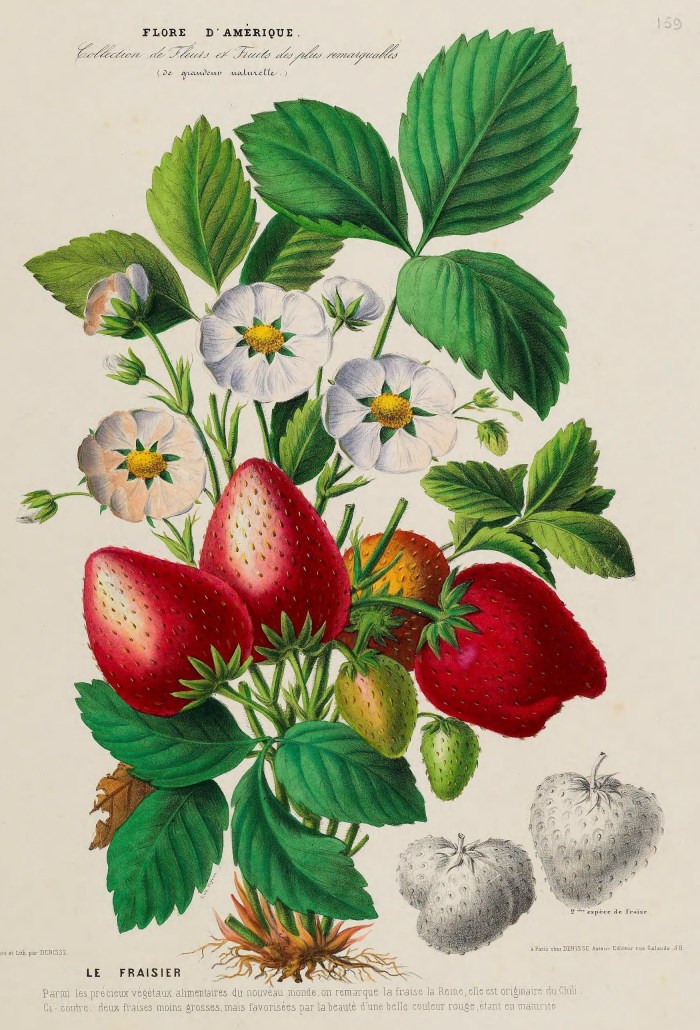
The strawberry advertised itself
early, already edible (if not truly
ready) in late May.
I’d already been warned,
monitored when on the patio
where the planters sat: Hands off!
Berries need time to grow, Gub,
and care, like this little red one;
in a month he’ll be ruby-rosacea,
with a white seed in every pore.
Always time, always care; too late
for the one I’d kept tucked at the back
beneath a blanket of young leaf,
tart and still with its crunch.
Next summer, secret-sick, gut-
knotted, I’d pluck myself completely;
for now, I wiped my fingers
on my jeans and passed the salt.

.

.

About the Author: Guy Elston is a British teacher and writer currently living in Toronto. His poetry has been included by The Moth, Ink Sweat & Tears, The Honest Ulsterman, Anthropocene, Rust + Moth and other journals. He was commended in the 2020 Geoff Stevens Memorial Prize.

.

Image Credit: Digitally enhanced illustration from Flore d’Amérique,. Paris, Gihaut [1843-1846]. Courtesy of the Biodiversity Heritage Library Creative Commons License 2.0.

John Dorsey: “Poem for Danny Bell”

.

service-pnp-fsa-8b35000-8b35500-8b35577v

.

.

Poem for Danny Bell

you had a face like a weasel
& a heart like a lion
in your late 40’s
your parents gone
you had never lived alone
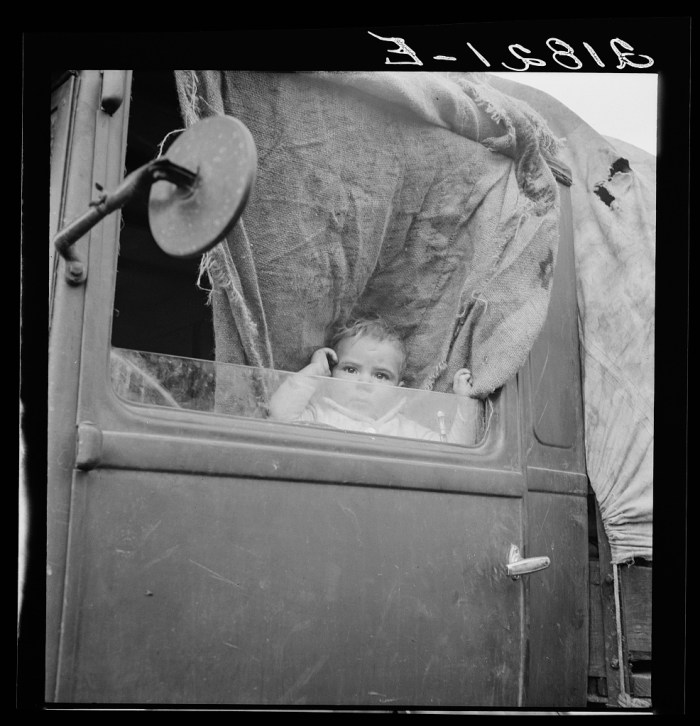
carrying your faded baby picture
around the factory floor

in the morning
watching for deer
from the bus window

the sun dancing
along every wrinkle
you never noticed

the passing of time

your thin black hair
slicked back
with a cheap plastic comb

eat your lunch
apple first
tuna sandwich
with the crust cut off

wait to go home.

.

.

About the Author: John Dorsey lived for several years in Toledo, Ohio. He is the author of several collections of poetry, including Teaching the Dead to Sing: The Outlaw’s Prayer (Rose of Sharon Press, 2006), Sodomy is a City in New Jersey (American Mettle Books, 2010), Tombstone Factory, (Epic Rites Press, 2013), Appalachian Frankenstein (GTK Press, 2015) Being the Fire (Tangerine Press, 2016) and Shoot the Messenger (Red Flag Poetry, 2017),Your Daughter’s Country (Blue Horse Press, 2019), and Which Way to the River: Selected Poems 2016-2020 (OAC Books, 2020). His work has been nominated for the Pushcart Prize, Best of the Net, and the Stanley Hanks Memorial Poetry Prize. He was the winner of the 2019 Terri Award given out at the Poetry Rendezvous. He may be reached at archerevans@yahoo.com.

.

More By John Dorsey:

Anthony Bourdain Crosses the River of the Dead

Punk Rock at 45

Perpetual Motion

.

Image Credit: Dorothea Lange “Baby from Mississippi parked in truck at FSA (Farm Security Administration) camp, Merrill, Oregon” (1939) The Library of Congress

Lynn White: “The Light At The End Of The Tunnel”

.

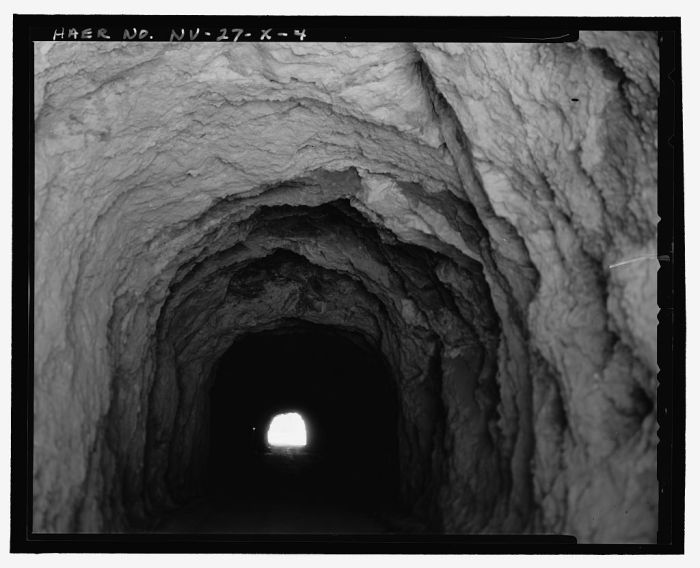
service-pnp-habshaer-nv-nv0400-nv0436-photos-366236pv

.

.

The Light At The End Of The Tunnel

They all said the same,
that the light
at the end
of the tunnel
had been switched off.
She didn’t believe it.
Who would do such a thing?
So she went in search of it
wended her way along
the long dark tunnel
until she saw it
just a speck at first,
a glimmer of
starlight
shining
seemingly
from the outside in
while leaving the dark
outside.
Perhaps they were right
someone had turned it off
inside.
She scrambled up towards
to the end of the tunnel
and searched for the switch.
She found it
turned it on
and then
all was bathed in light
flooded with bright white light
but still she saw nothing
nothing hopeful
just emptiness
bathed in light,
in blinding light
so bright
so blinding
she fell back
disoriented
into the dark
into the emptiness of the dark.

She left the light on.

.

.

About the Author: Lynn White lives in north Wales. Her work is influenced by issues of social justice and events, places and people she has known or imagined. She is especially interested in exploring the boundaries of dream, fantasy. She was shortlisted in the Theatre Cloud ‘War Poetry for Today’ competition and has been nominated for a Pushcart Prize and a Rhysling Award. Her poetry has appeared in many publications including: Apogee, Firewords, Peach Velvet, Light Journal and So It Goes. Find Lynn at: https://lynnwhitepoetry.blogspot.com and https://www.facebook.com/Lynn-White-Poetry-1603675983213077/

.

More by Lynn White:

Imagination’s Real

We Should Have Seen It Coming

.

Image Credit: Douglas M. Edwards “Nevada Spoils Tunnel, south end interior, view northeast – Hoover Dam, Nevada Spoils Tunnel, Near the Lower Portal Tunnel Access Road, Boulder City, Clark County, NV” (2003) Image courtesy of the Library of Congress

Eric Burgoyne: “Witnessing the Arrival”

.

.

21

.

Witnessing the Arrival

My wife sleeps alone as
the meandering breeze
rustles palm fronds framing
a gibbous moon.

Across the road, gazing
into anthracite sea, I stand
on the beach listening
to instant echoes of the

Soft crunch and shatter of
waves meeting the reef
forty yards offshore, reflecting
on the beauty of life.

Those waves survived thousands
of miles punished by unrelenting
winds before transcending
the Hawaiian Trench.

Reaching our resting island
in the middle of the night
relieved someone is present to
witness their arrival.

Thinning lunar light leaves
faint shadows on the sand
as I walk home to my wife
in her relieved repose.

Reunited after our years apart.
As a lost wave gratefully
reaching solid ground, anxious to
embrace and caress its warmth.

.

.

About the Author: Eric Burgoyne is a poet living in Haleiwa, Hawaii. His degrees are from Reading University, Berkshire, England, and the University of Utah. Later this year he completes a master’s degree in Creative Writing from Teesside University, Middlesbrough, England. When not writing and reading he’s surfing, motorcycling, or chasing his grandchildren.

.

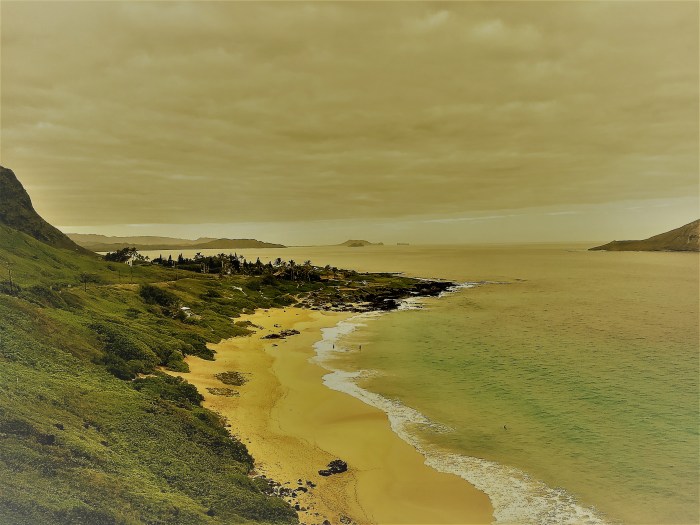
Image Credit: Chase Dimock “Hawaiian Waves” 2019

Melody Wang: “All That My Mother Cultivates”

.

35021810922_0207f22b0a_o

.

.

All That My Mother Cultivates  

On the morning of his death, my mother: a lone
cypress, statuesque in her mourning
even as rising smoke clouded her vision

Plum blossoms cast downward, she morphed
into a resolute blackthorn boasting branches
bursting with tales of courage amid darkness

Autumn crept in and she invited the lost
to harvest her fruit as the fading world
oscillated between darkness and light

She teaches me how to forage wild fennel
and radish greens — the spiced aroma of anise waltzes
with a subtle mustard melody of earth-warmed resilience

Umbel flowers extend proud heads upward,
amber brilliance quivering over parched land.
We delight in spotting whimsical wood sorrel

Heart-shaped leaflets grouped in threes
fold up at night and unfurl again
with the sleepy smile of dawn

As golden hour illuminates the first buds
of magnolia, sporadic blooms appear,
eager to take in the first rains of June

Amid the deserts of Southern California,
an unmistakable fragrance permeates
the night air, not soon to be forgotten.

.

.

About the Author: Melody Wang currently resides in sunny Southern California with her dear husband. In her free time, she dabbles in piano composition and also enjoys hiking, baking, and playing with her dogs. She can be found on Twitter @MelodyOfMusings.

.

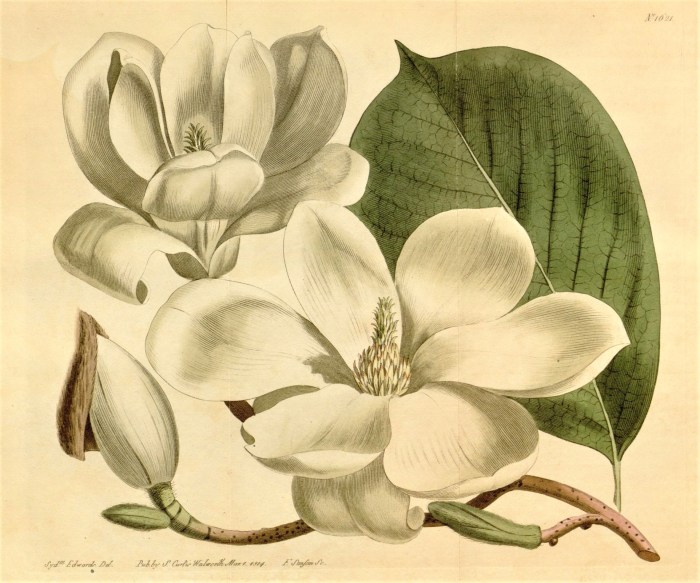
Image Credit: Digitally enhanced image of a Magnolia from Curtis’s Botanical magazine. London ; New York [etc.]  Academic Press [etc.]. Courtesy of the Biodiversity Heritage Library. Creative Commons License 2.0.

Kerry Trautman: “Context”

.

.

.

.

Context
“Different musics respond to knocked-on silences”  –Sarah Gridley

Outside air becomes glass when
Spring’s first red-wing

blackbird shudders its voice
into the chilled void—

the song to be lost
come July with its

humid white-noise
of crickets, honeybees

and cardinals.
My toddler’s

cry of no-no ping-pongs
off midnight bedroom

walls in small eruptions
of panicked confusion,

and just as I wake
enough to step from quilts,

I know already
nothing is there.

.

.

About the Author, Kerry Trautman: I am a poetry editor for Red Fez, and my work has appeared in various anthologies and in journals, including The Fourth River, Gasconade Review, Midwestern Gothic, Paper & Ink, Third Wednesday, and Think Journal. My poetry books are, Things That Come in Boxes (Kingcraft Press 2012,) To Have Hoped (Finishing Line Press 2015,) Artifacts (NightBallet Press 2017,) and To Be Nonchalantly Alive (Kelsay Books 2020.)

.

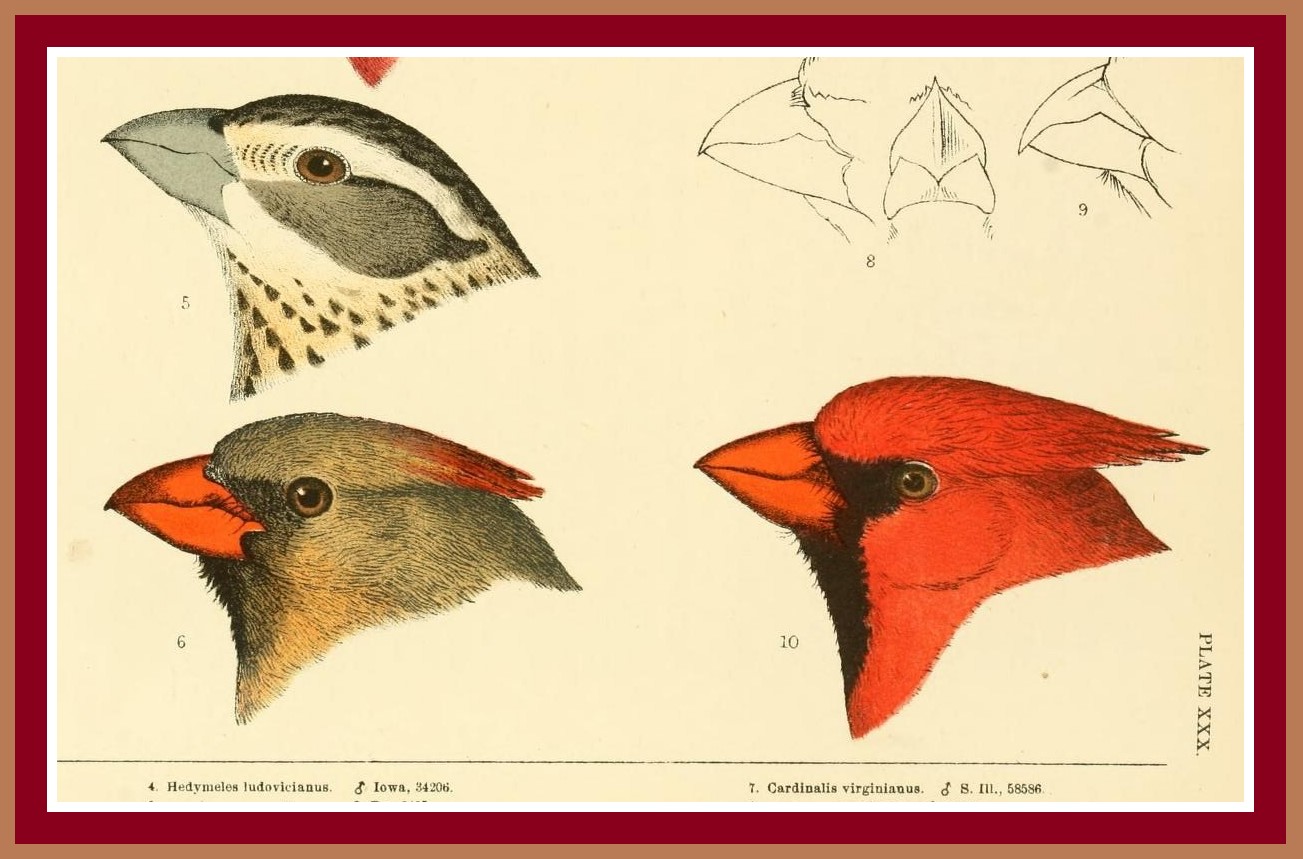
Image Credit: Digital remixing of an illustration from A History of North American Birds. Boston :Little, Brown,1905. biodiversitylibrary.org/page/12887556. Creative Commons License 2.0.