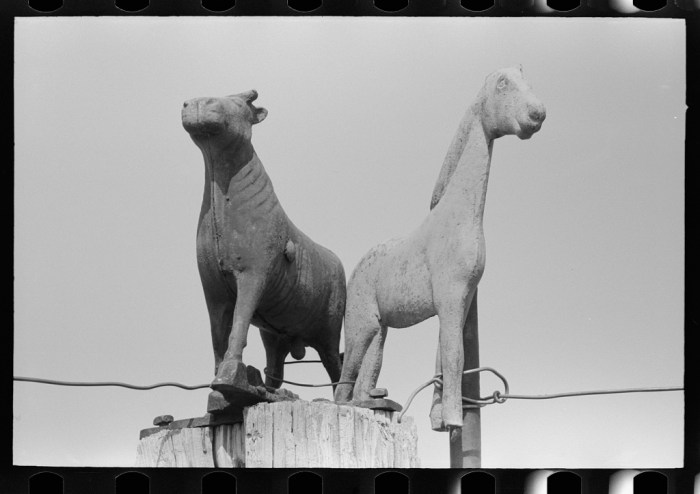
Steve Brisendine: “The Gray King of Winter’s End”

.

service-pnp-fsa-8a26000-8a26900-8a26908v

.

.

The Gray King of Winter’s End

We have lions in Kansas, of a sort, but
our sort skulks, yellow-eyed, and slinks
               from one shadow to the next.

Here, March comes in like an old badger,
surly and still possessed of claws
               with a few good scratches left.

It growls through whipping prairie grass, 
burrows down past-dusk suburban streets 
               daring you to try and stop it.

In its prime, it bit with teeth of jagged
ice, dug holes in houses, picked off and
               picked clean the unhoused.

Even in twilight it is nothing you want to 
fight for long; even dulled, its weapons
               still sting, still buffet and bruise.

It chases thunder east to Missouri, nips
at lightning’s heels, gnaws all night
               at chattering screen doors.

Whatever comes to take it to earth at last
will not wear wool, but feathers, and fly
               full speed into April, talons bared.

.

.

About the Author: Steve Brisendine is a writer, poet, occasional artist and recovering journalist living and working in Mission, KS. He is the author of two collections from Spartan Press: The Words We Do Not Have (2021) and Salt Holds No Secret But This (2022). His work has appeared previously in As It Ought to Be Magazine, as well as in Connecticut River Review Journal, Flint Hills Review, Circle Show and other journals and anthologies. He was a finalist for the 2021 Derrick Burleson Poetry Prize.

.

Image Credit: Russell Lee, “Weather vanes, Sheridan County, Kansas” (1939) The Library of Congress
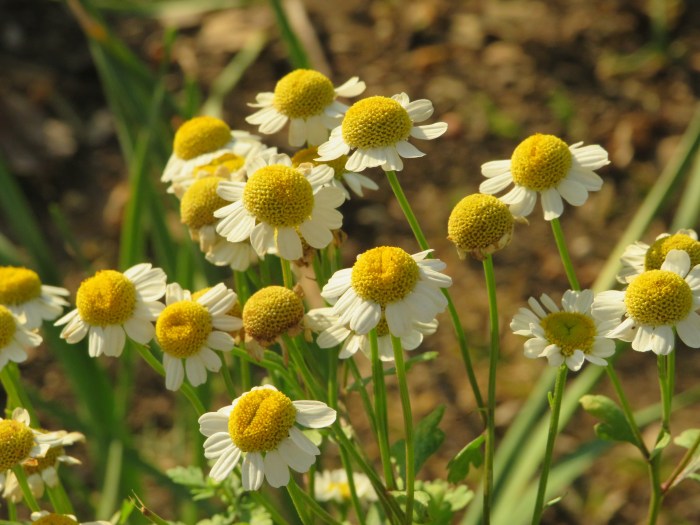
Rose Mary Boehm: “Cumbrian Summer”

.

20220302061602_IMG_3351

.

.

Cumbrian Summer

The mudroom. Wildflowers on the kitchen table. 
Big eiderdowns in which I could disappear.
Mother and I played hide-and-seek
during that last summer,
before her hair fell out.

We ran through oak woodland
and pretended to fish in the tarns.

Father couldn’t come, she said.
Sometimes she’d sit by the window
looking out at nothing. 

Those were the afternoons
when I professed to read,
with deep interest, my book
on English wildflowers.
With illustrations.

In London, on a drip
of lifesaving poison,
she smiled at the memory.
And the silence
was too loud.

.

.

About the Author: Rose Mary Boehm is a German-born British national living and writing in Lima, Peru. Her poetry has been published widely in mostly US poetry reviews (online and print). She was twice nominated for a Pushcart. Her fifth poetry collection, DO OCEANS HAVE UNDERWATER BORDERS, has just been snapped up by Kelsay Books for publication May/June 2022. Her website: https://www.rose-mary-boehm-poet.com/

.

Image Credit: Chase Dimock “Wild Daisies” (2022)

Caleb Bouchard: “Slippage”

.

service-pnp-fsa-8c00000-8c00100-8c00102v

.

.

Slippage

A love letter tacked on a refrigerator slips from the grip of the magnet and lands inside the fridge, among the leftovers, uncooked meat, and vegetables. It grows cold over time, soaks in all the pungent smells of the tupperware food kept for too long. Grimy spinach. Sour soup. Chili caked in a layer of discolored fat. The letter’s edges curdle and the penned words blanch in solidarity with the forsaken dishes, until the words have completely faded and the page is empty, and somewhat crepey.

.

.

About the Author: Caleb Bouchard’s writing has recently appeared in or is forthcoming from The Atlanta Review, MORIA, Saw Palm, and Thimble Literary Magazine. His translations of the French poet Jacques Prevel will soon appear in Black Sun Lit and Poet Lore.

.

Image Credit: Russel Lee “Houses at Mineral King cooperative farm. Tulare County, California. They are equipped with electric refrigerators” (1940) The Library of Congress

Ryan Quinn Flanagan: “She Says Her Cat is in Love with Javier Bardem”

.

service-pnp-ppmsca-19000-19072v

.

.

She Says Her Cat is in Love with Javier Bardem 

She tells me she sat up late watching
Being the Ricardos.

That it is better than you would think 
which is what everyone says about everything
but the apocalypse.

Throwing one of those scrunchies up in her hair
like trying to contain the mess.

A trick of beauty that she still turns heads.
Says her cat is in love with Javier Bardem.

Woke up out of a dead sleep on the couch
to watch him most attentively.

When she sleeps, she’s out,
she says.
She doesn’t do that for anyone.

I’ve taken to calling her cat Mrs. Bardem
the last few days.

The cat seems to get embarrassed
if cat embarrassment away from the little box
is such a thing.

Throws litter all over the place.
She never did that before.

.

.

About the Author: Ryan Quinn Flanagan is a Canadian-born author residing in Elliot Lake, Ontario, Canada with his wife and many mounds of snow.  His work can be found both in print and online in such places as: Evergreen Review, As It Ought To Be Magazine The New York Quarterly, Cultural Weekly, In Between Hangovers, Red Fez, and The Oklahoma Review.

.

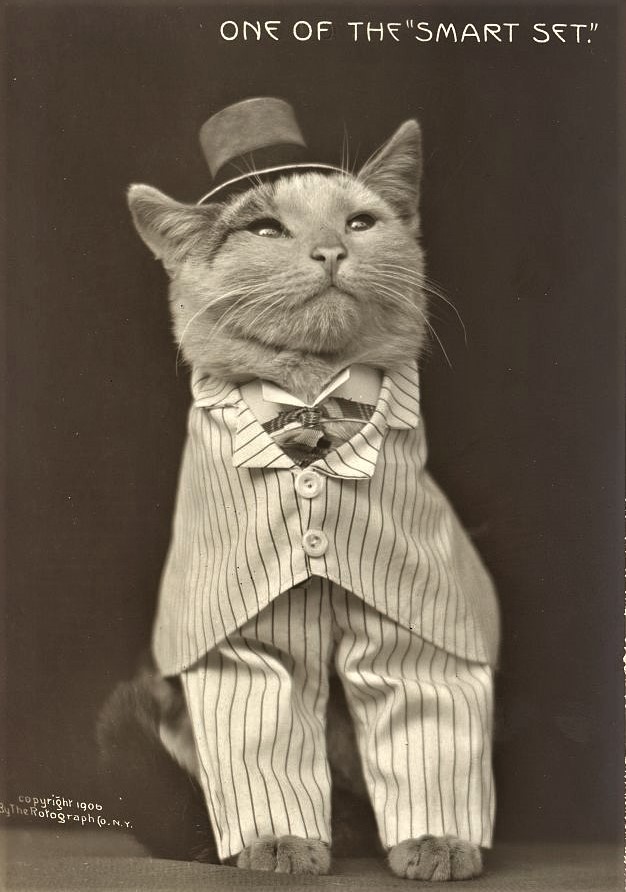
Image Credit: “One of the “smart set” (1906) Courtesy of The Library of Congress (public domain)

Larry Smith: “March 31, 1852 in Thoreau’s Journal”

.

imgonline-com-ua-andy-warhol-rVfEVH7gPnFP

.

.

March 31, 1852 in Thoreau’s Journal:
What would the days, what would our life, be worth, if some nights were not dark as pitch, – of darkness tangible or that you can cut with a knife? How else could the light in the mind shine? How should we be conscious of the light of reason? If it were not for physical cold, how should we have discovered the warmth of the affections? I sometimes feel that I need to sit in a far-away cave through a three weeks’ storm, cold and wet, to give a tone to my system. The spring has its windy March to usher it in, with many soaking rains reaching into April. Methinks I would share every creature’s suffering for the sake of its experience and joy.

.

March 31, 1852 in Thoreau’s Journal:

What would the days, what would our life, be worth, 
if some nights were not dark as pitch, 
of darkness tangible or that you can cut with a knife? 
How else could the light in the mind shine? 
How should we be conscious of the light of reason? 
If it were not for physical cold, how should we 
have discovered the warmth of the affections? 

I sometimes feel that I need to sit in a far-away cave
through a three weeks’ storm, cold and wet, 
to give a tone to my system. 
The spring has its windy March to usher it in, 
with many soaking rains reaching into April. 
Methinks I would share every creature’s suffering 
for the sake of its experience and joy.

.

.

About the Author: Larry Smith, director of Bottom Dog Press in Ohio. Smith is from the industrial Ohio Valley and a professor emeritus at Bowling Green State University with over a dozen books of fiction, poetry, and memoir.

.

More By Larry Smith:

No Walls

Union Town

At The Country Store

.

Daniel Vollaro: “Robin Hood, Where Are You?”

.

1280px-Robin_Hood_paper_theater

.

.

Robin Hood, Where Are You? 

A personal essay 

By Daniel Vollaro

.

     On the first anniversary of the January 6 insurrection, Robin Hood appeared to me as if in a dream. There was no obvious reason I should have been thinking of him, no banners in his name from that awful day in 2021; no t-shirts proclaiming that “Robin Hood was Right,” or wrong; no clever Robin Hood memes, pro or anti insurrection. Nevertheless, he was suddenly there, as present in my imagination as he had been when I was a child. I had not seen him in a very long time.  

     I immediately understood why he had come. In my desire to escape from the one-year-anniversary news stories and think pieces and retrospectives, all forcing me to relive that terrible day, I had inadvertently summoned a being who is the antithesis of the MAGA-QAnon-Oath Keeper swamp that oozed into the Capitol Complex that day. That mob was the walking embodiment of cowardice and dishonorable conduct, from its leader promising ”I’ll be there with you” and then promptly retreating to the White House to the chorus of participants who now want to faux apologize or plead ignorance or blame others for deceiving them or deny that they were even there. Robin Hood, on the other hand, is a paragon of courage and chivalry, a righter of wrongs and solver of problems who always looks out for his fellow yeomen. An outlaw, yes, but an honorable one. Robin takes credit for his law breaking and looks his friends and enemies in the eye. Liars are especially likely to feel his wrath. 

     Robin would have been mystified by the insurrectionists. There was no one to champion or rescue and nothing of value to steal. No archery contest to win or good sport to be had. You tased a police officer in the neck, he would ask? What did he do to you?  You broke into the Capitol building to hunt down and possibly kill an elderly woman named Nancy Pelosi? Where is your chivalry? You rifled through some papers and took a shit in someone’s office. What does that accomplish? You built a gallows to hang a man because he refuses to say what you want him to say about an election? Really? Robin would not be opposed in principle to the idea of mischief or property destruction or even a little violence, but he would wonder, who actually benefits from this? What is the point? What injustice was crying out to be righted on that day? Was it really nothing more than the fact that one of the most pampered, silver spoon-fed men in America was thwarted from realizing his political ambitions?  

*** Continue reading “Daniel Vollaro: “Robin Hood, Where Are You?””

William Taylor Jr.: “Little Windows and the People Behind”

.

service-pnp-gsc-5a06000-5a06000-5a06088v

.

.

Little Windows and the People Behind

They finally fixed my busted heart with a brand new 
robot valve and after a week in the ICU I’m well enough 
to be moved into a regular room.

The other bed is empty
so I have the place to myself .

From the hallways and other rooms I hear 
the sounds of people vomiting and moaning, 
bargaining with gods they don’t believe in, 

asking the nurses when they can go home 
or how long they have to wait before 
they can take their meds again.

I have a little chair and table by a window 
overlooking Geary Street and if the people
below look up they can see me here

gazing at crows resting on the tops of streetlamps
reading an old Sherwood Anderson novel that nobody remembers
breathing in and out and marveling at the fact of it.

The nurses bring me drugs and jello of myriad colors.

Countless days I’ve passed this building
on my way to the store or somewhere and I’ve always 
glanced up at the little windows and imagine 
the people behind, feeling both afraid of and for them.

And now here I am, one of the window people
sitting with my laptop writing the first 
draft of my first hospital poem.

I wave down to the sidewalk folk,
give them a thumbs up to let them know
that things are alright, and it’s not so bad 
except for the food.

.

.

About the Author: William Taylor Jr. lives and writes in the Tenderloin neighborhood of San Francisco.  He is the author of numerous books of poetry, and a volume of fiction. His work has been published widely in journals across the globe, including Rattle, The New York Quarterly, and The American Journal of Poetry. He is a five time Pushcart Prize nominee and was a recipient of the 2013 Kathy Acker Award. Pretty Words to Say, (Six Ft. Swells Press, 2020) is his latest collection of poetry.

.

More by William Taylor Jr.

“The Fire of Now”

“One of Pessoa’s Ghosts”

.

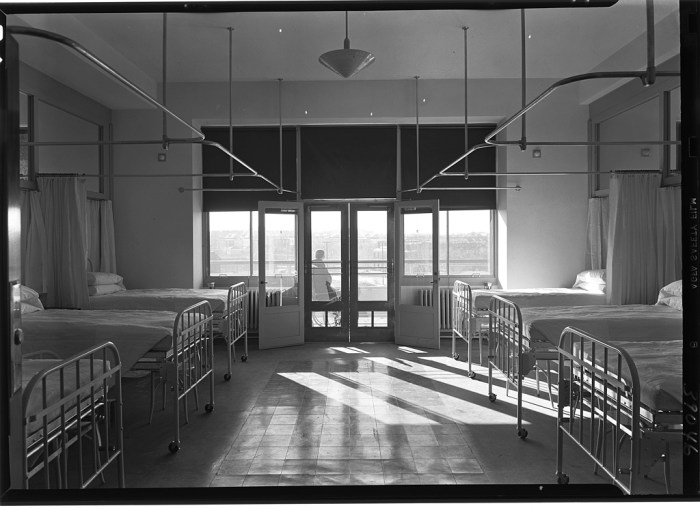
Image Credit:  Gottscho-Schleisner, Inc. “Triboro Hospital for Tuberculosis, Parsons Blvd., Jamaica, New York. Typical six-bed ward, to balcony” (1940) Image Courtesy of the Library of Congress

Matthew Wallenstein: “Washington”

.

service-pnp-highsm-50400-50459v

.

.

Washington

Low 
tide. Across the bay 
the mountains are blue in moving fog. 
Animal 
corpse
in the brown grass. 
Headless and skinned.
About the size of a dog. Max says 
he thinks it is a deer that went 
In the ocean and drowned, 
washed up on shore. I nod, 
I don’t smile and I don’t mention its flippers.
Around a bend 
on the beach we find another—
skinned, headless. 
Its ribs grey, yellow, bending 
from its pile of body. It smells 
like seawater and rot. 
The flippers are splaying out 
more obviously this time, 
he sees them. 
“Oh,” he says, “it’s a seal, they are seals.”
I don’t let him forget 
that he thought it was a deer 
that went swimming.

.

About the Author: Matthew Wallenstein is a writer and tattooer. He lives in the Rust Belt. Much of his work concerns growing up in poor rural New Hampshire, the deportation of his wife, and mental illness, though it also captures every day life.

.

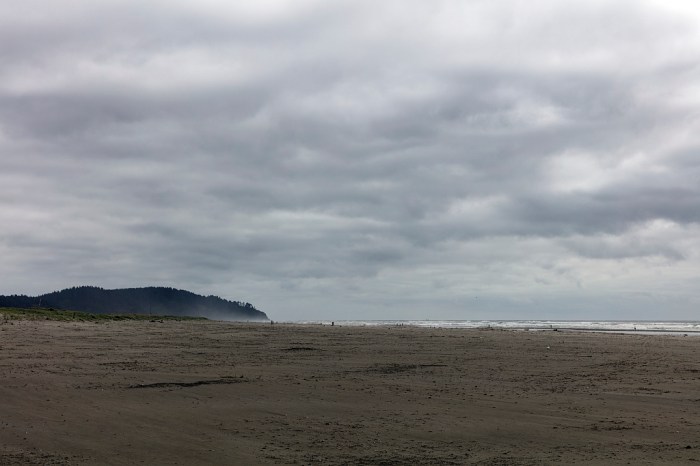
Image Credit: Carol M. Highsmith, “A distant shoreline view in a Washington State town fittingly called Long Beach, since it advertises its 28-mile-long Pacific Ocean strand as “the world’s longest beach.” (2018) The Library of Congress

John Brantingham: “Joan Miro’s Portrait of Vincent Nubiola”

.

Vincent_Nubiola_Miro

.

.

Joan Miro’s Portrait of Vincent Nubiola

Before he started painting, Miro had 
a nervous breakdown, which seems rational
given that this was Spain, and a quiet hell
had cracked open in Europe, his world gone mad,
and what could he do but watch and resist
as Franco and Adolph got together 
to dream up cynical new ways to sneer
at what could be if we would just coexist.
And then Miro started to paint, which seems
more than rational. More than sane. Portrait 
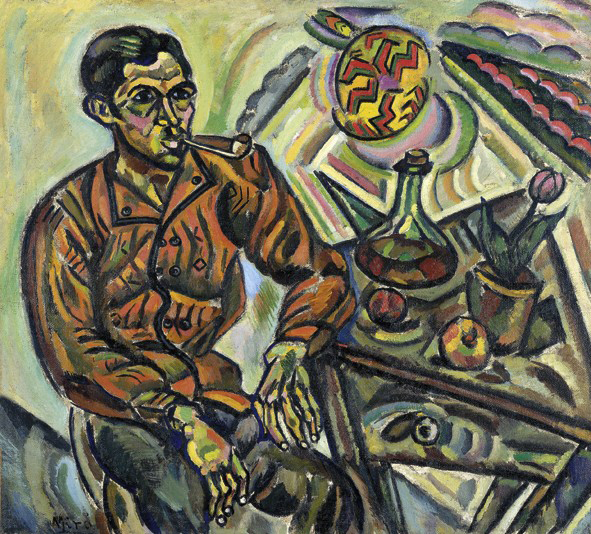
of Vincent Nubiola was an early piece.
Miro catches him in a pipe-smoking daydream,
his elbow resting on a table with fruit,
a tulip, and wine. He’s at the kind of ease

that Miro must have dreamed of. Fields stretch
out beyond him, fields where he will no doubt
return for the day’s work, worrying about
things that matter while Miro will sketch
and paint and find a place where he can stand
against what is coming. He will turn 
toward the surreal, even as Europe’s dictators
call it degenerate, and it is banned.
I imagine the two of them, Miro 
still young, but wise enough to be alarmed
at what is building. Nubiola is
a professor of agriculture who knows
Miro’s genius, a man with training and wisdom.
They sit and talk of the coming hostilities.

“It feels like the end of everything that’s right,”
my imagined Joan says. Vincent replies,
“Every generation feels this. It’s an endless fight.”
And Joan can foresee an endless night
of terror. He thinks of all who will die
and to him it is the end of everything that’s right.
And Vincent remembers stories of knights
in his childhood and King Alfonso’s lies,
and he knows this is an endless fight.
Old men get a sexual thrill at the sight
of young men dying. They get off on cries
of anguish, and maybe it’s the end of right,
but he tells Joan they’ll keep moving despite
the horror of old men’s pornography.
This, Vincent tells Joan, must remain an endless fight
because these old men live for this kind of blight,
but this world was made for Miro’s kind of beauty.
We must keep going to keep everything right.
That is the beauty of our endless fight.

.

.

About the Author: John Brantingham was Sequoia and Kings Canyon National Parks’ first poet laureate. His work has been featured in hundreds of magazines, Writers Almanac and The Best Small Fictions 2016. He has nineteen books of poetry and fiction including his latest, Life: Orange to Pear (Bamboo Dart Press). He teaches at Mt. San Antonio College.

.

Image Credit: Joan Miro “Portrait of Vincent Nubiola” (1917) Public Domain

Joanna George: “woodpeckers”

.

51068443446_0dee97a4bd_o

.

.

Screenshot 2022-03-16 140342

.

.

About the Author: Joanna George (She/Her) writes from Pondicherry, India. Her poems appear or are forthcoming in Parentheses Journal, Cordite Poetry Review, Isele magazine, Honey Literary, Borderlands: Texas Poetry Review, West Trestle Review, Lumiere Review, Paddler Press and others. She tweets at j_leaseofhope.

.

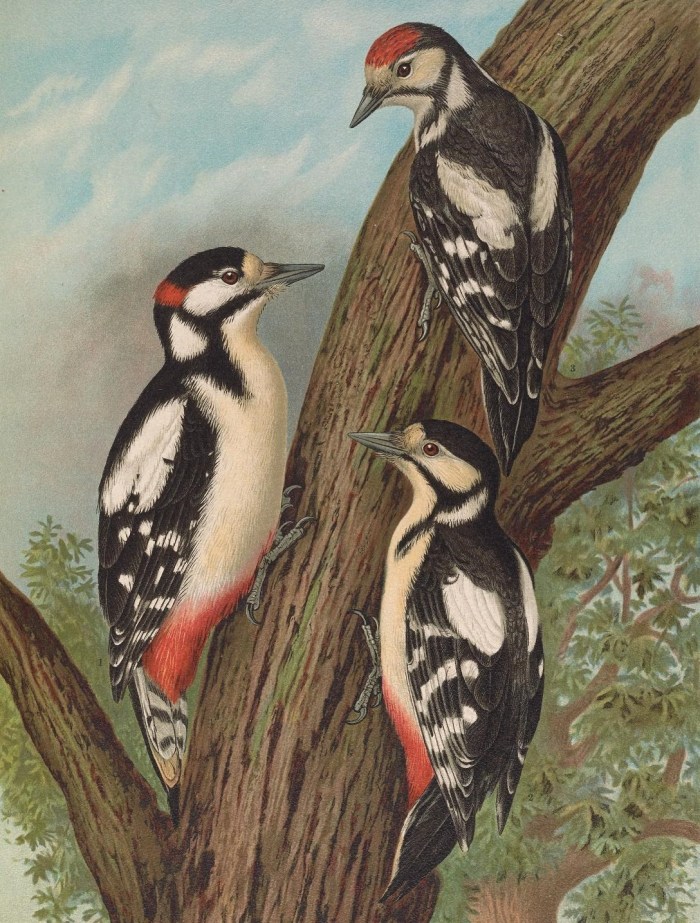
Image Credit: Image from Naturgeschichte der Vögel Mitteleuropas Gera-Untermhaus,F.E. Köhler,1897-1905 [v.1, 1905] Courtesy of the Biodiversity Heritage Library (public domain)