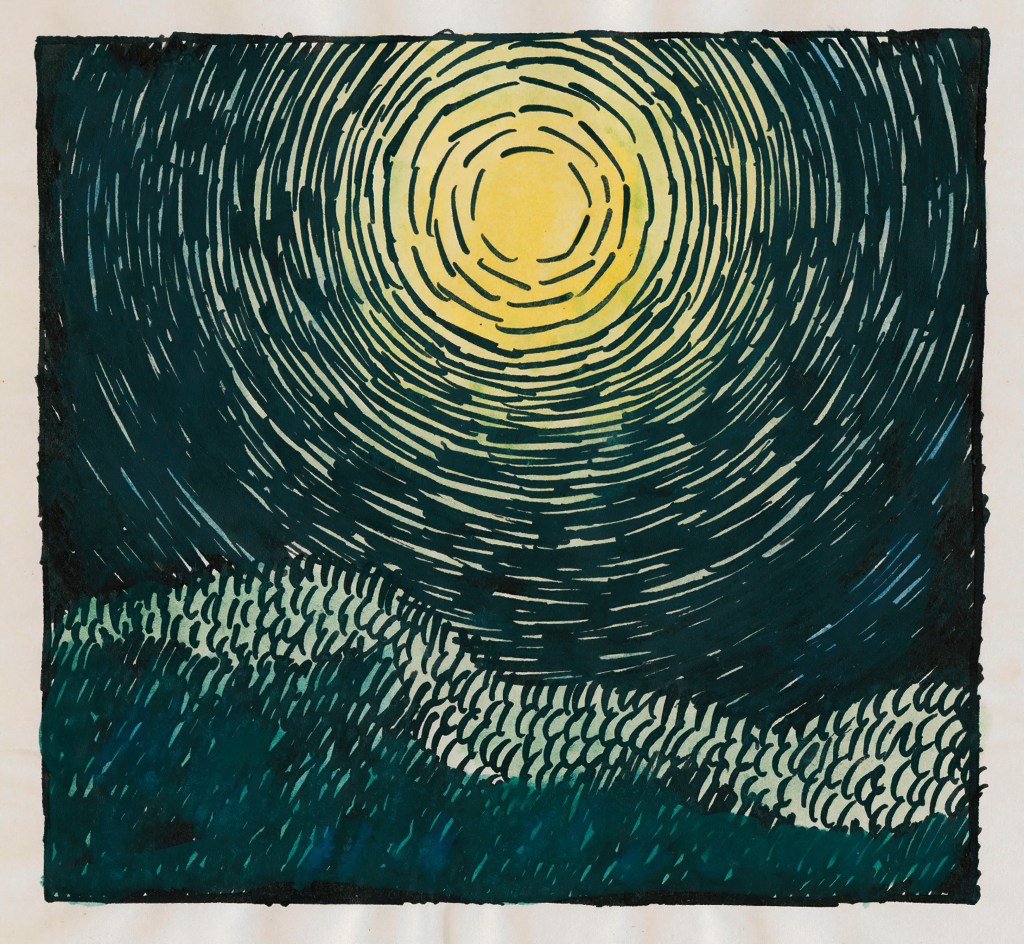
You shuddered and I shuddered and I smiled because of gravity. I moved you with my hands, and then we went to the movies. Full-screen, popcorn, real butter. You say we’ve sinned and our faces have dropped. I laugh and tell you I’ll pick your face up for you. You say you gave up women for an old yellow dog and magazines and a bad lower back. I say I wear a plastic-certainty mask when I greet the young pharmacist who knows my driver’s-license name. Your handwriting was here on my table last week. I’m not giving up on this.
About the Author: Meg Pokrass is the author of 8 collections of flash fiction.
Expiration Date

In the dream we all had one. Some were subtle,
the back of an earlobe, the sole of your foot. Pale
digits in a delicate Roman font. Others more brazen,
a numeric ring on a middle finger. Nobody got
to choose. It was the first thing new moms checked
after counting fingers and toes, tiny numbers and dashes
in folds of still damp skin. No point trying to get rid  of
them. Like the chemistry teacher who scrubbed  her skin
raw with a concoction boiled up in the lab.  Her
tattoo-artist boyfriend, undeterred,
wielded his needle magic to give her a few more years.
But the merciless 2022 was still there. Many
tried to ignore it, the way third graders in July
refuse to think about September. A few made it into a party,
their birthday’s morbid cousin, where black balloons had a
whole new meaning.
                                               Later I wondered if they
were any better off, those people with indelible dates,
taking their personal time bombs with them as they
went about their lives. At least they were never
surprised by death, foretold as it was from the start.  No phone
calls that drop you to your knees. But you’d  still have to face
the appointed date, wouldn’t you? Alone  in your den, blinds
shut tight, listless ceiling fan stirring above.  Feeling the
seconds squeeze through you like cigarette smoke  through a
menthol filter. Realizing as you wait—the end is still the end
even when you know its schedule.
About the Author: A 2021 Pushcart Prize and Best of the Net nominee, Ken Hines has written poems that appear in AIOTB, Vita Poetica, Ekphrastic Review, Psaltery & Lyre and other magazines. His poem “Driving Test” won the Third Wednesday Journal Annual Poetry Prize. All this scribbling takes place in Richmond, Virginia.
Sirocco

The hot winds blow northwards.
Laboring hearts adapt to a slow-burning rhythm.
Nights find you breathing harder,
dreaming languid dreams dipped in Saharan orange.
Snow melts into puddles, makes
little rapids in the gullies.

Shy bright green unfolds on hitherto
barren winter stalks, like young girls
succumbing to the whispered promise
of swelter, not heeding either calendar
or caution.  Cars covered in red sand
use the roads like go-cart runs. An early
tulip pushes through heavy slush,
a sense of unseemliness in the air.

On a park bench two grey heads,
woolen scarves undone daringly,
galoshes protecting warm shoes.
Old hands stripped of thick gloves,
he holds hers and bends over them as far
as his stiff back gives him leave.
The Sirocco will hold a few days.
About the Author: Rose Mary Boehm is a German-born British national living and writing in Lima, Peru. Her poetry has been published widely in mostly US poetry reviews (online and print). She was twice nominated for a Pushcart. Her fifth poetry collection, DO OCEANS HAVE UNDERWATER BORDERS, will be published by Kelsay Books in July 2022. https://www.rose-mary-boehm-poet.com/
Image Credit: Chase Dimock “Dead Leaves and Landscape” (2021)
Real

Side-winding around the half-cars though
the man seeing me looking yells Don't look!

I have seen the coat-covered passenger's
arm. Real? Is it real?

—I must keep going. It is real.
As real as watching your neighbor's house

burst into flames. How fast

disaster consumes others. Shocking,
our relief—I must keep going

or run the risk of becoming
real to someone else.
About the Author: Matt Dennison is the author of Kind Surgery, from Urtica Press (Fr.) and Waiting for Better, from Main Street Rag Press. His work has appeared in Verse Daily, Rattle, Bayou Magazine, Redivider, Natural Bridge, The Spoon River Poetry Review and Cider Press Review, among others. He has also made short films with Michael Dickes, Swoon, Marie Craven and Jutta Pryor.
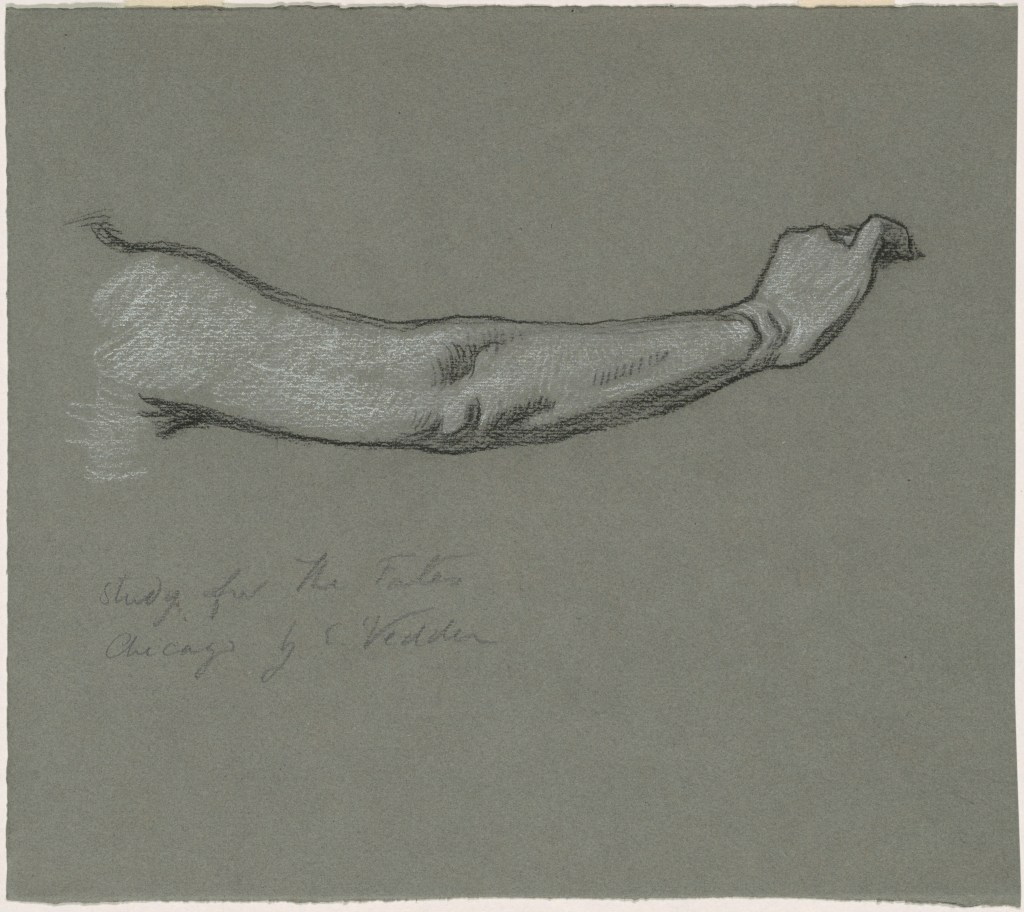
Image Credit:Elihu Vedder “Study for “The Fates Gathering in the Stars”, 1884-1887. Courtesy National Gallery of Art, Washington
Mom had to sell eggs on the sly to get the money for tickets the day we took the bus from Coldwater to Battle Creek, Michigan. Dad would never have approved of us traveling. If he had caught wind of our secret trip, he would have said, “Hell, no, you can’t go. Praying is for crazy people. Stay home where you belong.”
When we got off the bus, Mom pointed toward a tower in the distance. “That’s Dr. Kellogg’s famous Battle Creek Sanitarium. The tower, high above soaring trees, seemed to nod in our direction, the flags atop wave at us.
We turned and walked at a fast clip in the opposite direction, until we came to a white mansion with fish scales in the pointed gable. “Mrs. Reynolds lives here,” Mom said. “Her husband is a doctor. He works at the sanitarium.”
Mom softly tapped on the door, and Mrs. Reynolds said, “Come in Mrs. Miller. Isn’t it wonderful that the Lord brought us together at Reverend Safford’s prayer meeting when I visited my sister in Coldwater? Let’s have tea in the parlor, and then we’ll pray.”
Mrs. Reynolds looked over the top of her glasses at me and said, “I’m glad you are traveling with your mother. It’s never too early to learn about the Lord’s work.” She paused for a moment to let her words sink in, before asking, “How old are you, young lady? Would you like a glass of milk?”Continue reading “Fay L. Loomis: “Bathtub Prayers””→
Nobody wants to die but I don't mind

trying it if I can come back should I
not like it but it can't be all bad says
my Sunday School teacher, after all if
I don't die then I can't go to Heaven
to live forever, which doesn't make sense
but that's why it's religion and of course
I could go to Hell as well and dwell for
-ever there though it's not nearly as nice
as Heaven. Then there's the Resurrection
--Jesus was on His feet again three days
after we nailed Him, I think that's what I'd
like, to live forever that way though on
Earth is best, I'll take Earth over Heaven,
forget that I'll live less here but longer.
About the Author: Gale Acuff has had poetry published in Ascent, Chiron Review, McNeese Review, Adirondack Review, Weber, Florida Review, South Carolina Review, Carolina Quarterly, Arkansas Review, Poem, South Dakota Review, and many other journals. He has authored three books of poetry: Buffalo Nickel (BrickHouse Press, 2004), The Weight of the World (BrickHouse, 2006), and The Story of My Lives (BrickHouse, 2008).
Gale has taught university English in the US, China, and the Palestinian West Bank.
Traveling on Our Stomachs

Leaving the excess of old-world Utrecht,
all gargoyles, staggeringly high churches
with their proverbial lesson in perspective,
arched doorways folding into arched hallways
like bellows on a monochromatic accordion,
I enter the gray-gray of its New Town: Massive,
hard-edged concrete slabs of cold contemporary
Dutch architecture dedicated to function over form,
utility over any hint of Rococo. I’m drawn to an
Edward Hopper-lit café, empty save the silent
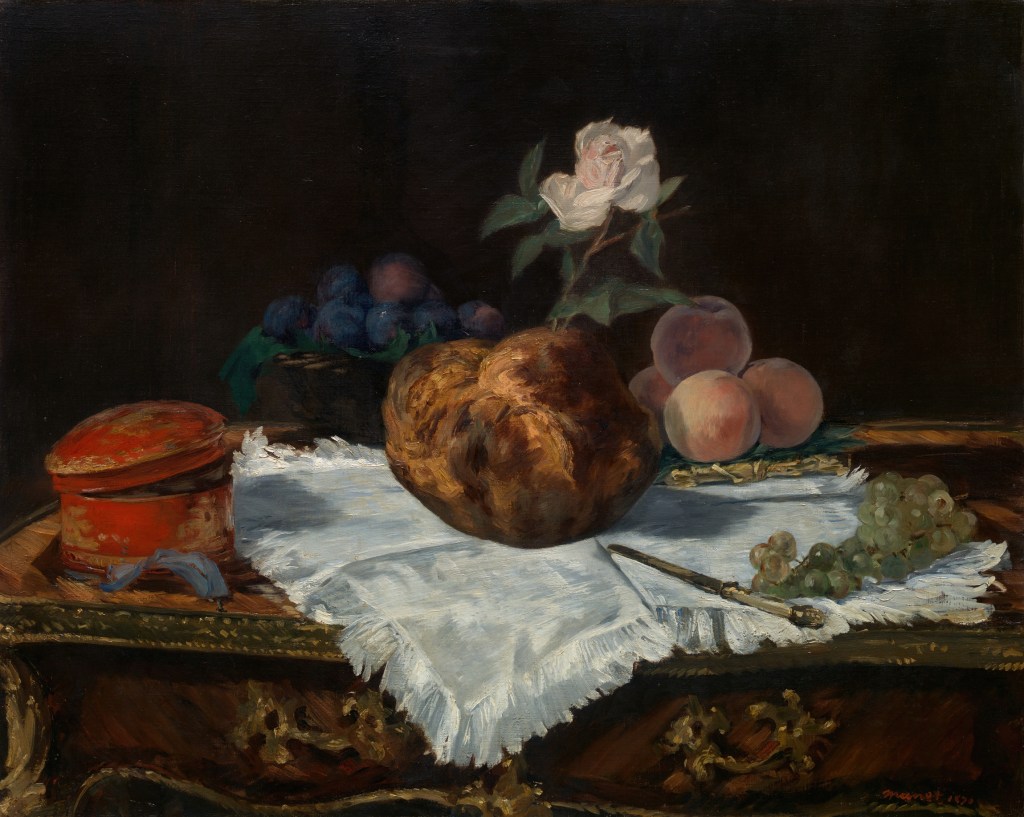
server who presents a slab of creamy yellow cheese,
flaky golden-dusted brioche its tenderness cradling
the bright orange yolk of the freshest egg, satiny hot
coffee in a white-white cup, the perfect American
travel memory on a gray-gray day in Utrecht.
About the Author: Diana Rosen is a poet, flash writer, and essayist with work in online and print journals in the U.S., the U.K., Australia, Canada, and India. Her first book of flash and poetry, “High Stakes & Expectations,” was released in spring 2022 from thetinypublisher.com Diana lives in Los Angeles where she writes website content on food and beverage. To read more of her work, please visit www.authory.com/dianarosen
Image Credit:Édouard Manet “The Brioche” (1870) Public domain image courtesy of Artvee
DADDY, WE’RE ENGAGED

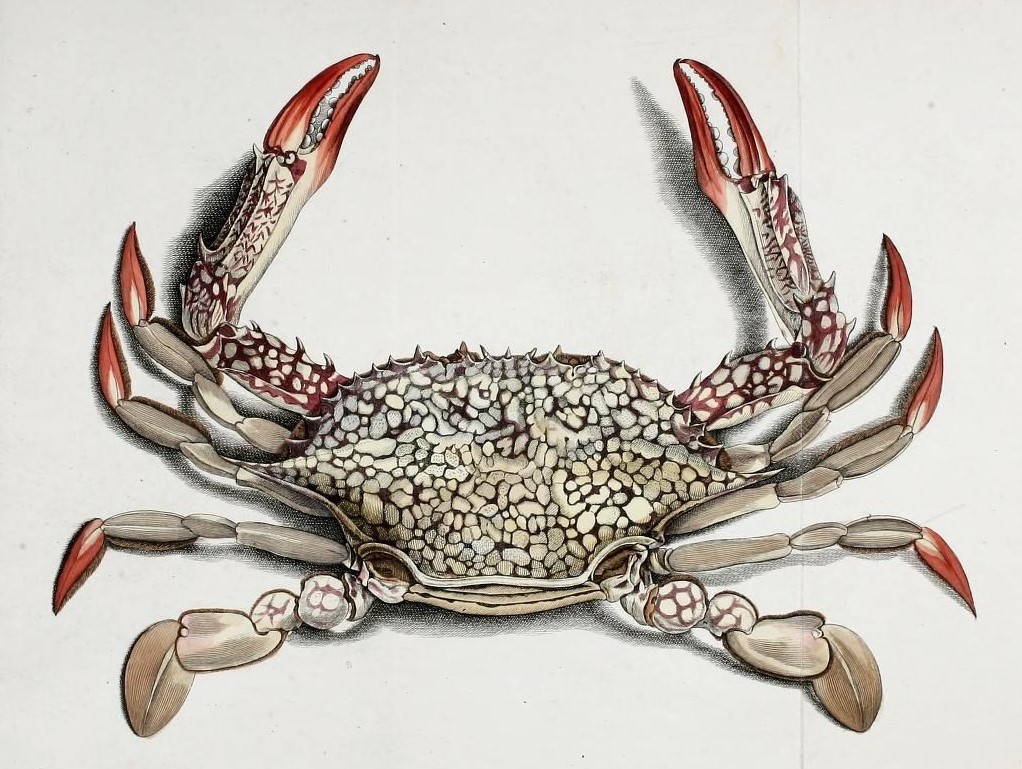
His expression is like a crab
moving sideways and backwards
and forwards at will.
The eyes, the nose,
the mouth, are as restless as small dogs.
They can’t settle on a frown.
And a smile is seemingly beyond them.
We stand before him,
our fingers clutching and unclutching,
together elsewhere,
but insecurely tethered here.
We came to tell him
but it feels as if we’re asking his permission.
I know my own mind.
You know yours.
But that’s still one mind short.
About the Author: John Grey is an Australian poet, US resident, recently published in Sheepshead Review, Stand, Poetry Salzburg Review and Hollins Critic. Latest books, “Leaves On Pages” “Memory Outside The Head” and “Guest Of Myself” are available through Amazon. Work upcoming in Ellipsis, Blueline and International Poetry Review.
.
Image Credit: Versuch einer Naturgeschichte der Krabben und Krebse: Berlin ;Bei Gottlieb August Lange,1782-1804. Image courtesy of the Biodiversity Heritage Library
Author’s Note: These poems, along with several hundred others, are part of a larger erasure collection entitled Pocatello Wildflower, which examines the words of a group of Idaho writers who worked primarily from the 1970’s to the 1990’s, including the late Bruce Embree, who really got the ball rolling in my head and heart, with a few still working today. It is my great hope that folks will be interested in the original writers work, in addition to my own. Pocatello Wildflower will be available in 2023 from Crisis Chronicles Press. Thanks for reading.
My Parents

strangers raised us
in ditchbank weeds
on combat rations

it was love
& bruises
no pity
in the blowing dust.


Moving Past the Fetish

last year’s growing storm
a lost friend

famous people
not humping boulders
like me
in the foolish
september moon.


The River of Lovers

could burn enough nostalgia
to find comfort
in our past

a whirl of wind.


Rosie Died

goats
river rock

his father never blinked
feet first

alley shadows
lilacs

a bad dream
catches in his throat.


Pocatello Tattoo

i lost my horse

my body
a boxcar
of coaldust

pocatello
pocatello
pocatello

this country of shame
died in the trees

rolled west
in shoshone
in boise

in pocatello
pocatello
pocatello

april whiskey
on the spot

where the sun goes down
like a red-hot needle.
About the Author: John Dorsey lived for several years in Toledo, Ohio. He is the author of several collections of poetry, including Teaching the Dead to Sing: The Outlaw’s Prayer (Rose of Sharon Press, 2006), Sodomy is a City in New Jersey (American Mettle Books, 2010), Tombstone Factory, (Epic Rites Press, 2013), Appalachian Frankenstein (GTK Press, 2015) Being the Fire (Tangerine Press, 2016) and Shoot the Messenger (Red Flag Poetry, 2017),Your Daughter’s Country (Blue Horse Press, 2019), Which Way to the River: Selected Poems 2016-2020 (OAC Books, 2020), Afterlife Karaoke (Crisis Chronicles Press, 2021) and Sundown at the Redneck Carnival, (Spartan Press, 2022).. His work has been nominated for the Pushcart Prize, Best of the Net, and the Stanley Hanks Memorial Poetry Prize. He was the winner of the 2019 Terri Award given out at the Poetry Rendezvous. He may be reached at archerevans@yahoo.com.
After surgery

he surfaces drowsy
from anesthesia
sees his wife
by his bedside
reaches out
his hand feels
her shoulder blade
relieved he sighs
“No wings!
I am alive!”
About the Author: Agnes Vojta grew up in Germany and now lives in Rolla, Missouri where she teaches physics at Missouri S&T and hikes the Ozarks. She is the author of Porous Land (Spartan Press, 2019) and The Eden of Perhaps (Spartan Press, 2020), and her poems have appeared in a variety of magazines.