Marc Janssen “The Wooden Cross”

THE WOODEN CROSS

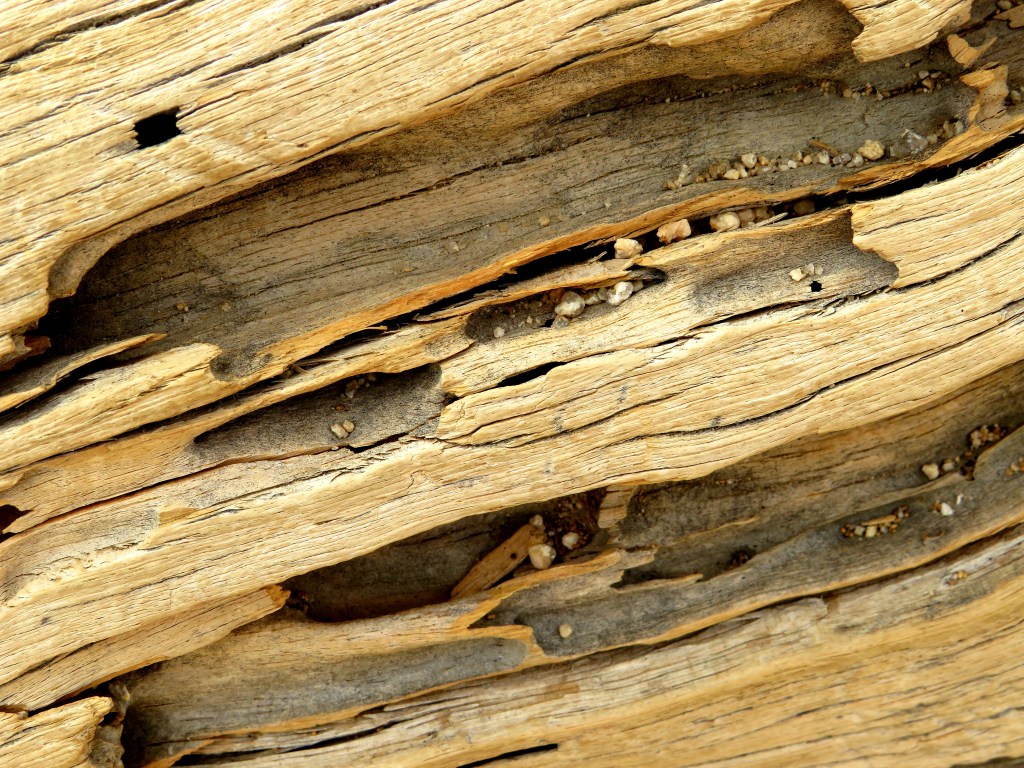
That old beaten up cross 
Slowly disintegrating 
In a planter 
In the early morning,
Dark;
At the corner of River Road and Chemawa.
Illegible name
Behind a Dollar Tree sun-faded garland.

Are you here in the full throated rumble of five AM delivery trucks,
The buzzing crackle of streetlights,
The ordered red and yellow and green signals,
Are you in the rain slanting in from the west cold and callous?
Is this broken memorial your bequest
Or is there a shadow on someone’s heart somewhere 
Who will move away, go to college, 
And slowly release your face?

Streetscape or mountaintop it’s about the same.
The intimacy of a vista
The formations of clouds
Naked stones
Incomprehensible in each
Namelessly ingrained in the old wooden cross,
The kind that doesn’t speak. 
The way words cling to meanings
The way letters cling to sounds.

About the Author: Marc Janssen started writing many novels but didn’t finish any of them. He’s a sprinter. Janssen did complete a poetry collection, November Reconsidered, published by Cirque Press. His verse can be found scattered around the world in places like Pinyon, Slant, Cirque Journal, Off the Coast and Poetry Salzburg. Janssen also coordinates the Salem Poetry Project, a weekly reading, and was a 2020 nominee for Oregon Poet Laureate. 

Image Credit: Chase Dimock “Desert Wood” (2021)
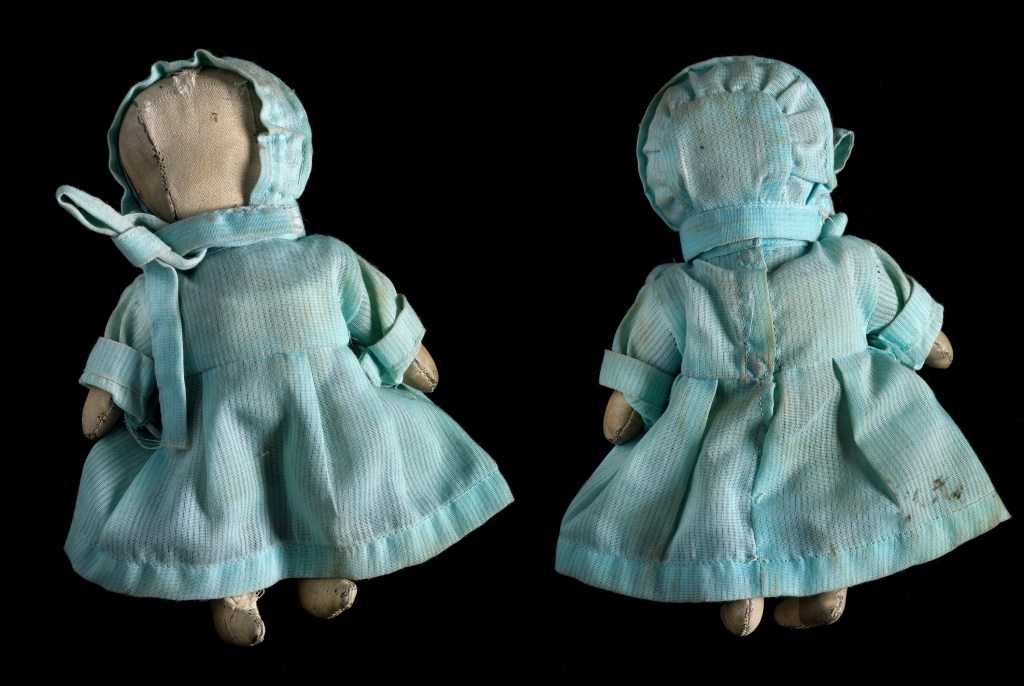
Michael Gushue: “Valley of the Dolls”

VALLEY OF THE DOLLS

The town I came from was in the middle 
of nowhere. It was a small farming 
community until the locusts showed up.
I suppose you’d call us a tight knit bunch—
we knew what hour it was by the colors we wore,
and we didn’t follow Daylight Savings Time
because it was the work of the devil.
In other words, we were a god-fearing people
but we only believed in the fear part, 
and we might have been patriotic but 
had no idea what country we lived in. 
We loved our children, though we knew
their picnics were really for the yellow jackets. 
Adult parties we saw as soap operas 
decaying from conviviality to terror.
We had our ups and downs, booms and busts. 
There was the time the birds decided 
to attack us like they did like in the movie—
we couldn’t have cared less. We were that
kind of town. Our library was a point
of civic pride but the head librarian 
kept our dirty fingers away from the books. 

In the town square we erected statues 
to the unknown soldier, the unknown 
conscientious objector, and the unknown
guy in a recliner who doesn’t give a fuck.
And, boy, did we like our drugs or what?
We had parades on holidays. You can
take a wild guess how we handled that.
When you moved away the whole town
gathered at the train station to say good-bye
and warn you to never come back. 
There was a rumor that’s where Thomas Wolfe
got the idea for the title of his book.
Fact is, Thomas Wolfe never heard of us.
Of course, people are the same everywhere: 
badly carved marionettes jerked about
by a drunken, spastic puppeteer.
I guess looking back it seems kind of idyllic
compared to what I woke up to today.

About the Author: Michael Gushue is co-founder of the DC-based nanopress Poetry Mutual Press. He curates the BAWA poetry reading series in the Brookland and Capitol Hill neighborhoods of DC, and writes the Vrzhu Press poetry & arts blog, Bullets of Love. His books are Pachinko Mouth (Plan B Press), Conrad (Silver Spoon Press), Gathering Down Women (Pudding House Press), and—in collaboration with CL Bledsoe—I Never Promised You A Sea Monkey (Pretzelcoatl Press). He lives in the Brookland neighborhood of Washington, D.C.

Image Credit: Untitled (Amish Doll) Public domain image courtesy of the Smithsonian American Art Museum, Gift of Patricia Sue Smith

Leslie M. Rupracht: “Slow Denial”

Slow Denial

Years passed since I witnessed 
MS fracture Mom’s neurology, stealing 
her calligraphic hand, stilling her walk 
and independence, robbing all recollection. 

Unhurried decline gave rise to stroke that denied 
her swallow, silenced her song and motherly words, 
her last breath at age 74. Today, with each successive 
phone call from seven hundred miles away, 

I learn how my father’s eyes betray his art. Potter’s 
wheel not recently turned, blank canvases on the easel 
sit untouched, despite Dad’s nagging urge to paint, 
to create, before his waning vision decides 

it’s too late. Now 83, he also fights COPD. Worries 
over his final arrangements, forgets again and again 
to follow through. I gently remind. I politely nag— 
it’s a father-daughter round dance. Correspondence 

penned by an unsure hand and our déjà vu discussions 
underscore his blurred attention to details, numbers, 
and words—macular degeneration in cahoots with his 
mind’s random disposal of clear thought and memory.

Tonight, I call Dad. I wrote a poem about a ball game 
we went to when I was nine. This holds his attention. 
He says he looks forward to hearing it. Calls me a true 
artist for my writing craft. Mostly, I want to reminisce 

for fun and distraction from our legal to-do list. Tough 
topics simmer on the back burner as Dad cites the same 
Major League players I named in my poem—
Reggie Jackson, Thurman Munson, Willie Randolph, 

among them—our famous sports heroes who 
stood at the fence between first base and bleachers, 
signed autographs as we lingered in joyful awe, 
drenched in the summer rain.

Check out the previous poem referenced in stanza 6 “The Night I Lost My Souvenir Bucket Hat”

About the Author: Leslie M. Rupracht has poems appearing or forthcoming in Aeolian Harp, Asheville Poetry Review, As It Ought To Be Magazine, Chiron Review, K’in, The Ekphrastic Review, Gargoyle, Anti-Heroin Chic, Kakalak, a chapbook, Splintered Memories (Main Street Rag), and elsewhere. Editor, poet, writer, visual artist, and rescued pit bull mama, Leslie cofounded and hosts the monthly reading series, Waterbean Poetry Night at the Mic, in Huntersville, NC (on Facebook/Instagram @WaterbeanPoetryNightattheMic).

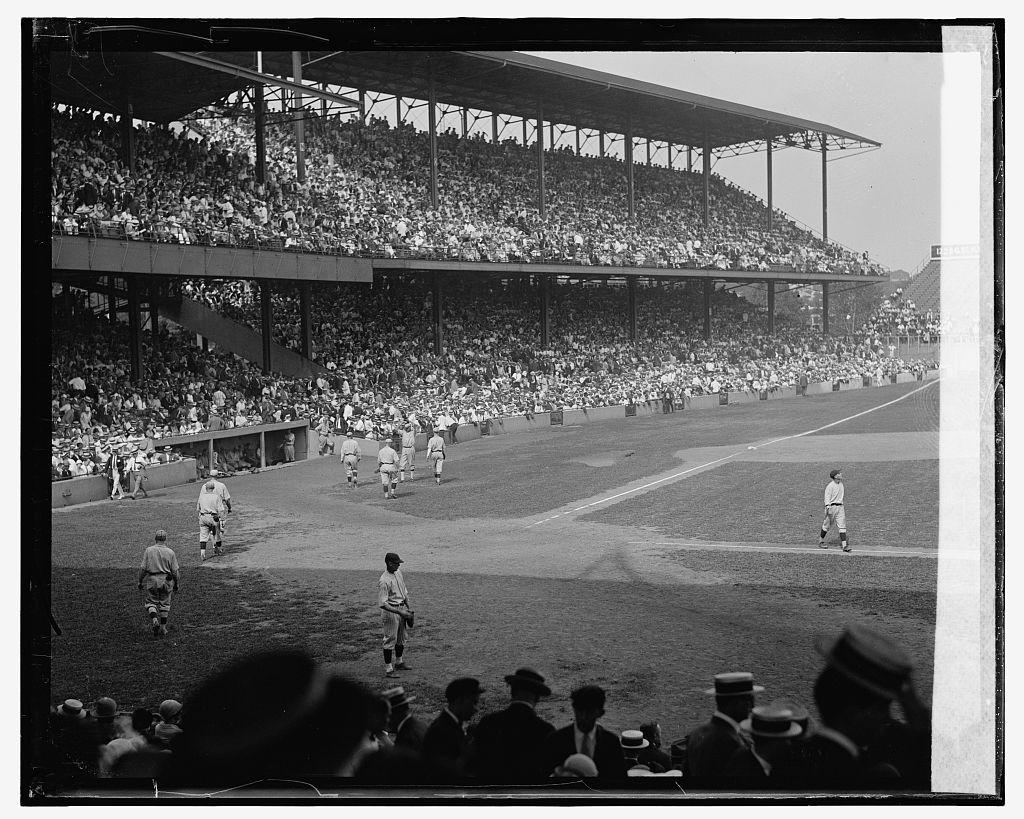
Image Credit: “Baseball game at Griffith Stadium, Washington, DC. The Washington Nationals are playing the Philadelphia Athletics” (1925) Image courtesy of The Library of Congress

Tohm Bakelas: “the nonhuman from polaris”

the nonhuman from polaris

he was deemed no longer a danger 
to himself, others and property,
and therefore he was eligible for discharge

i referred him for group home placement 
and prepped him on all the things
he should and shouldn’t say

he placed his hand over mine
and said “tohm i love ya”

during his intake meeting he said 
“i don’t need no group home, i’m 
going to israel to be crucified… you 
see, i’m not human, i’m from polaris”

they looked at me, 
then he looked at me,
i put my hand on his shoulder
and said “i understand”

“what do you do for fun?” they asked

“hang myself” he said and laughed

“umm, what?” they asked

“that’s a joke,” he said, “i think...”

after the meeting we took our time
walking back to the ward

“tohm i think that went well” he told me

“yeah, we’ll see what they say” i said

i let him inside the ward 
and waited until the door locked

after that i went for a short walk 
and stared outside a window for a while

About the Author: Tohm Bakelas is a social worker in a psychiatric hospital. He was born in New Jersey, resides there, and will die there. His poems have appeared in numerous journals, zines, and online publications. He has published 18 chapbooks and 2 collections of poetry. His forthcoming collection “The Ants Crawl In Circles” will be published by Whiskey City Press in Summer 2022. He runs Between Shadows Press. 

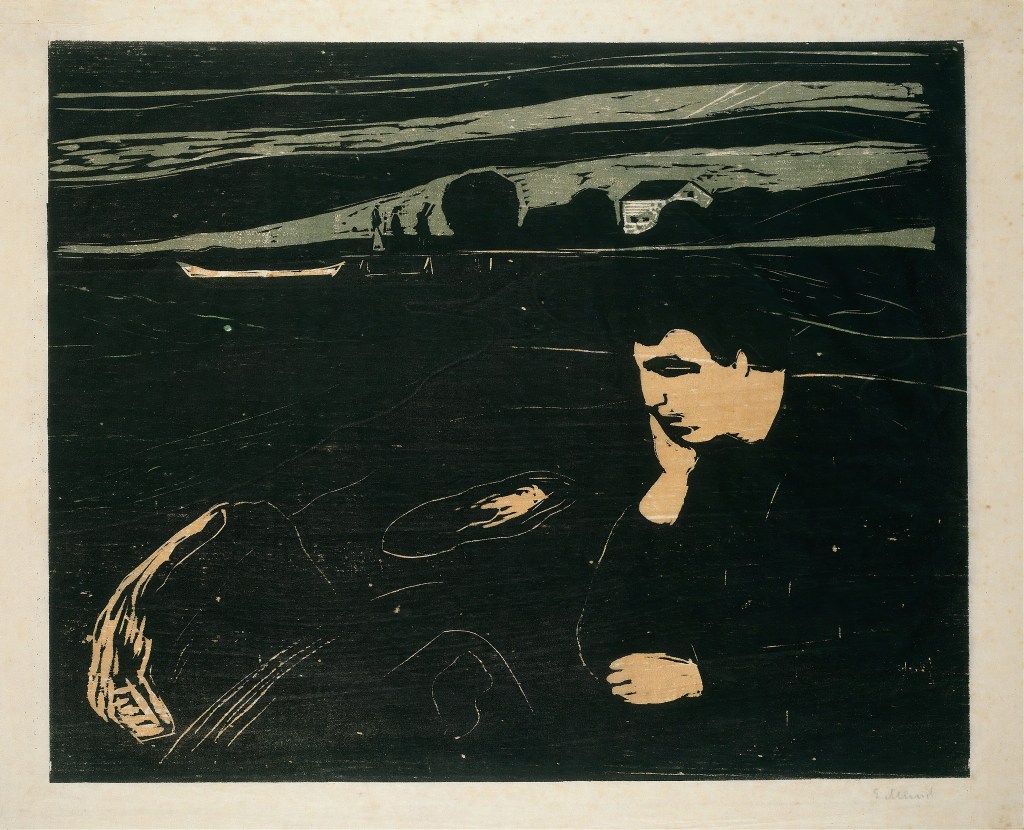
Image Credit: Edvard Munch “Melancholy III” (1915–1917). Public domain image courtesy of Artvee

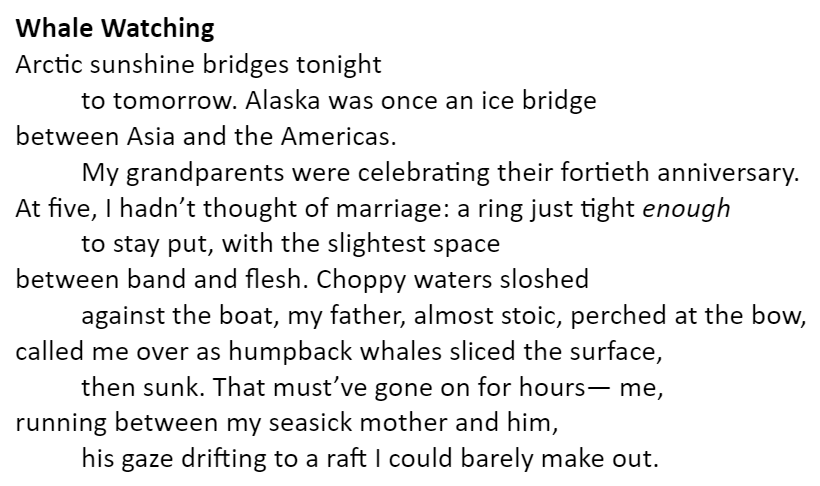
Christian Paulisich: “Whale Watching”

About the Author: Christian Paulisich is an undergraduate poet at Johns Hopkins University. He lives in Baltimore, Maryland, but is originally from the Bay Area, California. His poems have appeared in Neologism Poetry Journal, Orchards Poetry Journal, Beltway Poetry Quarterly, and Monterey Poetry Review. He enjoys nature walks, drinking Yerba mate, and spending time with loved ones. 

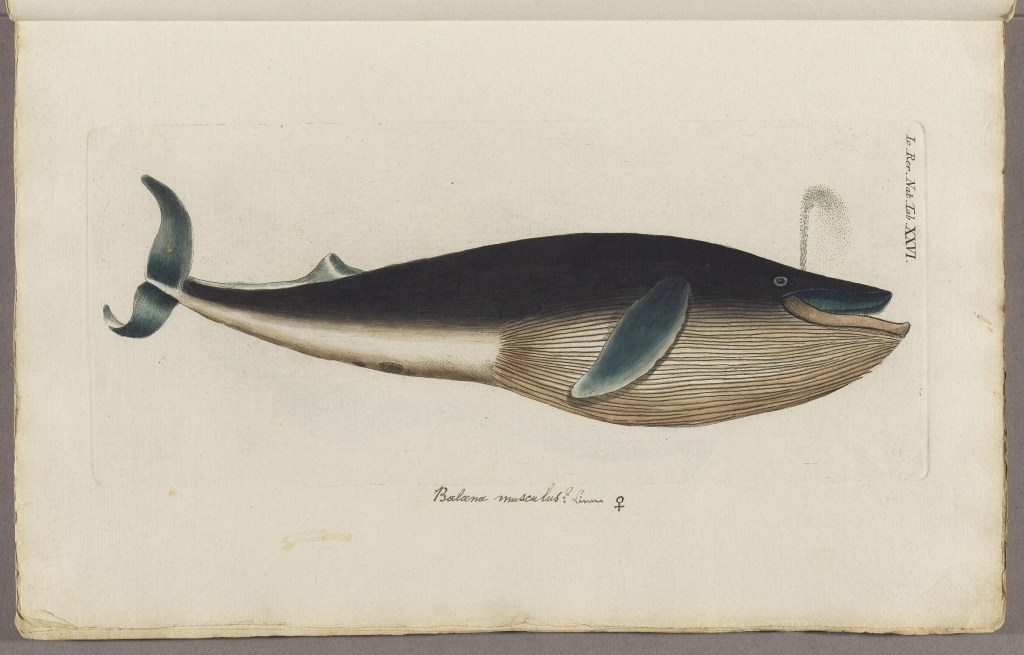
Image Credit: Original image from Icones rerum naturalium. Copenhague,Chez E.A.H. Möller, etc.,1805-1806. Courtesy of the Biodiversity Heritage Library

Howie Good: “Mood Piece”

Mood Piece

Nights back then somehow seemed darker than they do now. I resigned myself to long empty hours of insomnia. Someone said, “Have you been checked out by a psychiatrist recently?” The house across the street from ours was strung with Christmas lights way into the spring. Police treated any outdoor gathering of three or more people as a riot. The latest idea in art was that only when a painter destroyed a painting, scratched it out, was it ready to be seen. A life’s work could just about fit inside a shoebox.

About the Author: Howie Good is a poet and collage artist on Cape Cod. His latest poetry books are Famous Long Ago (Laughing Ronin Press) and The Bad News First (Kung Fu Treachery Press)

Image Credit: Herbert Crowley “A Dark Landscape” Public Domain image courtesy of Artvee

Diane Kendig: Searching For The Rosetta Stone

 SEARCHING FOR THE ROSETTA STONE

                  “He re-examined with pleasure the luminous 
                    yellow, green, red little jars.” 
                  -Nabokov, Signs and Symbols

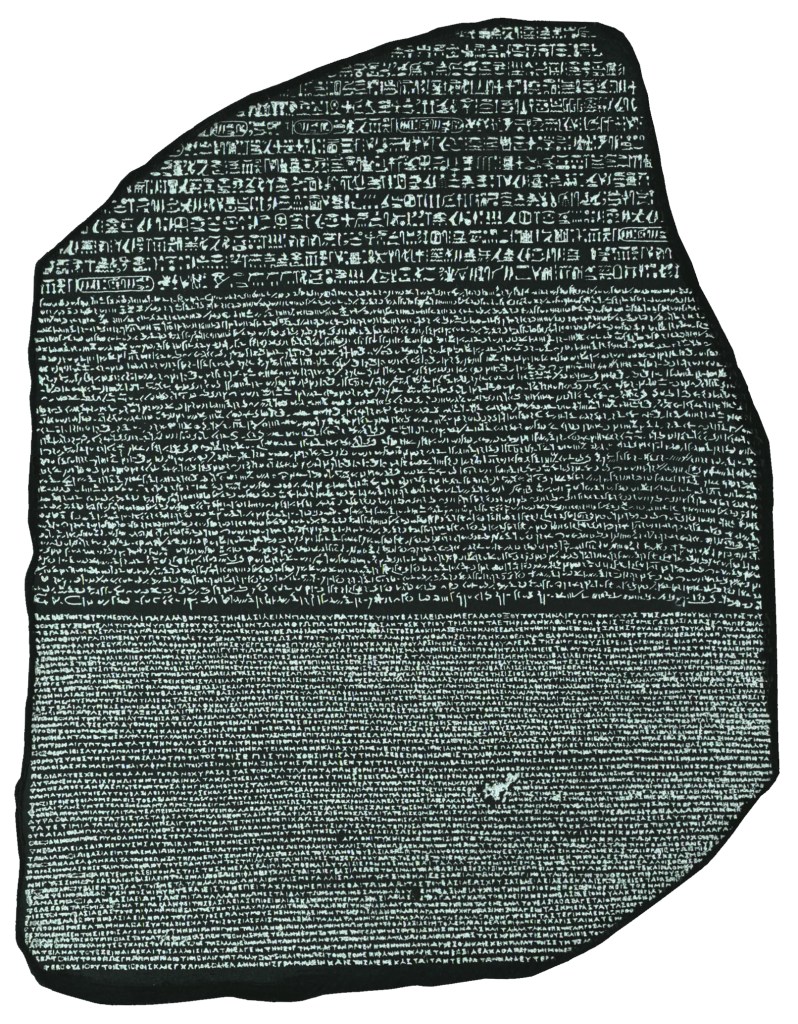
I couldn't find it in the British Museum, under renovation--
just representations, like "The Rosetta Stone" postcard
at a makeshift gift shop of two by fours in a hallway.  
Until then, I had imagined a scalloped round
like the Notre Dame window, but opaque and blocking some tomb,
promising secrets to marauders if they'd go away.

From the postcard caption, I learned it began as homage to Ptolemy, 
like a trilingual billboard announcing,
"What a great guy our mayor is! Signed, the Mayor's Cabinet."
Rosetta Stone scarves, notepads, and a two-dollar eraser 
(white glyphs on black rubber), abounded too, at an airport gift shop,
making me think there had to be more. 

Back home online
I found a hundred seventy-one sites, like one 
on Rosetta Stone, the new leader of Gothic Rock,
influenced by the Headrops of Parma, Italy and another,
the publisher of Erotic Film Guide, Hottest Gay Male Site,
and Hot & Sexy Mature Women.

I found the Rosetta Stone Language Library 
with its life-sized stone photo, a review of je tuil elle,
"a cinematic Rosetta Stone of female sexuality," 
the Cleopatra recording artist, Rosetta Stone, 
and a link to the British Museum page about
that famous stone dug up at one site by Champollin--

but nothing on where in the museum it stands for real.
I skim one hundred sixty-three sites more, one side of the world
then the other, meaning less all the time,
as though too many jars shone stickily from the shelf,
preserves, and not jelly, too thick to see through.		

About the Author: Diane Kendig‘s latest book is Woman with a Fan. Her writing has appeared in J JournalWordgatheringValparaiso Review, and other journals. She ran a prison writing workshop in Ohio for 18 years, and now curates the Cuyahoga County Public Library weblog, Read + Write. Her website is dianekendig.com

Image Credit: “A picture of the Rosetta Stone, in a high contrast, readable format” Courtesy of Wikimedia Commons, Public Domain.

Cameron Morse: “Memorial Day”

Memorial Day

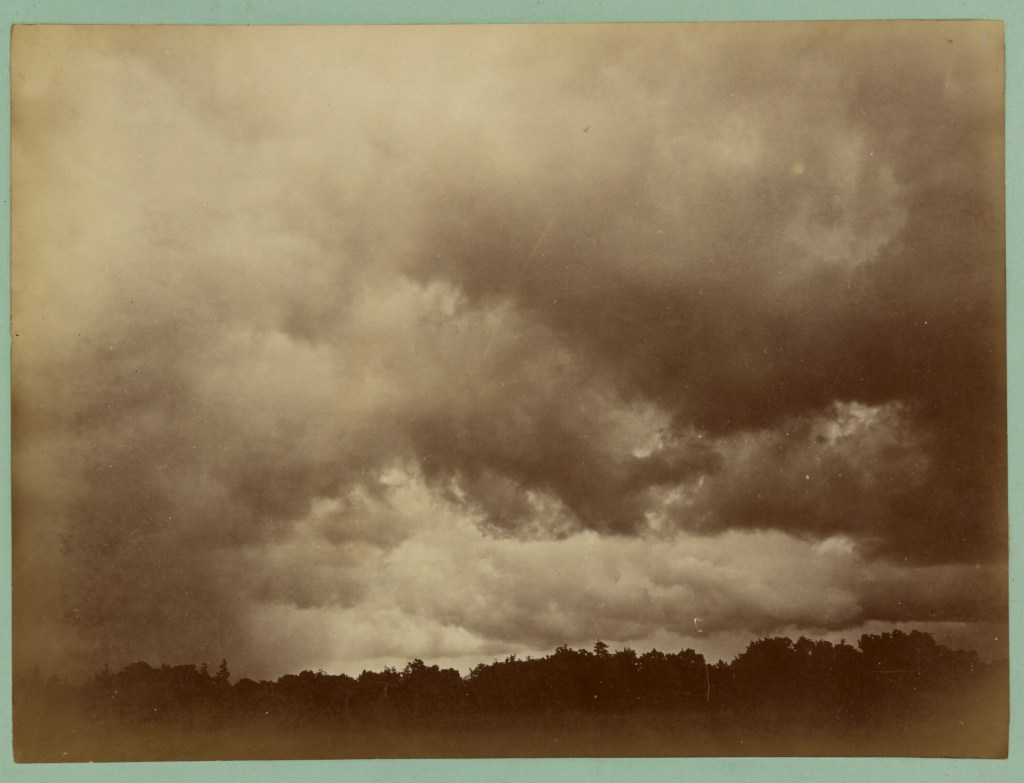
A cousin tags me in the photo 
of the tombstone. It’s my name 
in liquid granite, not his, 
though neither of us are expected 
to live long, I expect I will
outlive him. Is that why I hide 
the photo from my profile? Do I 
see my face reflected in glass?
Am I afraid to go the way of my 
grandparents? That they might be 
lying in wait, robbers ready to 
spring out and seize me 
by the shoulders? Morning after 
Memorial Day I hide the photo 
I’m tagged in, tuck away the reminder 
to die in a loose digital sheaf 
and go on gassing up my lungs
with oxygen. Rain deafens the house 
I sit in. Great swells of white noise 
ocean waves gather and disperse. 
My wife and children are sound asleep
sleep the sounder for this. 
I examine the stone. Close my eyes 
and listen to the rain. 

About the Author: Cameron Morse (he, him) is Senior Reviews editor at Harbor Review and the author of eight collections of poetry. His first collection, Fall Risk, won Glass Lyre Press’s 2018 Best Book Award. His latest is The Thing Is (Briar Creek Press, 2021). He holds an MFA from the University of Kansas City-Missouri and lives in Independence, Missouri, with his wife Lili and three children. For more information, check out his Facebook page or website.    

Image Credit: Unknown Photographer “Clouds” (1871) Digital image courtesy of Getty’s Open Content Program.

Tiffany Troy: “Wedding-bound Million-Dollar Dream”

Wedding-bound Million-Dollar Dream

I.

While people around me are getting married and having kids,
I am chained to the bottom of the sea.
“A start,” they say. What fools they are, like you.
I’ll get married before you, that’s for sure. I’ll go: “Excuse me,

Stranger, won’t you marry me?” (I have a bet
I need to win.) Just as your daddy and mommy
won’t let you marry your rich childhood friend a caste below you,
Master, as Aeneas did, dreams of resuscitating a lost dynasty,

which is difficult because his “busted” deposition
sounds like “bastard.” I was going to write back
“Bastard is not part of Master’s lexicon,” award-winning
Bullshit Artist that I am. Bounced between Master who says if only 

he was me, and School filled with 
pricks who teach me Shame, my World shimmers 
with lunacy. Come morning, Master will fill the bathtub with water
waking me up alongside my million-dollar dreams, bubbling.


II.

When I hear the water thunder, I do not give thanks. 
I curse pink-puckered dawn, who mocks us for still not knowing
the Rules of the Game at the back 
of our hands. They call us “incompetent,”

“not duly diligent,” and “inadequate.” As the water
runs through me, I struggle to meet and confer
with one jerk after the other as you wait
for “please understand” to KO tenderly.

When the phoenix rises, we will no longer be pariah
pinned to the wall for our lousy copy-and-pasted work.
The troubadours will not sing of Master texting 
the Defendants’ counsel about “shaking the mango tree.”

At nine p.m., unbillably, I play you weird animal music 
before marching you to the 7 train
as you joke how each case is a million-dollar case
and I how this is my first walk outside of the Office.


III.

I swear—soon—we’ll leave
evil ladies tugging at men’s shirts behind
garbage bags in treeless streets
and go to your home in India, where the summer is even hotter

than the hellfire of New York.
It’ll only take a case or two under the largess of judges who ought to be on meds
for me to sit in the front row as your VIP,  
all beaming in giving my Emma Woodhouse speech.

Then we will live happily ever after. That is, once troubles
worse than Achilles'
can be fought by lesser mercenaries,
Master will not dump me

for his trainloads of girlfriends
prettier and younger than I am,
leaving me alone with 
my million-dollar dreams.

About the Author: Tiffany Troy is an interviewer and reviewer. Her interviews and reviews are published/ forthcoming from The Adroit Journal, The Cortland Review, The Los Angeles Review, EcoTheo Review, and Tupelo Quarterly, where she serves as an associate editor.

Image Credit: Chase Dimock “Lemur Food” (2021)

Cheryl A. Rice: “Ashtray”

Ashtray

Paper and foil, relic from a time when 
hospitality meant accommodating smokers, 
waited for us in Pennsylvania, Mom and Pop diner
that serves pierogis like other places
dish up hash browns or white toast. 

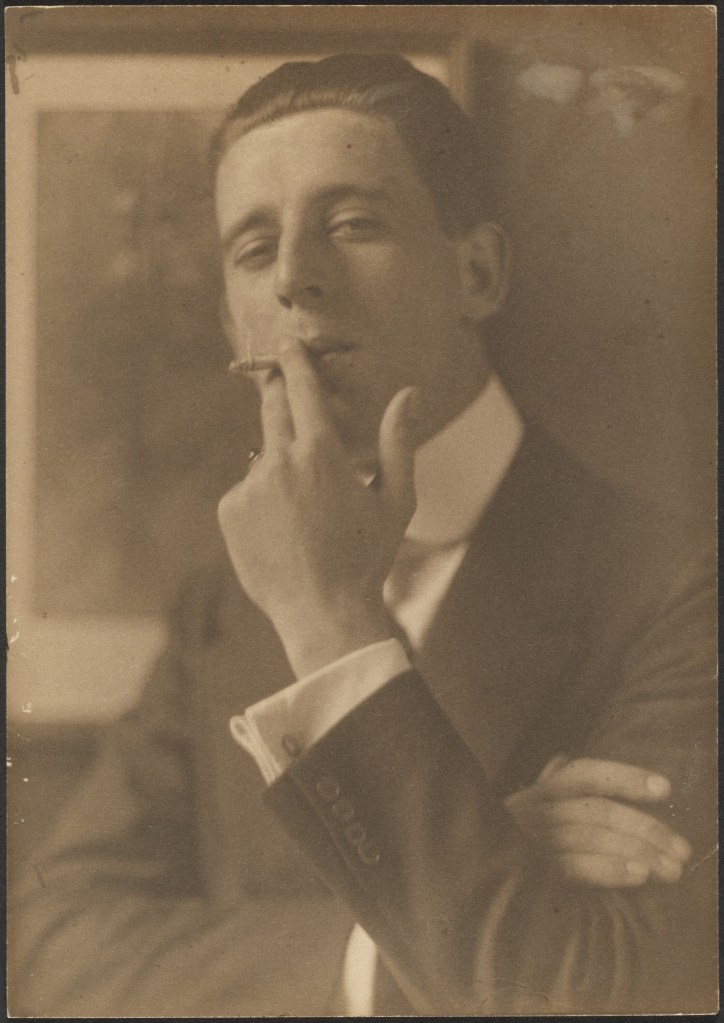
You were still a smoker then, rolled your own, 
pure tobacco from pale blue cans, 
Indian silhouette on the front 
reassuring us of its sincerity. 
I would wake to the sound of your little machine
sliding back and forth, ka-thuk, ka-thuk, 
assembling your supply for the day.

It was already illegal to smoke in New York
unless you were fifty feet from anywhere. 
Even restaurants lousy with smoke eaters were forbidden. 
But here in Scranton, the place your people put down roots, 
you could sit back, tap your homemade ash 
into the proper receptacle, or your empty coffee cup, 
but that’s bad manners, as we recalled. 

Despite second-hand warnings, 
I inhaled the smoke, 
romantic intoxicant, nostalgic pollutant, 
Marlboro mornings, Lemon Pledge afternoons,
childhood nights around the color console, 
hair and teeth and t-shirts next day 
reeking like the butts in that dish, 
emptied infrequently as all the good miners
have gone to seed.

About the Author: Cheryl A. Rice’s poems have appeared in Home Planet News, Misfit Magazine, and Trailer Park Quarterly, among others. Recent books include Love’s Compass (Kung Fu Treachery Press), and Until the Words Came (Post Traumatic Press), coauthored with Guy Reed. Her blog is at: http://flyingmonkeyprods.blogspot.com/. Rice lives in New York’s Hudson Valley.

Image Credit: Louis Fleckenstein “Portrait of a Man Smoking Cigarette” Digital image courtesy of Getty’s Open Content Program.