Rick Christiansen: “Dragging His Beast Around”

Dragging His Beast Around

The habit was structured, controlled, modulated—
Architecture married to inspiration.
Never too much—it was always too much.
Gone in a stutter.

Chasing God.
You were not supposed to catch up.
The cliché too painful.
No choice but to be seen.

There is risk in being seen.
Beast seeping out by inches.
Like yellow jackets oozing
from the nest.

You didn’t have to wait until life
was not hard to be happy.
You were going to outlast
the buzz and swarming.

Two coasts—your face.
No ocean on either shore,
yet still an island.
Made lethargic by the needle.

You circled a thing that wasn’t there
until you forced it into existence.
You knew that killing it
would be a sin.

But you broached the firewall
and shrank to fit in a small place.
Belief leaks when you chase chaos.
And you can get caught up short.

About the Author: Rick Christiansen is a former corporate executive, stand-up comedian, actor and director. His work is published or forthcoming in MacQueen’s Quinterly, Oddball Magazine, Muddy River Poetry Review, Stone Poetry Journal, The Raven’s Perch, The Rye Whiskey Review, As It Ought to Be Magazine, WINK Magazine and other journals, magazines and anthologies.  He is the co-host of SpoFest and a member of The St. Louis Writers Guild.  He lives in Missouri near his eight grandchildren.

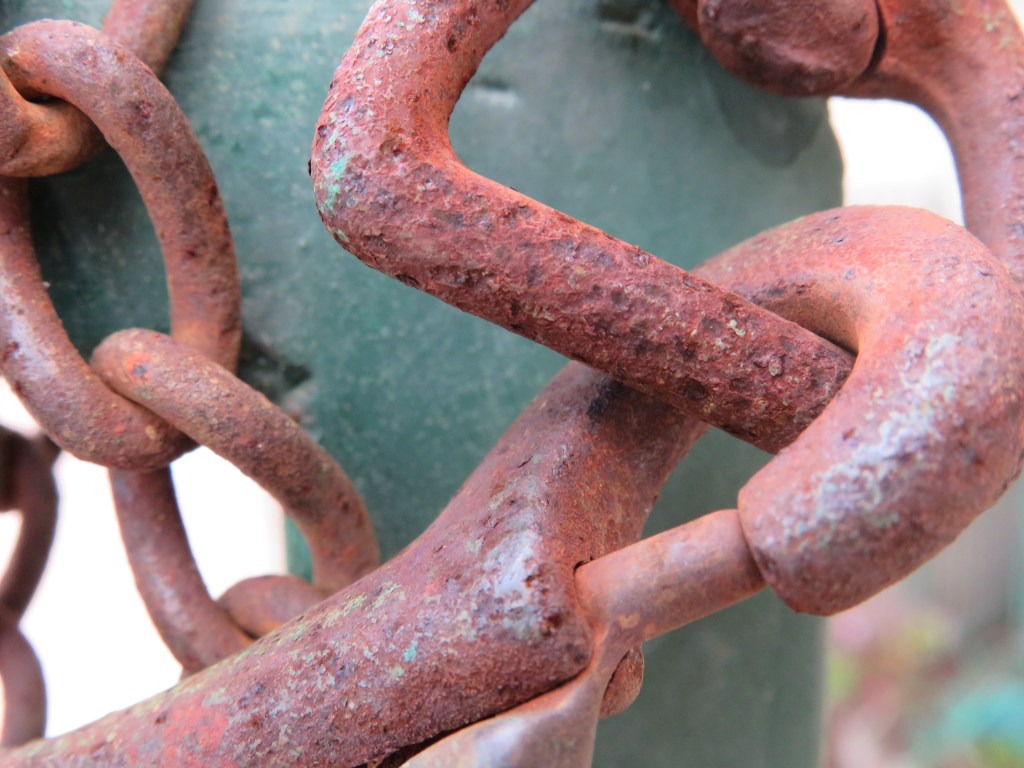
Image Credit: Chase Dimock “Rusty Chains” (2022)

Alexandria Tannenbaum: “The Strip Mall”

The Strip Mall

At thirteen, on Friday night,
when the boy who smoked at eleven met us
near the strip mall plant sale
with bags of mulch piled in rows,
we ignored him when he made comments
about the girls at school.
When he raked his eyes over us,
we crumbled into a pile of leaves.

When he walked, we dampened
and pushed down into the cement.
Pretended not to hear when he spread that rumor
so thin it was a fingerprint that we didn’t try to wipe away.
When he called the cashier a slut,
we let the word float out the door like a balloon.
It rose up into the sky and kept going
until we could no longer distinguish
between bird and rubber.
At night, when we were home in our own beds,
we wondered how many balloons blanketed the sky.
How many girls were witnesses?

The adults in our lives would never
catch all the ways we slunk down.
They would miss the nights we came home
different.
And they would not get to see the way we sat frozen
in the bouncy, worn seat at the back
of the run-down theater
as the boy who took us to the movies that night
moved his hand up her leg.
They wouldn’t be able to see how a middle school girl
who doesn’t move is the stuffed head of a hunted animal.
Nailed into the wall like a worn painting.
Anyone who comes to visit is free to stare in awe and disgust,
and no matter how many necklaces and hands are hung on her,
she remains a piece of furniture.
A party favor.
She is the balloon and the sky and the blanket.
She is all of these things,
even when she doesn’t know
who she is.

About the Author: Alexandria Tannenbaum is a poet and twice National Board Certified educator working outside of Chicago, Illinois. She is pursuing a poetry MFA from Lindenwood University. Her poems are published in the journals Bluepepper and Across The Margin. Her poem “ars poetica” will be published in the fall issue of The Literary Journal of the Kurt Vonnegut Museum and Library.

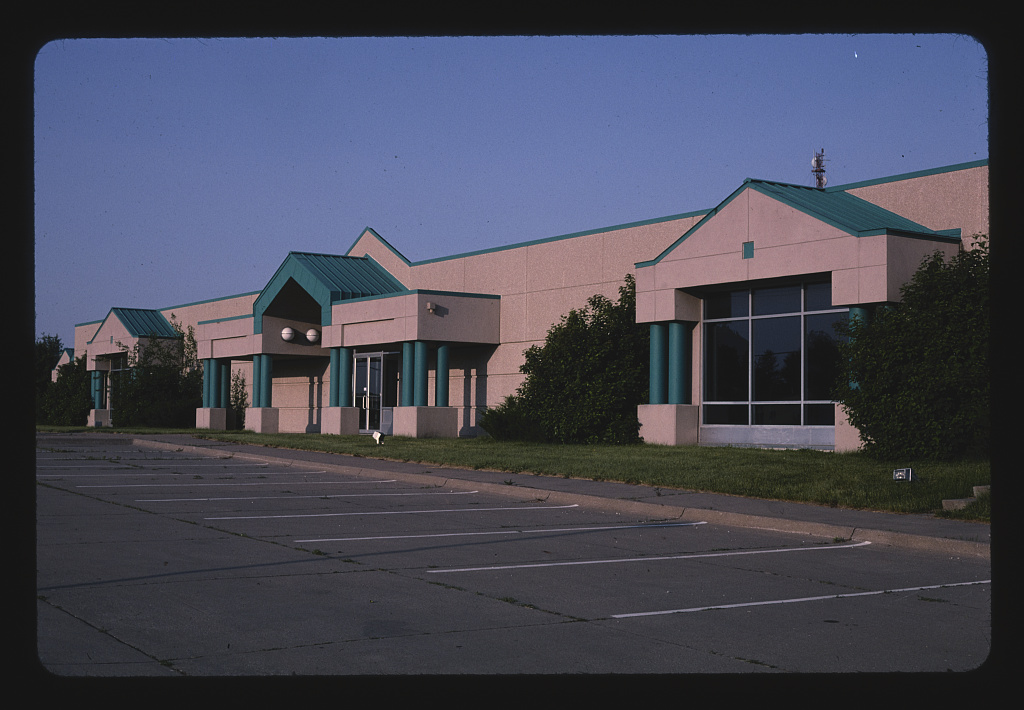
Image Credit: John Margolies “Strip mall, Burlington, Iowa” (2003) Public domain image courtesy of the Library of Congress
Justin Hamm: “The Floor”

The Floor

I saw, in a magazine, the floor 
your miraculous feet deserved. 
Laminate like a rich dark wood 
to replace the carpet you hated. 
And I, son of a carpenter, 
swore I would give it to you. 

For days I ripped and tore, 
measured and sliced, until 
I finally fit each piece in place.
Well, more or less. 
The floor was there, thank God, 
but I’d done a shoddy job. 
Certainly nothing worthy 
of your effusive gratitude 
nor the way you kept grinning, 
half teasing, half seducing, 
as you called me a “man’s man.” 

Eight years since the first plank
and our floor is still hanging on. 
Every time you step over a gap
or stumble on a warped section, 
it is as if you don’t even notice
all the ways I have failed you. 

You have always understood 
how real love requires us 
to turn our heads away. 
I am only just now learning
it should never be from shame. 

About the Author: Justin Hamm is the author of four collections of poetry–Drinking Guinness With the Dead, The Inheritance, American Ephemeral, and Lessons in Ruin–as well as two poetry chapbooks and a book of photographs, Midwestern. His poems, stories, photos, and reviews have appeared in Nimrod, River Styx, Southern Indiana Review, The Midwest Quarterly, Sugar House Review, and a host of other publications. Justin is a 2022 Woody Guthrie Poet and 2014 Stanley Hanks Prize winner. His solo poetry/photography show Midwestern featured in numerous galleries in 2019 and early 2020. In 2022 he delivered a TEDx talk on poetry in the region, and in 2019 his poem “Goodbye, Sancho Panza” was studied by 50,000 students worldwide as part of the World Scholar’s Cup Curriculum.

Image Credit: Justin Hamm “No Selfies” (2023)

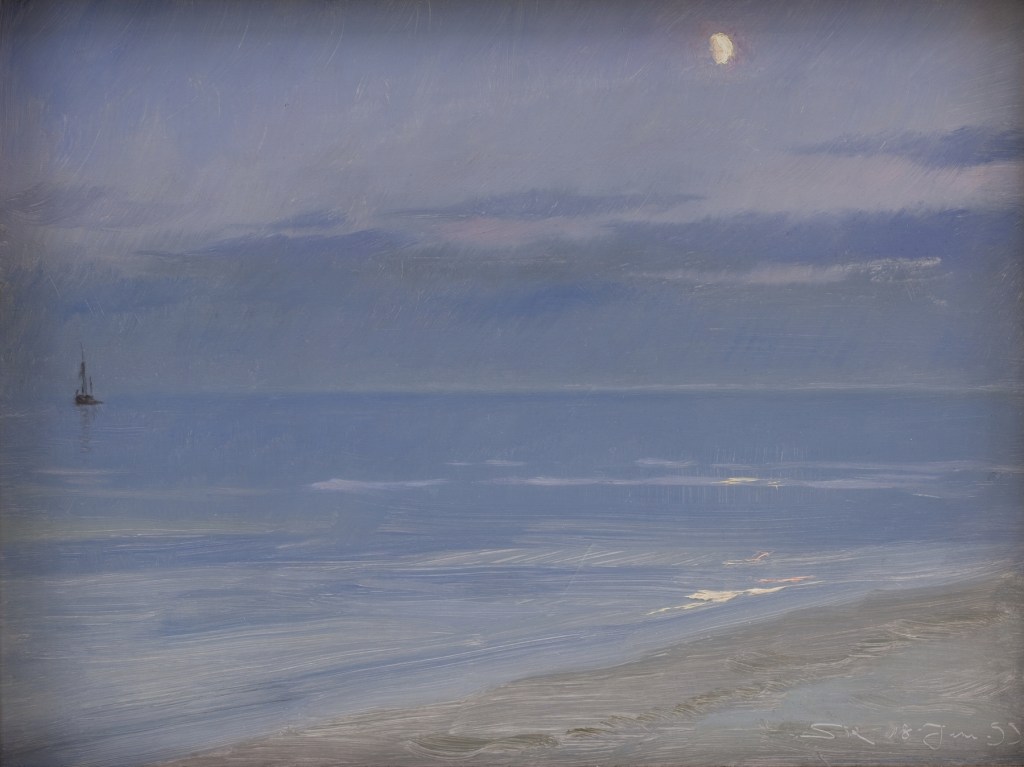
Jason Baldinger: “buttermilk skeleton”

buttermilk skeleton

the moon is a ghost
buttermilk skeleton
rising against afternoon
I cross from maryland
in search of coastal waters
these traditions, these miles
add up still unsolvable

herons fish under loblolly and cypress
these waterways, these estuaries
this sky darkens in gridlock
I walk past the last lights of christmas

a storm blows in
I hear its voice in each wave
eyes focus on speeding clouds

funny, how we don't remember
our lives before the moment
everything changed
years pile up as vacant memories
haunted shelters reveling in abandon
but if I look hard I see myself
a wraith vague within the deluge

crowds shout and cheer
as seconds tick away
fireworks open the sky
a small welcome explosion
we ante up once again
prepare for a grand finale

I pour champagne
down my throat, into foam
water ebbs at the edge of my boots
licks sand clean
all these offerings
another series of prayers
here's to the chaos of the universe

About the Author: Jason Baldinger is a poet and photographer from Pittsburgh, PA. He’s penned fifteen books of poetry the newest of which include: A History of Backroads Misplaced: Selected Poems 2010-2020 (Kung Fu Treachery), and This Still Life (Kung Fu Treachery) with James Benger. His first book of photography, Lazarus, as well as two ekphrastic collaborations (with Rebecca Schumejda and Robert Dean) are forthcoming. His work has appeared across a wide variety of online sites and print journals. You can hear him from various books on Bandcamp and on lps by The Gotobeds and Theremonster. His etsy shop can be found under the tag la belle riviere.

Image Credit: Peder Severin Krøyer “Skagen Beach in Moonlight” (1899) Public domain image courtesy of Artvee

Barbara Daniels: “The Möbius Loop”

The Möbius Loop 

Google View shows our old yard
paved over, somebody’s truck, 

two strange cars. Elms gone, 
the shabby garage replaced 

by another grown shabby too.
I loved the logic of numbered streets,

highways crossed at the periphery,
Main Street’s two stoplights. 

On Friday night, cars crowded
downtown. Men leaned against trucks 

while women shopped and kids 
ran through alleys shouting. 

I mention certain perfections: bikes 
ridden on sidewalks, clanging skates, 

yards I lay down in to look up at trees 
that met and joined over me, winds 

aloft but where I was warm dirt 
and the smell of mown grass.

Maybe nowhere is safe, but I felt 
safe—took to the streets but knew 

to be home when the streetlights 
blinked on. I walked to the library, 

prowled the stacks till I picked out 
books that could lift me and carry me. 

In science class I twisted a strip 
of paper and glued it, then traced 

a continuous sinuous line
up the curve of the paper. 

We all got away, or almost all.
Yes, there was death, every year 

a boy who died at the wheel of a car.
I’m guessing others dream 

as I do of drives through 
the dark while the radio plays.


About the Author: Barbara Daniels’ Talk to the Lioness was published by Casa de Cinco Hermanas Press. Her poetry has appeared in Qwerty, Image JournalRogue Agent, and elsewhere. She has received four fellowships from the New Jersey State Council on the Arts.

Image Credit: Carol M. Highsmith “Aerial view of a point on the edge of downtown Cincinnati, Ohio, where a number of intestate highway lanes and on- ramps meet” (2016) Public domain image courtesy of the Library of Congress
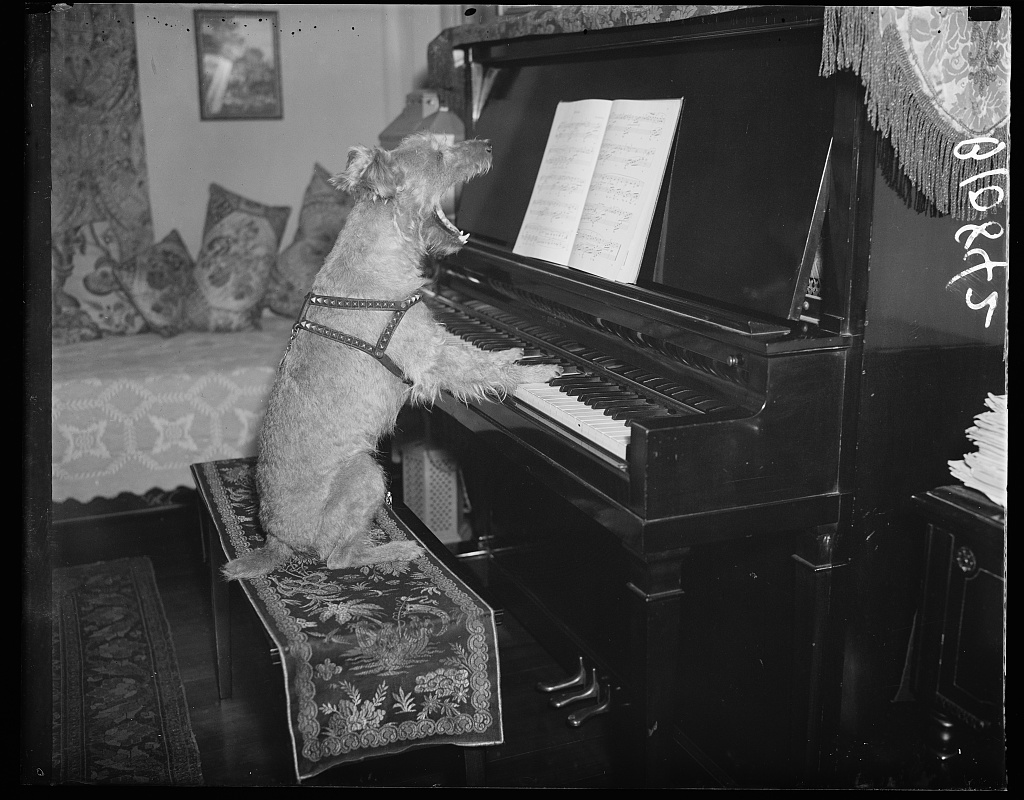
Timothy Tarkelly: “The Baffled King”

The Baffled King
For Leonard Cohen...and David, I guess

Compose hallelujah.
Try it. Take a pen and put it to paper,
watch the hallelujah
grow into some recognizable shape.

Now that you’ve failed,
compose an apology. Five or so couplets
that can cast your hubris as imagery,
a picture of you giving up, frustrated.
Crumpling paper as each attempt
sounds less and less like hallelujah.

Apologies are weak 
as long as they’re just words,
so go outside, take to the streets.
Talk to the first five people you see.

Make their lives easier,
mow their lawns, help their mothers
move into their last home. 
Give them twenty dollars,
so they cannot feel guilty
for eating out tonight.
Put an arm around their shoulder,
tell them it’s okay 
to have to apologize for things.

Now that you’ve made their problems your problems,
go home and apologize. In the mirror.
Who the hell are you
to give mercy? To decide
who needs it?

Feel lost. Pace. Walk your floor,
the same path in your carpet over and over
until you actually are lost. Baffled. Until every breath you draw
is an apology.

Now tie yourself to your chair
and remember that writers who deal in secrets
die unread. You will try again.

Compose an apology
in pencil. Proofread, erasing every appearance
of "you made me feel”

and replacing it with 
with forgiveness,
with a nod and a wink,
with hallelujah.

About the Author: Timothy Tarkelly’s work has appeared in Vocivia Magazine, Clayjar Review, Ekstasis Magazine, and others. He’s written several collections of poetry, including Angie and Her Roommate (Alien Buddha Press), Luckhound (Spartan Press), and On Slip Rigs and Spiritual Growth (OAC Books). When he’s not writing, he teaches in Southeast Kansas.

Image Credit: Harris & Ewing, photographer “Dog At Piano” (1936) Public domain image courtesy of the Library of Congress.

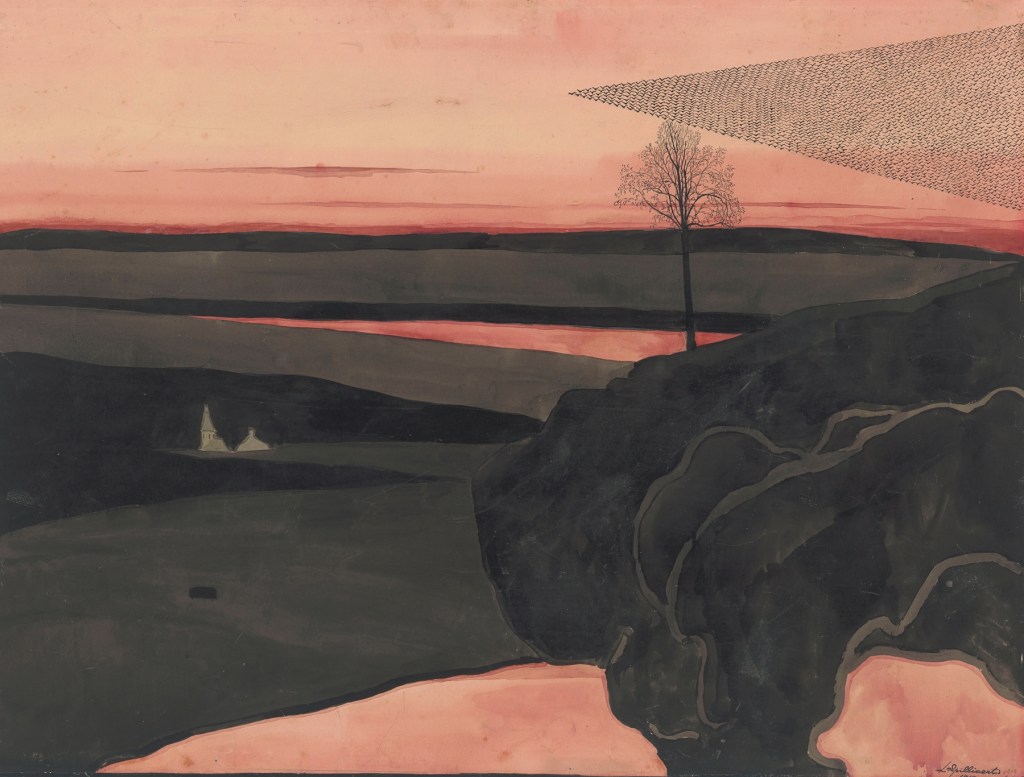
Paul Ilechko: “Life in Translation”

Life in Translation

We use so many words to avoid engaging 
directly with the brutality of death     words 
like passed and hospice     but love and death 

are intertwined     each would mean much 
less without the other     it’s the boundaries 
of life that give us meaning     the harshly finite 

world that somehow finds a way to still 
continue on its way without us     and so we 
are a gift     each to the other     no matter 

the angle of observance that we bring to bear 
upon our journey across this life     silvered
and quiet     as if through the blue of a mirror


we catch the train from different stations     
but find ourselves within the same compartment     
collapsing into adjacent seats     so much  

of life is random     even if the clocks 
are stopped     even if our narratives seem 
stalled at times     we tell ourselves we can’t 

go on     and Beckett laughs as we continue     
somewhere ahead of us there is an apocalypse
but all we have is appetite     all we can do 

is translate     one for the other     content in 
the threadbare mystery of our life together 
a bottle of bourbon     a desert of rocks. 

About the Author: Paul Ilechko is British American poet and occasional songwriter who lives with his partner in Lambertville, NJ. His work has appeared in many journals, including The Night Heron Barks, Lily Poetry Review, Iron Horse Literary Review, Stirring, and The Inflectionist Review. He has also published several chapbooks.

Image Credit: Léon SpilliaertLandscape under a Red Evening Glow with Migratory Birds” (1919) Public domain image courtesy of Artvee

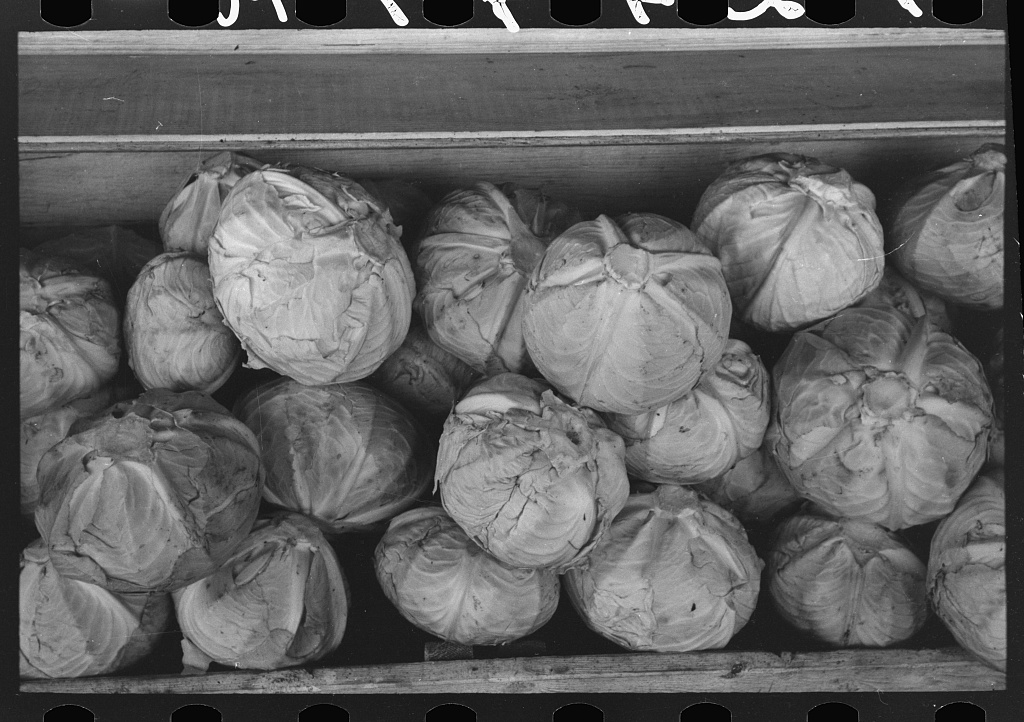
Jon Bennett: “Purple Cabbage”

Purple Cabbage 

 
Glossy sapphire 
garlic powder, cider vinegar, 
apple, caraway  
a quantity of soy 
just shy of detectable 
I’m a bachelor and have 
always been one 
even as a little boy 
I had a black beard, a suitcase 
and a lonely heart 
but my mother did make 
cabbage with caraway and apple 
so I have a taste for it 
I sit at my small table 
with my potful  
of Eastern European history 
and eat my fill 
wondering what else 
I might be filled with 
had things 
turned out different.

About the Author: Jon Bennett writes and plays music in San Francisco, CA. You can find his songs on most streaming sites as well as here and here.

Image Credit: Russell Lee “Cabbages at roadside stand near Greenfield, Massachusetts” (1939) Public domain image courtesy of the Library of Congress
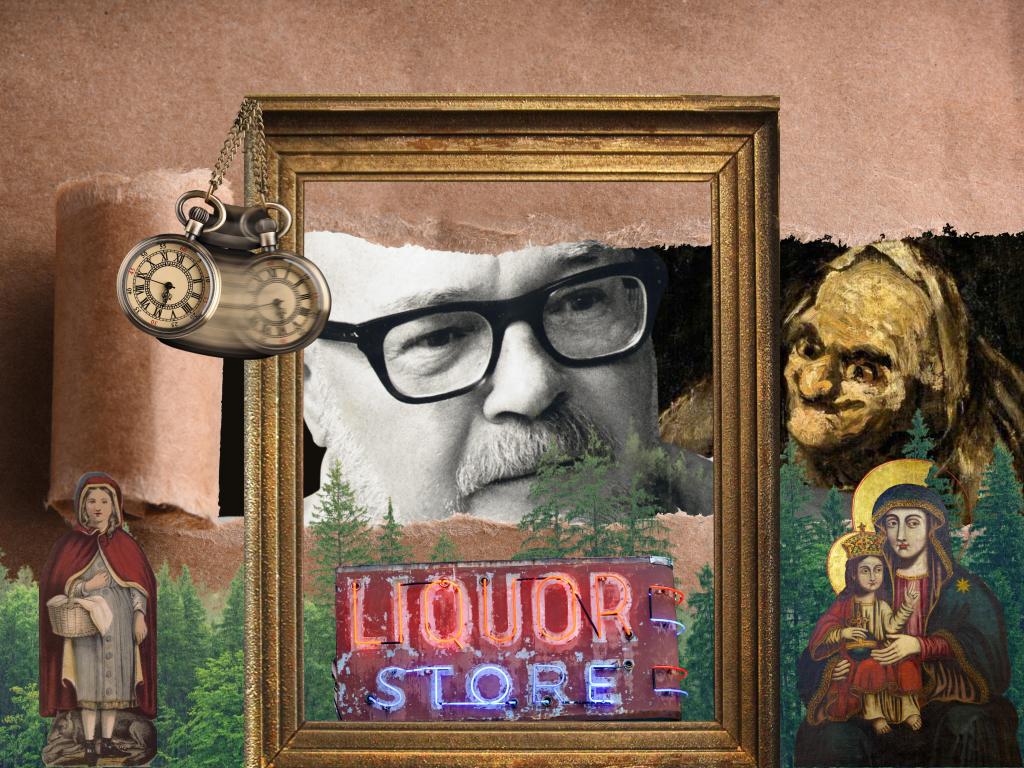
John Brantingham: “Age of Isolation”

Age of Isolation

So many shops downtown are closed. 
The liquor stores are still there of course, 

but maybe every third store has been 
boarded up since the pandemic started, 

knocked out like teeth on a fighter’s mouth. 
Bookstores gone, coffee shops too. 

The place where you used to go to buy 
records gone, but you suppose that 

would be abandoned anyway 
like the video game arcade you loved 

before you discovered girls. 
You wonder if this is the way of things, 

the turning of an age as the world moves 
on to a new way of being alive. 

It feels like that summer day twenty 
years ago, where you were at the park, 

but realized that kids didn’t go there any more. 
It’s like those first days of COVID 

when you looked out your door 
and understood that you could have 

a picnic on the highway, 
and not a single person would care.

About the Author: John Brantingham was Sequoia and Kings Canyon National Parks’ first poet laureate. His work has been featured in hundreds of magazines. He has twenty-one books of poetry, memoir, and fiction including his latest, Life: Orange to Pear (Bamboo Dart Press) and Kitkitdizzi (Bamboo Dart Press). He lives in Jamestown, New York.

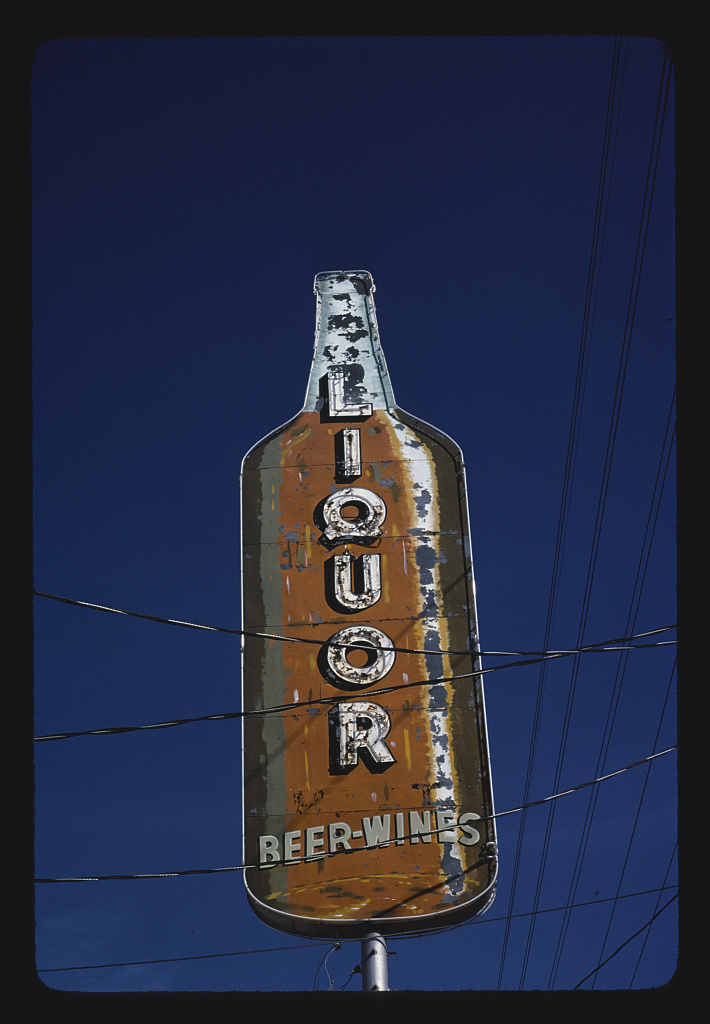
Image Credit: John Margolies “Liquor store sign, Bossier City, Louisiana” (1979) Public domain image courtesy of The Library of Congress

Savannah Lauren: “If I ever have a daughter”

If I ever have a daughter 

We will sit by her bed at night 
Sing a song that we co-write 
–These are my arms 
They are good arms 
I use them to (fill in the blank)– 
We will roadtrip through our bodies 
Drift around ankles 
Hug tightly to curves 
Slow down over bumps and ridges 
Name them and be not afraid of ourselves
 
I have never seen my mother’s stomach 
But if it’s anything like the top of her shoulders 
It’s a galaxy of freckles 
8-children’s worth of ribbon curl folds and 
Hills and valleys and deep veins of ore that we were forged from 
Carried within like we were on her starry-sloped shoulders 
A home before we knew that her hands would not always be ours 

If I ever have a daughter 
I will pull my shirt up every night 
We will count the stretch marks 
I will let her drive her hot wheels 
Down the scars that made her 
And the ones that were there 
before she came 

–This is my belly 
It is a good belly 
I use it to carry you always–

About the Author: Savannah Lauren is a poet and photographer living in Bushwick, Brooklyn, New York. The Bushwick part is very important to her, as are her small fox-dog, Morello, Vietnamese summer rolls, and the way the sun hits her disco ball in the winter. You can find her on twitter @sava_laur and on instagram @savannahlaurenphoto

Image Credit: Joaquín Sorolla “Mother” (1895) Public domain image courtesy of Artvee